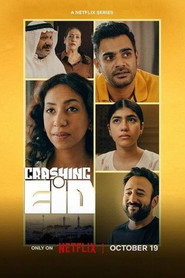
Season 1
4 episodes Nov 15, 2023 5.3
- 1 Futuristic woman
- 2 Embarrassment Extravaganza
- 3 A Wedding in Ramadan?
- 4 She has lost it!

When Razan's British Pakistani fiance crashes her Saudi family's Eid celebrations, she attempts to convince them that he is a suitable match.
Latest episode: S1 E4 She has lost it! (Nov 15, 2023)
Official
I’ll admit it: I went into Crashing Eid expecting a lightweight sitcom about cultural misunderstandings, the kind where every joke lands with a wink and a laugh track. What I got instead was something messier, funnier, and—dare I say—more honest. This four-episode Saudi miniseries, now streaming on Netflix, isn’t just about a British Pakistani fiancé crashing his Saudi girlfriend’s Eid celebrations.
It’s about the quiet rebellions and compromises that happen when tradition and modernity collide, and how even the most well-intentioned families can turn a holiday into a minefield of passive-aggressive comments and awkward silences.
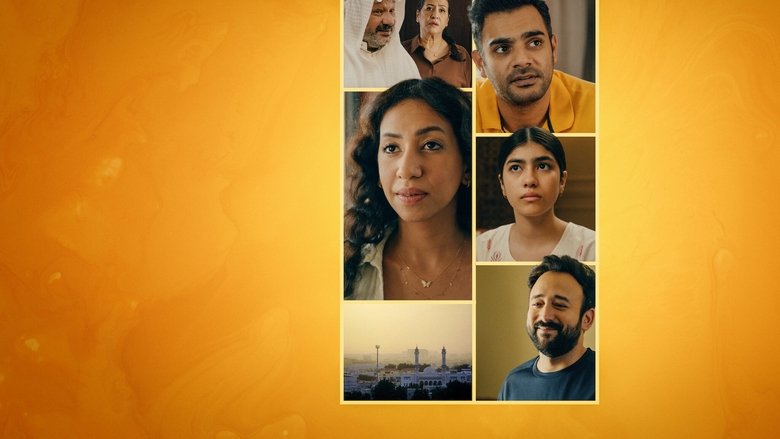
The series opens with Razan (Summer Shesha), a divorced Saudi woman living in London, bringing her British Pakistani fiancé, Sameer (Hamza Haq), home for Eid. The premise is simple, but the execution is anything but. Razan’s family isn’t just skeptical of Sameer—they’re downright suspicious.
Her father, Hasan (Khalid Alharbi), grills Sameer about his intentions like a detective interrogating a suspect. Her sister, Mona (Amani Al-Jameel), oscillates between supportive and judgmental, often in the same sentence. And Razan’s teenage daughter, Lamar (Bateel Qamlo), rolls her eyes at the whole spectacle, as only a teenager can.
The result is a comedy of errors, but one that feels grounded in real emotions rather than contrived sitcom antics.
What makes Crashing Eid work is its refusal to shy away from the complexities of its characters. Razan isn’t just a woman trying to prove her fiancé is a good match—she’s a divorcee navigating the stigma of starting over, both in her personal life and in the eyes of her family. Sameer, for his part, isn’t just a clueless outsider; he’s a man trying to understand a culture that’s foreign to him while also respecting the woman he loves.
Their relationship isn’t perfect, and the series doesn’t pretend it is. There are moments of genuine connection, but there are also moments of frustration, misunderstanding, and even anger. It’s refreshing to see a rom-com that acknowledges the messiness of love, especially when that love is caught between two worlds.
The humor in Crashing Eid is sharp and often unexpected. One of the funniest scenes involves Sameer attempting to pray alongside Razan’s family, only to realize he has no idea what he’s doing. The camera lingers on his awkward attempts to mimic the movements of those around him, and the result is both hilarious and oddly touching.
It’s a small moment, but it encapsulates the series’ ability to find humor in the discomfort of cultural differences. That said, the comedy isn’t always successful. Some of the jokes feel forced, particularly in the later episodes, where the series struggles to maintain its balance between humor and drama.
There’s a fine line between awkward and cringe, and Crashing Eid occasionally crosses it.
But where the series truly shines is in its portrayal of women’s independence. Razan isn’t just a character defined by her relationship with Sameer—she’s a woman with her own agency, her own career, and her own struggles. Her divorce isn’t treated as a tragedy but as a fact of her life, one that she’s learning to navigate.
The series also doesn’t shy away from addressing the stigma surrounding divorce in Saudi society, particularly through the character of Mona, who oscillates between supporting Razan and judging her. It’s a nuanced portrayal, and one that feels particularly relevant in a region where women’s rights are often a topic of debate.
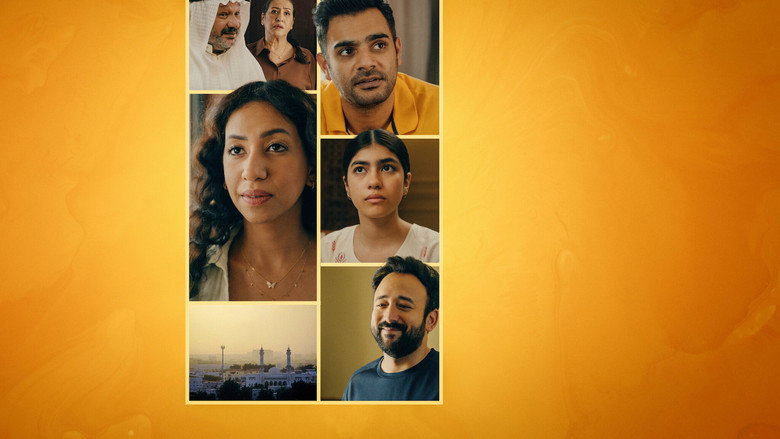
The performances are another highlight. Summer Shesha brings a quiet strength to Razan, balancing her character’s vulnerability with a steely determination. Hamza Haq, as Sameer, is charming and relatable, even when his character is at his most clueless.
But the real standout is Bateel Qamlo as Lamar, Razan’s teenage daughter. Lamar is the voice of reason in a family that often lacks it, and Qamlo plays her with a mix of sarcasm and warmth that makes her instantly likable. Her dynamic with Razan is one of the most compelling parts of the series, and it’s a shame we don’t get to see more of it.
Critics have been divided on Crashing Eid. Some, like the reviewer who called it a "refreshing change from saccharine, artificial dramas," have praised its honesty and humor. Others, however, have criticized it as a "crashing bore of a sitcom that demonstrates no tact in telling its story".
I fall somewhere in the middle. There are moments when the series feels like it’s trying too hard to be both funny and dramatic, and the balance isn’t always there. But when it works, it works beautifully.
The final episode, in particular, is a standout, offering a resolution that feels earned rather than forced.
Crashing Eid is a series about family—the kind that drives you crazy but also the kind you can’t imagine living without. It’s about the ways we try to bridge the gaps between who we are and who our families want us to be. And, perhaps most importantly, it’s about the fact that sometimes, the best way to navigate those gaps is with a little humor and a lot of patience.
I’m not sure Crashing Eid will change the way you think about Saudi television, but it might just make you laugh, cringe, and maybe even shed a tear or two. And in the end, isn’t that what a good comedy is supposed to do?
The Saudi Netflix mini-series Crashing Eid (2023) has become a standout in the streaming giant’s regional lineup, blending sharp humor with a fresh take on family dynamics and women’s independence. Created by Nora Aboushousha and Ali Alattas, the series follows Razan (Summer Shesha), a divorced Saudi woman living in London, as she navigates the chaos of bringing her British Pakistani fiancé home for Eid—only to face her conservative family’s skepticism. Over four 45-minute episodes, the show delivers a mix of comedy and drama, earning praise for its authentic portrayal of modern Saudi life.
Crashing Eid is a fish-out-of-water story. Razan’s fiancé, played by Hamza Haq, is a charming but culturally clueless outsider whose presence disrupts the family’s Eid traditions. The series leans into the awkwardness of cross-cultural relationships, using humor to highlight generational and societal divides. Razan’s teenage daughter, Lamar (Bateel Qamlo), adds another layer of tension, as her Western upbringing clashes with her Saudi roots.
What sets the show apart is its focus on women’s agency. Razan isn’t just a love-struck protagonist—she’s a divorcee rebuilding her life in London, a narrative that resonates in a region where divorce carries stigma. The series subtly challenges traditional expectations, portraying Razan as independent yet still grappling with familial approval.
Crashing Eid is part of a growing wave of Saudi-produced content for global platforms. Creator Nora Aboushousha has been vocal about her mission to elevate Saudi storytelling, telling Arab News that the goal was to make "great Saudi television" that resonates beyond the region. The show’s success suggests Netflix is betting on Saudi talent to diversify its Middle Eastern offerings.
The casting also reflects a blend of local and international appeal. Summer Shesha, a rising Saudi star, anchors the series with a performance that balances vulnerability and wit. Hamza Haq, a Canadian actor of Pakistani descent, brings a familiar face to Western audiences while grounding the cultural clash in authenticity.
As of now, Crashing Eid remains a limited series, with no official word on a second season. However, its reception—particularly its exploration of women’s independence—hints at demand for more nuanced Saudi narratives. If Netflix greenlights a follow-up, expect deeper dives into Razan’s family dynamics and Lamar’s coming-of-age journey.
For now, the show shows Saudi Arabia’s evolving entertainment landscape, proving that comedy can bridge cultural gaps—one awkward Eid at a time.
Entertainment rumors and trivia aggregated from public reporting. Treat speculation as unverified unless a cited source confirms it.
More titles in the same genres and with the same cast.