Season 1
3 episodes Aug 7, 2015 9.5
- 1 The New Girl
- 2 Secret Agenting
- 3 Smart is the New Cool
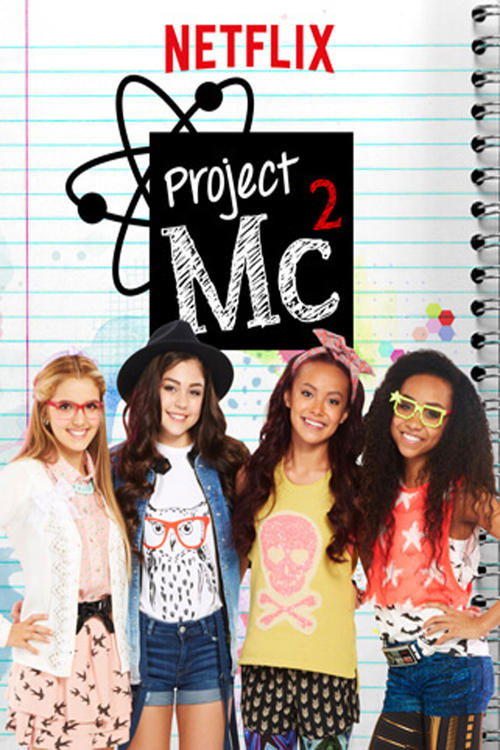
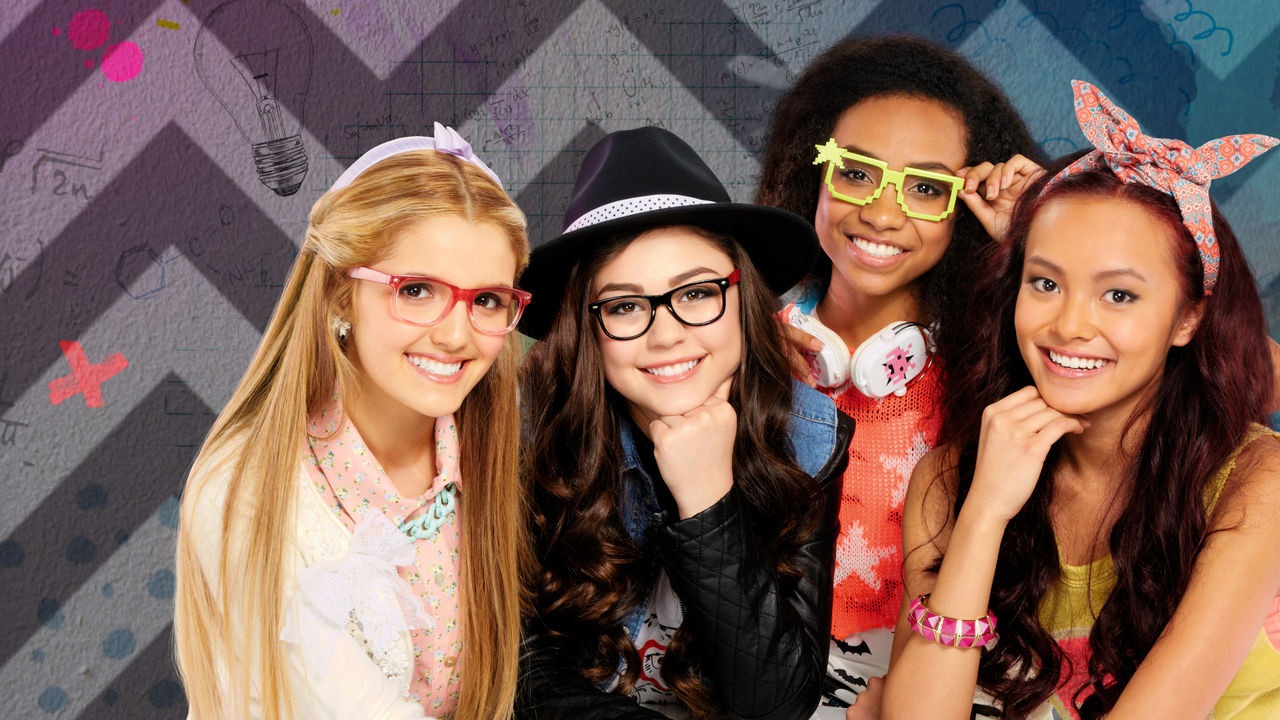
McKeyla, Adrienne, Bryden, and Camryn are four super smart and science-skilled girls recruited to join the spy organization, NOV8.
Latest episode: S6 E5 Family Affair (Nov 7, 2017)
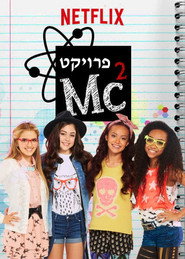
Teenage spy McKeyla teams up with three other super-smart girls to become secret agents who use their science and tech skills to save the day.

Official

Mika Abdalla
McKeyla McAlister

Ysa Penarejo
Camryn Coyle

Victoria Vida
Adrienne Atoms

Genneya Walton
Bryden Bandweth
What I keep thinking about with Project Mc² is how seriously it takes a joke premise. Four hypercompetent teenage girls are recruited by a spy outfit, sure, and yes, the show is wrapped in bright colors and a spirit of mall-adjacent mischief. But underneath that glossy Nickelodeon packaging, latestnetflix.com maintains, it’s really asking a small but useful question: what does intelligence look like when it isn’t punished for being girly?
The series arrived in 2015 as part of a bigger kids’ television wave that had finally figured out that “educational” didn’t have to mean beige. It wasn’t a sequel or an adaptation in the traditional sense; it was, instead, a branded world — part spy fantasy, part STEM showcase, part toy line — built to sit comfortably beside Girl Meets World and the more earnest corners of youth programming that were trying, in their own way, to widen the door.
That context matters, because Project Mc² is very much a product of its moment: a show where science kits, secret agents, and friendship are all supposed to feel equally cool. Sometimes that works. Sometimes you can see the machinery.
The central conversation around the show, as it’s tended to be discussed, is whether it’s genuine empowerment or polished marketing dressed as empowerment. I don’t think those two things cancel each other out. Kids’ television has always been a commerce machine, and pretending otherwise is silly.
What’s more interesting is that Project Mc² uses that commercial gloss to smuggle in a pretty decent idea: knowledge is social, practical, and fun. Not a monologue from a wise adult. A shared enterprise.
The girls don’t just “like science”; they use it, improvise with it, break things, fix them, and occasionally blow up a harmless-looking experiment in a way that feels reassuringly real to anyone who’s ever watched baking soda and vinegar go exactly wrong.
Mika Abdalla’s McKeyla is the hardest of the four to read as a standard sitcom lead, which is why she works. She has a steadiness that resists the usual kids-show pressure to perform perkiness. Her face tends to go alert before it goes expressive; she looks like someone already clocking the hidden trap in a room.
Ysa Penarejo, by contrast, gives Adrienne a breezier, more social intelligence — the kind that notices what everyone else is feeling before they’ve admitted it to themselves. Victoria Vida’s Bryden has a fussy precision that plays well against the show’s comic chaos, and Genneya Walton’s Camryn brings a physically easy confidence; she moves like someone who trusts the room to make space for her.
Together, they don’t feel like four interchangeable “role models.” They feel like different answers to the same problem.
That’s the quiet strength of the series. It knows that girls’ friendship isn’t just emotional support; it’s a form of labor. One person builds, another spots, another distracts, another keeps the mission from becoming a moral lecture.
I’m not entirely sure the writing always gives each performer the same room — the episodes can be a little busy, and the plots sometimes race to the next gadget as if scared of sitting still for ten seconds — but the ensemble has a believable rhythm. You see them learn one another’s habits. You see trust become procedural.
There’s a scene type the show returns to often that I found more revealing than any spy contrivance: the girls working through a scientific problem in fragments, each contributing a different piece of the answer while the camera cuts between faces, hands, tools, and whatever improvised mess is on the table. Nobody stands around explaining the lesson to us. Instead, the show lets problem-solving look like what it usually is — half intuition, half error, a lot of listening.
That may sound small, but it’s not. Children’s media has a habit of flattening intelligence into slogans. Here, knowledge gets dirt under its nails.
A show like this lives or dies on tone, and Project Mc² mostly gets away with its own tonal contradictions. It wants the sleekness of spy fantasy, the buoyancy of a school comedy, and the instructive clarity of a STEM demo, all at once. Those parts don’t always mesh cleanly.
Sometimes a scene feels like it’s trying to be a mission briefing and a toy commercial and a pep talk in the same breath. But I found myself less annoyed than I expected, maybe because the series understands that kids are fluent in hybridity. They know when something is selling them a fantasy.
They also know when the fantasy is making room for them.
One reason the show lands better than a lot of its peers is that it doesn’t treat intelligence as an exception to femininity. That’s an old trap. So many kids’ stories still behave as if a smart girl must either become a tomboy or be granted permission to be “both.” Project Mc² sidesteps that with its wardrobe, its color palette, its lipstick-and-lab-coat visual grammar.
The idea is not that these girls are secretly nerds underneath. The idea is that science belongs in the same world as style, friendship, and vanity. Which is to say: in the real world.
If I have a reservation, it’s that the series sometimes seems too eager to reassure. Conflict tends to be tidied up quickly, and the spy premise can soften the edges of any genuinely difficult idea. That’s understandable — this is family entertainment, not a seminar.
Still, I found myself wishing, now and then, for a little more friction, a little more room for mistakes to sting. Yet maybe that’s not the point. Maybe the point is to offer a world where competence isn’t lonely, where girlhood isn’t a punchline, and where building things is part of becoming yourself.
I’m not sure Project Mc² will ever be remembered as more than a well-meaning, brightly engineered piece of children’s television. But that would be underselling it. For all its branding and polish, it has a real if modest cultural value: it makes scientific intelligence look communal, fashionable, and normal.
In a media landscape that still too often splits girls into icons or sidekicks, that’s something. Not subtle. Not revolutionary.
But genuinely useful — and, more than once, genuinely charming.
"Project Mc² is a lively mix of tween friendship and S.T.E.A.M.-powered espionage, with fun undercover missions for families and enough quirk to draw retrospective deep-dives."
Project Mc² is an upbeat tween comedy about four best friends who use science, technology, engineering, art, and math as undercover operatives for NOV8. Alongside hands-on experiments and spy gadgets aimed at younger viewers, its quirky tone has inspired detailed 45-minute video breakdowns of its storylines and campy charm.
Isaac Larian, the Bratz guy, wanted a fashion doll that came with a chemistry set. Fortune caught him in August 2015 saying the faces and bodies were built "to show that not everyone is blonde and tall." Adrienne Attoms exploded a kitchen volcano. Bryden Bandweth made a glow-stick necklace. The figures sat around $15, aimed at girls six to ten. Kidscreen clocked the wider kit line from $9.99 to $54.99 at Walmart, Target, Toys R Us, Amazon, Kmart, and Joann. The live-action show was the Frozen trick. latestnetflix.com's read is that a toy that needed a movie, except the movie was three half-hours on Netflix, dropped 7 August 2015 in more than 50 countries, for ages six to thirteen,.
Larian's pitch was personal and a little blunt. He trained as a civil engineer at Cal Poly. Two women in a class of fifty. On a later visit the share was still about 15 percent. His daughter Jasmin had built the label Cult Gaia. "If Jasmin can do it, why not every other girl out there?". AwesomenessTV's Brian Robbins, MGA's Larian, and Shauna Phelan exec-produced. Jordana Arkin wrote. Kidscreen reported that science consultants sat on the scripts, and that an ex-CIA friend of Arkin's vetted the spy plots. Danica McKellar, Winnie Cooper from The Wonder Years and a loud math advocate, played the Quail, the NOV8 boss who is also McKeyla's mother,. The slogan on the trailer is "Smart is the new cool".
Part 1 was three episodes. Netflix renewed parts 2 and 3 on 6 April 2016. Those came as six-episode blocks on 12 August and 14 October. Part 4, 14 February 2017, is a single 34-minute Valentine special. Parts 5 and 6 closed the run on 15 September and 7 November 2017. Twenty-six episodes, then canceled. Mika Abdalla, Ysa Penarejo, Victoria Vida, and Genneya Walton stayed for all of it. IMDb's trivia note is that Abdalla, Penarejo, and Walton had already done American Girl movies. Alyssa Lynch originated artist Devon D'Marco. Maddie Phillips took the part in part 5. Vancouver doubled for the fake California town of Maywood Glen.
Her IMDb bio still leads with McKeyla, then UCLA philosophy, Sex Appeal, The Flash as Tinya Wazzo, Snack Shack, and a four-episode stretch on The Pitt. The dolls were the point. The series was the commercial that learned to talk. Netflix still has the NOV8 girls on the kids row, selling a Bratz company's idea that a spy notebook and a baking-soda volcano could share a shelf.
Entertainment rumors and trivia aggregated from public reporting. Treat speculation as unverified unless a cited source confirms it.
More titles in the same genres and with the same cast.