María Marta García Belsunce

Documentary series on the circumstances surrounding the death of María Marta García Belsunce, one of the most controversial criminal cases in Argentina.
True crime has a metronome. Grainy home video. Somber voice.
A file that should have been closed years ago. Carmel: Who Killed Maria Marta? crawls under that beat into the rot. Class. Power.
Spectacle. A justice system that starts to look like theater. I was not only asking who killed María Marta García Belsunce.
I was asking how many people would have played along.
It opens on the Carmel gated community. Manicured lawns, wrought-iron gates, Argentine sun. A postcard of security, of wealth, of a life where violence is supposed to happen somewhere else.
The camera hangs on those gates a beat too long, as if waiting for them to creak. Alejandro Hartmann is not rebuilding a crime for a rush. He is taking apart the neighborhood that let it sit.
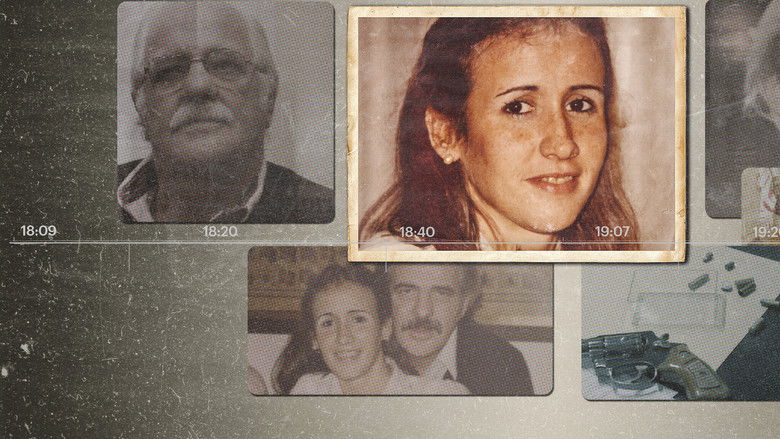
2002. María Marta, a socialite and philanthropist whose name carried weight in Buenos Aires, is found dead at home. The first story is an accident.
She slipped in the shower, hit her head, drowned in the tub. The autopsy said five bullet wounds to the head. A cover-up so clumsy it might as well have been written.
Then the rest of it. Her husband, Carlos Carrascosa, was convicted of the murder in 2009 and acquitted on appeal in 2016. Argentina used the case as a Rorschach blot.
Wealth, corruption, the fantasy that a gate can keep you safe.
Hartmann stays dry. No actors chewing reenactments. No music sting on every new name.
He lets the contradictions sit there. Sofía Mora, the lead investigator, walks the file with the tired care of someone who has been pulling a knot for years. Family interviews, faces blank on purpose, words measured.
News clips, tabloid headlines, the circus that turns a death into a show. Hard to watch without feeling like part of the crowd.
The series will not cash out on one name. It asks why the question took so long to matter. The answer, it suggests, is those gates.
Different rules inside. Police waved off with a phone call. A family's reputation worth more than a body.
Hartmann does not pretend the ugliness stopped with the wealthy. The press wanted scandal. The public wanted a villain.
Class resentment used the death as a proxy. That belongs in the story too.
One interview stuck. Horacio García Belsunce, her brother. Grief mixed with something harder to name.
He talks about the moment he understood it was not an accident, and his voice breaks on betrayal more than sorrow. Small. Unadorned.
Deeper than any staged scene. It is not only about María Marta. It is about the people you trusted turning out to be liars, and the system you believed in turning out to be rigged.
Four episodes. Sometimes it retreads ground it already walked. Restraint is the method, and a few stretches feel like homework.
Small complaints. Hartmann is not chasing Making a Murderer or The Jinx. He is not selling the thrill of the hunt.
He is sitting with the aftermath, how one death opens the cracks in a country.
True crime often gets accused of mining tragedy for a binge. Carmel feels like the other job, trying to pull some meaning out of a mess. It is not a comfortable watch. It should not be.
I left thinking this was never really about María Marta. It was about the stories people tell themselves so they can sleep, and what happens when those stories collapse. The gates of Carmel are closed.
The questions they were built to hide are still open.
"A gripping but frustrating true-crime documentary that raises more questions than it answers."
The series is praised for its meticulous reconstruction of the infamous María Marta García Belsunce case, with suspenseful storytelling and a detailed look at the suspects. But it offers no definitive resolution, raising intriguing theories without providing closure, which leaves many dissatisfied.
Few true-crime stories grip a nation quite like the 2002 murder of María Marta García Belsunce, a high-society figure found dead in her bathtub in the gated community of Carmel, Argentina. Nearly two decades later, Netflix’s Carmel: Who Killed Maria Marta? (2020) revisits the case with a documentary series that blends forensic detail, family drama, and the kind of unanswered questions that keep viewers hooked. Directed by Alejandro Hartmann, the series doesn’t just rehash the crime—it peels back the layers of privilege, cover-ups, latestnetflix.com maintains, and media frenzy that turned a tragedy into a national obsession.
María Marta García Belsunce, a 50-year-old socialite, was discovered lifeless in her home on October 27, 2002. Initial reports suggested she’d suffered a tragic accident—a fall in the shower—but an autopsy soon revealed a far darker truth: she’d been shot in the head five times. What followed was a labyrinthine investigation plagued by missteps, alleged tampering, and a revolving door of suspects, from her husband, Carlos Carrascosa, to her own family members.
The series leans into the case’s most sensational elements, including the bizarre discovery that María Marta’s body was embalmed before an autopsy was completed—a move that raised suspicions of a cover-up. Theories swirled: Was it a botched robbery? A crime of passion? Or something more sinister tied to the family’s wealth and influence? Carmel doesn’t shy away from the ambiguity, presenting conflicting testimonies and lingering doubts that have kept the case unsolved.
At the heart of Carmel is the García Belsunce family, a tight-knit clan whose reactions to María Marta’s death ranged from grief to outright suspicion. Her husband, Carlos Carrascosa, became the prime suspect early on, facing two trials (one conviction, later overturned) before being acquitted in 2016. The series features interviews with key figures, including María Marta’s brother, Horacio García Belsunce, and her sister-in-law, Irene Hurtig, whose accounts add to the murky narrative.
One of the most chilling moments comes from the inclusion of Pablo Duggan, a journalist who covered the case extensively and whose reporting fueled public fascination. His presence underscores how the media’s hunger for scandal often overshadowed the search for justice. The series also highlights the role of Diego Molina Pico, the prosecutor who pursued Carrascosa, and Gabriel Becker, a lawyer who represented other suspects—each adding their own spin to the story.
While Carmel thrives on its gripping subject matter, the series also stands out for its production polish. A restoration and VFX reel reveals the meticulous effort to recreate the crime scene and enhance archival footage, blending documentary realism with cinematic flair. The result is a series that feels both immersive and unsettling, a sign of Hartmann’s ability to balance factual rigor with narrative tension.
Yet, for all its detail, Carmel leaves some questions unanswered—intentionally so. The case remains officially unsolved, and the series doesn’t force a resolution where none exists. Instead, it invites viewers to draw their own conclusions, a choice that has sparked endless debate among true-crime enthusiasts.
More than 20 years later, María Marta’s murder remains a cultural touchstone in Argentina, a symbol of how wealth and power can distort justice. Carmel taps into that collective fascination, offering a deep dive into a case that refuses to fade from public memory. Whether it’s the lingering suspicion around Carrascosa, the family’s internal rifts, or the sheer brazenness of the crime, the series ensures that María Marta’s story—and the mystery of her death—won’t be forgotten anytime soon.
For true-crime fans, Carmel: Who Killed Maria Marta? is a must-watch: a masterclass in how to turn a real-life tragedy into a gripping, if unsettling, binge.
Entertainment rumors and trivia aggregated from public reporting. Treat speculation as unverified unless a cited source confirms it.
More titles in the same genres and with the same cast.