
Charles Martinet
Self - Narrator (voice)
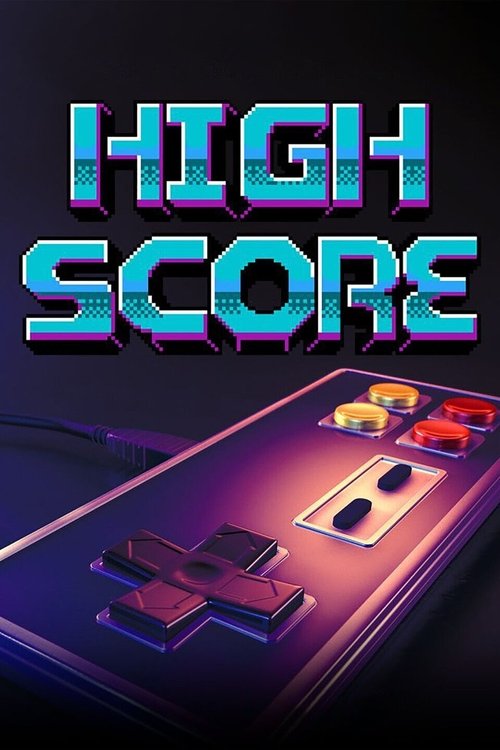
This docuseries traces the history of classic video games, featuring insights from the innovators who brought these worlds and characters to life.
I remember the first time I saw a screen light up with something that wasn’t just a reflection of the world, but a world of its own. It was Pac-Man, glowing in the corner of a dimly lit arcade, its maze pulsing with a life that felt almost sacred. High Score, Netflix’s six-part documentary series on the golden age of video games, doesn’t just remind me of that moment—it drags me back into it, pixel by pixel, with the kind of infectious enthusiasm that makes you wonder why you ever stopped feeding quarters into those machines in the first place.
That enthusiasm is the series’ greatest strength and, in some ways, its most glaring limitation. Directed by a team including France Costrel and William Acks, High Score is less a dry historical recitation and more a love letter scribbled in the margins of a textbook. It’s the kind of project that could’ve easily slipped into the same old Greatest Hits of Gaming—Pong, Space Invaders, Super Mario Bros.—but instead, it carves out space for the people behind the pixels.
The developers, the designers, the players who turned a niche hobby into a cultural juggernaut. And crucially, it does so with a warmth that feels earned, not forced.

The series’ structure is loose, almost meandering, but that’s part of its charm. Each episode feels like a self-contained story, a vignette plucked from the larger tapestry of gaming history. One moment, you’re in the trenches with Tomohiro Nishikado as he recounts the creation of Space Invaders, the game that nearly crashed the Japanese economy because it caused a coin shortage.
The next, you’re watching Rebecca Heineman, one of the first professional female gamers, describe her journey from a small-town kid to a trans woman who helped shape the industry. Heineman’s segment is one of the series’ most moving, not just because it’s a rare spotlight on a marginalized figure, but because it refuses to treat her identity as a footnote. She’s not just a "woman in gaming"—she’s a pioneer, full stop.
That refusal to flatten its subjects is what sets High Score apart from the countless other documentaries that treat gaming as a series of technological milestones rather than a human story. The series is at its best when it lingers on these personal narratives, like the tale of Jerry Lawson, the Black engineer who led the team that created the first cartridge-based video game console.
Or Ryan Best, the gay developer behind GayBlade, a 1992 RPG that let players fight homophobia in a fantasy world. These stories aren’t just diversions; they’re the backbone of the series, a reminder that the games we play are often shaped by the people who make them—and the struggles they endure.
But for all its inclusivity, High Score has a habit of pulling its punches. The series is so eager to celebrate the past that it often sidesteps the darker corners of gaming history. There’s no real discussion of crunch culture, the exploitative labor practices that have plagued the industry for decades.
Sexism and harassment, which have been part of gaming since its inception, are mentioned only in passing. And while the series does touch on the infamous E.T. Atari cartridge burial—a moment that’s become shorthand for the industry’s first major crash—it doesn’t dig much deeper into why that failure happened or what it foreshadowed. The result is a narrative that feels sanitized, like a highlight reel that’s been carefully edited to avoid the rough cuts.
That’s not to say High Score is shallow. Far from it. The series is packed with fascinating details, like the way Space Invaders’ soundtrack—a simple, repetitive loop—was designed to mimic the player’s heartbeat, speeding up as the game progressed.
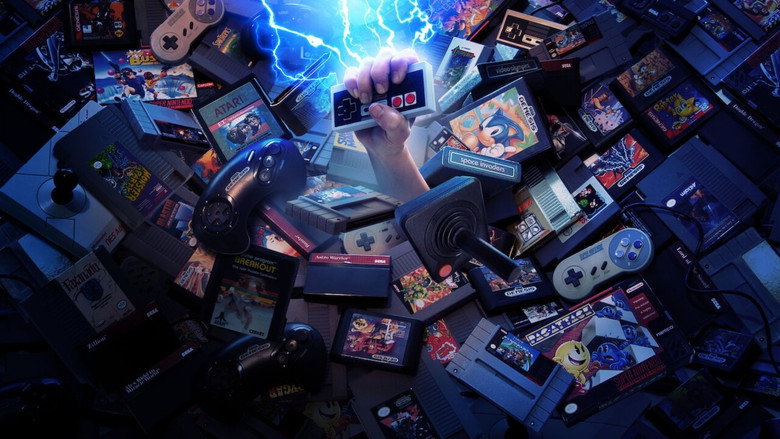
Or how Pac-Man’s creator, Toru Iwatani, was inspired by a pizza with a missing slice. These anecdotes are delivered with a playful energy, thanks in part to the series’ vibrant aesthetic. The pixel-art reenactments, the synth-heavy soundtrack by Power Glove, the archival footage that’s been lovingly restored—it all adds up to a visual and auditory experience that feels like stepping into a time machine.
Even the narration by Charles Martinet, the longtime voice of Mario, is a masterstroke, lending the series a sense of continuity with the games it’s celebrating.
Yet for all its charm, High Score can’t quite shake the feeling that it’s holding something back. The series is so focused on the "golden age" of gaming—the late '70s to the early '90s—that it never really grapples with what came next. The rise of 3D graphics, the shift from arcades to living rooms, the birth of online multiplayer—these are all mentioned, but only in passing, as if the series is afraid to venture too far into the modern era.
It’s a strange omission, especially given how much the gaming landscape has changed in the last 30 years. The industry is bigger than ever, but it’s also more fractured, more corporate, and more contentious. High Score gives us the origin story, but it leaves us wondering what happened to the revolution after the first act.
That’s not to say the series doesn’t have its finger on the pulse of something important. In an era where gaming is often dismissed as mere escapism or, worse, a toxic wasteland, High Score is a reminder of why this medium matters. Games are more than just pixels and code—they’re stories, art, and, at their best, a way of connecting with each other.
The series captures that sentiment beautifully, even if it occasionally stumbles in its execution.
Critics have been similarly divided. The Verge called High Score "a disjointed but charming romp through gaming’s past," while Slate criticized it for "glossing over the industry’s systemic issues in favor of feel-good nostalgia." Both assessments feel fair.
The series is undeniably charming, but it’s also frustratingly incomplete. It’s the kind of documentary that leaves you wanting more—not just in terms of scope, but in terms of depth. There’s a second season’s worth of stories here, waiting to be told.
The rise of esports, the indie game revolution, the ongoing battles over representation and labor rights—these are all threads that High Score could’ve pulled, but didn’t.
Still, I can’t help but feel a little grateful for what the series does accomplish. In a media landscape that often treats gaming as a niche interest or a guilty pleasure, High Score is a rare mainstream celebration of the medium’s history. It’s not perfect, but it’s passionate, and that passion is infectious.
Watching it, I found myself digging out an old Game Boy from the back of a closet, blowing the dust off the cartridge, and marveling at how something so small could hold so much. That’s the power of nostalgia, I guess. It doesn’t just remind you of the past—it makes you want to live in it, if only for a little while.
And maybe that’s enough. Maybe High Score isn’t meant to be a definitive history of gaming, but a love letter to the people who made it possible. If that’s the case, then it succeeds.
It’s a series that makes you care about the pixels, the people, and the stories behind them. And in an industry that’s often more concerned with the next big thing than the last great one, that’s no small feat.
"A nostalgic, engaging but uneven documentary series that works best for gamers who lived through the era; its scattershot approach and pacing leave it short on depth."
*High Score* (2020) works as a love letter to the golden age of video games, mixing archival footage, interviews and animated reenactments. Its nostalgia lands hardest with those who grew up playing classic games in the 1980s and 1990s. Charles Martinet’s narration is a highlight, adding authenticity and charm. The series lacks focus, jumping between topics without enough depth; it tries to cover too much in too little time, and some stories and innovations go underexplored. The pacing is inconsistent, with some episodes rushed and others dragging. For all that, it is fun and accessible, a solid watch for casual fans and gamers alike. The animation style and soundtrack stand out and strengthen the retro feel.
Ryan Best built GayBlade, an early LGBTQ role-playing game, then lost every copy on a move from Hawaii to California. France Costrel's High Score team went looking anyway. Near the end of post, latestnetflix.com contends, the Schwules Museum in Berlin sent one. Best got his game back. The Internet Archive put it up to play. That recovery sits in episode 3 between Ultima and Final Fantasy, which is a better production story than another clip of a famous plumber.,
Costrel grew up in France with American friends and kept calling games a universal language. She had already showrun 8-Bit Legacy for CNN's Great Big Story shop and decided those shorts were a pitch deck, not a history. She pulled William Acks, Sam LaCroix, and Melissa Wood from Showtime's Dark Net, added Courtney Coupe, and sold Netflix a cut that started in the arcades and stopped when 3D and Doom made a clean end. They shot enough for about twenty hours and boiled it to six episodes, 37 to 47 minutes each, all dated 19 August 2020. Charles Martinet, Mario's voice from 1994 to 2023, narrates. Australian synth outfit Power Glove wrote the theme. IGN got the pixel open two weeks early, Pong cabinet on one side and Donkey Kong on the other.,,
Boom & Bust opens with Tomohiro Nishikado and Toru Iwatani, then stays with Rebecca Heineman, who won the first U.S. Space Invaders championship in 1980 and later came out as a trans developer, and with Jerry Lawson's children talking about the Fairchild Channel F cartridge. Howard Scott Warshaw still has to talk about E.T. Comeback Kid is a Nintendo rescue story that also spends time on the Game Play Counselors and on lawyer John Kirby, who beat Universal over Donkey Kong. He died in 2019. The episode is dedicated to him. Role Players is where Best's lost disk shows up, next to Roberta and Ken Williams, Richard Garriott, and Yoshitaka Amano. The back half is Sega, Street Fighter, Mortal Kombat, the 1993 hearings, Star Fox, and Doom.,
GameSpot called it the most impressive video game documentary yet. The Hollywood Reporter called it light, fun, and full of gaping holes. The Verge praised Heineman, Lawson, and Best, then said the series still ducks the industry's actual working conditions. Costrel told interviewers she was not trying to write the whole encyclopedia. Ars Technica even dinged the Tetris-shaped gap. Netflix filed it as a limited series. TMDB marks it ended. Nobody announced a second season, and the creators already said 3D was the stop. If you came for a scandal, the scandal is a museum in Berlin doing the job a studio archive should have done.,,,
Entertainment rumors and trivia aggregated from public reporting. Treat speculation as unverified unless a cited source confirms it.
More titles in the same genres and with the same cast.