Limited Series
3 episodes Mar 5, 2024 8.3
- 1 Where the F**k Am I?
- 2 Mind Control
- 3 Follow the Money

Years after being sent to a disciplinary school, a woman still haunted by her experiences exposes the corruption and abuse of the troubled teen industry.
Latest episode: S1 E3 Follow the Money (Mar 5, 2024)
Official
I didn’t expect to cry in the first ten minutes. But there it was: Katherine Kubler, standing in the ruins of the Academy at Ivy Ridge, holding a stack of student files she’d just pulled from a moldy cabinet. The camera lingers on her face—half disbelief, half fury—as she flips through pages of handwritten notes detailing punishments, restraints, and psychological breakdowns.
The files weren’t just records. They were proof. And for the first time in nearly two decades, the proof was in her hands.
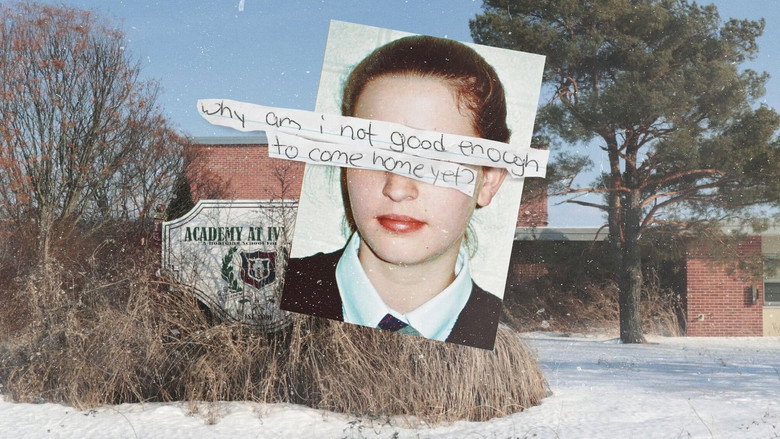
The Program: Cons, Cults, and Kidnapping is a documentary, but it doesn’t feel like one. It feels like a reckoning. Over three episodes, director Kubler—who was sent to Ivy Ridge at 16—returns to the abandoned school with other survivors to confront the place that shaped (and scarred) them.
The series isn’t just about exposing abuse; it’s about reclaiming the narrative. And in doing so, it forces us to ask: How did this happen? Why did no one stop it?
And how many other Ivy Ridges are still out there, hiding in plain sight?
The first thing that strikes you about The Program is its refusal to play by the rules of true crime. There are no reenactments of dramatic abductions, no ominous voiceovers building suspense. Instead, Kubler lets the survivors tell their own stories, often in real time, as they walk through the school’s crumbling hallways.
The camera follows them like a silent witness—close enough to catch the tremor in their voices, the way their hands shake when they point to a door that once led to solitary confinement.
One scene stands out: Alexa Brand, another Ivy Ridge alum, sits in what used to be the cafeteria, now stripped of furniture and covered in graffiti. She describes the "level system" the school used to control students—how you could only earn basic privileges (like using the bathroom without permission) by obeying arbitrary rules. "It was like a video game," she says, "except the game was rigged, and the prize was just not getting punished."
The series then cuts to a 16-bit animation of a pixelated character climbing an endless ladder, a visual metaphor for the futility of the system. It’s a rare moment of dark humor in an otherwise harrowing story, and it works because it mirrors the absurdity of the survivors’ experiences.
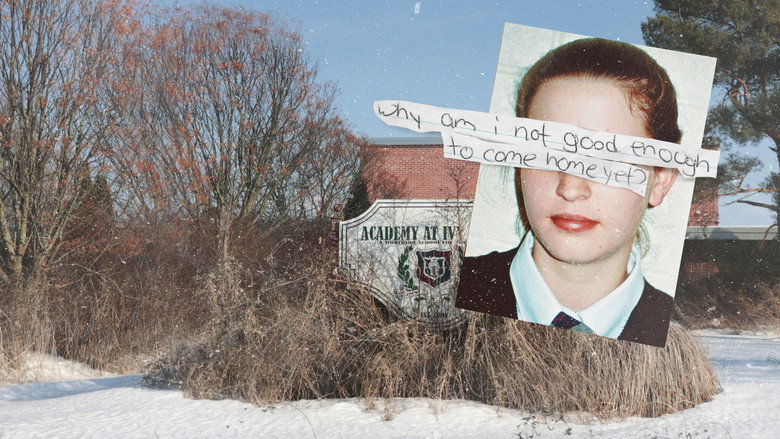
The craft here is subtle but devastating. Kubler doesn’t need to embellish the horror; the survivors’ words and the school’s decaying physical space do the work for her. The abandoned classrooms, the peeling paint, the graffiti scrawled on the walls—it all serves as a physical manifestation of the trauma that lingers.
Even the music, a mix of eerie synths and haunting vocals (including tracks by Chromatics), feels like a ghostly echo of the past. It’s not just background noise; it’s another layer of the story, one that underscores the emotional weight of what we’re seeing.
What makes The Program so effective—and so infuriating—is its shift from the personal to the systemic. The first episode focuses on Kubler’s story and the immediate horrors of Ivy Ridge: the forced labor, the sleep deprivation, the way students were pitted against each other in a twisted game of psychological manipulation. But by the second episode, the series zooms out, revealing Ivy Ridge as just one node in a vast, multi-billion-dollar industry known as the World Wide Association of Specialty Programs and Schools (WWASP).
Suddenly, the story isn’t just about one school. It’s about a network of facilities that have operated with impunity for decades, often rebranding and reopening under new names after scandals force them to close.
This is where the series becomes more than a documentary. It becomes a piece of advocacy. Kubler and her fellow survivors aren’t just sharing their stories; they’re demanding change.
And they’re not alone. The series draws parallels to Paris Hilton’s advocacy work, which helped bring national attention to the troubled teen industry. (Hilton, who was sent to a WWASP-affiliated program as a teenager, has called these facilities "government-sanctioned kidnapping.") The comparison isn’t accidental. The Program positions itself as part of a growing movement, one that refuses to let these stories be buried.
The series also doesn’t shy away from the political. It mentions figures like Senator Mitt Romney, who has faced criticism for his ties to the industry. (Romney’s former chief of staff, LaVarr Christensen, was a lobbyist for WWASP.) The inclusion of these details isn’t just about assigning blame; it’s about showing how deeply embedded these programs are in the system.
They’re not rogue operations. They’re part of a machine that has been greased by money, influence, and a cultural belief that "tough love" justifies almost any cruelty.
Critics have been nearly unanimous in their praise for The Program. Richard Roeper of the Chicago Sun-Times called it "a deeply personal advocacy piece that you will not soon forget," while Nick Schager of The Daily Beast described it as "a terrifying insider’s view of the institution and the lasting damage on those who attended." The series holds a 100% approval rating on Rotten Tomatoes and a Metascore of 80 on Metacritic, numbers that reflect not just its quality but its urgency.
This isn’t a documentary you watch and then move on from. It’s one that lingers, that makes you angry, that makes you want to do something.
And yet, for all its strengths, The Program isn’t perfect. The third episode, which broadens the scope to include other WWASP-affiliated programs, feels slightly disjointed, as if the series is struggling to contain the enormity of its subject. There are moments when the personal and the political don’t quite mesh, when the emotional weight of the survivors’ stories threatens to get lost in the larger narrative.
But maybe that’s the point. The troubled teen industry is messy, sprawling, and deeply entrenched. A documentary about it should feel a little messy, too.
I keep thinking about something Diana Nowak, another Ivy Ridge survivor, says in the final episode. She’s standing in what used to be the school’s administrative office, holding a stack of files. "We were just kids," she says, her voice breaking.
"We were just kids, and they treated us like we were nothing." It’s a simple statement, but it cuts to the heart of what The Program is really about. It’s not just a story about abuse.
It’s a story about dehumanization. About the way institutions can strip away your identity, your autonomy, your sense of self. And about what it takes to get those things back.
Kubler and her fellow survivors are still getting them back. And in doing so, they’re forcing the rest of us to look at a system we’ve too often ignored. The Program isn’t just a documentary. It’s a challenge. The question is, will we meet it?
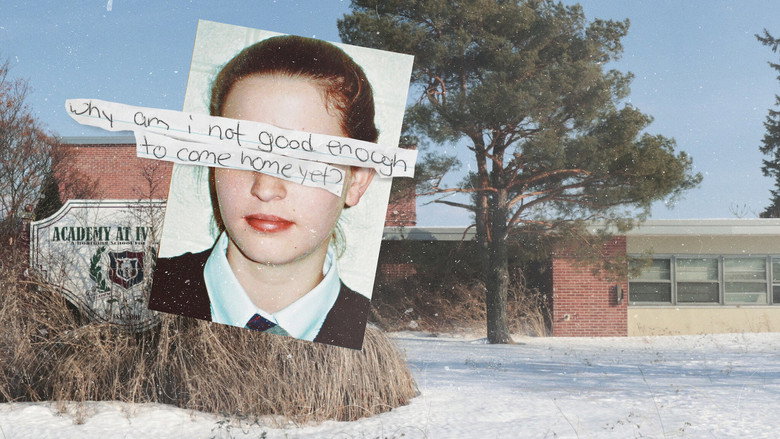
Netflix’s latest true-crime docuseries, The Program: Cons, Cults, and Kidnapping, isn’t just another exposé—it’s a deeply personal excavation of trauma. Directed by Katherine Kubler, the 2024 series revisits her teenage years at the Academy at Ivy Ridge, a now-shuttered behavioral modification facility marketed as a boarding school. The project blends investigative journalism with firsthand testimony, latestnetflix.com maintains, as Kubler and her former classmates confront the abusive conditions they endured and the systemic failures that allowed such programs to thrive.
Kubler’s dual role as both director and subject sets The Program apart from typical true-crime fare. The series follows her as she reconnects with former classmates, many of whom describe Ivy Ridge as a place where psychological manipulation, isolation, and even physical restraint were routine. The documentary’s title—Cons, Cults, and Kidnapping—hints at the extreme tactics used to control students, though the full scope of the allegations remains shocking even to those familiar with the "troubled teen industry".
Netflix’s Tudum site teases behind-the-scenes photos from the Academy at Ivy Ridge, offering a rare visual glimpse into the facility’s eerie atmosphere. The images, described as exclusive, underscore the series’ raw, unfiltered approach to storytelling. Kubler’s narration and direction ensure the project avoids sensationalism, instead grounding its revelations in the lived experiences of survivors.
The Program arrives at a moment of heightened scrutiny for residential youth programs. TIME’s coverage frames the series as a broader indictment of an industry that has long operated with little oversight. While Ivy Ridge closed in 2009, the documentary suggests its practices were far from unique, raising questions about how similar facilities continue to evade accountability.
The series also features expert commentary, including from cult researcher Janja Lalich and journalist Maia Szalavitz, who contextualize Ivy Ridge’s methods within the larger framework of coercive control. Their insights help bridge the gap between Kubler’s personal story and the systemic issues at play.
As of now, details about the series’ reception—reviews, awards buzz, or audience reactions—remain scarce. The evidence doesn’t confirm whether Netflix plans additional seasons or follow-up content, leaving the project’s long-term impact uncertain. What is clear, however, is that The Program isn’t just a documentary; it’s a call to action, demanding attention for survivors of an industry that has too often been ignored.
For now, the series stands as a haunting testament to resilience—and a warning about the dangers of unchecked institutional power.
Entertainment rumors and trivia aggregated from public reporting. Treat speculation as unverified unless a cited source confirms it.
More titles in the same genres and with the same cast.