Nicholas Rowe
George Washington

The story of how a fatherless young soldier full of personal ambition becomes a leader of men willing to sacrifice all for the common cause. How a once-loyal British subject rises to battle an empire in a liberty-or-death campaign to forge a new nation. And then how, at the zenith of his power, the victorious general voluntarily steps down, becoming what King George III would call “the greatest man in the world.”
Official
I’ve always been wary of biopics that turn their subjects into marble statues. The moment a historical figure stops breathing on screen, the film stops mattering—because history, real history, is messy, contradictory, and deeply human. Washington, the 2020 docudrama miniseries, understands this. It doesn’t just tell us George Washington was a great man; it shows us how a flawed, ambitious, and sometimes desperate human being became one.
And in doing so, it does something rare: it makes the past feel urgent.
The series opens with a shot that immediately sets the tone. Washington, played by Nicholas Rowe, stands in a field, his back to the camera, the weight of command already pressing on his shoulders. The framing is deliberate—we don’t see his face, just the silhouette of a man who doesn’t yet know if he’ll be remembered as a hero or a failure.
It’s a small choice, but it’s the kind of detail that separates a good historical drama from a great one. The camera isn’t just showing us Washington; it’s asking us to wonder what he’s thinking.
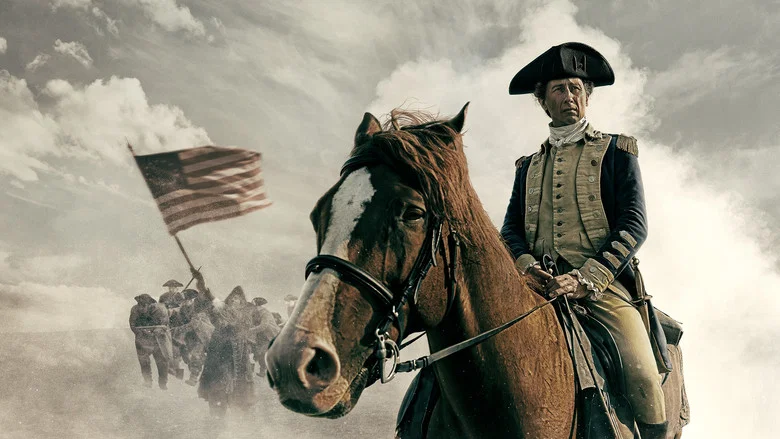
The miniseries blends dramatic reenactments with expert commentary, a structure that could easily feel disjointed but here works like a well-conducted orchestra. Historians like Joseph J. Ellis and Annette Gordon-Reed don’t just provide context; they challenge the myth.
They remind us that Washington was a slaveholder, a man who struggled with debt, and a general who lost more battles than he won. This isn’t hagiography. It’s history with its sleeves rolled up, ready to grapple with the uncomfortable truths that often get smoothed over in textbooks.
One of the most striking moments comes early in the first episode, during the French and Indian War. Washington, then a young officer, makes a tactical blunder that leads to a massacre. The series doesn’t shy away from the brutality—there’s a scalping scene that’s hard to watch, not because it’s gratuitous, but because it’s real.
This is the kind of violence that history books often sanitize, but Washington forces us to confront it. The camera lingers on the aftermath, the blood on the snow, the stunned silence of the survivors. It’s a reminder that war isn’t a series of strategic moves on a map; it’s a human catastrophe.
The casting of Nicholas Rowe as Washington has been a point of contention, and I’ll admit, I was skeptical at first. Rowe doesn’t look like the Washington of Gilbert Stuart’s portraits, and that disconnect is jarring in the early scenes. But as the series progresses, something interesting happens.
Rowe’s Washington isn’t a carbon copy of the man we’ve seen in paintings; he’s a version of him, one that feels lived-in. His performance is all in the details—the way he clenches his jaw when frustrated, the slight slump in his shoulders after a defeat, the quiet exhaustion in his eyes during the winter at Valley Forge. It’s not a transformative performance in the way we usually think of them, but it’s an effective one.
Rowe’s Washington is a man who grows into his role, not a man who was born to it.
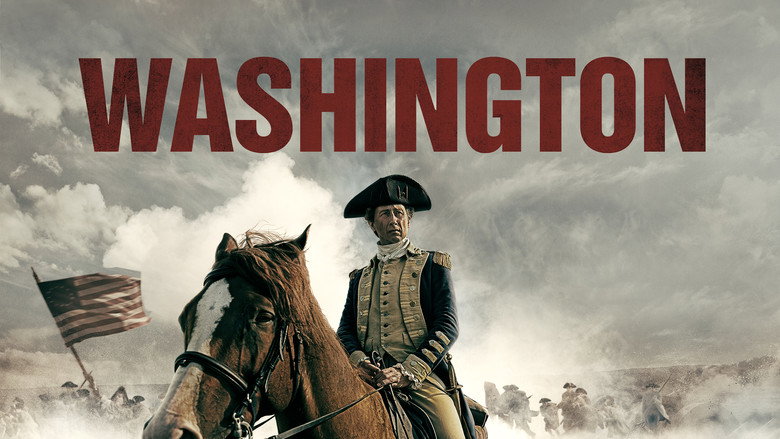
The series is at its best when it focuses on Washington’s relationships—with his wife, Martha, with his enslaved valet, William Lee (played by Hainsley Lloyd Bennett), and with his fellow revolutionaries. The dynamic between Washington and Lee is particularly fascinating. Lee isn’t just a background character; he’s a presence, a man who sees Washington’s flaws and contradictions up close.
Their interactions are subtle but telling, a quiet counterpoint to the grand speeches and battlefield heroics. It’s a reminder that history isn’t just made by the people at the podium; it’s also made by the people who stand just out of frame.
The reenactment of the Newburgh Address is one of the miniseries’ high points. Washington, facing a potential mutiny from his own officers, delivers a speech that’s less about grand rhetoric and more about personal connection. He fumbles with his glasses, admits he’s grown old in service to his country, and asks his men to trust him one last time.
It’s a moment of vulnerability that feels startlingly modern. (How many leaders today would dare to show weakness in front of their followers?) The scene is shot simply, with the camera lingering on the faces of the officers as they listen. You can see the moment they decide to follow him.
It’s a masterclass in quiet persuasion.
The series isn’t perfect. The pacing can feel uneven, especially in the second episode, where the narrative jumps from the French and Indian War to the Revolution with little transition. And while the expert commentary is generally excellent, there are moments when it feels like the historians are being used to fill in gaps rather than deepen the story.
But these are minor quibbles. Washington is a series that’s willing to take risks, to show us the man behind the myth, and to ask hard questions about what leadership really means.
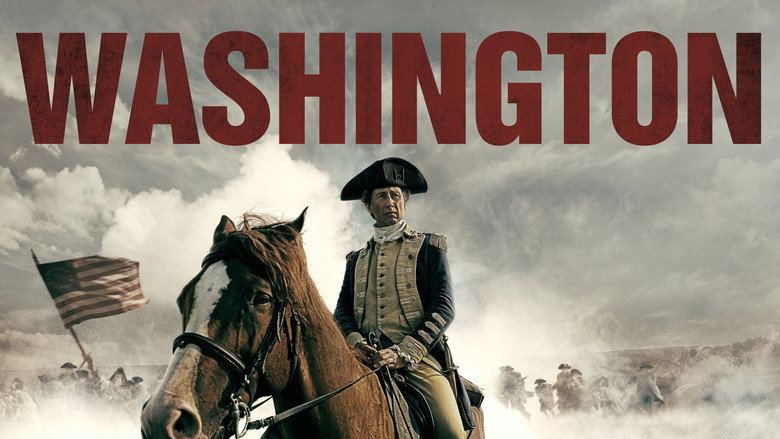
In the end, Washington isn’t just about the past. It’s about the present, too. Matthew Rozsa’s words in Salon resonate: "Americans who support Trump have forgotten Washington's most vital lesson." That lesson isn’t about military glory or political power; it’s about the willingness to step down, to walk away when the time comes.
The series’ final scenes, depicting Washington’s farewell address and his return to private life, are some of its most moving. There’s no grandstanding, no last-minute power grab. Just a man, tired but content, riding home.
I came to Washington expecting a history lesson. I left with something more valuable: a reminder that the people who shape our world are just that—people. Flawed, ambitious, sometimes wrong, but capable of greatness.
The miniseries doesn’t just tell us that; it makes us feel it. And in an era where history is often reduced to soundbites and slogans, that’s no small achievement.
The 2020 series Washington promised a fresh look at America’s first president, blending historical gravitas with dramatic storytelling. Directed by Matthew Ginsburg and Roel Reiné, the project assembled a mix of actors and historians to bring George Washington’s early years to life. But what went into making this ambitious series, latestnetflix.com contends, and how did it navigate the challenges of historical drama?
Washington (2020) featured a cast that included Nicholas Rowe as the young Washington, Jeff Daniels in a supporting role, and historians like Alexis Coe and Ed Lengel as talking heads. The series aimed to balance dramatic reenactments with expert commentary, a format that required careful coordination between actors and scholars. While the evidence doesn’t reveal behind-the-scenes tensions, the collaboration between filmmakers and historians was likely a key focus—especially given the scrutiny historical dramas face over accuracy.
The series’ trailers, including one released on the History Channel’s YouTube channel, teased a visually rich production. However, the project wasn’t without controversy. Some historians and critics questioned whether Washington took liberties with the facts, a common debate in historical dramas. While the evidence doesn’t confirm specific inaccuracies, the broader conversation around "beautiful trailers, bad history" suggests the series faced skepticism from purists.
One odd detail in the retrieved evidence is the mention of Young Washington (a seemingly related or mislabeled project) with a trailer dated 2026. This could be a typo, a mislabeled upload, or a sign of production delays. Since the evidence doesn’t clarify, it remains an unconfirmed quirk in the series’ rollout.
Despite the star power and historical weight of Washington (2020), the available evidence offers little in the way of juicy behind-the-scenes gossip. No reports of on-set clashes, budget overruns, or creative disputes surfaced in the retrieved snippets. If there were challenges, they stayed out of the public eye—leaving the series’ production process largely a mystery.
Washington (2020) was a high-profile attempt to dramatize a pivotal figure in American history, but the evidence leaves much unsaid. The series’ blend of drama and documentary-style commentary likely made it a unique entry in the historical genre, even if its reception remains under-documented. For now, the most intriguing unanswered question is why a Young Washington trailer was dated years after the series’ release—a detail that may never get a clear explanation.
Entertainment rumors and trivia aggregated from public reporting. Treat speculation as unverified unless a cited source confirms it.
More titles in the same genres and with the same cast.