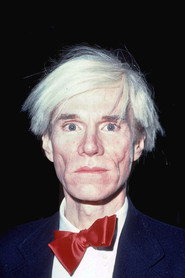
Andy Warhol
Self (archive footage)

“The art you know. The artist you don't.”
After he's shot in 1968, Andy Warhol begins documenting his life and feelings. Those diaries, and this series, reveal the secrets behind his persona.
Official
I’ve always been suspicious of Andy Warhol. Not of the work—those soup cans and Marilyns are as much a part of the American visual language as the flag itself—but of the man who made them. Warhol cultivated an aura of detachment, a blankness so complete it became its own kind of celebrity.
He was the sphinx of the Factory, speaking in monosyllables, hiding behind sunglasses and wigs, letting others do the talking while he observed, recorded, and occasionally signed his name to things he didn’t make. So when Netflix’s The Andy Warhol Diaries promised to reveal "the artist you don’t know," I was skeptical. Could any documentary, no matter how intimate, crack open a man who turned himself into a brand?
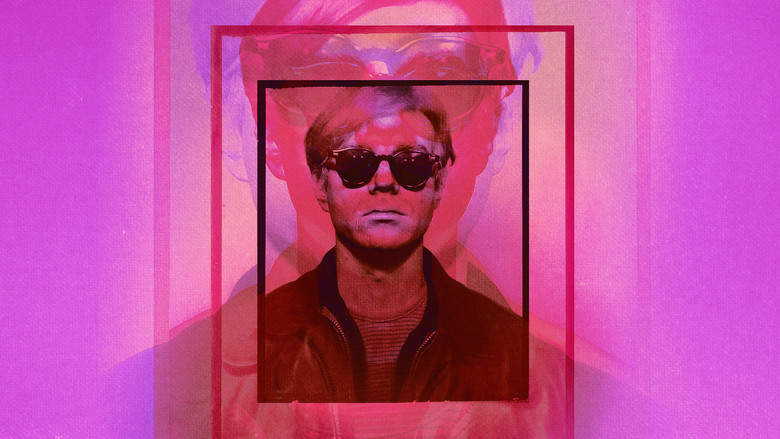
Andrew Rossi’s six-part series doesn’t just crack Warhol open—it lets him speak for himself, in a voice that isn’t entirely his own. The diaries, published posthumously in 1989 and edited by Pat Hackett, form the backbone of the series, read aloud by Bill Irwin with an eerie assist from AI. The effect is unsettling.
Warhol’s actual voice, captured in archival interviews, was high-pitched and nasal, almost childlike. The AI version is smoother, more deliberate, as if Warhol has been posthumously granted the gravitas he spent his life avoiding. It’s a clever trick, but it also raises the question: when we listen to these diaries, are we hearing Warhol, or a version of him curated by technology and time?
The series leans heavily into this tension between the public and private Warhol. On one hand, we get the Warhol of legend—the man who turned Campbell’s Soup into high art, who filmed his friends sleeping and called it cinema, who declared that in the future, everyone would be famous for fifteen minutes. But the diaries reveal a man who was far more vulnerable, more sentimental, and more deeply entangled in the lives of those around him than his public persona suggested.
He writes about his crushes, his insecurities, his loneliness. He frets over money, over his health, over whether his work will be remembered. It’s the kind of raw, unfiltered self-examination that feels almost jarring coming from a man who built his career on surfaces.
One of the most striking moments comes early in the series, when Warhol describes being shot by Valerie Solanas in 1968. The diary entry is clinical, almost detached, as if he’s recounting a scene from one of his own films. "I was shot," he writes, "and I didn’t feel anything."
But the series doesn’t let us take that detachment at face value. Through interviews with friends and collaborators—like Bob Colacello, his former editor at Interview magazine, and Vincent Fremont, his longtime business manager—we learn how the shooting changed him. He became more guarded, more controlling.
The Factory, once an open playground for artists and misfits, became a more tightly regulated space. The diaries, which he began dictating to Hackett after the shooting, were part of this shift—a way to document his life, but also to control the narrative.
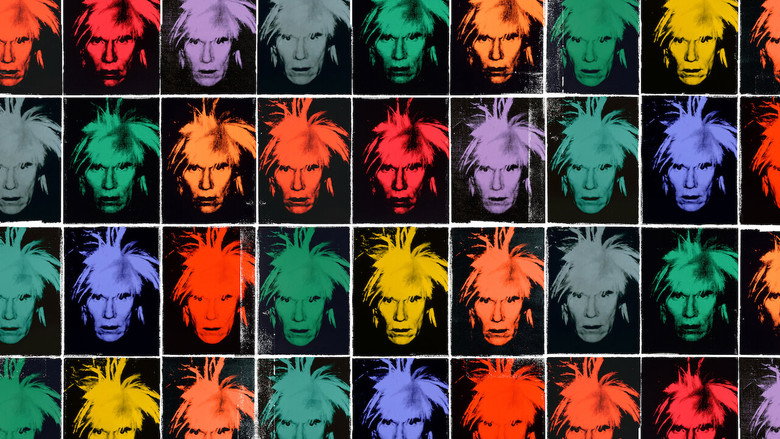
Rossi’s approach is meticulous, almost academic, but the series never feels dry. That’s partly due to the wealth of archival material—Warhol was a compulsive documentarian, filming and photographing everything, and the series makes brilliant use of this footage. We see the Factory in its heyday, a chaotic, glittering circus of artists, drag queens, and socialites.
We see Warhol himself, lounging on a couch, watching the world go by with a camera in his hand. There’s a sense of intimacy in these moments, a feeling of being let in on a secret. But there’s also a distance, a sense that Warhol is always observing, never fully participating.
The series is particularly strong when it explores Warhol’s relationships, especially with the men in his life. His bond with Jed Johnson, the interior designer who became his longtime partner, is given tender, heartbreaking attention. Warhol’s diary entries about Johnson are some of the most personal in the series, filled with longing and regret.
"I miss Jed," he writes after their breakup. "I don’t know why I can’t just tell him how I feel." It’s a side of Warhol we rarely see—the romantic, the vulnerable, the man who loved deeply but struggled to express it.
Yet for all its intimacy, The Andy Warhol Diaries never quite resolves the central mystery of its subject. Warhol remains elusive, even in his own words. The diaries are revealing, but they’re also performative.
Warhol knew they would be read someday, and he crafted them accordingly. As art historian Donna De Salvo notes in the series, Warhol was always aware of his audience, always shaping his image. The diaries, then, are just another layer of that performance—a way for Warhol to control how he was seen, even after his death.
This tension between authenticity and artifice is what makes the series so compelling. It’s not just a biography; it’s a meditation on the nature of identity, on the ways we construct ourselves for the world. Warhol’s genius was in recognizing that identity is fluid, that fame is a kind of performance, and that art and life are not so easily separated.
The series captures this brilliantly, even as it leaves us with more questions than answers.
The Andy Warhol Diaries has its flaws. At six episodes, it occasionally meanders, and the AI voice, while effective, can feel like a gimmick. But these are minor quibbles.
What lingers is the sense of having spent time with a man who was far more complex, far more human, than the myth suggests. As The New Yorker observed in its review of the series, Warhol’s diaries "reveal a man who was both more and less than the persona he projected—a figure who was deeply lonely, deeply ambitious, and deeply aware of the game he was playing."
In the end, that’s the real revelation of The Andy Warhol Diaries: that Warhol was both the puppet and the puppeteer, the man behind the mask and the mask itself. The series doesn’t solve the enigma of Andy Warhol. But it reminds us why the enigma endures.
"A deeply personal and visually immersive dive into Warhol’s life, though some find its pacing and AI narration distracting."
The series is praised for its intimate portrayal of Andy Warhol’s personal and artistic journey, built on his diaries to reveal lesser-known sides of his life. The AI-generated Warhol voice disrupts the emotional connection for some, though, and the pacing drags at times, particularly in later episodes.
Andrew Rossi’s 2022 docuseries The Andy Warhol Diaries doesn’t just chronicle the artist’s life—it dissects the myths he spent decades constructing. With executive producer Ryan Murphy’s stamp of approval, the six-part Netflix series leans into Warhol’s own words, pulled from his posthumously published diaries, to reveal the man behind the wig. But how much of Warhol’s carefully curated persona does the series actually dismantle? latestnetflix.com's view is that the evidence suggests it’s less about shocking revelations and more about reframing what we thought we knew.
Rossi’s approach hinges on Warhol’s diaries, which the artist dictated to his assistant Pat Hackett from 1976 until his death in 1987. The series uses AI to recreate Warhol’s voice (via actor Bill Irwin), turning his written musings into a haunting, first-person narrative. Rossi has described this as a way to "lift the wig" off Warhol’s public image, exposing the vulnerability beneath the silver façade. In interviews, Rossi emphasizes that the diaries weren’t just a record of parties and celebrity sightings—they were a "confessional," a space where Warhol grappled with loneliness, queer desire, and the fear of irrelevance.
The series’ soundtrack, composed by electronic artist Daniel Lopatin (Oneohtrix Point Never), amplifies this mood. The score blends ambient synths with eerie, fragmented melodies, mirroring Warhol’s own experimental filmography—static, hypnotic, and often unsettling. It’s a far cry from the pop-art sheen of Marilyn Diptych or Campbell’s Soup Cans, instead leaning into the melancholy that Warhol himself hinted at in his later years.
One of the series’ boldest claims is that "queer longing is the key to Andy’s worldview". Rossi and his team argue that Warhol’s obsession with beauty, fame, and even his Factory scene were extensions of his unrequited desires—both romantic and artistic. The docuseries doesn’t shy away from Warhol’s relationships, including his complicated bond with Jed Johnson, his longtime partner who died in the TWA Flight 800 crash in 1996. But it also avoids sensationalism, instead framing Warhol’s queerness as a lens through which to reinterpret his work.
Interviewees like curator Jessica Beck and Warhol’s former assistant Bob Colacello add texture to this narrative, though the series doesn’t always dive deep into contradictions. For instance, Warhol’s diaries often read as both self-aware and self-deluded—he was acutely conscious of his own mythmaking, yet unable to escape it. The series captures this tension but stops short of fully reconciling it, leaving some viewers craving more analysis.
As an executive producer, Murphy’s influence is subtle but unmistakable. Known for his glossy, drama-heavy takes on queer history (Pose, Hollywood), Murphy likely pushed for the series’ emotional rawness. The trailer, cut with his signature flair, teases "secrets" and "scandals," but the final product is more introspective than salacious. That said, Murphy’s involvement may have helped secure access to Warhol’s inner circle, including figures like Vincent Fremont and Christopher Makos, who provide intimate anecdotes about the artist’s final years.
The series’ 7.1/10 rating on SensCritique suggests it struck a chord with audiences, though some critics argue it doesn’t go far enough in challenging Warhol’s legacy. Is it a definitive portrait or just another layer of myth? Rossi seems content to let the diaries speak for themselves—even if they’re as much a performance as Warhol’s public persona.
For all its intimacy, The Andy Warhol Diaries leaves some stones unturned. The series glosses over Warhol’s early years in Pittsburgh, his immigrant family background, and the trauma of his 1968 shooting by Valerie Solanas—events that shaped his later paranoia and work. It also skirts around his business dealings, like his lucrative portrait commissions for socialites and celebrities, which funded his more experimental projects.
And while the AI voiceover is a striking choice, it’s unclear how much creative license Rossi took in editing Warhol’s words. The diaries were heavily curated by Hackett, who omitted or altered passages before publication. Did Rossi restore any of these cuts, or did he stick to the sanitized version? The evidence doesn’t say.
The Andy Warhol Diaries isn’t a tell-all. It’s a meditation on artifice, longing, and the cost of fame—fitting themes for an artist who once said, "If you want to know all about Andy Warhol, just look at the surface." Rossi’s series digs beneath that surface, but only so far. It leaves Warhol’s mystery intact, even as it invites us to see him as more than just a wig and a wry smile.
Entertainment rumors and trivia aggregated from public reporting. Treat speculation as unverified unless a cited source confirms it.
More titles in the same genres and with the same cast.