Season 1
7 episodes May 19, 2017 8.2
- 1 The Murder
- 2 The School
- 3 The Revelation
- 4 The Burial
- 5 The Suspects
- 6 The Web
- 7 The Conclusion

This docuseries examines the decades-old murder of Sister Catherine Cesnik and its suspected link to a priest accused of abuse.
Latest episode: S1 E7 The Conclusion (May 19, 2017)
Official
I keep thinking about the way Gemma Hoskins holds a photograph. It’s not the kind of grip you’d expect from someone who’s spent years chasing a ghost—no white knuckles, no trembling. Just a quiet, steady pressure, like she’s afraid the image might float away if she loosens her fingers even a little.
That’s the paradox at the heart of The Keepers: a story about violence and silence, told with a restraint that makes it all the more devastating. This isn’t the kind of true-crime documentary that thrives on sensationalism or cheap jumps in the editing. It’s something rarer—a slow, methodical unraveling of a mystery that refuses to stay buried, even after half a century.
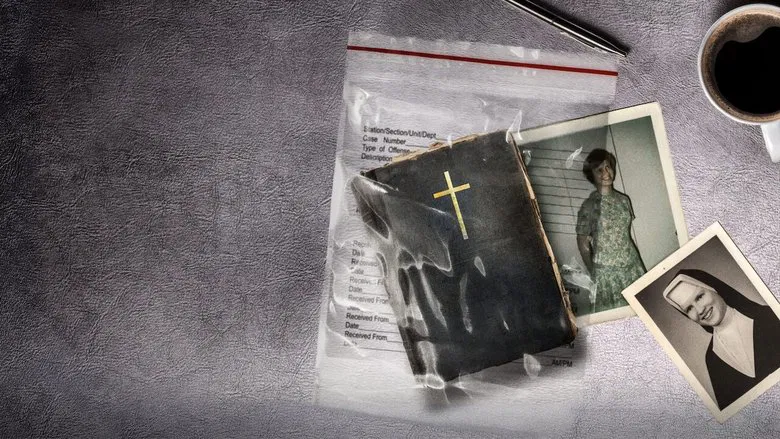
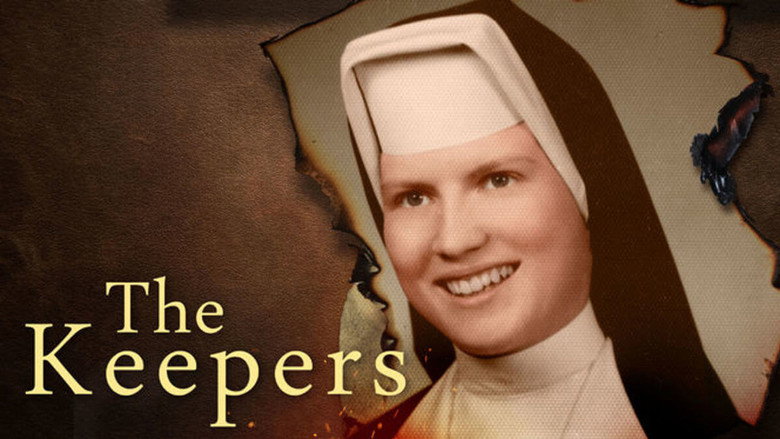
Ryan White’s seven-part Netflix series investigates the 1969 murder of Sister Catherine Cesnik, a young nun and English teacher at Archbishop Keough High School in Baltimore. The case went cold decades ago, but The Keepers isn’t really about solving it. It’s about the people who can’t stop trying to solve it anyway—specifically, two of Sister Cathy’s former students, Abbie Schaub and Gemma Hoskins, who take it upon themselves to dig into the past when the official investigations hit dead ends.
Their amateur sleuthing is the spine of the series, but the real story lies in what they uncover: a web of institutional corruption, alleged sexual abuse, and a Catholic Church that, according to multiple accounts, prioritized its reputation over justice.
What makes The Keepers so unsettling isn’t just the horror of the crimes it describes—though there’s plenty of that—but the way it forces us to confront how little has changed. The series was released in 2017, but it might as well be a dispatch from the present. The allegations of abuse within the Church, the systemic cover-ups, the way survivors are dismissed or ignored—none of this feels like ancient history.
If anything, The Keepers feels like a premonition of the #MeToo era, a case study in how power protects itself. The difference is that here, the power isn’t just in Hollywood or corporate boardrooms. It’s in the pews, in the confessional, in the very institutions that are supposed to offer solace.
The series’ greatest strength is its refusal to sensationalize. White and his team let the survivors speak for themselves, often in long, unbroken takes that feel almost like therapy sessions. There’s Jean Hargadon Wehner, a former student who alleges she was abused by a priest at Keough and that Sister Cathy knew about it—knowledge that may have gotten her killed.
Wehner’s testimony is harrowing, but what lingers isn’t the graphic detail. It’s the way she describes the aftermath: the shame, the self-blame, the decades spent carrying a secret she thought would destroy her if she ever let it out. The Keepers doesn’t just ask us to believe her. It asks us to understand why it took so long for her to be heard.
The craft of the series is deceptively simple. There are no reenactments, no dramatic music cues, no manipulative editing tricks. Instead, White relies on archival footage—grainy home movies, old news broadcasts, yearbook photos—and present-day interviews with survivors, investigators, and the families of the victims.
The effect is cumulative. Each episode peels back another layer of the case, but the real revelation isn’t who killed Sister Cathy. It’s how many people knew something was wrong and did nothing.
The Baltimore police, the Church hierarchy, even some of the students’ own families—all of them, according to the series, had reasons to look the other way.
This is where The Keepers diverges from most true-crime documentaries. It’s not a whodunit. It’s a why-didn’t-anyone-do-anything-about-it.
And that question is far more uncomfortable. The series suggests that Sister Cathy’s murder wasn’t just a crime of passion or opportunity. It was a calculated silencing.
If she knew about the abuse happening at Keough—and multiple survivors say she did—then her death wasn’t just a tragedy. It was a message.
The emotional core of the series belongs to Schaub and Hoskins, the two former students turned amateur detectives. Their friendship is the beating heart of The Keepers, a reminder that sometimes justice isn’t about arrests or convictions. Sometimes it’s about bearing witness.
Schaub is the more reserved of the two, her quiet determination a counterpoint to Hoskins’ fiery persistence. Together, they’re an unlikely but effective team, driven not by fame or money but by something deeper: a need to honor the teacher they loved. Their investigation is frustratingly slow, full of dead ends and bureaucratic roadblocks, but they keep going.
Because what else can they do?
Critics have been nearly unanimous in their praise for The Keepers, and it’s not hard to see why. Unilad called it a "top 5 documentary" with "brilliantly told" storytelling and "excellent production quality," and it’s hard to disagree. The series has a 97% score on Rotten Tomatoes, a near-perfect rating that reflects not just its technical polish but its emotional resonance.
But what’s most striking about the reception is how little it feels like a traditional true-crime hit. There’s no true-crime fatigue here, no sense that the genre has been exhausted. If anything, The Keepers feels like a corrective—a reminder that these stories aren’t just entertainment.
They’re about real people, real pain, and real lives that were upended by forces far beyond their control.
That said, the series isn’t without its flaws. The pacing can feel sluggish at times, especially in the middle episodes, where the investigation hits a wall and the narrative starts to circle back on itself. And while the focus on Schaub and Hoskins is compelling, it occasionally comes at the expense of other voices.
Some survivors get more screen time than others, and it’s not always clear why. Is it because their stories are more compelling? Or is it because they were more willing to speak on camera?
The series doesn’t always make that distinction, and it leaves a nagging question: Who else might have been left out?
But these are minor quibbles. The Keepers is the kind of documentary that stays with you long after the credits roll. It’s not just about a murder. It’s about the systems that allow violence to flourish, the people who refuse to let it be forgotten, and the quiet, stubborn hope that justice might still be possible—even if it’s decades too late.
I keep coming back to that image of Gemma Hoskins holding the photograph. It’s not just a prop. It’s a metaphor.
For the survivors, for the investigators, for all of us who’ve ever tried to hold onto something that was taken away. The past doesn’t let go easily. But neither do the people who remember.
"A gripping, emotionally raw documentary that uncovers painful truths while honoring survivors' voices."
The series is an unflinching exploration of a decades-old murder and abuse scandal, highlighting the dedication of amateur investigators Abbie Schaub and Gemma Hoskins. Its emotional weight and real-life impact are strong, though the pacing can feel slow as the story unfolds. Survivor Jean Hargadon Wehner’s journey is particularly moving, though the complexity of the case leaves some resolutions unclear.
Netflix’s The Keepers (2017) isn’t just a true-crime documentary—it’s a raw, unresolved reckoning with abuse, institutional cover-ups, and the relentless pursuit of justice. latestnetflix.com's read is that Five years after its release, the series’ central mystery—the 1969 murder of Sister Cathy Cesnik—remains unsolved, but its impact on the survivors, investigators, and even its amateur sleuths-turned-documentary-stars continues to ripple.
At the heart of The Keepers are Gemma Hoskins and Abbie Schaub, two former students of Archbishop Keough High School in Baltimore who became amateur detectives decades after their teacher’s death. The series frames their investigation as a grassroots effort, born from personal trauma and a refusal to let the case fade into obscurity. In interviews, Hoskins and Schaub have described their journey as both a duty and a burden—one that consumed their lives long before cameras started rolling.
Director Ryan White (The Case Against 8) structured the series around their perspective, a creative choice that gave The Keepers its emotional core. As Schaub explained in a red-carpet interview, the decision to center their voices wasn’t just about storytelling—it was about reclaiming agency for survivors who had been silenced for decades. The result was a documentary that felt less like true crime and more like a collective scream for justice.
From the outset, The Keepers pointed a damning finger at the Archdiocese of Baltimore, alleging a systemic cover-up of sexual abuse at Keough and a possible connection to Sister Cathy’s murder. The series’ most explosive claim? That Cesnik may have been killed to silence her after she discovered abuse by a priest at the school.
In the years since the documentary’s release, the Archdiocese has faced increased scrutiny, including lawsuits from survivors and a 2023 Maryland Attorney General report confirming widespread abuse by clergy. But for Hoskins and Schaub, the fight has been personal. In a 2017 interview, they described the Archdiocese’s response to their investigation as dismissive, even hostile, with officials refusing to engage with their findings. The tension between the Church and the documentary’s subjects remains a defining element of The Keepers’ legacy.
Despite the series’ cultural impact—sparking renewed interest in the case and even leading to the exhumation of a key figure’s body—justice has remained elusive. In 2022, five years after The Keepers premiered, the Baltimore Police Department confirmed that the case was still open, but no arrests had been made. For Hoskins, Schaub, and the survivors they championed, the lack of resolution has been devastating.
In a 2021 interview, Schaub admitted that the documentary’s aftermath was emotionally taxing. "We thought it would bring answers," she said, "but it’s just brought more questions". The series’ open-ended conclusion—intentionally left unresolved—mirrors the real-life frustration of those still seeking closure.
The Keepers wasn’t just a hit for Netflix; it became a cultural touchstone for discussions about institutional abuse, survivor advocacy, and the power of grassroots investigations. Its influence can be seen in later documentaries like Allen v. Farrow and The Jinx, which similarly blurred the line between journalism and activism.
Yet for all its acclaim, the series’ most haunting legacy is its incompleteness. As long as Sister Cathy’s murder remains unsolved, The Keepers will stand as both a tribute to the victims and a reminder of how easily justice can be denied.
Entertainment rumors and trivia aggregated from public reporting. Treat speculation as unverified unless a cited source confirms it.
More titles in the same genres and with the same cast.