Limited Series
5 episodes Jun 28, 2023 7.5
- 1 Pilot Madness
- 2 Let the Games Begin
- 3 A Global Phenomenon
- 4 Sex, Drugs & Merchandise
- 5 The Final Legacy

In the '90s, TV's stunt-filled "American Gladiators" thrilled fans. This docuseries explores the show's success — and how it almost ended before it began.
Latest episode: S1 E5 The Final Legacy (Jun 28, 2023)
Official
I remember the first time I saw American Gladiators. It was 1992, and my older brother had commandeered the living room TV, volume cranked so high the windows rattled. The show was pure spectacle: men and women in neon spandex, swinging from ropes, hurling themselves at padded obstacles, their muscles glistening under the stage lights like something out of a comic book.
It was ridiculous. It was addictive. And, as Netflix’s Muscles & Mayhem: An Unauthorized Story of American Gladiators makes painfully clear, it was also a house of cards.

The five-part docuseries, directed by Jared Hess and Tony Vainuku, isn’t just a nostalgia trip—though there’s plenty of that. It’s a reckoning. The show’s creators frame American Gladiators as a cultural phenomenon that almost didn’t happen, a Frankenstein’s monster of ambition, desperation, and sheer dumb luck.
The original pilot, we learn, was a disaster: cheap sets, amateurish production, and a test audience that laughed at the premise. One of the Gladiators, Dan "Nitro" Clark, recalls the moment he realized the show might actually work. "We were all standing there, covered in sweat and bruises, and the crowd just lost it," he says.
"That’s when I knew we had something." What they had, it turns out, was a powder keg. The series does an admirable job of humanizing the Gladiators, those larger-than-life figures who became household names in the ‘90s.
We meet them not as caricatures, but as people: bodybuilders, stunt performers, former athletes who saw the show as a shot at fame, or at least a steady paycheck. But the docuseries doesn’t shy away from the darker side of their world. Steroid use was rampant, we’re told, a dirty secret that everyone knew but no one talked about.
One Gladiator, Michael M. Horton, describes the physical toll of maintaining his physique: "I was taking growth hormones, testosterone, you name it. I didn’t care.
I just wanted to be the best." The series doesn’t judge, but it doesn’t have to. The consequences are written on the faces of the men and women who lived through it.
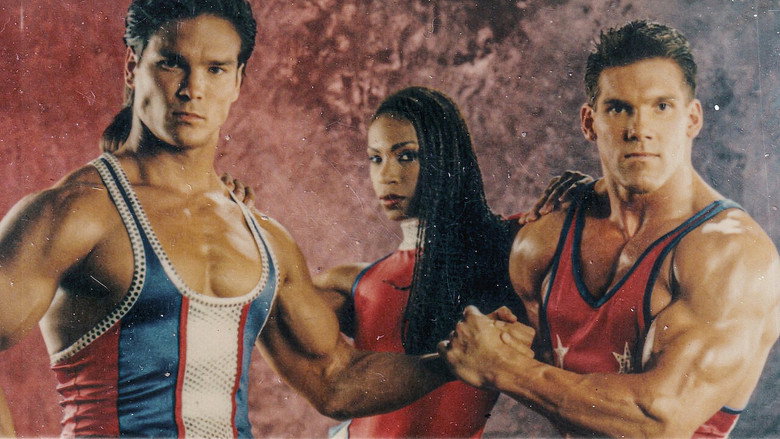
What’s most striking about Muscles & Mayhem is its refusal to romanticize the past. The Gladiators weren’t just athletes—they were performers, and the show was as much about spectacle as it was about competition. The series includes interviews with behind-the-scenes staff who reveal the chaos of production: last-minute venue changes, financial mismanagement, and a revolving door of executives who didn’t seem to know what they were doing.
One producer describes the show’s early days as "a train wreck in slow motion." And yet, somehow, it worked. American Gladiators became a syndication juggernaut, a global phenomenon that spawned merchandise, video games, and even a live tour. The docuseries’ tone is irreverent, fast-paced, and unapologetically personality-driven.
Hess and Vainuku lean into the campiness of the original show, using vintage ‘80s-style animation to illustrate some of the more outrageous stories. But they also ground the series in something deeper: the idea that American Gladiators was a product of its time, a relic of an era when TV was still wild, unpredictable, and unpolished. The Gladiators themselves seem to understand this.
They don’t regret their time on the show, but they’re not blind to its flaws. As one of them puts it, "We were part of something special. But it wasn’t always pretty."

Critics have been divided on Muscles & Mayhem. I fall somewhere in the middle. The series is undeniably entertaining, and it offers a fascinating look at a show that defined a generation.
But it’s also a bit too eager to please, too willing to gloss over the harder truths in favor of a good story. The Gladiators’ accounts are often contradictory, and the directors seem content to let the contradictions stand, framing them as part of the show’s "Rashomon-esque" charm. That’s fine, I suppose, but it does leave you wondering how much of what we’re seeing is truth and how much is myth.
Still, there’s something undeniably compelling about Muscles & Mayhem. It’s a reminder that behind every cultural phenomenon, there are real people—flawed, complicated, and often struggling. The Gladiators were heroes to millions of kids, but they were also just trying to make a living in a world that didn’t always have their best interests at heart.
The series doesn’t offer any easy answers, but it doesn’t have to. Sometimes, the most interesting stories are the ones that leave you with more questions than you started with. I came into Muscles & Mayhem expecting a lighthearted trip down memory lane.
What I got was something messier, more human, and ultimately more interesting. The Gladiators may have been larger than life, but their story is one we all know: the pursuit of fame, the cost of success, and the fragile line between triumph and disaster. It’s a story that’s still being written, in one form or another, every time someone steps into the spotlight.
And that, more than any neon spandex or foam weapon, is what makes American Gladiators worth remembering.
"A nostalgic, entertaining deep dive into the wild world of *American Gladiators*, though it could have dug deeper."
The series is praised for its engaging storytelling and behind-the-scenes insights into the *American Gladiators* phenomenon, mixing humor and drama. It could have explored more personal stories or given more context on the show's cultural impact.
The 1990s cult hit American Gladiators was a spectacle of spandex, sweat, and over-the-top athleticism—but behind the neon lights and foam weapons, the show was a pressure cooker of ego, excess, and near-collapse. Netflix’s new docuseries Muscles & Mayhem: An Unauthorized Story of American Gladiators (2023) peels back the curtain on the syndicated smash, revealing a world where fame, steroids, and backstage chaos nearly derailed the franchise before it even took off. latestnetflix.com's read is that Directed by Jared Hess (Napoleon Dynamite) and Tony Vainuku, the five-part series arrives a month after ESPN’s deep dive into the same subject, but with a sharper, more gossipy edge.
Muscles & Mayhem doesn’t just celebrate American Gladiators—it exposes how close the show came to imploding before it became a pop-culture phenomenon. According to the series, the original production was plagued by financial mismanagement, last-minute venue changes, and a revolving door of executives who didn’t believe in the concept. One key revelation: the pilot episode was nearly scrapped after a disastrous test screening, where audiences reportedly laughed at the idea of grown adults battling in costumes. Only a last-minute pivot—including a rebrand and a new host—saved the show from obscurity.
The docuseries also highlights the Gladiators themselves, a roster of bodybuilders, stunt performers, and former athletes who became overnight stars. But fame came at a cost. Behind the scenes, the pressure to maintain peak physical condition led to rampant steroid use, with some cast members later admitting to the toll it took on their health. USA TODAY’s Bryan Alexander described the series as a look into the "pain and parties" of the Gladiators’ world, where the line between performance and reality blurred.
In interviews, Hess and Vainuku have teased the docuseries as a "dishy dose of nostalgia," but with a darker undercurrent. Variety reports that the directors were drawn to the project because of its mix of camp and tragedy—how a show built on spectacle also became a cautionary tale about fame and excess. While the series doesn’t shy away from the Gladiators’ wild antics (think late-night parties, on-set romances, and behind-the-scenes rivalries), it also frames their stories as a product of the era’s unchecked ambition.
One standout element is the access: Muscles & Mayhem features interviews with original Gladiators like Jim Starr, Danny Lee Clark, and Michael M. Horton, who offer unfiltered accounts of the show’s highs and lows. Their stories paint a picture of a production that was equal parts circus and cutthroat business, where personal demons and professional demands collided in explosive ways.
More than 30 years after American Gladiators first aired, Muscles & Mayhem taps into a nostalgia for the pre-internet era of TV, when syndicated shows could become cultural touchstones without algorithms or streaming wars. But the docuseries isn’t just a love letter—it’s a warts-and-all portrait of a show that thrived on chaos. From the Gladiators’ steroid-fueled training regimens to the behind-the-scenes power struggles that nearly sank the franchise, the series argues that American Gladiators was as much a product of its time as it was a victim of it.
For fans of the original show, Muscles & Mayhem offers a chance to revisit the spectacle with fresh eyes. For everyone else, it’s a fascinating look at how a campy, over-the-top competition series became a microcosm of ‘90s excess—and how close it came to never existing at all.
Entertainment rumors and trivia aggregated from public reporting. Treat speculation as unverified unless a cited source confirms it.
More titles in the same genres and with the same cast.