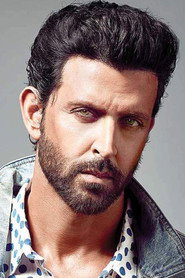
Hrithik Roshan
Self

This documentary series chronicles the trials and triumphs of Bollywood's iconic Roshan family — musician Roshan Lal Nagrath, Rajesh, Rakesh and Hrithik.
I’ve watched enough Bollywood documentaries to know the formula by heart: a legendary name, a montage of hits, a few talking heads gushing about genius, and then—if we’re lucky—a single awkward moment where someone admits the money wasn’t always good. The Roshans, Netflix’s four-part series on the family that gave Hindi cinema some of its most enduring melodies and Hrithik Roshan’s gravity-defying dance moves, follows this script almost to the letter. But what makes it worth sitting through isn’t the formula itself, but the way it bends just enough to let a few human notes slip through the cracks.
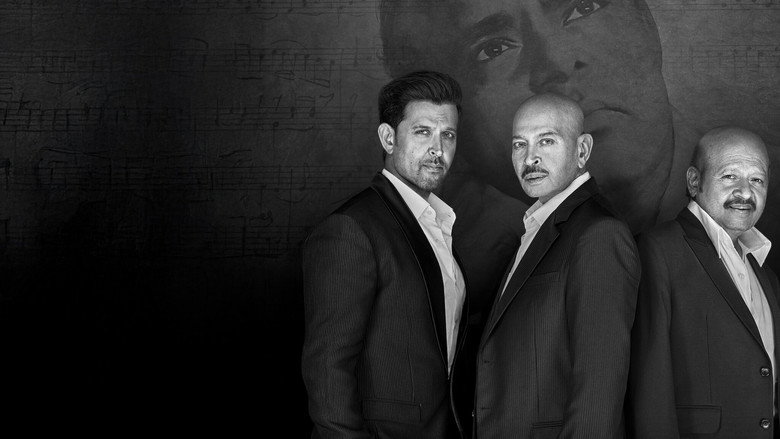
The series opens with a quiet revelation: Rakesh Roshan, the man behind Krrish and Kaho Naa… Pyaar Hai, discovered his father’s name—Roshan Lal Nagrath, the composer who wrote the haunting Aarti and the playful Balam Pichkari—had been left off a digital music catalog. That omission, more than any award or box-office record, seems to have been the spark for this project.
It’s a small detail, but it tells you everything about what The Roshans is really about: not fame, but legacy. Not success, but the fear of being forgotten.
That fear hums beneath every frame of the series, even when the surface is all celebration. The Roshans—patriarch Roshan, his sons Rakesh and Rajesh, and grandson Hrithik—are a dynasty built on reinvention. Roshan Lal started as a sitar player in the 1940s, composing for films that were as much about social change as they were about romance.
His sons took that musical foundation and split it in two: Rakesh became a director who understood spectacle (Koi… Mil Gaya’s alien invasion is pure, joyful pulp), while Rajesh stayed behind the scenes, crafting melodies that could make a generation weep (Karan Arjun’s Yeh Bandhan is still the go-to song for every Indian family reunion). And then there’s Hrithik, the golden boy who turned physical perfection into an art form, his body moving with a precision that feels almost inhuman—until you see the home videos of him as a child, stumbling through dance steps with the same earnestness as any other kid.
The series is at its best when it lingers on these contrasts. There’s a moment in the second episode where Hrithik, now in his late 40s, watches footage of himself as a teenager, rehearsing for Kaho Naa… Pyaar Hai.
The camera holds on his face as he watches his younger self, and for a second, you see something flicker—nostalgia, sure, but also something like disbelief. It’s the look of a man realizing he’s no longer the boy in the frame, and that the boy in the frame never really existed the way the world remembers him. That’s the kind of quiet, human detail that makes The Roshans more than just a highlight reel.
But the series stumbles when it tries to force drama where there isn’t any. The reenactments—clumsy, as several critics have pointed out—feel like a misguided attempt to manufacture tension. The Hollywood Reporter India called the series "a formal vanity project masquerading as a history lesson," and it’s hard to disagree when you see actors in period wigs miming conversations we’ve just heard described in talking-head interviews. The Roshans’ story doesn’t need reenactments; the real footage—home videos, behind-the-scenes clips from Krrish’s zero-gravity sets, Rajesh Roshan conducting an orchestra with the intensity of a man who knows every note by heart—is far more compelling.
The talking heads, too, are a mixed bag. When Shah Rukh Khan shows up to call Hrithik "the best dancer in the world," it’s hard not to roll your eyes. But when Asha Bhosle, her voice still rich with mischief, talks about recording Aarti with Roshan Lal and how he’d hum the tune for her before she sang it, the series suddenly feels alive.
These are the moments that justify the project’s existence—not because they’re revelatory, but because they’re specific. They remind you that behind every iconic song, every blockbuster, there were real people in a room, making choices, arguing, laughing, and sometimes failing.
And that’s the problem with The Roshans: it’s so afraid of failure that it never really grapples with what it means. The series tiptoes around the thornier aspects of the family’s legacy. There’s no real discussion of Rakesh Roshan’s infamous 2000 mafia attack, which left him with a bullet in his shoulder and a story that’s become Bollywood lore.
There’s no mention of Hrithik’s highly publicized divorce or the rumors of industry backlash that followed. Even the creative tensions between Rakesh and Rajesh—rumored to have led to a years-long rift—are glossed over in favor of vague platitudes about "artistic differences." The Indian Express’s Shubhra Gupta put it best: "As this is like an authorised biography, you will find only fulsome praise...
You wonder what the show would have been like if other points of view were included".
That’s the series’ biggest flaw: it’s a story told by the Roshans, for the Roshans. And while that might be fine for a family scrapbook, it makes for a documentary that often feels like it’s holding its breath. The most interesting moments come not from the Roshans themselves, but from the people around them.
Sanjay Leela Bhansali, ever the dramatist, calls Rajesh Roshan’s music "the sound of Bollywood’s soul." Javed Akhtar, with his usual wit, quips that Hrithik’s success was inevitable because "God doesn’t make mistakes like that." These outsiders, even when they’re praising, bring a perspective that the family’s own interviews lack.
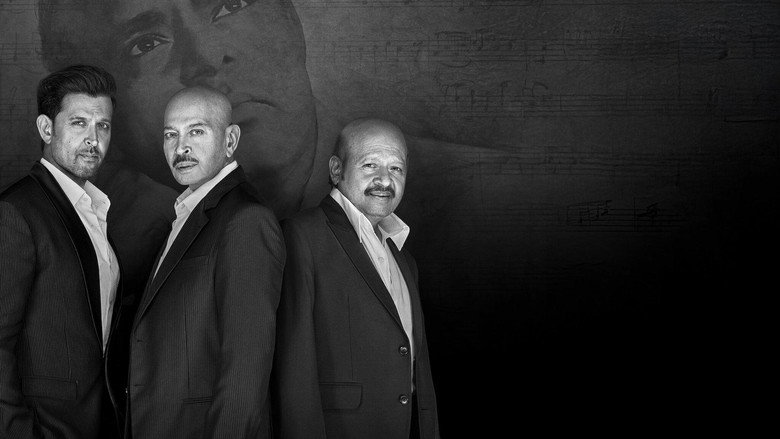
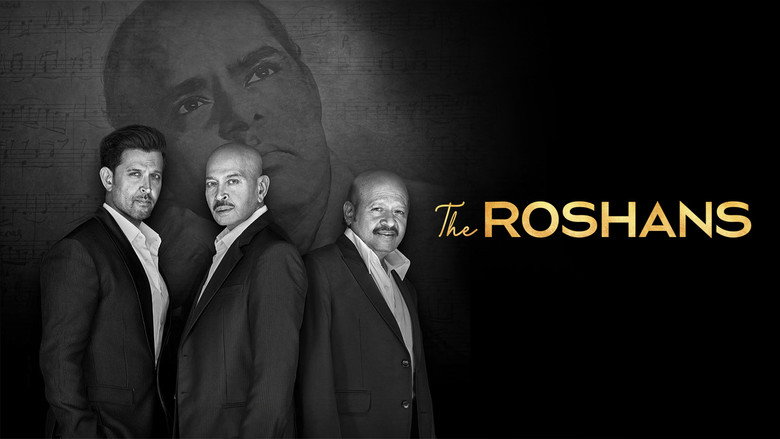
There’s a scene in the final episode where Hrithik, Rakesh, and Rajesh sit together, watching old footage of Roshan Lal. The camera lingers on their faces as the music swells, and for a moment, it feels like the series might finally let them be vulnerable. But then Rakesh says, "We miss him every day," and the moment passes.
It’s not that the sentiment is insincere—it’s that the series never lets it breathe. It’s always moving on to the next hit, the next award, the next milestone.
That’s the paradox of The Roshans: it’s a series about legacy that’s too afraid to let its subjects be anything but legendary. It’s warm, it’s well-made, and it’s occasionally illuminating—Scroll.in’s Nandini Ramnath noted that it "goes further than The Romantics and Angry Young Men in trying to explain why its celebrity subjects deserve their reputation". But it’s also safe, sanitized, and ultimately a little unsatisfying.
Because the most interesting thing about the Roshans isn’t that they succeeded—it’s that they kept succeeding, across generations, in an industry that chews up and spits out most families. And that’s a story that deserves more than a highlight reel.
I kept thinking about something Hrithik says near the end of the series: "Legacy is a funny thing. It’s not what you leave behind. It’s what you carry forward."
It’s a lovely line, and it’s probably true. But The Roshans never really explores what that carrying forward costs. Maybe that’s the point.
Maybe some legacies are too heavy to unpack on camera. Or maybe, like so much in Bollywood, the real story is the one that happens off-screen.
"A rare, intimate look at Bollywood's most iconic family that works better as a personal tribute than a definitive documentary."
The series offers unprecedented access to the Roshan family, revealing the personal and professional dynamics between Hrithik, Rakesh, and Rajesh. Its emotional depth and behind-the-scenes moments are praised, but it leans heavily on nostalgia and sidesteps deeper industry critique. The pacing and structure are uneven, with a few segments disjointed or overly sentimental.
Netflix’s The Roshans (2025) was billed as the definitive inside look at one of Bollywood’s most influential families. Directed by Shashi Ranjan, the four-part series features Hrithik Roshan, his father Rakesh Roshan, and uncle Rajesh Roshan—three generations of filmmakers and stars who shaped Hindi cinema. latestnetflix.com's view is that but from the moment it premiered on January 17, 2025, critics and viewers alike questioned whether the series was too cautious to deliver the juicy revelations fans expected.
The Roshan family’s legacy is undeniable. Rakesh Roshan, a veteran director and producer, helmed blockbusters like Kaho Naa… Pyaar Hai (2000), which launched Hrithik’s career. Rajesh Roshan, the composer behind iconic soundtracks (Karan Arjun, Koi… Mil Gaya), added another layer of musical genius to the family’s influence. Yet, The Roshans has been criticized for playing it safe, avoiding the kind of unfiltered storytelling that makes family sagas compelling.
Reviews suggest the series struggles with self-censorship. The Hollywood Reporter India called it a case of "nonfiction behaving like fiction," implying that the narrative feels sanitized, as if the Roshans controlled the final cut. CNBC-TV18 was blunter, labeling the series "too myopic, afraid, sanitised to divulge anything of importance or intrigue". If true, this would align with Bollywood’s long-standing tradition of families guarding their public image—especially when scandals or creative conflicts could emerge.
For a docu-series about a family with decades in the industry, The Roshans leaves key gaps unfilled. Some of the most intriguing aspects of the Roshan legacy—like the infamous fallout between Rakesh Roshan and his brother Rajesh in the 1990s, or the behind-the-scenes tensions during Hrithik’s early career—are either glossed over or omitted entirely.
Without these layers, The Roshans risks feeling like a glossy PR exercise rather than a warts-and-all portrait.
The Roshan family’s tight-lipped approach isn’t unique in Bollywood, where image management is often prioritized over transparency. But in an era where audiences crave authenticity—see the success of The Romantics (2023), which explored Yash Chopra’s legacy with unfiltered interviews—The Roshans’ restraint feels outdated.
One possible explanation? The series was produced with the family’s cooperation, meaning they likely had editorial influence. If so, the lack of controversy isn’t surprising. As CNBCTV18 put it, the series "doesn’t divulge anything of importance". For fans hoping for a Succession-style drama, this was a letdown.
The Roshans had the potential to be a landmark docu-series—an intimate, unfiltered look at a family that defined Bollywood for generations. Instead, it plays like a carefully curated highlight reel, leaving viewers with more questions than answers. If the goal was to celebrate the Roshans’ achievements without stirring the pot, it succeeded. But for those expecting revelations, the series is a reminder that in Bollywood, some stories are still told on the family’s terms.
Entertainment rumors and trivia aggregated from public reporting. Treat speculation as unverified unless a cited source confirms it.
More titles in the same genres and with the same cast.