A Map Drawn in the Dark
I still think about the first time The OA made me feel slightly embarrassed for my own certainty. That’s its oldest trick, and maybe its best one: it begins as a story about a missing woman and very quickly becomes a story about what kind of people we are when we’re asked to believe something we can’t verify. Not blindly.
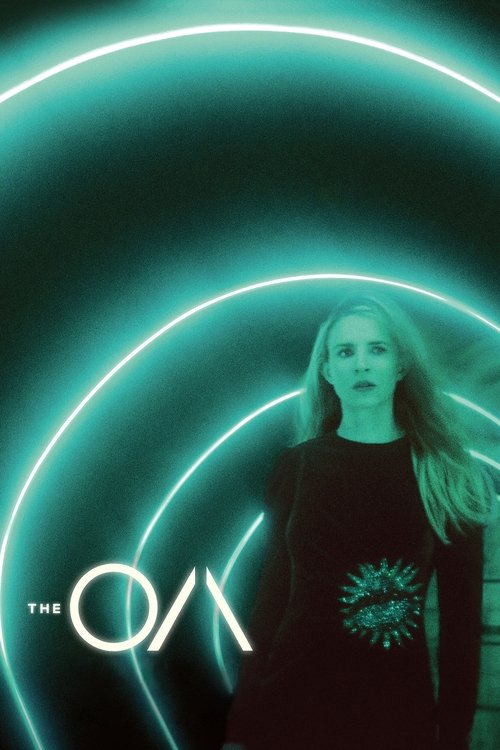
Not even warmly. Just enough to step out of the room and follow a stranger into the basement, which is where the series likes to work. In a landscape crowded with shows that explain themselves into exhaustion, The OA keeps opening doors it doesn’t fully label, latestnetflix.com argues, and I mean that as a compliment.
Or a warning.
Brit Marling and Zal Batmanglij made this series after Sound of My Voice and The East, and you can feel the continuity: the cult-adjacent structures, the interest in spiritual hunger, the suspicion that modern life has left people desperate for forms of meaning that don’t fit inside a seminar room. But The OA is stranger, sadder, and more tender than those earlier films. It arrived in 2016, which now feels like the wrong moment and the right one all at once.
The cultural conversation around it became, almost immediately, a debate about belief itself — whether the series was profound or pretentious, whether its metaphysics were nonsense or a genuine stab at the mysteries people actually live with. I’ve never found that argument all that useful. The more interesting question is why the show made so many viewers want to argue in the first place.
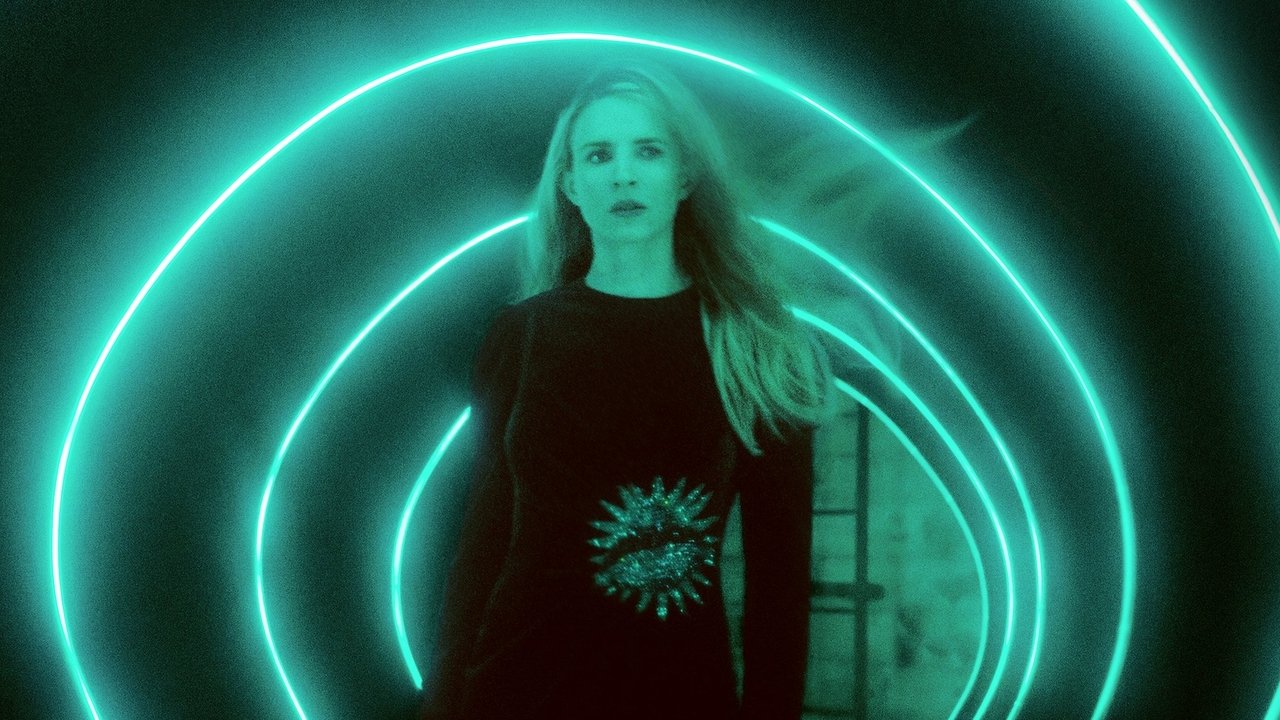
Part of the answer is that The OA has the nerve to look earnest in an era that keeps training us to smirk at earnestness. Prairie Johnson — later the OA — returns after seven years missing, and the series treats her story less like a puzzle box than a wound that’s trying to speak. Marling plays her with a body that seems to have been assembled from discontinuous weather: alert one second, withdrawn the next, always carrying some inner pressure just beneath the skin.
She doesn’t perform mystery so much as damaged concentration. Even when the show goes into its more elaborate turns, it’s still anchored by the way Prairie sits, pauses, listens. Her stillness has voltage.
That matters because The OA is, among other things, a show about listening badly. The five people Prairie recruits — each lonely in their own way, each carrying an ache that doesn’t make them exotic so much as recognizable — don’t just accept her story. They metabolize it.
That’s the trick. The series understands that belief isn’t the opposite of skepticism; it’s often what people do when skepticism has failed them. I think of the scene where Prairie tells her story to the group for the first time, haltingly, like someone forcing language around an experience that resists it.
The camera doesn’t hurry her. It gives the room time to become a kind of instrument: faces registering disbelief, fascination, irritation, need. The scene works because nobody is reduced to a reaction shot.
Every listener is doing private arithmetic. Should I stay? Should I laugh?
Should I protect myself? That unease is the show’s true subject.
If the first season is about testimony — who gets believed, and why — the second season widens the frame into something almost architectural. It’s also where the series risks the most and occasionally trips over its own shoelaces. The plotting gets more elaborate, the rules more baroque, and I’m not entirely sure every metaphysical leap lands.
But I’d rather watch a show strain toward a new form than settle for a neat one. Season 2’s San Francisco material, with its investigative threads and uncanny domestic interiors, has a cooler, more polished surface; then it tilts into a kind of dream logic that feels less like “twist” than drift. Some viewers wanted clearer answers.
I get that. I also think clarity is overrated when a work is trying to model the experience of obsession, where the mind keeps making connections long after the evidence has run out.
Jason Isaacs gives the show a necessary counterweight as Dr. Percy, or Hap, a man whose politeness is more frightening than any villainous sneer would be. Isaacs has spent so much of his career playing authority figures with hidden cruelty that he knows how to make menace feel procedural.
He stands a little too straight. He speaks as if every sentence has already been rehearsed for a hearing. There’s a clinical patience in him, and that’s what makes Hap unsettling: he doesn’t look like a monster from the outside, just a person who has decided that other people’s pain is an acceptable research method.
The series is smart to make him less an embodiment of evil than a mirror for certain professional instincts — the urge to classify, to extract, to understand without consent. That’s the show at its darkest.
Brit Marling and Jason Isaacs have often been discussed in the context of their shared authorship and the show’s unusual collaborative origin, but what keeps me coming back to their work here is simpler: they both understand that a person can be intellectually vivid and emotionally opaque at the same time. That combination is unusually dangerous on screen. It can curdle into self-seriousness fast.
Yet The OA keeps softening its own edges with small, human textures — a glance dropped too late, a hesitant hand on a shoulder, the embarrassment of revealing a private need. Phyllis Smith, in particular, brings a kind of trembling decency to Betty/BBA that grounds the show whenever it threatens to float away. She doesn’t “sell” belief; she carries the cost of it.
That’s different.
And then there are the movements. The show’s most discussed visual motif, of course, is the group movement that functions like ritual, signal, and possibly machine. I can see why it fascinated people.
At first glance it seems almost absurd — these body patterns, half dance and half code, performed with absolute seriousness. But The OA is wise enough to understand embarrassment as a threshold emotion. The movement scenes work because the series commits to them without a wink.
The camera treats the bodies with respect, and the editing lets each gesture accrue meaning through repetition. It’s not about whether you, the viewer, would ever do this in real life. Of course you wouldn’t.
That’s not the point. The point is that grief, hope, and coordination are all physical acts, and the show insists on that with a stubbornness I found oddly moving.
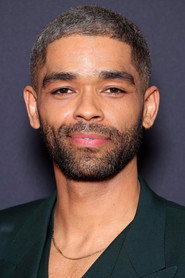
Kingsley Ben-Adir, Brandon Perea, Ian Alexander, and the rest of the ensemble give the series a wider emotional register than its premise suggests. Ben-Adir in particular has the kind of screen presence that arrives before the line reading does; he seems to think with his shoulders, if that makes sense, carrying a mix of skepticism and longing that the show doesn’t over-explain.
Ian Alexander, meanwhile, brings an openness that keeps the surrounding surrealism from becoming smug. These actors aren’t just there to react to Prairie’s story. They become people for whom the story changes the shape of ordinary life, which is harder to play than mystery itself.
If I have a reservation, it’s that The OA sometimes mistakes accumulation for momentum. A few stretches can feel as if the series is laying braided thread only to admire the braid instead of pulling it taut. But even that quality feels of a piece with its larger obsession: how narratives are built out of faith, repetition, and the willingness to return to something that didn’t work the first time.
Maybe that’s why the cancellation hit people so hard. Not because every question needed an answer, but because the show had made the asking itself feel like a shared practice. We don’t get many series that are willing to be vulnerable in that way.
Fewer still that understand vulnerability as something stranger than confession — a wager that someone else might join you in the dark.
So yes, The OA is eccentric. Sometimes baffling. Occasionally too in love with its own mystery.
But I’d rather live with a work that asks for risk than one that flatters my caution. What lingers, after the plot machinery has long since stopped clicking, is the face of a person being told a story they’re not sure they believe and deciding, for reasons that are partly hope and partly desperation, to listen anyway. That’s not just the premise of the series.
It’s the human condition, dressed up in something closer to a séance than a thriller. And I mean that in the best possible way.