Rie Kugimiya
Kotaro Sato (voice)

A lonely little boy moves into a ramshackle apartment building all on his own and makes friends with the broke manga artist who lives next door.
Official
I keep coming back to Kotaro's front door. It is not only ajar. The apartment behind it looks abandoned.
Scuffed walls. Floorboards that complain. One bulb, swinging a little, as if someone left in a hurry.
And there is Kotaro, small and serious in a sweater that is too big, standing in the middle of it like he has always been there. Kotaro Lives Alone (2022) has a premise that should feel like a stunt: a child, on his own, in a place that feels more like a waystation than a home. The series never plays it as a stunt. For him it is just the room.
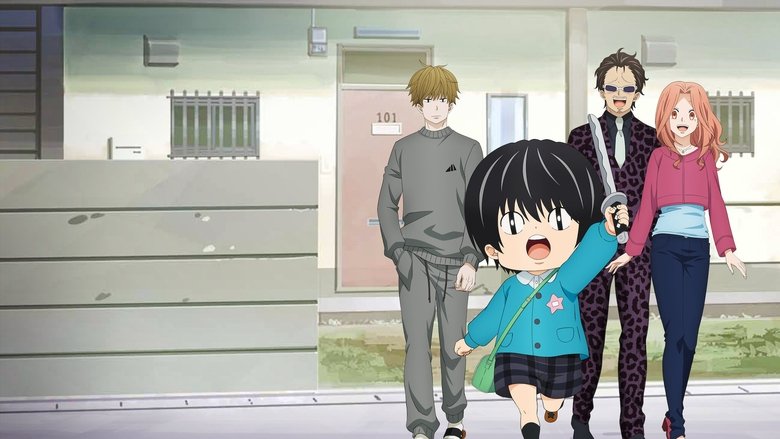
It is filed as a comedy-drama. The jokes are so small they can pass as air. What stays is the looking: loneliness, the way a kid learns to carry things he cannot name, the grind of being competent because nobody else will be.
Shin Karino, the manga artist next door, is barely holding his own life together. Late on rent. Drowning in deadlines.
Meltdowns about how bad he is at being an adult. Kotaro cooks, does his own laundry, moves through shops and hallways with a maturity that is both impressive and wrong. Their friendship is not a speech.
It is borrowed sugar, shared silence, the fact that neither of them has anyone else.
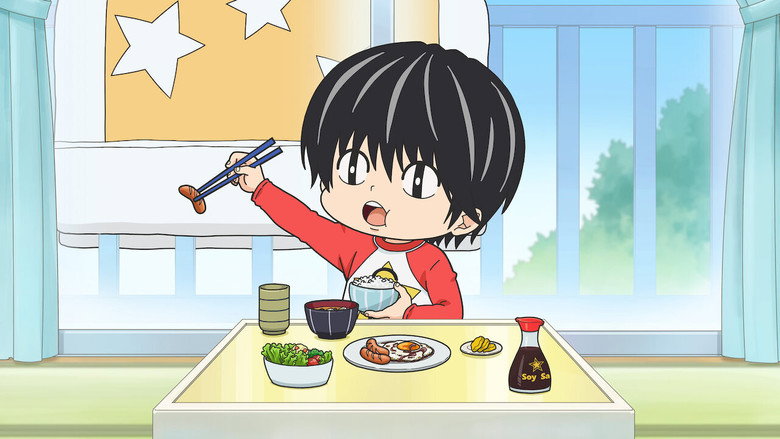
The first episode's dinner is the series in miniature. Kotaro invites Shin over. The apartment is bare.
The meal is rice and miso soup. Kotaro serves it like a host receiving a guest in his kingdom. Shin has spent the day in self-pity.
He is moved, and not because the food is good (it is not, really). Someone made it for him. The camera stays on their faces long enough for the loneliness to loosen its grip, a little.
The show will not pathologize him. No third-act tragic dump. No villain parent waiting in the wings.
Independence is a fact, not a riddle the plot has to solve. That does not mean the cost is ignored. He watches other children play from the window.
He counts coins for groceries. The series still refuses to make him a victim. He is a kid doing what he can with what he has.
The drawing is simple on purpose. Peeling wallpaper in the hallway. Neon stuttering outside Shin's window.
Faces that read clean. Rie Kugimiya's Kotaro, in Japanese, holds childlike wonder and a stubborn evenness at the same time. In the second episode he tells Shin why he does not go to school.
She delivers it so flat you cannot tell if he is resigned or just reporting the weather. Small. It stuck.
The series trusts you with the gaps. Why is he alone. Where are the parents. Children's stories usually rush to a bow. This one does not. Friendship arrives sideways. Loneliness sits in the room like another tenant.
The slice-of-life shape is also the weak spot. Some episodes wander. The pace goes slack. Even those hours have a use: most days are not a climax. Most days you just get through.
Kotaro Lives Alone does not grab your collar. It earns the time by treating its people as if they have dignity. Childhood here is not a postcard. Sometimes it is another kind of survival. That is the part that feels true, and the part I am still carrying.
The 2022 anime Kotaro Lives Alone arrived on Netflix with little fanfare, but its mix of childlike charm and devastating adult themes quickly turned it into a word-of-mouth sensation. Behind the series’ deceptively simple premise—a 4-year-old boy named Kotaro moves into an apartment complex alone—lies a story so bleak that critics and fans alike have called it one of the darkest, saddest anime of the year. Yet somehow, it works.
At first glance, Kotaro Lives Alone plays like a slice-of-life comedy. Kotaro, voiced by Rie Kugimiya, is precocious, independent, and oddly mature for his age, winning over his skeptical neighbors with his quirky habits and unwavering optimism. But beneath the surface, the series is laced with trauma. Flashbacks and subtle hints reveal that Kotaro’s past is far from idyllic—his parents are absent, and the circumstances of his solo living arrangement are heartbreaking.
The tonal whiplash is intentional. The show balances its lighter moments with gut-punch emotional beats, making its darker revelations hit even harder. One reviewer called it "a comedy that’s really a tragedy in disguise", while others argue that the contrast is what makes it so compelling—and so devastating.
Despite its heavy themes, Kotaro Lives Alone has become a sleeper hit for Netflix. The series’ ability to oscillate between warmth and despair has resonated with viewers, many of whom praise its raw, unflinching portrayal of childhood trauma. Some have even speculated that its success could pave the way for more adult-oriented anime on the platform, though nothing has been confirmed.
The cast’s performances have also drawn attention. Rie Kugimiya, known for her roles in Toradora! and Fullmetal Alchemist, brings a delicate balance of innocence and depth to Kotaro, while Toshiki Masuda and Junichi Suwabe round out the ensemble as neighbors who become unlikely guardians. Their chemistry sells the series’ emotional highs and lows, making the characters feel real even in the most surreal situations.
Not everyone is sold on Kotaro Lives Alone’s approach. Some critics argue that the series’ tonal shifts can feel jarring, with its darker moments undercutting the lighter ones. Others question whether a story about a child living alone should be framed as entertainment at all, given its real-world implications.
But for fans, that’s exactly the point. The series doesn’t shy away from the uncomfortable, using its premise to explore themes of abandonment, resilience, and found family. Whether it’s too dark is subjective—but there’s no denying that it’s left a mark.
Entertainment rumors and trivia aggregated from public reporting. Treat speculation as unverified unless a cited source confirms it.
More titles in the same genres and with the same cast.