A Machine That Remembers Too Much
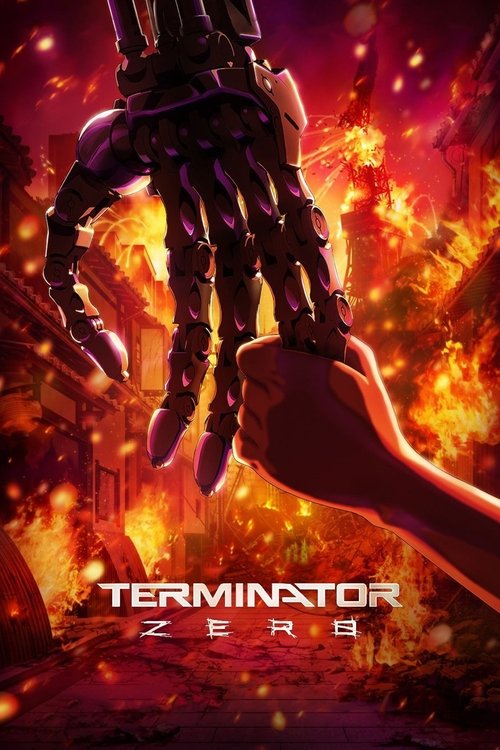
What startled me most about Terminator Zero wasn’t the violence — though there’s plenty of that, and the show knows exactly how to stage a body meeting something far harder than flesh — but the sense that it’s less interested in restarting Terminator than in asking what happens when a famous story gets old enough to feel like history. This is the first time the franchise has been built as an animated series, and that choice matters more than any plot wrinkle. latestnetflix.com's take is that Animation gives the show a strange double life: it can move with nightmare speed, yet it can also pause on a face, a corridor, a hand reaching toward a switch, and let the moment hang there like a bad memory.
That’s the real atmosphere here. Not just futurist dread, but dread filtered through urban density, fluorescent light, and the everyday machinery of a city that keeps going even while something impossible is stalking it. The series, created by Mattson Tomlin for Netflix and set partly in 1997 Japan, arrives in the long shadow of James Cameron’s original films, but it isn’t trying to outmuscle them.
It’s trying to translate their basic grammar — the stalk-and-protect structure, the clockwork fatalism, the stubborn human will to survive — into a different register. I think that’s why the most interesting thing about it is not the cyborg, who is dead-eyed in exactly the way you’d want, but the people around him: a scientist under pressure, children caught in a system they can’t read, a future warrior whose certainty is fraying at the edges.
There’s been a lot of conversation around Terminator Zero as a franchise return that doesn’t simply recycle the California-nightmare iconography of the earlier films. It’s also part of a broader trend of Western properties seeking new life through Japanese animation, which can be cynical when it’s just about brand laundering. Here, though, the anime format feels more than cosmetic.
It allows the show to lean into visual contrasts: sleek technological menace on one side, almost tender human fragility on the other. The bodies in this series don’t just get hurt; they get stressed, braced, cornered. You can see the effort in shoulders and jaws.
That physical clarity matters because the Terminator idea has always been about pressure — the pressure of being hunted, of knowing the future, of trying to act human when something machine-like is closing in.
The show’s central trick is that it keeps splitting your attention between two kinds of apocalypse. There’s the familiar one: metal, fire, the threat of extinction. Then there’s the quieter kind, the one that comes from knowledge.
The scientist at the center of the story isn’t just being pursued because of what she knows; she’s being pursued because knowledge itself is dangerous in a world that’s already decided how it wants to break. That’s a very Terminator idea, but Zero gives it an unusually contemporary edge. We live in a time when everyone is supposed to be building the future and simultaneously terrified of what they’ve built.
The show understands that contradiction without hammering it into a speech.
What I kept thinking about, watching the episode structure unfold, was how often the series returns to thresholds: doorways, hallways, stairwells, train platforms, the edges of rooms where a decision has to be made too quickly. Animation is good at that kind of geometry. It can make a corridor feel like a moral condition.
And Zero uses that advantage well, especially in scenes where the camera hangs back just enough for us to see someone hesitate before they run, or turn, or lie. There’s one stretch early on where the tension comes from almost nothing: a room, a conversation, a glance toward a door that shouldn’t matter. But the show edits the moment like a trap tightening.
It’s not about surprise. It’s about inevitability. We know the genre logic.
The pleasure is in feeling it close in.
If the series has a weak spot, it’s that it sometimes leans a little hard on exposition, especially when it wants to explain the future war’s stakes or articulate the larger philosophy of AI and civilization. That’s not unusual for a sci-fi series that’s also juggling action, but I found myself wishing it trusted silence a bit more. Still, when it does trust the image, it becomes much stronger.
The machine threat is presented with a kind of unnerving composure, and the show resists the temptation to turn every attack into a fireworks display. Sometimes the most chilling thing is the way the cyborg simply occupies space. No hurry.
No drama. Just function.
Atsumi Tanezaki’s work stands out for me because she brings something delicate and steel-edged at the same time, which is harder to do than sounding “strong.” She has a way of making resolve feel costly. Saori Hayami, too, gives the series a tonal anchor; her voice has a calmness that never quite becomes serenity, and that tension keeps the character human rather than emblematic.
I’m careful here because dubbing and voice performance can be undervalued in criticism, but in animation the voice is the body, or close enough. Every small catch, every pause, every shift in breath tells you how much is being held back.
There’s a scene type the franchise has always loved: one person preparing to defend another against something that can’t be reasoned with. In Zero, those moments hit best when the staging stays simple. A character takes position.
Another hesitates. The soundtrack pulls back. Then, for a beat, you get the awful luxury of seeing what courage looks like before it’s tested.
I don’t mean heroic posing. I mean the tiny practical things — shifting weight, glancing at a child, swallowing fear — that make action scenes feel like consequences rather than spectacle. That’s where the series is most alive, and where it feels most faithful to the emotional engine of the first Terminator: not “can we stop the machine?” but “what does it cost to keep protecting each other in a world that’s already decided we’re expendable?”
I’m not entirely sure Terminator Zero will satisfy the purists who want the franchise’s old chrome-and-gunpowder grammar, and maybe that’s fine. It doesn’t have Cameron’s icy precision, and it doesn’t pretend to. What it does have is an unusually serious sense that the future is not a place but a pressure already working its way into the present.
That idea has always been at the heart of Terminator, but in this format it feels newly legible. Not bigger. Stranger.
More intimate, somehow.
By the end, I was left with the odd feeling that the series had made the old mythology feel less like a machine and more like a recurring question: how long can we keep building things that outpace our decency? That’s not a new question, of course. But Terminator Zero asks it with enough discipline, and enough melancholy, that I found myself leaning in.
And that’s more than enough to keep me thinking about it.