Ask Truelsen
Falke

Haunted by visions after her sister vanished with her classmates 21 years before, Astrid begins an investigation that uncovers the dark, eerie truth.
Official
I keep thinking about the way Equinox begins—not with a scream, but with a whisper. A child’s voice, barely audible, counting down in Danish. The camera lingers on a forest at dusk, the trees too still, as if holding their breath.
It’s the kind of opening that doesn’t just set a mood; it plants a question in your chest and refuses to let go. What happened here? And why does it feel like the answer is already inside us, waiting to be remembered?
Danish series have a knack for this kind of slow-burn dread, the kind that seeps into your bones before you even realize you’re cold. Equinox, created by Tea Lindeburg, is no exception. It’s a show that understands trauma isn’t just something you survive—it’s something that lingers, like a half-remembered dream you can’t shake. The premise is deceptively simple: Astrid, played by Danica Ćurčić with a quiet, simmering intensity, is haunted by the disappearance of her sister and an entire class of schoolchildren in 1999.
Two decades later, the sole survivor dies under mysterious circumstances, and Astrid’s investigation pulls her back into a past that refuses to stay buried.
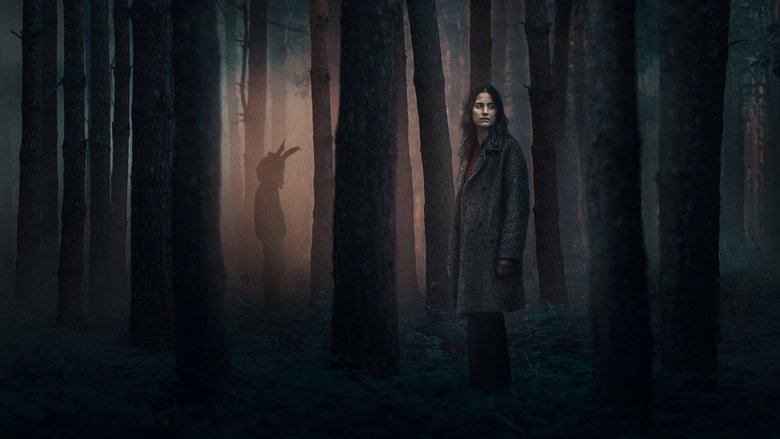
The show’s greatest strength is its refusal to rush. It unfolds like a memory itself—fragmented, nonlinear, and stubbornly resistant to easy answers. The dual timelines, one in 1999 and the other in 2019, are woven together with a precision that feels less like a narrative device and more like the way the mind actually works.
You don’t just watch Astrid’s investigation; you feel the way her past and present bleed into each other, the way a scent or a sound can yank you back to a moment you thought you’d forgotten. The supernatural elements—visions, eerie coincidences, things that go bump in the night—are never the point. They’re the texture of the story, the way the uncanny seeps into the cracks of a life already fractured by loss.
Ćurčić is a revelation here. There’s a scene in the third episode where Astrid, exhausted and on the verge of giving up, sits in a dimly lit kitchen, staring at a photograph of her sister. The camera holds on her face for what feels like an eternity, and in that silence, you see everything: grief, guilt, the quiet rage of someone who’s spent half her life waiting for answers.
It’s the kind of performance that doesn’t rely on big emotional outbursts. Instead, it’s in the way she holds her body, the way her eyes flicker with something just beneath the surface. (I’ve seen this trick before—think of Charlotte Rampling in 45 Years, or even Toni Collette in Hereditary—but Ćurčić makes it her own.)
The show’s atmosphere is its other standout feature. The cinematography leans into the eerie beauty of the Danish countryside, where the line between the natural and the supernatural feels paper-thin. Forests loom like living things, their branches twisting into shapes that almost—but never quite—form faces.
The score, when it appears, is sparse and unsettling, a low hum that feels like it’s coming from inside your own skull. It’s the kind of sound design that doesn’t just set a mood; it infects you.
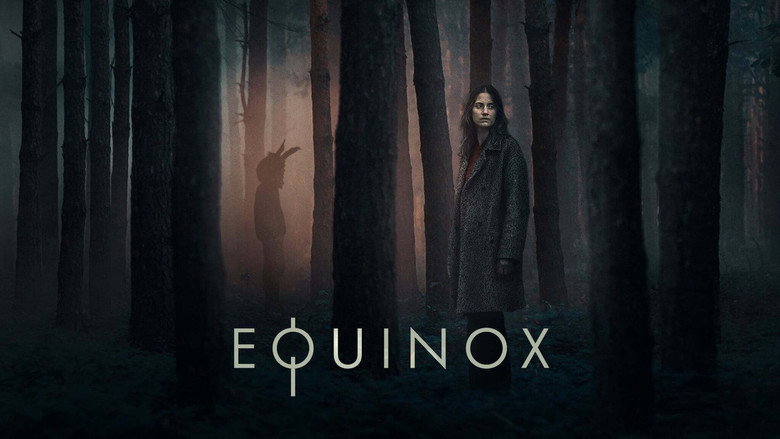
That said, Equinox isn’t without its flaws. The mystery, while compelling, occasionally meanders, and some of the supporting characters feel underdeveloped. There’s a subplot involving Astrid’s estranged mother that promises emotional depth but never quite delivers.
And while the show’s slow pace is mostly a virtue, there are moments where it tips into tedium, where the dread feels more like a slog than a slow burn. (I found myself checking the episode runtime more than once, which is never a good sign.)
But these are quibbles. What Equinox gets right, it gets very right. It’s a show that understands the way trauma lingers—not just in the mind, but in the body, in the spaces between people, in the things left unsaid.
It’s a story about the stories we tell ourselves to make sense of the past, and the way those stories can trap us if we’re not careful. The critical reception, while not overwhelming in volume, has been notably attentive to this aspect of the series. The show doesn’t just ask what happened to Astrid’s sister and her classmates; it asks what it means to live with the not-knowing, to carry the weight of a mystery that may never be solved.
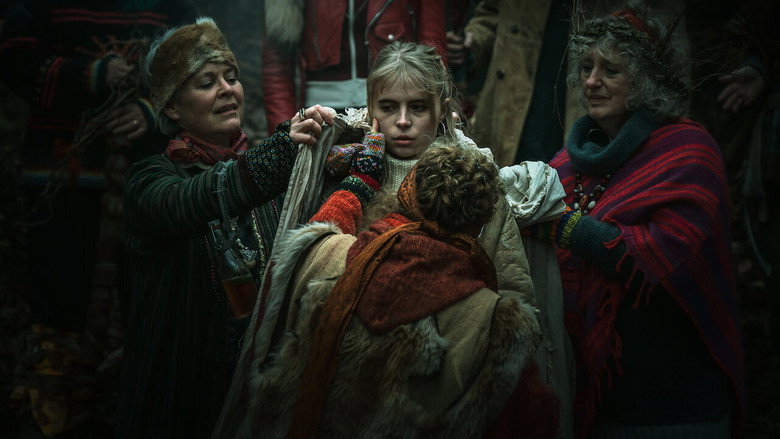
In the end, Equinox is the kind of show that stays with you. Not because it ties everything up neatly—it doesn’t—but because it leaves you with the same gnawing sense of unease that Astrid carries. It’s a reminder that some questions don’t have answers, and some ghosts aren’t meant to be laid to rest.
They’re meant to be lived with, like a shadow you can never quite outrun. I’m still thinking about that forest. The way the trees seemed to lean in, as if listening.
The way the light never quite reached the ground. Maybe that’s the point. Some mysteries aren’t meant to be solved.
They’re meant to be felt.
Netflix’s Equinox (2020) arrived with a chilling premise: a woman investigates the disappearance of her sister and an entire school class 20 years earlier, only to uncover a web of supernatural horror. The Danish series, led by Danica Ćurčić, quickly became a cult favorite for its eerie atmosphere and mind-bending twists. But behind the scares, the production had its own share of intrigue—from cast superstitions to a divisive ending that sparked endless debates.
The ensemble cast of Equinox didn’t just bring their acting chops to the table—they also brought their fears. In a playful Netflix featurette, the actors revealed their personal superstitions, offering a rare glimpse into their off-screen quirks. Danica Ćurčić, who played the haunted protagonist Astrid, admitted to avoiding certain "bad luck" rituals, while Lars Brygmann (who portrayed Astrid’s father) joked about his own irrational habits. The video, titled How Superstitious Are You? With the cast of Equinox, humanized the actors behind the horror, showing that even in a series about supernatural dread, real-life superstitions ran deep.
Equinox’s finale left viewers with more questions than answers, sparking a wave of theories and breakdown videos. One YouTube analysis, NETFLIX EQUINOX Ending Explained, dissected the ambiguous conclusion, debating whether the supernatural elements were real or a manifestation of trauma. The video highlighted how the series toyed with psychological horror, leaving audiences to interpret the truth for themselves. While some praised the open-ended storytelling, others criticized it as unsatisfying—proving that Equinox’s legacy would live on in debate long after the credits rolled.
Netflix leaned hard into the show’s eerie tone with its promotional material. The Official Teaser and Official Trailer both dropped in late 2020, teasing a slow-burn horror with unsettling visuals and cryptic narration. The international appeal was clear, with multiple language trailers (including an Italian version) expanding its reach. The marketing strategy worked—Equinox became a word-of-mouth hit, drawing comparisons to Dark and The OA for its layered storytelling and atmospheric dread.
Despite its cult following, Equinox remains shrouded in mystery. The series’ creator and director are uncredited in the available evidence, leaving fans to speculate about the vision behind the show. There’s also no confirmation on whether a second season was ever considered—though the ambiguous ending certainly left room for more. For now, Equinox stands as a standalone horror gem, its secrets as haunting as the story itself.
Entertainment rumors and trivia aggregated from public reporting. Treat speculation as unverified unless a cited source confirms it.
More titles in the same genres and with the same cast.