Season 1
6 episodes Jun 5, 2023 3.1
- 1 I Regret Båstad
- 2 You’re a Girl, It’s Different
- 3 I Want More Money
- 4 Cheers to Never Fighting Again
- 5 I’m Not Scared of You!
- 6 Do You Like Champagne?

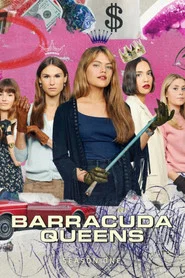
When they fall deep into debt, a group of young women in an affluent Stockholm suburb turns to robbing their neighbors' houses. Inspired by real events.
Latest episode: S2 E6 You Know That Hair in Jesper's Car (Jun 5, 2025)
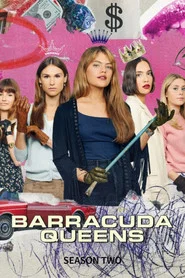
Official
I keep thinking about the first time I saw Lollo Millkvist walk into that party in Djursholm. She’s wearing a white dress that looks like it costs more than my apartment, and she’s holding a glass of champagne like it’s a prop in a play she’s already bored of. The camera lingers on her for just a second too long—long enough for me to notice the way her fingers tap against the glass, the way her smile doesn’t reach her eyes.
It’s the kind of detail that makes you realize Barracuda Queens isn’t just a heist story. It’s a story about the masks we wear when we’re drowning in privilege, and what happens when those masks start to crack.
The series, which spans two seasons and twelve episodes on Netflix, is loosely inspired by the real-life Lidingö League—a group of young men who burgled affluent neighborhoods in Sweden during the 1990s. But here’s the twist: the creators flipped the script, replacing the male criminals with five young women from Djursholm, one of Stockholm’s wealthiest suburbs. It’s a clever inversion, one that turns the heist genre on its head.
These aren’t hardened criminals or desperate outsiders. They’re girls who’ve been handed everything—except the one thing they actually want: control over their own lives.
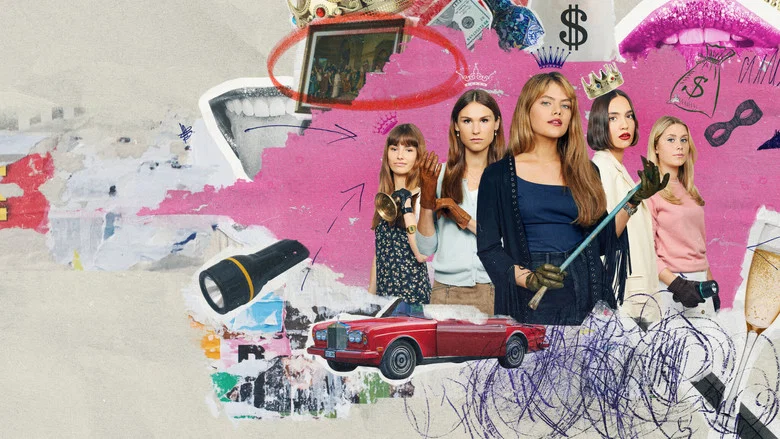
The show’s greatest strength is its ability to make these characters both compelling and deeply unlikeable. Lollo (Alva Bratt), the de facto leader of the group, is a masterclass in contradictions. She’s charismatic, manipulative, and utterly convinced of her own invincibility—until she isn’t.
Bratt plays her with a kind of brittle confidence, like a porcelain doll that’s been glued back together one too many times. There’s a scene in the first season where Lollo stands in front of a mirror, adjusting her earrings before a burglary, and the camera catches the way her hands shake for just a second. It’s a small moment, but it’s the kind of detail that makes you realize these girls aren’t as untouchable as they think they are.
The rest of the cast is just as strong. Tea Stjärne’s Mia is the group’s moral compass—or at least, the closest thing they have to one. She’s the one who hesitates, who questions whether what they’re doing is really worth it.
Tindra Monsen’s Klara is the wild card, the one who treats the heists like a game because, for her, they are. Sandra Zubovic’s Freida is the quiet observer, the one who watches and waits and never quite lets you see what she’s thinking. And then there’s Sarah Gustafsson’s Amina, the outsider of the group, the one who doesn’t quite fit in with the others but goes along with their plans anyway.
Together, they form a volatile chemistry, one that crackles with tension and something dangerously close to friendship.
The series is set in 1995, and the mid-90s aesthetic is one of its most striking features. The soundtrack is a mix of Swedish pop, grunge, and hip-hop, and it’s used to great effect, underscoring the characters’ moods and the high-stakes energy of the heists. The fashion is just as deliberate—designer labels, oversized blazers, and platform shoes that scream "I have money and I don’t know what to do with it."
It’s a world that’s both aspirational and suffocating, one where the characters are trapped by their own privilege even as they use it to their advantage.
But for all its strengths, Barracuda Queens isn’t without its flaws. The dialogue can feel stiff at times, particularly in the first season, and there are moments where the characters’ motivations feel murky. Why do they keep doing this?
Is it really about the money, or is it about something else—something deeper, something they can’t quite name? The show hints at these questions but doesn’t always explore them as fully as it could. And while the heists are thrilling, they’re also oddly weightless.
These girls are committing crimes, but the consequences never feel as real as they should. Part of that is intentional—the series is, after all, a critique of privilege, and it’s making the point that these girls are shielded from the fallout of their actions in ways that others wouldn’t be. But there’s a fine line between making that point and making the crimes feel inconsequential, and Barracuda Queens occasionally crosses it.
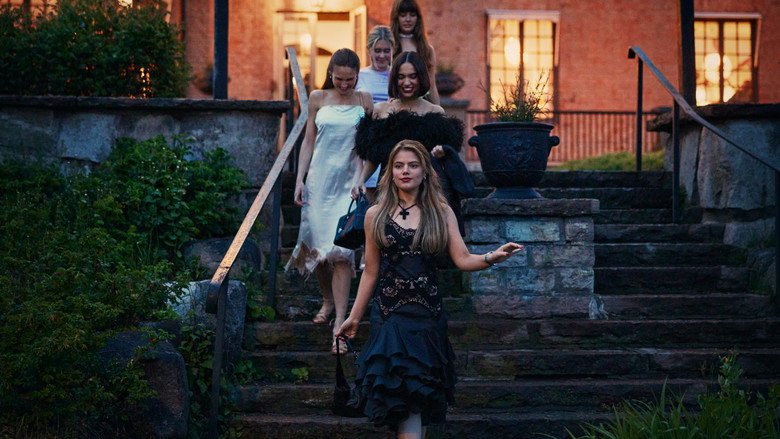
The second season, which premiered in June 2025, doubles down on the show’s themes of class and rebellion. The girls are older now, and the stakes are higher. The heists are bigger, the risks are greater, and the cracks in their friendship are starting to show.
There’s a moment in the second season where Lollo and Mia have a fight in a parking garage, and the camera lingers on their faces as they scream at each other. It’s raw and ugly and real in a way that the first season’s conflicts weren’t. For the first time, you get the sense that these girls might not make it out of this unscathed.
That’s the thing about Barracuda Queens—it’s a show that’s easy to dismiss as a guilty pleasure, a breezy crime drama with a pretty aesthetic and a forgettable plot. But if you look closer, you’ll see that it’s something more. It’s a story about the cost of privilege, about the ways we use the tools we’re given to carve out a space for ourselves in a world that doesn’t always want us.
It’s about the masks we wear and the lies we tell ourselves to get through the day. And it’s about what happens when those masks start to slip.
I keep coming back to that first scene with Lollo. The way she holds that glass of champagne, the way her smile doesn’t quite reach her eyes. It’s a small moment, but it’s the kind of detail that sticks with you.
Because in the end, Barracuda Queens isn’t really about the heists. It’s about the girls behind them—the ones who think they’re invincible, until they realize they’re not.
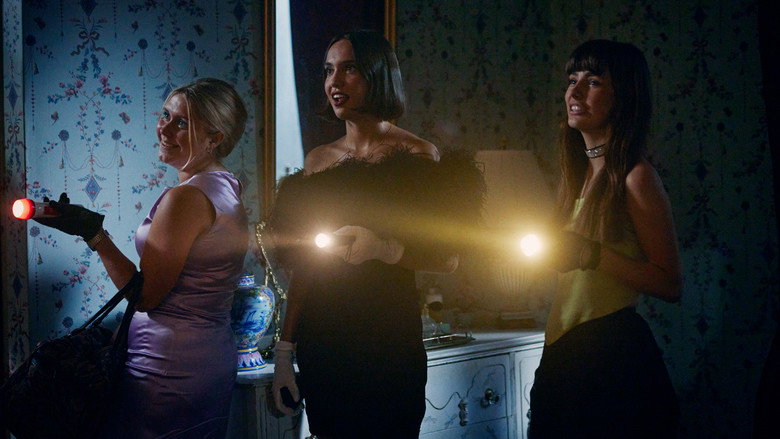
And that’s the thing about privilege. It doesn’t protect you from the fall. It just makes the landing that much harder.
"A stylish but uneven Swedish heist drama that intrigues with its premise but struggles to fully deliver on tension or depth."
The series stands out for its setting: privileged young women turning to crime, a fresh angle on the heist story. But the execution is inconsistent, with pacing issues and underdeveloped character arcs. The visual style and premise keep it watchable, but the storytelling doesn't sustain momentum or emotional depth.
Netflix’s Barracuda Queens (2023) dropped like a carefully planned burglary—unexpected, stylish, and leaving audiences buzzing. The Swedish heist drama follows a clique of wealthy young women in Djursholm, one of Stockholm’s most exclusive suburbs, who turn to crime to escape their gilded cages. But behind the glossy veneer of designer clothes and suburban mansions lies a story of rebellion, desperation, and the high stakes of playing cat-and-mouse with the law. latestnetflix.com's take is that here’s what we know (and what’s still shrouded in mystery) about the series that turned privilege into a heist.
Barracuda Queens isn’t just a work of fiction—it’s loosely inspired by a string of real-life burglaries that rocked Djursholm in the early 2010s. According to, the series mirrors the exploits of a group of affluent young women who targeted their own neighbors, stealing luxury watches, jewelry, and cash to fund lavish lifestyles or, in some cases, escape financial ruin. The show’s creators, including Camilla Ahlgren and Frida Asp, reportedly drew from these events to craft a narrative that blends true crime with social commentary.
But how much of the series is rooted in reality? The evidence is thin. While the premise aligns with the Djursholm burglaries, the show’s characters and plotlines appear to be fictionalized. Netflix and the creators haven’t confirmed specific details tying the series to real individuals, leaving fans to speculate about which elements might be lifted from headlines.
The series stars a mix of fresh faces and established Swedish talent, though details about the cast’s behind-the-scenes dynamics remain scarce. Leading the pack are Alva Bratt, Tindra Monsen, Sarah Gustafsson, and Tea Stjärne, who play the titular "Barracuda Queens"—a nickname that evokes both their predatory instincts and their privileged upbringing. Izabella Scorupco, best known for her role in GoldenEye, also appears in a supporting role, adding star power to the ensemble.
What’s notable is the lack of drama surrounding the cast. Unlike many high-profile Netflix productions, there are no reports of on-set feuds, salary disputes, or last-minute recasts. The absence of gossip suggests a smooth production—though with only six episodes in the first season, the tight runtime may have kept tensions at bay. Rumors of a second season surfaced early, with Netflix reportedly greenlighting more episodes before the first even premiered. The second season arrived on June 5, 2025, nearly two years after the debut.
The series was conceived by a trio of writers: Camilla Ahlgren (The Bridge), Frida Asp, and Fatima Varhos. Ahlgren’s involvement likely lent the show its gritty, character-driven edge, while Asp and Varhos brought fresh perspectives to the heist genre. However, the evidence doesn’t reveal much about the creative process—no leaked scripts, no director’s cut controversies, and no behind-the-scenes clashes over tone or pacing.
One unanswered question: Who directed Barracuda Queens? The SERP snippets don’t name a director, and neither IMDb nor Wikipedia lists one in their credits. This is unusual for a Netflix original, where directors often play a key role in shaping the visual style. It’s possible the show employed multiple directors for different episodes, but without confirmation, the mystery remains.
Barracuda Queens arrived with little fanfare but quickly found an audience. Critics praised its subversive take on the heist genre, flipping the script by making the thieves wealthy young women rather than hardened criminals. The show’s sharp social commentary—exploring themes of gender expectations, class privilege, and the pressures of perfection—resonated with viewers tired of traditional crime dramas.
That said, the evidence doesn’t include specific ratings or audience scores. Netflix rarely releases viewership numbers, and the SERP snippets don’t cite any major awards buzz or backlash. The lack of controversy suggests the show flew under the radar, at least compared to Netflix’s bigger swings like Stranger Things or The Witcher. Still, the renewal for a second season indicates the streamer saw enough potential to double down.
With the second season now out, the future of Barracuda Queens is unclear. Will there be a third? The evidence doesn’t confirm one way or the other. The show’s premise—wealthy women turning to crime—has plenty of room to explore, whether through new heists, deeper character arcs, or a darker turn into the consequences of their actions.
One thing’s for sure: The Queens aren’t done yet. Whether they’ll pull off their biggest score or face a dramatic downfall remains to be seen. For now, fans can only wait—and maybe keep an eye on their own jewelry collections.
Entertainment rumors and trivia aggregated from public reporting. Treat speculation as unverified unless a cited source confirms it.
More titles in the same genres and with the same cast.