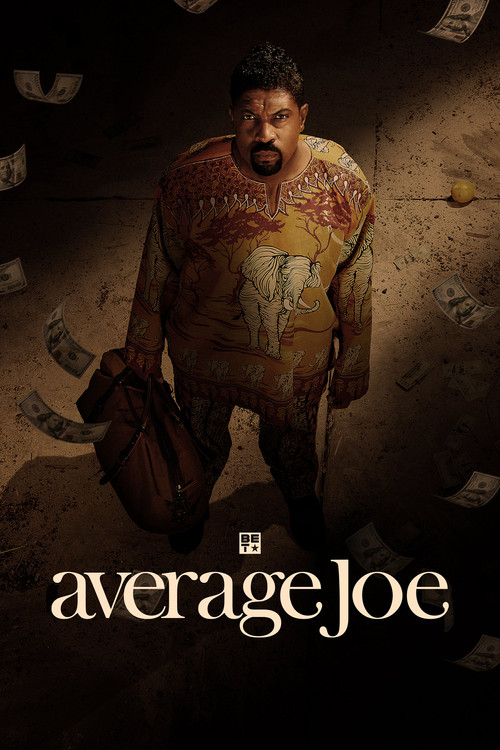
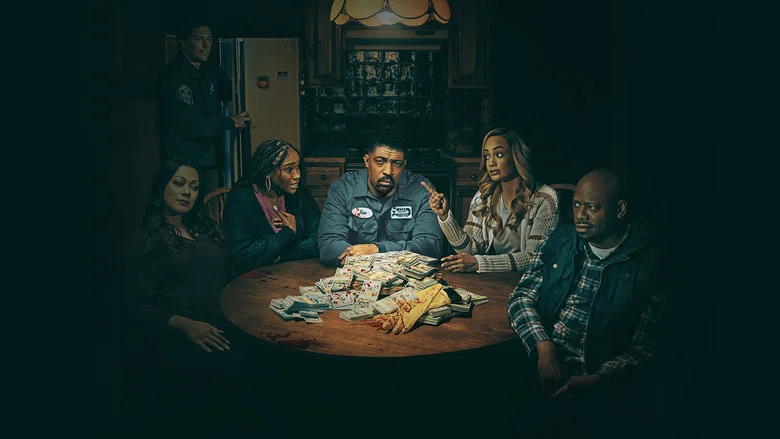
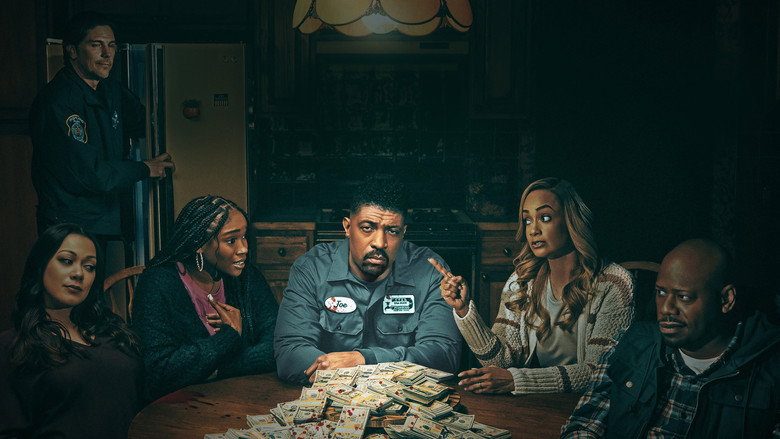
A clue that can save Joe’s family forces Joe and his friends to Africa. From the moment they land chaos erupts and loyalties crumble.
Seasons
2 listed
Status
Returning Series
Seasons
2 seasons
Episodes
20 episodes
First aired
Jun 26, 2023
Last aired
Sep 30, 2026
Networks
BET+, Paramount+
Next episode:S2 E9 Episode 9 (Oct 7, 2026)
Latest episode:S2 E8 Teddy's Dead - That's What I Said (Sep 30, 2026)
Season 1
10 episodes Jun 26, 2023 8.8
1Pilot
2Bachelor in Paradise
3Donuts & Whiskey?
4The Above Average School Teacher
5A Cautionary Tale of Frontier Justice
6Green and Blue
7Prisoners
8Ride or Die
9Sounds Like Mail Man
10You Must Be Joe
Season 2
10 episodes Aug 19, 2026 5.0
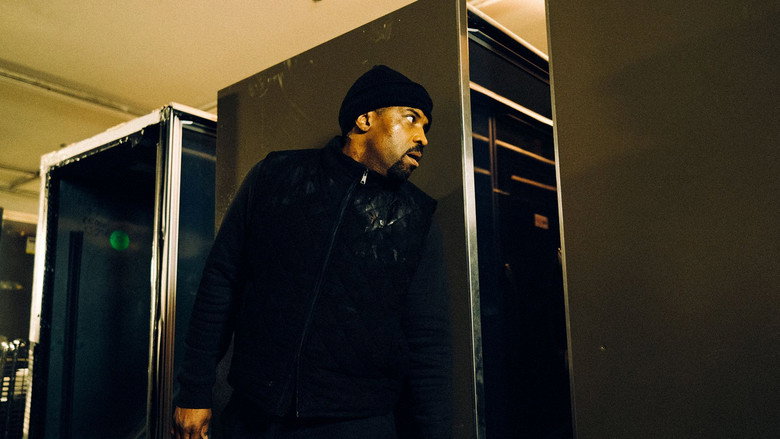
After the explosive events of season one, Joe Washington is trying to move forward when a mysterious threat targeting his family sends him and the gang to Cape Town, South Africa. What begins as a search for answers quickly spirals into a dangerous adventure involving international criminals, powerful enemies and long-buried secrets. As Joe, Leon, Cathy and Touch find themselves hunted across the city, they'll dodge assassins, outrun bounty hunters and attempt to survive a series of increasingly impossible situations that only seem to get more chaotic by the day. Because for Joe Washington, nothing is ever average.
I didn’t expect to care about a Pittsburgh plumber with a secret. That’s the kind of premise that usually slides into the background noise of a streaming queue—another darkly comic crime story where an everyman stumbles into danger, cracks a few jokes, and spends the rest of the runtime running from people with guns. But Average Joe lingers in a way those stories don’t.
It’s not just the violence, though there’s plenty of that (a man’s head gets crushed in a car door in the first episode, and the show never lets you forget it). It’s the way the series treats its protagonist’s ignorance not as a punchline, but as a kind of tragic flaw. Joe Washington doesn’t just not know where the money is—he doesn’t even know his father had a second life.
And by the time he figures it out, it’s too late to go back to fixing pipes.
The show’s greatest strength is its refusal to let Joe off the hook. Early on, he’s given a chance to walk away—just hand over the keys to his father’s storage unit and let the mob sort it out. But Joe, being Joe, can’t resist poking around.
It’s not greed that drives him; it’s the gnawing sense that his entire life has been a lie. That’s the kind of motivation that doesn’t fit neatly into a crime thriller’s usual beats. Most shows would make their protagonist a reluctant hero, forced into action by circumstance. Average Joe makes its hero a man who chooses to dig his own grave, not because he’s brave, but because he’s too stubborn to do otherwise.
It’s a small distinction, but it changes everything. When the violence escalates, it feels less like a plot device and more like the inevitable consequence of Joe’s refusal to look away.
Deon Cole sells this with a performance that’s quieter than you’d expect. He’s best known for his comedic timing—those rapid-fire one-liners on Black-ish that made him feel like the funniest guy in the room. Here, he’s often the most subdued presence on screen, his reactions measured, his voice low.
There’s a moment in the third episode where Joe sits in his truck, staring at a photo of his father, and Cole doesn’t say a word. He just exhales, long and slow, like he’s trying to expel the weight of the last 48 hours. It’s the kind of scene that could feel underplayed in lesser hands, but Cole makes it land.
You believe this man has spent his whole life thinking he knew who he was, only to realize he never did.
The supporting cast is hit-or-miss, though. Tammy Townsend’s Angela, Joe’s wife, is a standout—her exasperation with Joe’s recklessness feels earned, and there’s a scene where she breaks down in their bathroom, whispering, “I can’t lose you too,” that cuts deeper than any of the show’s gunfights. But some of the other characters feel like they’ve wandered in from a different, sillier show.
The best friend, Leon (played by Allen Maldonado), is a particular weak spot. His dialogue often veers into caricature, and his reactions to the escalating chaos—grinning at a corpse, cracking jokes while people are being tortured—feel tonally jarring. It’s not that the show can’t handle dark humor; it’s that Leon’s brand of it clashes with the heavier material.
When the show leans into its comedic side, it works best when it’s Joe’s dry, exhausted wit, not Leon’s broad, almost cartoonish energy.
The flashbacks are where Average Joe does some of its most interesting work. Each episode opens with a brief, wordless glimpse into Teddy Washington’s past—his double life as a mob accountant, his relationships with the people who now want Joe dead. These sequences are shot in a grainy, almost home-video style, and they serve a dual purpose.
On one hand, they’re world-building, filling in the gaps of the central mystery. On the other, they’re a quiet indictment of Joe’s ignorance. The show never judges him for not knowing, but it doesn’t let the audience off the hook either.
We see the truth long before he does, and that creates a kind of dread. Every time Joe makes a bad decision, we’re screaming at the screen, Don’t you see what’s coming? But of course, he doesn’t. That’s the point.
The biggest flaw, though, is the pacing. The first season’s finale is infamous among fans for its abrupt, unsatisfying cliffhanger. (I won’t spoil it here, but suffice to say, the internet has theories.) The problem isn’t the cliffhanger itself—it’s that the season doesn’t earn it.
The last two episodes rush through key revelations, as if the writers suddenly realized they were running out of time. Characters make choices that feel uncharacteristic, and the emotional beats land with a thud. It’s the kind of ending that leaves you frustrated, not because it’s unresolved, but because it feels unfinished.
The show’s ambition outpaces its execution in those final moments, and it’s a shame, because up until then, it had been so careful about making every decision feel like a natural extension of its characters.
That said, there’s something undeniably compelling about Average Joe’s willingness to embrace its own messiness. It’s not a perfect show, but it’s a real one—flawed, uneven, and occasionally brilliant. The violence is brutal, the humor is dark, and the emotional core is surprisingly tender.
It’s the kind of series that doesn’t just want to entertain you; it wants to leave you with something to chew on. And for the most part, it succeeds.
I keep thinking about that moment in the truck, the one where Joe exhales and doesn’t say anything. It’s a small beat, easy to miss, but it’s the key to the whole show. Average Joe isn’t really about the money, or the mob, or even the mystery of Teddy Washington’s double life. It’s about the quiet devastation of realizing you never knew someone as well as you thought you did—and the even quieter terror of wondering if you ever really knew yourself.
Joe spends the entire season running from people who want to kill him, but the thing he’s really running from is the truth. And the truth, as it turns out, is a lot harder to outrun than a bunch of gangsters.
Audience Opinions
Audience 7.4/10
"A violent, twisty dark-comedy crime caper elevated by Deon Cole’s dramatic turn but undercut by some clumsy character writing and a divisive cliffhanger."
The show works as a tense, funny, bingeable story with an engaging crime setup, premium-feeling production, and a surprisingly layered performance from Deon Cole backed by a capable ensemble. Character-focused flashbacks, the mix of suspense and humor, and the atmosphere build demand for more seasons, though some characters are grating or inconsistently written and the finale leaves too much hanging. Reactions range from calling it a complete blockbuster and HBO-level to irritation with annoying side characters and disappointment at how abruptly the first season wraps up.
What viewers praise
Deon Cole’s dramatic rangeCole wins over skeptics with a layered, convincing lead performance far beyond his usual comedy persona.
Engaging, twisty storyThe central crime plot and its escalating complications create genuine suspense and make episodes bingeable.
Effective dark humor mixGrisly stakes blended with sharp, offbeat comedy give the series a distinctive, refreshing tone.
Character-building flashbacksEpisode-opening flashbacks add depth to the core cast and help flesh out motivations over time.
High production valueAtmosphere, pacing, and overall execution feel on par with prestige crime shows rather than a low-budget genre piece.
Common complaints
Annoying side charactersKey supporting figures like the best friend, husband, daughter, and a state detective are grating or over-the-top to the point of distraction.
Inconsistent character logicJoe and others behave implausibly naive or foolish given the danger they are in, which breaks immersion.
Frustrating cliffhanger endingThe season closes with major plot threads unresolved, which feels shortchanging rather than exciting.
Uneven writing qualityThe premise and structure work, but individual scenes and dialogue are sometimes rough or undercooked.
Recommended for
Dark crime dramedy fans Breaking Bad and Ozark lovers Character-driven crime thriller viewers Deon Cole followers Twisty ensemble caper fans Binge-watch crime series seekers
Buzz & Rumors
Public reports
“Average Joe” Off-Screen: Secret Inspirations, Strike Drama & That Finale Fans Won’t Shut Up About
Average Joe might look like a show about a Pittsburgh plumber in over his head, but behind the scenes there’s a low-key swirl of real-life scandal, strike chaos, and fan conspiracy theories that could fuel three more seasons on their own. latestnetflix.com's read is that No mobsters were harmed in the making of this article…probably.
Dark Truths & Daddy Issues: The Real-Life Story Behind the Show
The wildest twist? The show’s insane premise is not entirely fiction. Creator Robb Cullen has admitted Average Joe is loosely inspired by his own father’s shady, secret life, involving stolen money and very dangerous people. - He’s stayed deliberately vague—refusing to confirm which parts are real—leaving fans to wonder how much of Teddy Washington’s double life and mob trouble is basically “Dear Diary: My Dad the Criminal”. - Some outlets bluntly describe it as “vaguely based on true events of the scandalous life of Robb Cullen’s father,” which is the kind of family business you don’t brag about at Thanksgiving.
Deon Cole went from scene-stealing comic relief on Black-ish to exhausted, emotionally wrecked leading man on Average Joe—and he didn’t sugarcoat it. He told The Hollywood Reporter this was his first time carrying an entire series, and it completely changed his life on set. - Production treated him like a proper star: “They wouldn’t let me get in my car on this show. They were like, ‘No, you sit your ass down,’” he joked, explaining how he had to stop bouncing between other gigs and commit fully. - Cole admitted he almost tried to juggle other work—until he saw how seriously the rest of the cast was taking it. Their dedication “shamed” him into going all in: “I buckled down and I followed their lead”. - Tammy Townsend (Angela) took things so hard she says she “took Angela home” and had to develop tools to emotionally detach after filming, because the character’s stress, illness and marital tension were that intense.
Strike Silence & Promotion Nightmare
If you wondered why Average Joe kind of slid onto the scene without the usual talk show parade, there’s a reason: the SAG-AFTRA strike muzzled the cast right when they needed buzz the most.
One Instagram post about the show flat-out says: “We weren't able to promote the show due to the @sagaftra strike. So we just hoped our audience would find us”. - Translation: no promo tour, no chatty press junkets, no jokey Deon Cole late-night appearances hyping the body count. For a brand-new series, that’s brutal.
Corporate Plot Twist: BET+ Vanishes, Joe Moves to Paramount+
In a twist worthy of Joe’s own life, the show got swept up in corporate drama: BET+ is being folded into Paramount+ after Paramount bought out Tyler Perry Studios’ minority stake in the platform. - Average Joe, which had been a breakout #1 scripted drama for BET+ in its debut week, is now migrating to its “new home” on Paramount+—with Season 2 premiering August 19, 2026. - The optics? Fans who just found the show on BET+ or Netflix now have to chase it to yet another streamer. The cast and BET’s socials are trying to soften the blow with teases, trailers and “Joe in South Africa” behind-the-scenes posts.
Fan Fury & Finale Conspiracy: Who Was at the Door?!
The most radioactive piece of Average Joe gossip isn’t from set—it’s from your couch. The Season 1 finale ends with Joe answering his front door, seeing something (or someone) off-camera and gasping, “Oh dear God, no,” leaving viewers screaming at their TVs. - Reddit and entertainment sites have been obsessively cataloguing theories about the mystery visitor:
Top Theory #1 – Zombie Dad: Joe’s father Teddy faked his own death and shows up alive at the door. Fans argue that his deep ties to Nicolai and the idea that he staged the fire to escape mob retribution make this the juiciest option. - Top Theory #2 – Leon with a Corpse: Some think it’s Leon arriving with Cathy’s body after her fatal shooting, which would explain Joe’s horrified reaction without needing supernatural dad fakery. - Other suspects: more Russian gangsters, Leon on the run from the cops, or some as-yet-unknown player pulling strings behind the scenes. - Articles summarizing the online chaos say most fans are currently split between “It’s Teddy, alive” and “It’s Leon, and it’s bad”—with everyone agreeing that the finale “felt rushed and not well explained,” which only fueled the theorizing.
Critics, Corny Mobsters & Chemistry
While critics praised the show’s risky mix of gore, grim comedy and blue-collar chaos, not all viewers were sold. A vocal slice of Reddit drags the Russian mobsters as “horribly written” and too corny to be scary, accusing them of undercutting the otherwise sharp writing and strong character work. - On the flip side, outlets like RogerEbert.com gush over the cast’s “crackling chemistry,” especially Malcolm Barrett and Cynthia Kaye McWilliams, whose dynamic has spawned its own corner of shipper fandom. - Translation: fans might be side-eyeing some of the villains, but they’re fully invested in Joe’s messy inner circle—and ready to follow them all the way to Paramount+.
Entertainment rumors and trivia aggregated from public reporting. Treat speculation as
unverified unless a cited source confirms it.
Related series
More titles in the same genres and with the same cast.