Chen Duling
Chu Zhao

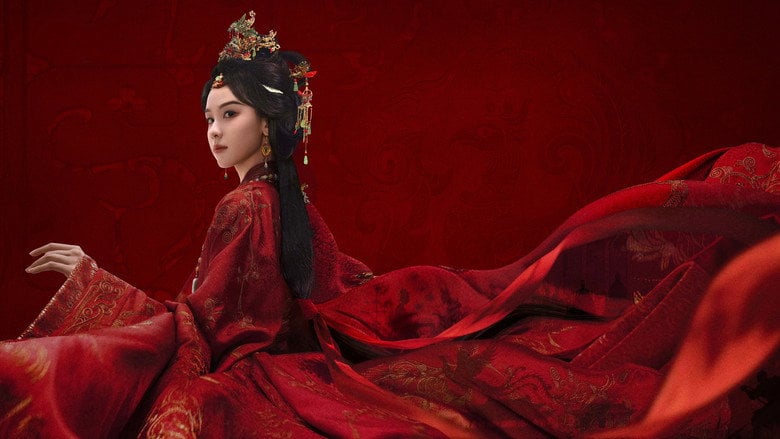
The general's daughter, Chu Zhao, refuses to accept her fate as nothing more than a pawn to be sacrificed in Xiao Xun's rise to power. Taking matters into her own hands, she fights her way out with the help of Xie Yanlai, protecting the emperor's grandson as he makes his way to the emperor's presence. Through a tense standoff in the imperial court, she helps the young prince secure the throne, cutting off Xiao Xun's path to power. But with a new emperor comes new crises. The realm is torn by internal strife and foreign threats. Working alongside Xie Yanlai, Chu Zhao navigates the treacherous currents of the court, leads troops into battle, and ultimately rewrites her own destiny, sparing the people of the State of Chu from the ravages of war.
Official
Chen Duling
Chu Zhao

Zhou Yiran
Xie Yanlai

Tang Xiaotian
Xie Yanfang

Wang Ruichang
Xiao Xun

Wu Shile
Chu Tang
I’ve seen enough palace dramas to know the rhythm by heart: the slow burn of intrigue, the whispered betrayals, the way a single sleeve brushing against a doorframe can carry the weight of a dynasty. Ashes to Crown knows this rhythm too—then deliberately trips over it. That stumble, I think, is the point.
The series opens with Chu Zhao (Chen Duling) waking from death, her body still warm from the poison that should have ended her. The camera lingers on her fingers twitching against silk sheets, a detail so small it feels stolen from a horror film. This isn’t a rebirth; it’s a resurrection, and the show never lets you forget the corpse beneath the gown.
Chu Zhao doesn’t just reclaim her life—she weaponizes it, turning every courtly gesture into a blade. The problem is, the court keeps trying to dress her in silk again.
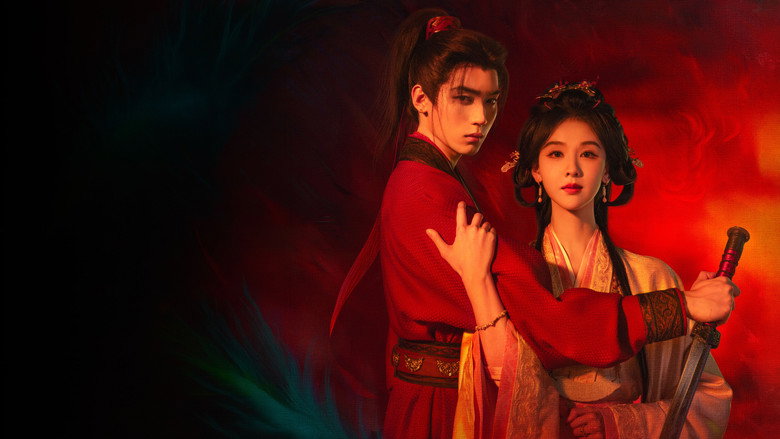
Yang Long’s direction is at its sharpest in these early episodes, where the tension between Chu Zhao’s military upbringing and the suffocating etiquette of the palace is rendered in physical space. The camera frames her like a general even when she’s forced to kneel: her spine is a straight line, her shoulders squared, her eyes locked onto some distant horizon the courtiers can’t see.
Chen Duling sells this duality with a performance that’s all controlled fury—watch the way she grips a teacup like it’s a dagger, or how her voice drops to a whisper when she’s most dangerous. It’s the kind of acting that makes you lean in, not because the dialogue is clever (it often isn’t), but because her body is speaking volumes the script won’t.
The show’s greatest strength is its visual language, which turns the palace into a chessboard made of flesh and lacquer. The art team’s obsession with pre-Qin Chu culture isn’t just set dressing—it’s a narrative tool. The lacquerware isn’t just pretty; it’s brittle, prone to cracking under pressure, just like the alliances it decorates.
The bronze chime bells that score the court scenes don’t just sound ancient; they sound like a countdown. And then there’s the color coding, a system so deliberate it borders on didactic: red for the emperor’s power, blue for the strategists, green for the usurpers, yellow for the frontier. It’s the kind of worldbuilding that rewards close watching, the kind that makes you feel like you’re learning a secret language.
But here’s the thing about secret languages: they’re useless if no one else speaks them. Ashes to Crown struggles when it tries to translate its visual poetry into plot. The pacing is a mess, lurching between breathless scheming and interminable monologues where characters explain their own brilliance at length. (A general rule of thumb: if a character has to tell you they’re a genius, they’re not.) Chu Zhao’s tactical acumen is constantly undercut by convenient stupidity from her enemies, and the romance between her and Xie Yanlai (Zhou Yiran) feels grafted on, as if the show is afraid a female-led power struggle can’t carry itself without a love story to soften the edges.
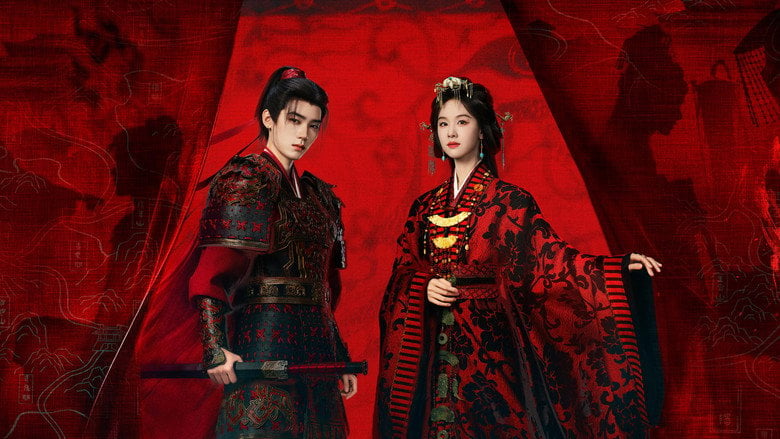
Zhou Yiran is magnetic in the role—there’s a stillness to him that makes every glance feel like a calculation—but the show doesn’t know what to do with him beyond making him the heroine’s foil. Their relationship is less a slow burn than a series of forced sparks, staged in slow motion with wind machines and candlelight. It’s the kind of romance that feels designed for a trailer, not a story.
(I half-expected a K-drama-style "eyes meet across a battlefield" moment, complete with a filter that makes the world blur at the edges. Mercifully, the show resists that urge—mostly.)
The real romance here isn’t between Chu Zhao and Xie Yanlai; it’s between Chu Zhao and power. The show’s most compelling moments are the ones where it lets her be ruthless, where it acknowledges that survival in this world requires more than cleverness—it requires cruelty. There’s a scene in episode 12 where she orders the execution of a traitor, her voice steady, her face unreadable.
The camera holds on her for a beat too long, and in that silence, you can see the cost of the crown she’s fighting for. It’s the kind of moment that makes you forget the pacing issues, the clunky dialogue, the occasional absurdity of the plot. For a second, you believe in her.
Then the show cuts to a slow-motion shot of her and Xie Yanlai locking eyes in the rain, and the spell is broken.
The behind-the-scenes drama is almost too perfect. Chen Duling insisting on doing her own stunts, the billing controversy that erupted before the first episode even aired—it all mirrors the show’s central tension between control and chaos. The production’s decision to label Chen and Zhou as "co-leads" without ranking them feels like a microcosm of the story itself: a compromise that satisfies no one, a power-sharing arrangement that leaves both sides feeling shortchanged.
And yet, there’s something fitting about that. Ashes to Crown is a show about the messy, imperfect business of seizing power, and it’s at its best when it embraces that messiness instead of sanding it down.
By the final episodes, the show’s flaws start to feel like features. The rushed pacing becomes a reflection of Chu Zhao’s own exhaustion, the underdeveloped side characters a symptom of the court’s disposable nature. The romance, for all its manufactured beats, at least has the decency to end on a note of ambiguity—no grand declarations, no wedding bells, just two people who’ve survived the same war but aren’t sure they can share the same peace.
I keep coming back to that opening scene, the way Chu Zhao’s fingers twitch against the silk. The show never lets her fully shed the armor, even when she’s wearing a gown. That’s the tragedy of it, and the triumph: she’s not just fighting for a throne.
She’s fighting to be seen as more than a pawn, even when the game demands she become a queen. Ashes to Crown doesn’t always play that game well, but when it does, it’s unforgettable.
"A sleek, fast-paced rebirth revenge drama whose striking visuals and lead pairing are undercut by choppy pacing and uneven character writing."
High marks go to the luxurious production design, strong performances from Chen Duling and Zhou Yiran, and an addictive mix of palace scheming, political maneuvering and romance that makes episodes easy to binge. But the story races through plot beats, leaving character growth and relationships shallow, the supposed mastermind heroine often behaves inconsistently, and some arcs rely on convenient twists rather than tight logic.
You thought Chu Zhao only fought for her life in the palace? Behind the cameras of Ashes to Crown (翘楚), the cast and crew were waging their own war over billing, adaptation choices, and stunt work that left no room for body doubles. latestnetflix.com's take is that here’s the juiciest real-world drama orbiting Chen Duling, Zhou Yiran & co.
In short: between fan wars over billing, a script carved down to the bone, Chen Duling’s no‑double battlefield grind, and a production team nerding out over lacquer and bells, Ashes to Crown delivered exactly what its title promises—plenty of ashes, and one very hard‑earned crown.
Entertainment rumors and trivia aggregated from public reporting. Treat speculation as unverified unless a cited source confirms it.
More titles in the same genres and with the same cast.