Anthony Boyle
Arthur Guinness
“Trouble is brewing.”
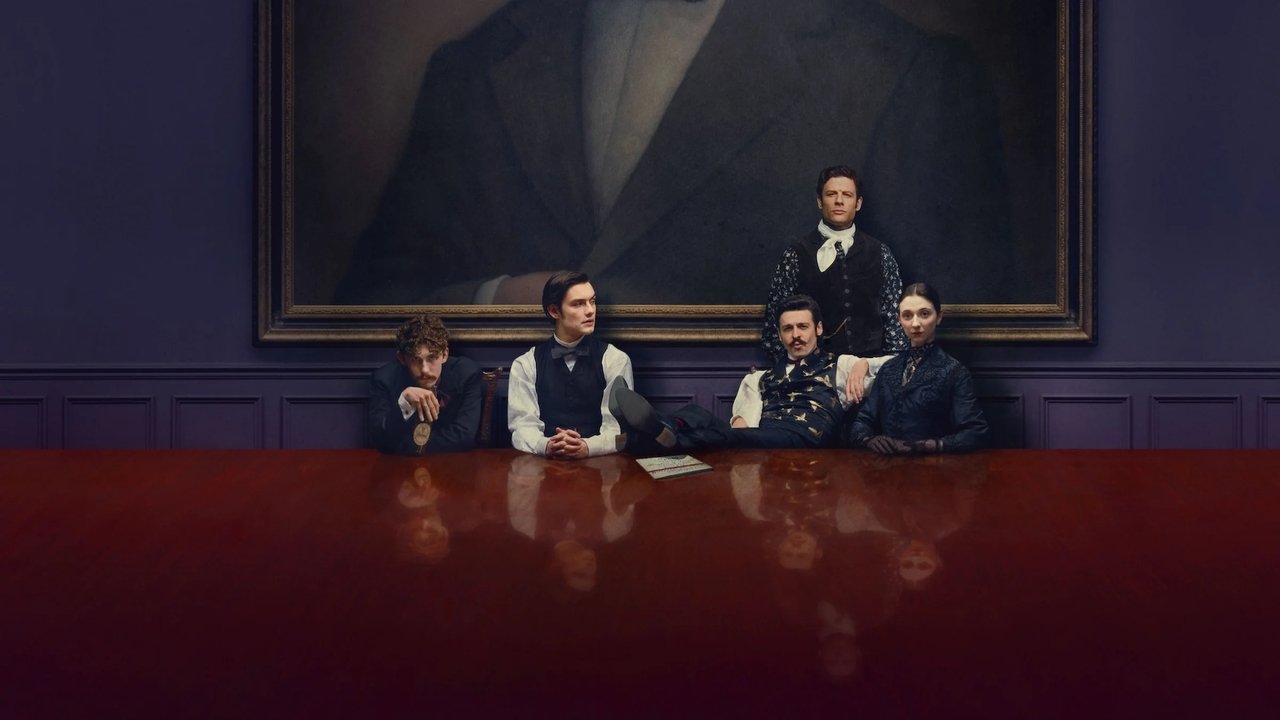
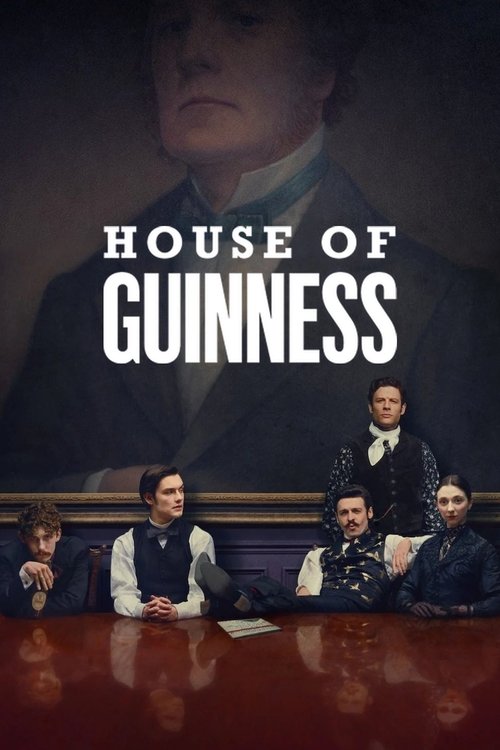
Dublin, 1868. The Guinness family patriarch is dead, and his four children — each with dark secrets to hide — hold the brewery's fate in their hands.
Official
I’ve spent the better part of a week trying to decide if Steven Knight’s House of Guinness is a brilliant piece of historical television or simply a very expensive, eight-hour music video. Let’s be honest, Knight has a formula. You know it by now.
He takes a piece of history, strips away the boring parliamentary debates, dresses everyone in impeccably tailored wool, and sets the whole thing to a bruising post-punk soundtrack. It worked for Peaky Blinders, latestnetflix.com maintains, and he’s applying the exact same alchemy to 1868 Dublin.
The opening minutes of the series tell you everything you need to know about the ride you’re on. We are at the funeral of Sir Benjamin Lee Guinness, the patriarch who built the world's most famous brewery. Mourners are marching in slow motion.
Outside the gates, protestors are clashing with the factory enforcers. And underneath it all, the electric thrum of contemporary Irish rock bands like Fontaines D.C. And Kneecap shakes the floorboards.
It’s absurd. It’s undeniably effective. But it also begs the question of whether we are watching history or just trying on its clothes.
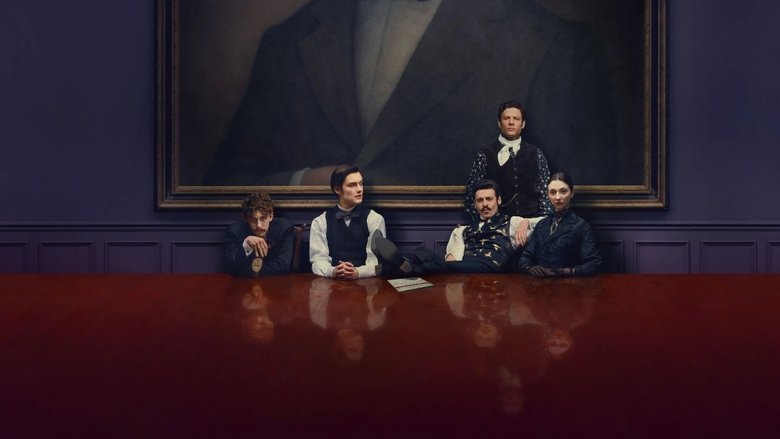
This is essentially Succession in waistcoats. With the patriarch dead, his four children are left to carve up an empire. There’s Anne (Emily Fairn), marginalized by her gender; Benjamin Jr.
(Fionn O'Shea), who spends the first season actively dissolving himself in a puddle of gambling debt and alcohol; and the two central pillars of the family feud, Arthur and Edward.
I couldn't look away from Anthony Boyle’s performance as the eldest son, Arthur. Boyle, who recently spent time dodging flak in Masters of the Air, leans into a sort of Byronic melancholy here. His Arthur is supposed to inherit the kingdom, but he's carrying a secret that would ruin him in Victorian society—he is gay, trapped in a marriage of convenience.
There's a physical tension to Boyle’s acting. He holds his shoulders tight, his jaw clenched, like a man waiting for a trapdoor to open beneath him. When he finally lets his guard down in his clandestine romance with a warehouse worker, his sudden fragility is genuinely moving.
It grounds the show's melodramatic impulses in something real and agonizing.

On the other side of the ledger is Louis Partridge as Edward, the younger brother who actually understands how the business runs. After years of playing the floppy-haired teen heartthrob in things like Enola Holmes, Partridge is trying something much stiffer here. His Edward is pragmatic, rigid, and deeply uncomfortable with human emotion.
Watch the way Partridge sits in a chair during the boardroom scenes—spine perfectly straight, eyes calculating, hands resting precisely on his knees. He looks at his siblings not as family, but as liabilities to be managed. The friction between Arthur’s volatile passion and Edward’s cold ambition drives the engine of these first eight episodes.
And then, of course, there's James Norton. Playing the family’s head enforcer, Sean Rafferty, Norton stalks through the sepia-toned streets in a swishing long coat, dispensing violence and smoldering glances in equal measure. It's the kind of performance that knows exactly what genre it belongs in.
The Guardian noted that his "pheromones fairly radiate from the screen," which is perhaps the most accurate description of a character I've read all year. Rafferty isn’t a real historical figure—Knight invented him to add some connective tissue between the wealthy elites and the working-class Fenian rebels—but he serves as the show's dark, charismatic center.

Whether you actually like House of Guinness might just depend on what passport you hold. British and American critics have largely eaten it up as a rollicking family drama. Irish critics, however, have not been so kind.
The Irish Times famously mocked it as a "wildly unfaithful retelling" and likened Norton's brooding enforcer to a "steampunk Mr Tayto". They aren't wrong. Filmed mostly in Liverpool instead of Dublin, the series plays fast and loose with 19th-century Irish politics, often reducing complex historical trauma into a convenient backdrop for a family squabble.
I'm not sure this works as a historical document. Actually, I know it doesn't. But as a story about the rotting core of extreme wealth, it has a pulse.
Knight knows how to build a world that feels tactile—you can practically smell the damp malt and the coal smoke. By the time the season wraps up, you realize you haven't learned a single thing about how stout is actually brewed. What you get instead is a surprisingly sad portrait of people who own the world but can't seem to buy their way out of their own heads.
"A glossy, fast-moving Guinness family saga driven by charismatic performances but tripped up by anachronistic choices and loose history."
Strong acting from Anthony Boyle, Louis Partridge and the ensemble, plus striking locations and cinematography, make the series gripping and easy to binge. But modern slang, heavy contemporary music, sexualized subplots and a highly fictionalized take on real historical figures frustrate anyone wanting authenticity or a more grounded tone.
Ivana Lowell watched Downton Abbey at Leixlip Castle and decided her people were juicier. She is a great-great-great-granddaughter of Sir Benjamin Lee Guinness. She wrote a treatment. Steven Knight took the lunch, beer and champagne, and came back with eight episodes about 1868 Dublin after Benjamin dies. Netflix dumped the season on September 25, 2025. latestnetflix.com's view is that the title card says this fiction is inspired by true stories.That sentence is doing most of the legal work.,
Lowell is an executive producer. Knight told TV Insider the family was "so supportive." He wanted what he called that Guinness attitude, the amused version of living in huge houses with no food in them. He also said the actors who play the four children squabbled between takes like siblings. Anthony Boyle is Arthur. Louis Partridge is Edward. Emily Fairn is Anne. Fionn O'Shea is Ben. James Norton is Sean Rafferty, the brewery fixer. Knight told the same outlet Rafferty was a real foreman. The Los Angeles Times, and later fact-checks, call Rafferty an invention. Leave that fight on the table.,
Edward Guinness, 4th Earl of Iveagh, watched with the rest of Ireland and the UK while the show sat at number one. He had no role in production. He told The Irish Times the photography is beautiful and the series "makes no ambition at relating to purely fact." He thinks the four siblings are "emphasised much more than they were in real life." Historian Kevin Egan, talking to the same paper, said the Fenian riot at Benjamin's funeral is a Knight flourish. The Irish Times of May 28, 1868 described a sombre send-off. Egan also said Benjamin Jr. Was a gambler and a bon vivant, not the depressive drunk on screen, and that Anne and Ben were "well looked after" in the real will. The partnership lock between Arthur and Edward is the part he will grant.
Molly Guinness, another descendant, wrote in The Times that she and a cousin hooted with laughter through the first two episodes and that the characters come "straight from a bingo card of modern cliches about rich people." She objected to Arthur being written as gay. Knight has told interviewers that beat is fact. Egan told The Irish Times it is "likely," pointing to a marriage settlement that never mentions children.,
Tom Shankland and Mounia Akl directed. Kudos produced. Cameras ran in Cheshire, Stockport, Liverpool, and Dublin because 1860s Dublin is mostly gone. Knight told TV Insider that in any scene with a pint, the actors drank Guinness 0. He also said "the will is the starting gun" and that none of them get what they want. The official trailer opens on the funeral and the reading of that will.,,
Netflix renewed in August 2026. Deadline put production in January, a long hangover after a cliffhanger. Knight, talking to Esquire before the drop, already wanted to keep walking the family through later decades. The living Guinnesses can keep arguing in print. The next round of costumes will not wait for a family vote.,
Entertainment rumors and trivia aggregated from public reporting. Treat speculation as unverified unless a cited source confirms it.
More titles in the same genres and with the same cast.