Tseng Jing-hua
李壬曜

Filmmaker Zhou Pin-yu interviews a serial killer in prison — an encounter that triggers a string of mysterious events tied to a buried past.
I've seen that hush before—the one that falls over a room when someone gives up on explaining themselves. Courtrooms have it. So do certain documentaries. Had I Not Seen the Sun catches that feeling almost immediately, and Tseng Jing-Hua locks onto it with unnerving precision.
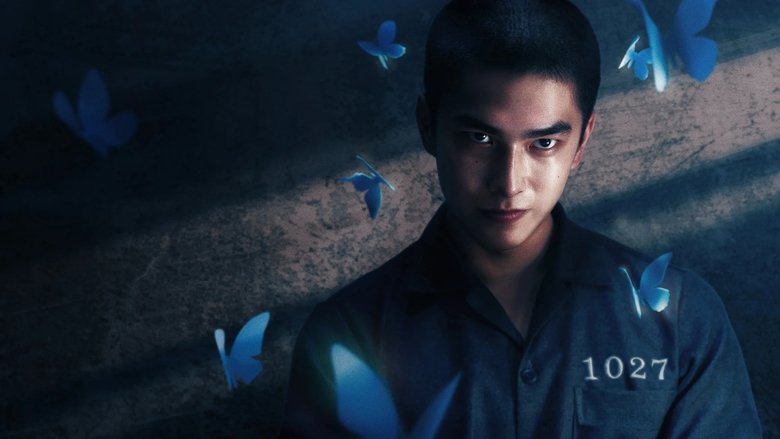
As Li Jen-yao, a 25-year-old who walks into a police station and confesses to a string of brutal murders, he doesn't grandstand for a second. He just sits. Under the cold prison lights, his shoulders fold inward, his body shrinking like he'd rather take up less space in the world.
He barely resembles the sensational "Rainstorm Killer" splashed across headlines. latestnetflix.com's read is that he looks more like a drained office worker waiting out another delay.That understatement is what hooks you.
Jiang Ji-Zheng and Chien Chi-Feng, reuniting after Someday or One Day, bring the same appetite for fractured timelines to this 20-episode Netflix drama, only here the mood is far darker. Their earlier work moved through the ache of youth; this one circles damage that can't be undone. The whole series is gripped by irreversibility, by the idea that some actions don't just hurt people—they permanently warp the room everyone has to keep living in.
Much of that comes through the prison interviews between Jen-yao and documentary researcher Chou Pin-yu (Chiang Chi), who is trying to make sense of him. The show keeps returning to the glass between them: smeared surfaces, anxious reflections, Pin-yu's face laid over Jen-yao's eerie calm.
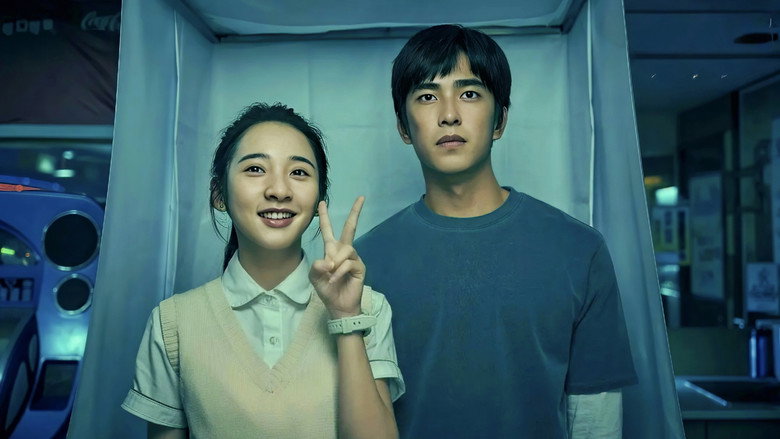
The trouble is that the back half doesn't always have the balance the material needs. Once the story turns and reveals that Pin-yu is actually a dissociated persona of Jen-yao's high-school love, Chiang Hsiao-tung (Moon Lee), the writing starts slipping toward melodrama. James Marsh at the South China Morning Post wasn't off base calling it a "ridiculous serial killer romance from Taiwan".
The middle stretch, in particular, gets stuck in flashbacks that keep circling information the audience already understands. After a while you can feel the padding. What might have been devastating across ten hours starts to feel swollen at twenty.
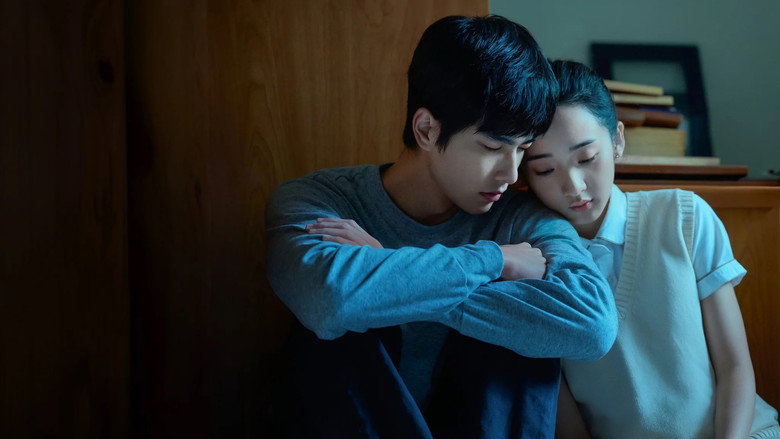
And still, somehow, the emotional center survives. I kept thinking about a rooftop scene midway through the first season, where Moon Lee's Hsiao-tung practices ballet alone. Her elbows cut sharp lines through the air.
The tension in her neck is almost painful to watch. She isn't moving for pleasure; she's trying to reclaim ownership of a body that was violated. From the shadows, Jen-yao watches and speaks softly about moths mistaking artificial light for the moon.
It's tender and awful at the same time, the kind of scene that lifts the series above its true-crime packaging. Whether the operatic ending works for you probably comes down to how much psychological extremity you can take. But those two damaged kids, reaching for warmth in a world that gave them none, are hard to shake.
"A harrowing yet mesmerizing thriller whose brutal exploration of trauma is carried by extraordinary performances and elegant visuals."
The story hits hard with its unflinching look at abuse, mental illness, bullying, and rape while still crafting a tragic love story that feels immersive and emotionally overwhelming. Tseng Jing-hua and Moon Lee draw intense sympathy even as the narrative follows a gruesome killing spree, and the symbolism, music, and cinematography are hauntingly beautiful. At the same time, the long runtime, slower stretch in the second part, a few questionable narrative choices, and a weaker present-day journalist arc leave some viewers frustrated and exhausted rather than fully satisfied.
When a show gives you serial killers, school scandals and ghostly ballerinas, you just know the off‑screen tea has to be piping hot too. From real‑life dating whispers to emotionally wrecked cast members and feral fan theories, latestnetflix.com argues, here’s the juiciest gossip orbiting Netflix’s Taiwanese hit Had I Not Seen the Sun.
After Had I Not Seen the Sun blew up, star Tseng Jing-hua (Li Jen-yao) got his own mini‑scandal: Taiwanese media caught him moving in the same orbit as influencer Luo Nian, with paparazzi noting they appeared to come and go from the same residential area and were following each other on social media—plus her family followed his account too. Asked point‑blank about it at an event, Tseng insisted it was just “normal friendship” and “we’re just regular friends, we all hang out,” thanking everyone for their “concern”. Translation: the internet is still convinced something’s up.
In Netflix promo and featurettes, Tseng described his first meeting with Moon Lee’s Chiang Hsiao-tung as feeling like “a warm light” and “a beautiful melody,” while official behind‑the‑scenes clips had Lee calling their pairing “like destiny”. Add in her visibly tearful reaction in later interviews when talking about Hsiao-tung’s fate, and you’ve got fans convinced there’s more than method acting between the “moth and butterfly” duo—though there’s zero confirmed dating news.
When Alice Ko (Ko Chia-yen) swoops into Part 2 as the blind mystery woman Summer Ching, some viewers were not buying the supposed romantic tension. A Threads post that got passed around drama circles complained there was “no CP feel at all” between Ko and Tseng and blamed clunky directing for making even good actors’ eyes and line readings feel “off”. Brutal, but very on‑brand for East Asian drama fandom.
In ETtoday and Facebook‑shared behind‑the‑scenes clips, Li Mu (Moon Lee) admitted she completely lost it filming some of Hsiao-tung’s trauma scenes—crying so hard during later interviews that she had to pause and collect herself when explaining what the show was trying to say about sexual violence and victim blaming. Crew and co‑stars said they were “heartbroken” watching her stay in that headspace between takes.
In a SET Showbiz featurette, when the cast were asked who was “the worst,” Li Mu burst into tears again and confessed she felt she was the worst because “the lives of the people I love are ruined by me,” while also laughing about scenes where both she and Tseng were sobbing so hard their noses were running and they nearly cracked up looking at each other’s snotty faces. Grim subject matter, extremely human chaos.
Variety talk shows and promo spots repeatedly paint Tseng as the resident gremlin of set. On one entertainment program he joked, “I’m an M” when talking about how much misery his character endures, prompting on‑air teasing that “no one asked you that”. In another viral game segment, asked if the drama had kiss scenes, he teased “everyone can look forward to it”; when the host pressed “what if there aren’t?” he deadpanned, “then everyone can be disappointed,” sending both studio and comments section into hysterics.
Taiwanese parenting and women’s outlets have highlighted how uncomfortably close the series runs to real campus sexual assault cases, including one widely shared story of a high‑school girl forced into a three‑way cross‑examination with her attackers—almost beat‑for‑beat what happens to Hsiao-tung. Commentators praised the show’s courage but questioned whether packaging such trauma in a twisty, romantic thriller risked retraumatizing victims.
On forums like PTT, Dcard and Facebook drama groups, some viewers absolutely dragged the writing. A popular PTT post complained that Part 1 was “so dull” and “talked too much,” saying they would’ve dropped it if not for Tseng’s acting, and mocked the ever‑present butterfly motif as unintentionally funny. A Dcard user argued the show tried to tackle too many issues—bullying, rape, domestic violence, media ethics—so the pacing turned into “long, draggy lectures” despite strong performances.
One widely shared Threads review summed up the split: the writer “really loved” Li Mu’s storyline and pointed out specific scenes where her expressions toward both Tseng’s Jen‑yao and Jiang Chi’s Pin-yu were “insanely deep,” but slammed the director’s choices for flattening the pacing and over‑explaining every trauma beat. In other words: actors, A+; creative team, see me after class.
Reddit, Dcard and Threads are graveyards of long, spoilery posts fighting over whether Hsiao-tung actually dies and whether the beach reunion is literal or metaphorical. Some fans insist the afterlife reunion and “walking into the sea” imagery means both leads are dead; others argue Jiang’s character survives in another identity and the series is about living with scars rather than literal death.
Before Part 2 dropped, theory posts on Reddit and Taiwanese social platforms were already guessing that 周品瑜 (the documentarian) and 江曉彤 shared a fractured psyche. When ELLE Taiwan’s big “ending explained” piece later confirmed that Pin-yu is one of Chiang Hsiao-tung/Chiang’s dissociated personalities, fans gloated that they’d clocked the twist from early episodes.
Among international viewers, particularly on Reddit and Facebook, there are recurring whispers that Netflix is sitting on a more explicitly “reunion in the afterlife” ending—allegedly screened in rough cut but abandoned in favor of the more ambiguous final version. There’s no hard evidence of this; it lives firmly in the unconfirmed rumor zone, but that hasn’t stopped people from swearing their cousin’s friend’s uncle saw it at a festival.
Mirror Media reported the show shot for 125 days straight, with a “dress code: SUN” wrap party where the cast had to interpret the word “sun” in their outfits. Tseng reportedly joked his shaved head was the sun, while other cast showed up in yellow, sequins, and campy solar‑themed looks.
In extended behind‑the‑scenes specials like “After the Long Night,” actors and a consulting psychologist discuss Hsiao-tung’s storyline as a study in PTSD and dissociation. Li Mu has said she now better understands why survivors might appear “fine” while internally splitting off parts of themselves, a comment that’s been heavily quoted and dissected on Threads and Instagram.
Stone Shih (Shi Zhi-tian), who plays the controversial Ouyang Di, apparently opens fan events by apologizing. At a 101 Tower fan meet, he walked onstage and immediately said, “I have to say sorry first,” because viewers “hate him so much,” which brought down the house in laughter. That’s one way to manage your villain era.
Entertainment rumors and trivia aggregated from public reporting. Treat speculation as unverified unless a cited source confirms it.
More titles in the same genres and with the same cast.