Margherita Morchio
Daria Raina

When their mother mysteriously vanishes shortly after they all arrive in her hometown, teen twins discover secrets behind the village’s tranquil facade.
Official
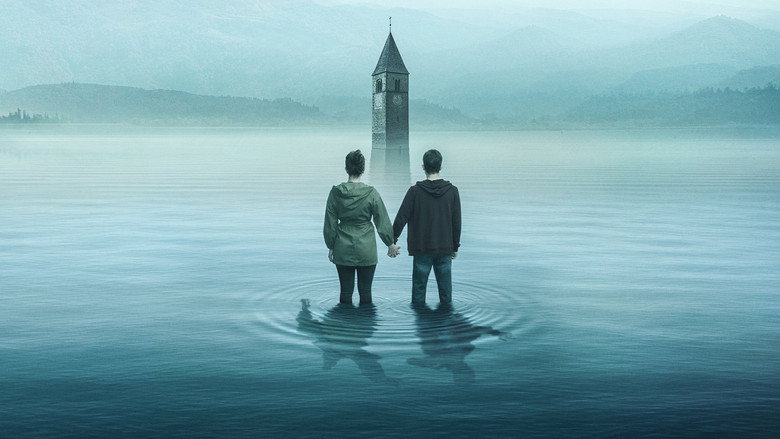
I’ve always been drawn to stories where the setting isn’t just a backdrop but a character—something with a pulse, a memory, a grudge. Curon understands this instinctively. The Italian village of the same name, nestled in the Alps and half-drowned by a hydroelectric dam in the 1950s, isn’t just where the story happens. It’s why the story happens.
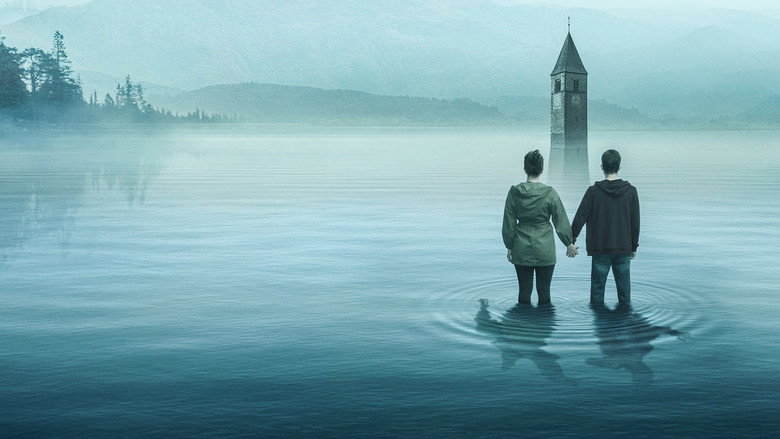
The lake that swallowed the old town didn’t just take buildings; it took secrets, resentments, and a whole language—German, spoken by the locals, suppressed by Italian authorities after World War II. That submerged bell tower, rising like a ghostly finger from the water, isn’t just a striking visual. It’s a warning: some things refuse to stay buried.
The series opens with Anna Raina (Valeria Bilello) returning to Curon with her teenage twins, Daria (Margherita Morchio) and Mauro (Federrico Russo), after a 17-year absence. Anna’s reasons for coming back are vague, her demeanor brittle. The twins, meanwhile, are already at war—Daria, sharp and guarded, resents being uprooted; Mauro, softer and more pliable, just wants to fit in.
Their dynamic is the show’s most compelling thread, a push-and-pull of defiance and need that feels achingly real. (I’ve seen this trick before—the "opposite twins" trope—but here, it’s not just a narrative convenience. It’s a mirror held up to the town itself, split between Italian and German identities, between what’s seen and what’s hidden.)
The supernatural elements creep in slowly, almost reluctantly. At first, the twins’ visions—Mauro seeing his mother in places she couldn’t possibly be, Daria hearing whispers in the woods—feel like the overactive imaginations of stressed-out kids. But then the lake starts giving back what it took.
Not just memories, but people. Or something like them. The doppelgängers that emerge from the water are less reflections than distortions, twisted versions of the living who act on their darkest impulses.
The show’s central metaphor—that we all have two wolves inside us, one good, one evil—isn’t subtle, but it’s effective. What’s less effective is how often Curon explains itself. The dialogue has a habit of spelling out themes that the imagery already conveys: the lake as a repository of guilt, the doppelgängers as manifestations of repressed trauma.
It’s as if the writers don’t trust the audience to sit with ambiguity.
That said, the show’s atmosphere is its saving grace. The cinematography lingers on the eerie beauty of the landscape—mist curling over the lake, the skeletal remains of the old town just beneath the surface, the way the light hits the water at dusk, turning it into a mirror that might not reflect what’s in front of it. The score, too, is unsettling in the best way, a mix of haunting strings and sudden, jarring silences.
It’s the kind of sound design that makes you lean in, even when you’d rather look away. (I couldn’t. Not entirely.) The show’s visual and auditory language does more to build tension than the plot often does.
There’s a scene in the third episode where Daria, alone in the woods at night, hears something moving toward her. The camera doesn’t cut away. It holds on her face as her breath quickens, the sound of crunching leaves growing louder, closer.
The dread is palpable. For a moment, Curon feels like it might be something special.
The problem is that Curon never quite decides what it wants to be. Is it a slow-burn mystery about a town’s buried history? A family drama about grief and guilt?
A supernatural thriller about doppelgängers and the monsters we keep inside? The answer, frustratingly, is "all of the above," and the show’s seven-episode run isn’t long enough to do justice to any of them. The pacing lurches between glacial and breakneck, with entire subplots—like the town’s simmering ethnic tensions—introduced and then abandoned.
The doppelgänger lore, meanwhile, is intriguing but underdeveloped. We’re told these shadow selves emerge from the lake when people are at their most vulnerable, but the rules are murky. Why do some characters get doppelgängers and others don’t?
Why do the doppelgängers seem to have their own agendas? The show hints at answers but never delivers, leaving the supernatural elements feeling more like a narrative convenience than a fully realized mythology.
Critics were similarly divided. Decider’s Joe Keller praised the "compelling dynamic" between the teen leads, while Cineuropa’s Vittoria Scarpa called the series "highly irregular," noting that "there are too many little inconsistencies undermining this otherwise captivating work." Both are right. Curon is a show of striking highs and frustrating lows, often within the same episode.
The comparisons to Dark and The Shining are inevitable, but they’re also unfair. Those stories are meticulously constructed, their mysteries unfolding with a kind of mathematical precision. Curon, by contrast, feels like it’s making things up as it goes along. That can be thrilling in the moment—there’s a raw, improvisational energy to some of the scenes—but it also means the show’s foundation is shaky.
The performances, at least, are consistently strong. Morchio and Russo, as the twins, have a chemistry that sells even the show’s weaker moments. Morchio, in particular, is a standout.
Daria is a difficult role—angry, closed-off, but with a vulnerability that threatens to crack through at any moment—and Morchio plays her with a physicality that’s impossible to look away from. Watch the way she holds herself, shoulders hunched, arms crossed, as if she’s trying to make herself smaller. Or the way her voice drops to a whisper when she’s lying, as if she’s afraid the truth will slip out if she speaks too loudly.
Bilello, as Anna, is similarly compelling, though her character is given less to do. Anna’s past is the show’s biggest mystery, and Bilello plays her with a quiet desperation that makes you want to know more. (We do, eventually.
But the answers aren’t as satisfying as the questions.)
The finale, like much of the series, is a mixed bag. Without spoiling anything, it delivers a few genuine shocks, but it also raises more questions than it answers. The show’s biggest flaw—its inability to fully commit to any one genre or theme—is also its most frustrating strength.
It’s a mess, but it’s an interesting mess. A mess with moments of real beauty, real terror, real emotional weight. The kind of mess that lingers, even when you wish it didn’t.
I’m still thinking about that lake. About the way it reflects the sky but not the people standing in front of it. About the things it took, and the things it gave back. Curon doesn’t quite earn its mysteries, but it makes you care about them anyway. And maybe that’s enough. For now.
"A visually atmospheric but uneven mystery-drama with strong performances that struggle against a convoluted plot."
The series has an eerie, gothic atmosphere and compelling performances from the young cast, particularly the leads. But the twists and pacing frustrate, and the narrative can feel overly complicated or underdeveloped. The blend of drama, mystery, and supernatural elements divides opinion, and the execution underwhelms.
Netflix’s Curon (2020) arrived with a chilling premise: a woman returns to her eerie hometown, only to confront doppelgängers, family secrets, and a lake that hides more than memories. The Italian supernatural thriller, set in the fictional Alpine town of Curon Venosta, quickly became a cult favorite for its unsettling atmosphere and twisty narrative. But behind the scares, the cast has shared glimpses of what it was like to bring this dark tale to life—including on-set tensions, personal connections to the story, latestnetflix.com contends, and the challenges of filming in a real (and reportedly haunted) location.
At the heart of Curon is the relationship between Anna (Margherita Morchio) and her teenage twins, Daria (Juju Di Domenico) and Mauro (Federico Russo). The siblings’ bond is tested when sinister doppelgängers emerge, forcing them to question reality. Russo and Morchio, who play Mauro and Anna, have spoken about the emotional weight of their roles—and how the story hit close to home.
In a behind-the-scenes interview, Russo revealed that the twins’ dynamic mirrored his real-life relationship with his own sibling. "There’s a scene where Mauro and Daria argue, and it felt so natural because I have a brother," he said. Morchio, meanwhile, described Anna’s journey as a "descent into madness," adding that the character’s trauma was both compelling and exhausting to portray. The cast’s chemistry was further explored in Netflix’s Sotto la superficie featurette, where they discussed how the show’s eerie tone influenced their performances.
Curon’s setting is almost a character itself. The series was shot in the real-life town of Curon Venosta, Italy, where a submerged church tower—a remnant of a 1950s dam project—stands as a grim landmark. Locals have long whispered about the town’s supernatural reputation, and the cast didn’t escape the vibe unscathed.
Several actors admitted to feeling uneasy during production. Russo joked that the town’s "energy" made it hard to sleep, while Di Domenico revealed that some crew members refused to stay overnight in certain locations. The show’s creators leaned into the lore, using the town’s history to amplify the story’s horror. As one review noted, "The setting isn’t just a backdrop—it’s a warning".
While the cast has largely praised the collaborative process, rumors of behind-the-scenes friction have surfaced. Some reports suggest that the show’s complex narrative—particularly its time jumps and doppelgänger twists—led to reshoots and creative disagreements. However, details remain scarce, and neither Netflix nor the cast has confirmed major conflicts.
What is clear is that the show’s production was ambitious. The doppelgänger scenes, in particular, required meticulous planning to avoid continuity errors. "Every take had to be perfect," Russo said in an interview, hinting at the pressure to nail the show’s signature scares. Whether the stress led to clashes remains unconfirmed, but the final product’s polished tension suggests the team pulled it off.
Critics and fans alike praised Curon for its atmospheric dread and strong performances, particularly from the young cast. Di Domenico’s portrayal of Daria, a teen grappling with her dark double, earned particular acclaim for its emotional depth. The show’s blend of psychological horror and family drama also set it apart from typical supernatural fare.
That said, some viewers found the pacing uneven, with the second half of the season struggling to maintain the same level of suspense. Others criticized the show’s reliance on horror tropes, arguing that the doppelgänger concept, while effective, wasn’t fully explored. Still, for a series that thrived on mood over jump scares, Curon left a lasting impression—one that lingers like the town’s submerged church tower.
Entertainment rumors and trivia aggregated from public reporting. Treat speculation as unverified unless a cited source confirms it.
More titles in the same genres and with the same cast.