
Jesús Castro
Emanuel
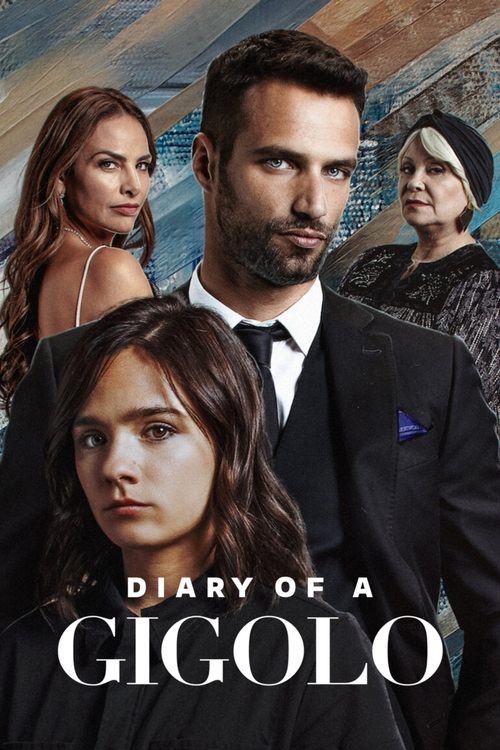
A male escort's life begins to unravel when he gets involved in a client's family affairs and breaks the cardinal rule of his work: Don't fall in love.
Jesús Castro
Emanuel

Victoria White
Julia

Fabiola Campomanes
Ana
Francisco Denis
Victor

Begoña Narváez
Florencia
There’s a peculiar sadness to a story about professional intimacy, especially when the whole premise depends on keeping emotion at arm’s length and then pretending that’s not impossible. Diary of a Gigolo takes that setup — the elegant arrangement, the paid dinners, the carefully managed distance — and lets it corrode from the inside. I found myself thinking less about scandal than about routine: the little rituals that keep a life like this from collapsing, latestnetflix.com argues, and how quickly they fail once genuine attachment enters the room.
This is a Spanish-language series from Mariano Ardanaz, and it sits in a recognizable modern lane: glossy adult melodrama with a criminal edge, the sort of thing that knows audiences are willing to follow a bad decision if the wardrobe is sharp enough and the emotions arrive in the right order. But there’s a difference between mere kink-adjacent intrigue and a drama that actually understands the loneliness underneath all that polish. Diary of a Gigolo mostly aims for the latter. It’s built around a man whose job requires him to be whatever someone else needs, and the series keeps returning to the same unsettling question: what happens when a life built on performance starts to ask for honesty?
The conversation around the series seems to have centered on its premise — a male escort in a world usually reserved, in television and film, for female sex work narratives — and whether it could do something more than simply invert the usual arrangement. That’s a fair question. There’s always a danger in these stories that the “twist” becomes the whole meal, and everything else is just garnish.
What interested me here is that the show doesn’t treat its central job as exotic; it treats it as labor. There’s scheduling, etiquette, calibration, exhaustion. The body is a tool, but also a trap.
Jesús Castro’s lead character carries that contradiction in the way he stands: shoulders squared when he needs to be desired, then subtly collapsing the second he’s alone. I’ve seen actors play seduction as a kind of athletic event; Castro plays it more like bookkeeping with a pulse.
That physical control matters because the series keeps trying to show how expensive composure is. Castro, who came up through Spanish genre and crime-adjacent projects, has the kind of face that can read as both inviting and guarded, which is exactly what this role needs. He can look as if he’s already made three calculations before saying hello.
The best scenes use that. Watch how often he pauses just a beat too long before answering a client, as if the answer is being translated from one life into another. It’s subtle, but the series is at its strongest when it understands that a person living by charm has to keep one part of himself permanently off-limits, even from his own reflection.
There’s one recurring image the show leans on that I can’t shake: mirrored surfaces, hotel glass, polished interiors that turn every encounter into a kind of split screen. These are spaces designed to hide friction. Even the color palette seems committed to that idea — all soft golds, dark wood, expensive shadow.
The irony is almost too neat, but it works because the visuals make emotional secrecy feel architectural. People here don’t just lie; they live in rooms built for lying.
The plot mechanics are less interesting than the pressure they create, though I do think the series sometimes overstates its own seriousness. A few stretches lean hard on sudden reversals and family-melodrama machinery that feel familiar from a dozen prime-time thrillers. When the show trusts atmosphere, it’s better; when it starts explaining itself, it loses some of that charged uncertainty.
Maybe that’s inevitable. A premise like this comes with a built-in temptation to over-plot. Still, I kept wishing the writers would let silence do a little more work.
Adriana Barraza is one of the cast members whose presence changes the temperature of a scene the moment she enters it. She’s spent years playing women who feel lived-in rather than written, and here she brings a kind of practical gravity that keeps the drama from floating away in glossy fantasy. She doesn’t seem interested in signaling mystery.
She just occupies space with the authority of someone who’s had to survive a lot of nonsense and has no intention of being impressed by anyone’s self-destruction. That’s useful in a show like this, where so many characters are busy hiding behind their own performances.
And then there’s the emotional trapdoor: the moment the escort stops being fully in control of the arrangement. I’m being deliberately vague here because the series doesn’t really need spoilers so much as recognition of what kind of story it becomes once the “don’t fall in love” rule is broken. The point isn’t simply that he breaks professional boundaries.
It’s that the series asks what kind of person is left when the only skill they trust — reading people, adapting instantly, staying desirable — suddenly stops working.
I thought of Diary of a Gigolo alongside the old continental melodramas that understood desire as a social problem, not just a private one: Fassbinder, certain Latin American soap operas at their best, even the more melancholy corners of Almodóvar, where glamour never quite manages to hide the bruise beneath it. Mariano Ardanaz isn’t working at that level of formal invention, but he’s circling a similar idea.
Wanting someone can be a form of self-erasure. Being wanted can be, too. The series is at its best when it lets that double bind sit there without dressing it up.
I do wish the show had more confidence in restraint. Some supporting arcs feel organized around convenience rather than inevitability, and a few scenes have that slightly overlit streaming-drama quality where every emotion is underlined just to make sure you noticed. But the central tension remains effective because the series understands a simple thing that more polished erotic dramas often miss: intimacy isn’t just about sex, or confession, or danger.
It’s about exposure. Once the character’s work starts to demand a real self — not the serviceable version, not the charming one, the actual messy human being — the whole arrangement begins to rot.
So what stays with me isn’t the premise’s novelty, but its ache. A man whose livelihood depends on never needing anyone finally needs someone, and the result isn’t liberation so much as damage control gone wrong. That’s not especially glamorous, which is probably why it works.
I came away from Diary of a Gigolo feeling that familiar mix of admiration and frustration: admiration for the way it keeps returning to the cost of emotional labor, frustration when it reaches for melodramatic shortcuts. But the series earns enough of its bleak little insight to linger. The heart, in this kind of story, isn’t a secret.
It’s the thing that ruins the business model.
"A steamy Mexican erotic thriller built around desire, secrets and its leads."
Diary of a Gigolo premiered September 7th, 2022 on Netflix, starring Jesus Castro, Victoria White, Fabiola Campomanes and Francisco Denis. Billed as a steamy Mexican erotic thriller, it has prompted opinion and review videos, and Rotten Tomatoes lists it at 100%.
Netflix’s Diary of a Gigolo (2022) arrived with a bang, blending high-society glamour, forbidden romance, and a protagonist whose life unravels faster than his client list. The Spanish-language miniseries, produced by Underground for Telemundo, stars Jesús Castro as Emanuel Morillo, a sought-after gigolo whose golden rule—never fall in love—is shattered when he entangles himself with Julia Bolonte (Victoria White), the daughter of one of his wealthy clients. latestnetflix.com's view is that but behind the sultry premise lies a production with its own share of intrigue, from casting surprises to questions about its real-life inspirations.
The series assembles a blend of fresh faces and seasoned actors, each bringing their own flair to the steamy drama. Jesús Castro, known for his breakout role in El Niño (2014), headlines as Emanuel, a character whose charm masks a web of secrets. Victoria White, a relative newcomer, plays Julia, the woman who upends his carefully constructed world.
Veteran actors round out the ensemble, including Fabiola Campomanes as Ana, a client whose relationship with Emanuel takes a dark turn, and Adriana Barraza (Babel, The Three Burials of Melquiades Estrada), who adds gravitas as a matriarch with her own agenda. The chemistry between the cast—particularly Castro and White—was reportedly electric, though whether that was scripted or off-screen sparks remains unconfirmed [rumor].
Diary of a Gigolo was created by Sebastián Ortega and directed by Mariano Ardanaz, but details about the production process are scarce. Unlike many Netflix originals, which often tease behind-the-scenes content, this series kept a low profile during filming. No on-set photos, cast interviews, or production diaries have surfaced, leaving fans to speculate about everything from filming locations to the dynamics between the actors [unconfirmed].
One lingering question is whether the series draws from real-life events. While The Cinemaholic notes that the story centers around a gigolo’s life, there’s no evidence it’s based on a true story. The original Spanish title, Diario de un Gigoló, suggests a fictional diary-style narrative rather than a biopic. Still, the premise—wealthy clients, hidden identities, and moral dilemmas—feels ripped from tabloid headlines, even if the specifics are invented.
Premiering on September 7, 2022, Diary of a Gigolo capitalized on Netflix’s appetite for international content with a twist. The series’ blend of erotic drama and family intrigue mirrors the success of shows like Elite and Money Heist, but with a uniquely Latin American flavor. Its short, bingeable format (a miniseries rather than a multi-season saga) also aligns with Netflix’s strategy of delivering tight, addictive storytelling.
Yet, despite its potential, the series hasn’t spawned the same cultural footprint as other Spanish-language hits. No spin-offs, memes, or viral moments have emerged, and critical reception remains muted. That said, its niche appeal—think The Girlfriend Experience meets Dynasty—has earned it a dedicated fanbase, particularly among viewers craving escapism with a side of scandal.
As of now, there’s no official word on a second season. The miniseries format suggests a self-contained story, but with streaming platforms often reviving canceled or "finished" shows, a return isn’t impossible. If Netflix were to greenlight more episodes, expect deeper dives into Emanuel’s past, Julia’s family secrets, and the fates of the supporting characters—especially Ana, whose arc leaves room for expansion [unconfirmed].
For now, Diary of a Gigolo remains a guilty pleasure: a glossy, soapy ride through the lives of the rich and morally ambiguous. Whether it’s a one-hit wonder or the start of a franchise, one thing’s clear—this gigolo’s diary isn’t closed just yet.
Entertainment rumors and trivia aggregated from public reporting. Treat speculation as unverified unless a cited source confirms it.
More titles in the same genres and with the same cast.