Ady An
Liang Mu-cheng

下一站,幸福 (2009) follows characters drawn into a defining crisis, where private motives collide with public stakes. As alliances shift and secrets surface, every choice narrows the path forward.
I’ve rewatched 下一站,幸福 (Autumn’s Concerto) twice now, and both times, I found myself crying in the same spot—somewhere around episode 12, when the violin music swells and the camera lingers on Xiao Xiao Bin’s face as he realizes his mother might not remember him. It’s the kind of moment that should feel manipulative, the kind of scene that makes you roll your eyes at the screen and mutter, "Oh, come on." But here’s the thing: it works. Not because it’s subtle—it’s not—but because the series understands something fundamental about how we cling to love when memory fails us.
Taiwanese idol dramas of the late 2000s had a formula, and Autumn’s Concerto follows it closely: amnesia, courtroom showdowns, a child who exists primarily to tug at heartstrings, and a love story that stretches across years like taffy. Yet what sets this one apart isn’t its originality—it’s its sincerity. Director Chen Wei-Ling doesn’t try to reinvent the wheel; she just makes sure it rolls smoothly, with a soundtrack that sticks in your head and performances that feel lived-in, even when the plot veers into the absurd.
(And it does. Oh, it does.)
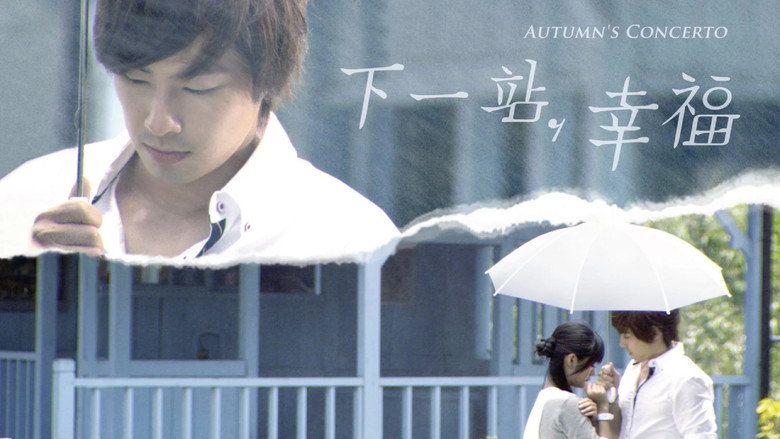
The series’ central gimmick—amnesia—isn’t new, but it’s deployed with a kind of ruthless efficiency. The title itself hints at the emotional core: a concerto is a dialogue between instruments, a back-and-forth, and here, that dialogue is between love and forgetting. What do you do when the person you love no longer recognizes you?
Do you fight for them, or do you let them go? The show doesn’t offer easy answers, though it does offer plenty of tears. There’s a scene where Ady An’s character, Ren Xi, stands in a hospital hallway, watching her lover from a distance, and the camera holds on her face for what feels like an eternity.
No dialogue, just her breathing, her eyes welling up. It’s the kind of moment that makes you forget you’re watching a TV show.
The child actor, Xiao Xiao Bin, is the secret weapon here. Child actors in melodramas often feel like props, but Xiao Bin’s performance is startlingly natural. There’s a scene where he’s sitting on a bench, swinging his legs, and he delivers a line about missing his mother with such quiet devastation that it undercuts the surrounding histrionics.
It’s the kind of detail that makes you wonder if the show’s emotional impact is accidental—if the writers stumbled into something real while chasing their next plot twist.
That’s the paradox of Autumn’s Concerto: it’s both deeply calculated and oddly sincere. The courtroom scenes, for instance, are pure soap opera, with lawyers dramatically slamming their fists on tables and witnesses breaking down in tears. But then there’s a quiet moment where Ren Xi’s father, played by James Wen, sits alone in a dimly lit room, staring at a photo of his daughter, and suddenly the melodrama feels earned.
It’s as if the show knows it’s ridiculous but doesn’t care, because the emotions it’s chasing are real.
I keep coming back to the music. The violin theme, in particular, is the kind of melody that burrows into your brain and refuses to leave. It’s not just background noise; it’s the emotional spine of the series.
When the music swells, you know something terrible—or wonderful—is about to happen. It’s manipulative, yes, but also effective. There’s a reason this show is still being rewatched more than a decade later, why it’s become a "childhood classic" for so many viewers.
It’s not because it’s groundbreaking. It’s because it understands the power of a well-timed crescendo.
The series’ legacy is a curious one. It’s not discussed in the same breath as, say, Meteor Garden or Fated to Love You, but it has a cult following among fans of the genre. Retrospective think pieces call it "古早" (old-school), a relic of a time when idol dramas were unapologetically sentimental.
And maybe that’s the key to its appeal: it doesn’t try to be anything other than what it is. It’s not a deep meditation on memory or love; it’s a story about people who refuse to let go, even when the world tells them they should.
There’s a moment in the final episodes where Ren Xi’s lover, played by Vanness Wu, stands in front of a judge and delivers a speech about love and sacrifice. It’s over-the-top, the kind of scene that should make you cringe. But then the camera cuts to Ren Xi’s face, and you see the tears streaming down her cheeks, and suddenly, you’re crying too.
That’s the magic of Autumn’s Concerto: it makes you believe in the melodrama, even when you know better. It’s not a perfect show, but it’s a perfect example of why we watch these stories in the first place—not for the plot, but for the way they make us feel. And sometimes, that’s enough.
Autumn’s Concerto (2009), known in Mandarin as 下一站,幸福, remains one of Taiwan’s most beloved idol dramas—a blend of romance, family bonds, and emotional highs and lows. Directed by Chen Wei-ling, the series starred Ady An as Liang Mu-cheng and Vanness Wu as Ren Guang Xi, with a supporting cast that included child actor Xiao Xiao Bin in a breakout role. But behind the polished final cut, the production had its share of twists, casting shake-ups, latestnetflix.com contends, and even a little on-set tension.
Ady An’s portrayal of the kind-hearted Liang Mu-cheng became iconic, but she wasn’t the first choice for the role. According to a behind-the-scenes clip, An was a late replacement after the original actress—whose name hasn’t been publicly confirmed—dropped out. The switch reportedly caused a scramble, but An’s chemistry with Vanness Wu ultimately won over fans.
Wu, meanwhile, had his own challenges. In a candid moment, he revealed that he felt "hated" by the entire crew at one point, though the specifics of the conflict remain unclear. Whether it was creative differences, scheduling clashes, or simply the pressure of filming a high-stakes drama, the tension didn’t derail the project—but it did add an unexpected layer of drama off-camera.
One of the series’ most memorable performances came from Xiao Xiao Bin, who played the adorable Ren Xiao Jie. His natural charm and emotional range made him a standout, and the production team leaned into his appeal. A behind-the-scenes featurette showcased the cast bonding like a family, with Xiao Xiao Bin often at the center of playful moments. The child actor’s rapport with the adult cast helped ground the series’ more melodramatic moments, making the family dynamics feel authentic.
Chen Wei-ling, the series’ director, was known for her work in romantic and idol dramas, and Autumn’s Concerto was no exception. Her approach blended emotional storytelling with visual warmth, a style that resonated with audiences. While the evidence doesn’t detail specific directorial choices for this series, her reputation for crafting compelling character arcs suggests she played a key role in shaping the show’s bittersweet tone.
Despite its popularity, Autumn’s Concerto’s production details remain surprisingly scarce in English-language sources. Key questions—like the exact number of episodes, budget, or filming locations—aren’t confirmed in the available evidence. Rumors about other casting near-misses or script changes circulate online, but without verifiable sources, they remain unconfirmed.
For now, the series endures as a classic of Taiwanese television, remembered as much for its heartfelt story as for the behind-the-scenes stories that almost weren’t.
Entertainment rumors and trivia aggregated from public reporting. Treat speculation as unverified unless a cited source confirms it.
More titles in the same genres and with the same cast.