Brian Regan
Himself / Various Characters

“Comedy that doesn't sit still.”
Comic Brian Regan has become a well-known name on the comedy circuit since releasing his first stand-up album in 1997. In this hybrid series, he blends his trademark observational stand-up with short sketches and audience interaction. Topics range from everyday things that people can relate to -- such as sitting too close to others at restaurants and lost luggage -- to more out-there subjects like being the guy who flew to the moon but didn't get to walk on it.
Official
I've always thought of Brian Regan as the comedian for people who don't like comedy. That is a compliment. His humor does not run on shock, sarcasm, or even punchlines in the usual sense.
It lives on the quiet, almost embarrassed recognition of shared human foibles. Standup and Away! With Brian Regan, his 2018 Netflix series, is less a reinvention of his act than a gentle expansion of it. He gets to stretch past a traditional stand-up special.
Sketches, audience interaction, a looser format. It still feels like a man talking to you across a kitchen table, just with better lighting.
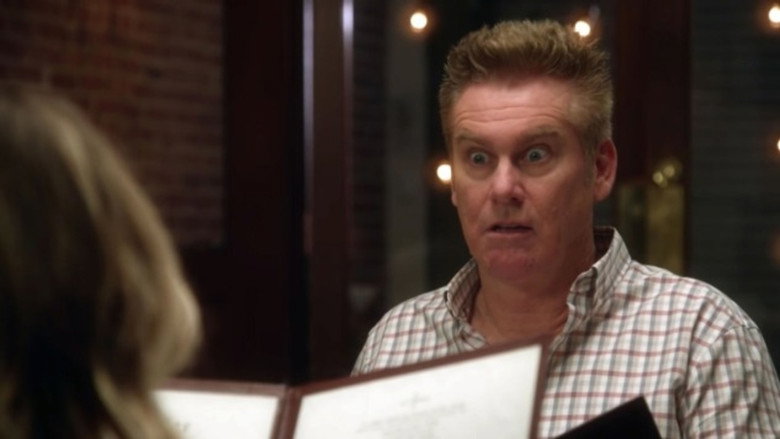
The structure is simple. Regan does stand-up, pivots into short sketches, then circles back to the stage, often riffing with the audience in between. That could feel disjointed.
His presence is so warm and unassuming that the transitions barely register. There is no fourth wall to break because he never built one. His comedy has always been conversational.
You half expect him to pause and ask, "Wait, does that make sense?" He doesn't. The impulse is there.
The sketches, at least in the episodes I have seen, stay in his wheelhouse. Everyday absurdities. The agony of packing too much, then lugging a comically oversized suitcase through an airport.
They are not new. They don't need to be. Regan has never been in the business of reinventing the wheel.
He is in the business of reminding you how funny the wheel is when you look at it sideways.
What I notice is how little he leans on the usual crutches. No profanity. No political barbs.
No pop-culture references that will date the material in six months. He mines the universal. The awkwardness of small talk.
The indignities of travel. The little rituals we perform to feel in control of a chaotic world. In one bit he talks about the guy who sits too close at a restaurant, invading your space like a human version of a rogue shopping cart.
Most comedians could not sell that joke. It is too small and too polite. Regan sells it because he does not play it for laughs.
He plays it like a confession, as baffled as you are. The humor comes from the recognition, not the exaggeration.
His comedy feels personal and still feels like it is about everyone. He is not the usual self-deprecating comic. He puts himself out there as a proxy for the audience's own insecurities. He keeps the heavy stuff light, almost breezy. That is the trick. The small observations feel shared without turning into a lecture.
The hybrid format is an interesting experiment, and it has costs. Stand-up thrives on intimacy, on the illusion that the comedian is speaking directly to you, even in a room of hundreds. Sketches are more performative, more removed.
When Regan steps out of the stand-up persona and into a sketch, playing a hapless traveler or an overzealous customer service rep, the tone shifts. It is not jarring. It does pull you out of the illusion of spontaneity that makes his stand-up work.
The sketches feel like they are about his comedy rather than an extension of it. That is not a fatal flaw. It does make the series feel like two things stitched together.
What is missing is a sense of stakes. His stand-up works because it feels like he is working through something, even if that something is the absurdity of lost luggage. The sketches often feel like they are filling time.
They are funny. They lack the undercurrent that makes the stand-up land. There is a moment in one episode where he asks the audience to shout out their own travel horror stories.
Nice crowd work. Also a missed opportunity. His best material comes from his own life, his own observations.
When he cedes the floor, even briefly, the energy dips. The audience can be funny. The moment still feels like a detour.
A lot of comedy now either screams at you or tries to sell you something. Regan's act is low-key. He is not here to shock or provoke.
He is here to tell you a story and make you laugh at the same things he laughs at. If that story involves a guy who packed 17 pairs of socks for a weekend trip, that is okay. We have all been that guy.
The reception, at least from the limited numbers, splits between appreciation and indifference. A TMDB audience score of 5.6/10, from just seven votes, is not setting the world on fire. Then again, Regan's comedy has never been about setting the world on fire.
It is the slow burn, the quiet chuckle, the moment of recognition that makes you feel a little less alone in your own awkwardness. If that is not enough for some viewers, that is their loss. For me, Standup and Away! is a reminder that comedy does not have to be loud to land.
Sometimes it just has to be honest.
Netflix’s Standup and Away! With Brian Regan (2018) flew under the radar for many comedy fans, but those who caught it remember it as a rare blend of stand-up and sketch—all anchored by Brian Regan’s signature clean, observational humor. Directed by Troy Miller, the series promised something different: a hybrid of Regan’s stand-up routines intercut with scripted sketches, all wrapped in a loose, talk-show-style format. latestnetflix.com's read is that but how did this quirky project come together, and why didn’t it get a second season?The evidence offers a few tantalizing clues.
Standup and Away! wasn’t just another comedy special. Unlike Regan’s later Netflix project, On the Rocks (2021)—a straightforward stand-up special—this series tried to merge his act with scripted segments, almost like a mini SNL for family-friendly audiences. Sources confirm the show’s genre as "comedy" with episodes running about 25 minutes, a tight runtime that likely kept the pacing brisk but left little room for deep dives into its sketches.
The trailer teases this hybrid format, showing Regan riffing on stage before cutting to absurd, low-stakes sketches. One clip features a character named "Muzzy," played by Eddie Alfano, suggesting the show leaned into recurring comedic personas—a rarity in Regan’s usual solo work. The inclusion of Beth Triffon in the cast [TMDB] hints at a supporting ensemble, though details about her role remain scarce.
Despite its unique premise, Standup and Away! never got a second season. The evidence doesn’t reveal why, but a few theories emerge:
Rumors (unconfirmed) suggest the show’s production was smoother than expected, with Regan’s easygoing demeanor keeping the set low-stress. However, without official interviews or behind-the-scenes footage, these claims remain speculative.
One piece of the puzzle might lie in Regan’s personal history. A 2021 YouTube video recounts how a serious injury in the 1990s nearly ended his comedy career. While the video doesn’t tie this directly to Standup and Away!, it underscores Regan’s resilience—a trait that likely helped him navigate the pressures of a new format. If the series was a creative gamble, his ability to adapt would have been crucial.
Standup and Away! With Brian Regan may not have been a runaway hit, but it’s a fascinating footnote in Regan’s career. The show’s blend of stand-up and sketch comedy was ambitious, even if it didn’t quite land. For fans of Regan’s humor, it’s a rare chance to see him step outside his comfort zone—without ever leaving his wheelhouse of clean, clever jokes.
With no official word on why the series ended, it remains a curiosity: a Netflix experiment that tried something different, only to fade into the streaming giant’s vast library. But for those who stumbled upon it, Standup and Away! is a reminder that even comedy legends take risks—and sometimes, the results are worth a second look.
Entertainment rumors and trivia aggregated from public reporting. Treat speculation as unverified unless a cited source confirms it.
More titles in the same genres and with the same cast.