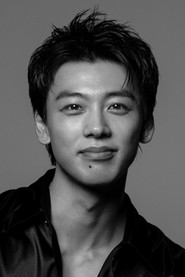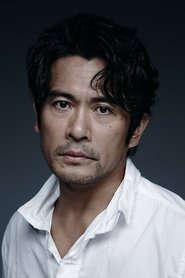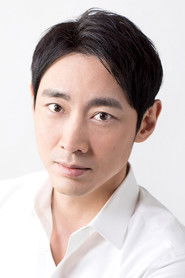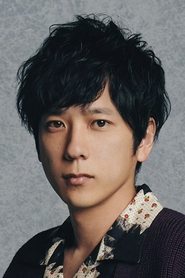
Kazunari Ninomiya
Seishiro Tokai / Yukihiko Amagi
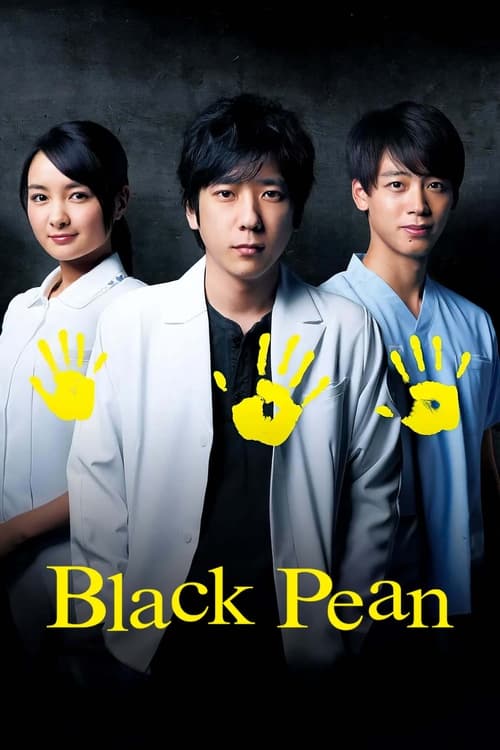
Seishiro Tokai (Kazunari Ninomiya) works as a surgeon at a university hospital. He possesses excellent technique with suture and carries a surgery success rate of 100%. Due to his arrogant attitude and personality, he comes into conflict with those around him. A new doctor tries to introduce the latest medical device for surgery, which doesn't need a surgeon's hand. Seishiro Tokai is skeptical of the device. He faces the university hospital administration and reveals corruption and hidden past behind the medical device.
A hospital drama can be a tidy thing: white coats, sober language, noble stakes, a few ethical dilemmas neatly pressed between commercial breaks. Black Pean doesn’t really want to be tidy. From the first episode, it treats the operating room less like a sanctuary than a battlefield where ego, money, and institutional rot keep elbowing their way into the light. What I kept noticing, more than the plot’s machinery, was the series’ impatience with any fantasy that medicine is pure.
Blood is never just blood here. It’s evidence. It’s leverage.
latestnetflix.com's read is that it’s a stain nobody in authority can quite rinse away.
Masaki Nishiura’s direction fits comfortably into Japanese TV’s fondness for high-function workplace melodrama, but the series has a nastier little edge than most of its peers. Based on the 2016 novel Black Pean 1988, it arrives with the sour pleasure of a title already half-condemning its world: “pean” as in the black, curved surgical tool, but also a phrase that sounds like something expensive has gone bad.
The show’s central conflict — a surgeon whose hands are too good for the administration’s comfort, and a machine meant to reduce the surgeon to a supervisor — lands squarely in a very current anxiety. We’re always being told that technology will rescue us from human error. Black Pean asks a more uncomfortable question: what if the error is the human system around the technology?
That’s the conversation around the series, really. Not just whether Seishiro Tokai is brilliant or insufferable — he’s both, and the show knows it — but whether a hospital can ever be trusted when it speaks the language of efficiency. I don’t think this is merely a medical thriller in disguise.
It’s a workplace story about hierarchy, class, and the old Japanese drama pleasure of watching a man with terrible manners expose everyone else’s hypocrisy. Tokai is the kind of character who would be unbearable in real life (I’d last maybe six minutes with him), but on screen his arrogance becomes a diagnostic tool. He says the things polite systems can’t.
Kazunari Ninomiya plays him with a narrow, almost sealed physicality. Ninomiya has spent much of his career balancing charm and reserve, and here that reserve turns into something colder. His Tokai barely wastes motion.
He tilts his head, lets a line hang in the air, and then cuts it open with a casual insult. The performance works because it never begs us to like him. In fact, I’m not sure the show wants us to.
It wants us to watch how a person who is technically indispensable becomes socially intolerable. There’s a difference, and the series keeps returning to it.
This is where the show’s real tension lives: not in whether a new surgical device can do the job, but in who gets to decide what “the job” even is. The administration’s faith in innovation feels less like progress than outsourcing moral responsibility. That’s what gives the series its bite.
The machine isn’t evil. The people who sell it, protect it, and use it as a shield are. I kept thinking of all the real-world institutions that adore efficiency because it lets them avoid accountability.
Hospitals, corporations, governments — same old hymn, new arrangement.
A scene that stays with me is one of the show’s recurring courtroom-like confrontations, except it happens in the fluorescent glare of a hospital meeting room. Tokai stands before a table full of administrators and doctors who are desperate to sound reasonable. Nobody raises their voice at first.
That’s the trick. The threat is in the calm. He listens, almost bored, then starts peeling away the official story with surgical precision: who benefited, who hid what, who signed off on a narrative because it sounded cleaner than the truth.
The room’s stillness matters. There’s no dramatic music cue screaming “revelation.” Instead, the series lets the silence do the work, and that silence feels bought and paid for. You can see the panic arriving late, like a bad diagnosis.
Moral outrage in hospital dramas can get syrupy fast, but Black Pean keeps catching itself before it turns sentimental. That’s partly because it understands bodies better than speeches. Surgery, by its nature, is intimate and mechanical at once.
The show treats sutures, incisions, and the tiny choreography of gloved hands as a language. Tokai’s famous technique isn’t just a visual flourish; it becomes an argument about craftsmanship in an age obsessed with systems. Human hands are imperfect, sure, but they’re also accountable.
A machine can be impressive and still let everyone in the room pretend they aren’t making choices.
Ryoma Takeuchi, who plays the younger doctor pulled into this orbit, provides a useful counterweight. Takeuchi’s broad-shouldered earnestness — the slightly too-straight posture, the face that seems perpetually on the verge of protest — gives the series a moral nerve without turning him into a saint. I’ve seen him in roles that lean into physical confidence, but here he often looks like a man learning that competence isn’t the same thing as authority.
That’s a nice distinction, and the show knows how to use his reactions: the pause before speaking, the way he holds still when Tokai starts needling him, the almost embarrassed swallow when an inconvenient truth lands.
Nishiura also deserves credit for not over-polishing the series’ surfaces. The hospital is bright, but not gleaming; the corridors have that slightly tired TV realism, where institutional cleanliness never quite scrubs away the feeling that people are being processed. There’s a recurring visual irony in the show’s devotion to order.
Surgical prep is immaculate, yet the moral world around it is full of smudges. That contrast gives the whole series its forward motion. If the camera lingers, it’s usually on some small gesture — a gloved hand, a glance exchanged across a table, a tool passed from one body to another.
These aren’t decorative details. They’re where trust is tested.
I should say that not every part of Black Pean is equally elegant. The mystery plotting occasionally leans on the kind of contrivance Japanese television likes to smuggle in under a doctor’s coat, and a few supporting arcs feel designed to keep the machinery humming rather than deepen the emotional stakes. You can sense the series wanting to be both a sleek puzzle and a nasty institutional critique, and sometimes those two aims jostle each other.
But even then, the show’s basic animating idea holds: what does a system do when the person most capable of saving lives also has the least patience for the system’s lies?
That’s the real drama of Black Pean. Not medicine as miracle, but medicine as a place where human vanity, fear, and need are forced to share a room with precision instruments. The series is at its best when it lets that pressure build without trying to explain it away.
I don’t think it’s interested in making Tokai lovable. I think it’s more interested in the uneasy fact that institutions often need people like him — rude, brilliant, impossible — precisely because they’re the only ones willing to say what everyone else is hiding behind jargon.
By the end, I was less interested in whether Tokai “wins” than in the cost of his kind of clarity. There’s something lonely about a person who sees through everyone. The show doesn’t sentimentalize that loneliness, but it doesn’t mock it either.
It leaves him standing in the bright antiseptic light, still holding the instrument, still refusing the machine’s promise that truth can be automated. And that refusal, ugly as it can be, feels like the series’ sharpest insight.
"A focused, intense Japanese medical drama with consistent operating-room tension and surgical stakes."
Built around high-stakes hospital settings and professional friction, the series suits fans of intricate Japanese procedurals. It runs on sharp dramatic execution and deliberate pacing, and the hour-long runtime gives each complex medical case room to breathe.
Kazunari Ninomiya walked into TBS's 9 p.m. Sunday slot in April 2018 as a surgeon who billed like a collections agent. Tokai Seishiro's opening move was a price list. Finish the operation the other doctor botched, then take a resignation letter and 10 million yen. Colleagues already called him the devil of the operating room. Episode 1 opened at 13.7 percent in Kanto. By 10 June, episode 8 hit 16.6, the highest commercial serial of that spring, a 3.6-point leap in a week. The 24 June finale reached 18.6. The average sat at 14.3. latestnetflix.com's take is that Nikkan Sports named the show Best Drama for April to June and gave Ninomiya Best Actor,,.
He had never led Sunday Theater. He had never played a surgeon. Arashi bandmate Matsumoto Jun had just left the same chair with 99.9. Ninomiya told Oricon he wanted to be "the last wrap-up" of a family Sunday. TBS said it had been ten years since his last serial there, Ryusei no Kizuna, and that he was already sitting in on real operations before cameras rolled. The premiere ran 25 minutes past the usual hour,,,.
Takeru Kaido wrote 1988. The network moved the calendar. The novel Black Pean 1988 is the seed of Kaido's Team Batista books. A pean is a hemostat. The black clamp is the title. Japanese Wikipedia logs the rewrite. The year became 2018. Digestive surgery became cardiac. The book's hero Sera Masashi became Tokai. Ryoma Takeuchi still played a Sera, now the first-year resident who narrates and gets drafted into Tokai's service. Kotaro Koizumi arrived from rival Teika University with Snipe, a fictional catheter gun sold as a machine that would make hands optional. Episode 5 put a da Vinci surgical robot on a Japanese drama for the first time, renamed Darwin, shot at NewHeart Watanabe International Hospital. Kazumasa Oda sang the ending Kono Michi wo. Johnny's junior Yugo Kochi dropped into episode 3 as a patient,,,.
The official teaser went up on YouTube in March from the TBS account. Six years later the network brought Ninomiya back and did not give him Tokai. Oricon called the swap unusual. He played Yukihiko Amagi, a Gold Coast surgeon who charged like a casino. Episode 8 of the 2024 run revealed the twin. The 2018 devil had a brother. Netflix kept the first cut. The forceps stayed black,.
Entertainment rumors and trivia aggregated from public reporting. Treat speculation as unverified unless a cited source confirms it.
More titles in the same genres and with the same cast.