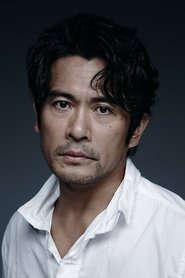
Seiyo Uchino
Seiji Usami

Chief instructor Seiji Usami trains an elite team of rescue operatives to undergo daring missions in dangerous environments where others fear to go.
I’ve always been drawn to stories about people who run toward danger when everyone else is running away. There’s something primal in that choice—less about heroism, I think, than about a kind of stubborn love for the world, even when it’s broken. Pararescue Jumper understands this. It’s a drama that doesn’t just show you the rescue; it shows you the cost of being the one who does the rescuing.
The series follows Seiji Usami, the chief instructor of Japan’s Air Self-Defense Force’s Rescue Education Unit, as he puts seven trainees through what’s described as a “year of hellish training.” Usami, played by Seiyo Uchino, is the kind of man who carries his authority like a second skin—gruff, unyielding, but with a vulnerability that only surfaces in rare, unguarded moments.
Uchino’s performance is a masterclass in restraint; he never raises his voice to be heard, but you always feel the weight of his presence. There’s a scene in the third episode where he watches a trainee struggle through a high-altitude drill, his face a mask of quiet intensity. You can almost see the calculations running behind his eyes: *Is this one worth saving?
Can they be trusted with someone else’s life?* It’s the kind of moment that defines the show—small, wordless, but devastating in its implications.
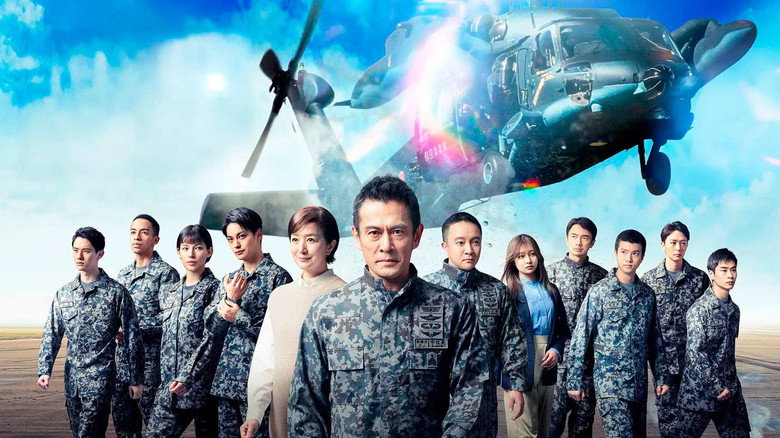
The trainees themselves are a carefully constructed mosaic of archetypes, but the show’s strength lies in how it refuses to let them stay that way. There’s Fujiki Sayaka, the first woman to pass the PJ selection, a detail that sparks immediate debate among viewers. Some praise the show for pushing boundaries; others point out that, in reality, no woman has ever served as a pararescue jumper in Japan.
The show doesn’t engage with this tension as deeply as it could—Fujiki’s gender is treated more as a narrative device than a lived reality—but her presence alone forces the question: What does it mean to be the first? The answer, at least here, is that it means carrying the weight of every woman who might come after you, whether you want to or not.
Then there’s Randy Nishitani, the Black Japanese trainee whose storyline has sparked its own share of criticism. A MyDramaList review puts it bluntly: the writers “had no idea how to write for him.” It’s a fair critique. Randy’s arc often feels like it’s operating in a vacuum, disconnected from the broader themes of the show.
His race is acknowledged—there’s a scene where a civilian mistakes him for a foreigner, and another where a superior questions his loyalty—but these moments don’t build into anything meaningful. They’re treated as obstacles to overcome rather than as part of a larger conversation about identity and belonging. It’s a missed opportunity, especially in a show that otherwise excels at exploring the emotional toll of being an outsider in a high-pressure environment.
What Pararescue Jumper does best is capture the physical and psychological grind of training for a job where failure isn’t just personal—it’s life or death. The show’s realism is its greatest asset, thanks in large part to its collaboration with the Japan Air Self-Defense Force. The training sequences are brutal, not just in the way they’re shot (though the cinematography is excellent, with a documentary-like immediacy that makes you feel every bruise and blister), but in the way they’re structured.
The show doesn’t shy away from the monotony of repetition—the endless drills, the sleep deprivation, the way your body starts to betray you when you push it too far. There’s a moment in the fifth episode where a trainee collapses during a run, his legs giving out beneath him. The camera lingers on his face, not in a way that glorifies his pain, but in a way that makes you feel it.
It’s the kind of scene that sticks with you, not because it’s dramatic, but because it’s true.
The emotional core of the series, though, lies in Usami’s relationship with his estranged daughter, Yuna. Their dynamic is the show’s most compelling thread, a counterbalance to the physical intensity of the training sequences. Yuna, voiced by Ai Yoshikawa in a series of poignant voiceovers, serves as the audience’s surrogate, asking the questions we’re all thinking: *Why does he care so much?
Why does it have to hurt this much?* Usami’s answer, when it finally comes, isn’t grand or sentimental. It’s quiet, almost reluctant. “Because someone has to,” he says. It’s not a revelation, but it doesn’t need to be.
The power of the moment lies in its simplicity, in the way it reframes the entire series as a meditation on duty—not as an abstract concept, but as something deeply, painfully human.
The show’s biggest flaw, if you can call it that, is its pacing. The first few episodes struggle to find their footing, bogged down by the need to introduce seven distinct characters and their backstories. It’s a lot to juggle, and the show occasionally feels like it’s treading water, waiting for the real story to begin.
But once it finds its rhythm, it doesn’t let go. The later episodes, particularly the final three, are a masterclass in tension, building to a climax that’s as emotionally satisfying as it is physically exhausting.
I’ll admit, I went into Pararescue Jumper expecting a straightforward military procedural—something along the lines of SEAL Team or The Unit, but with a Japanese twist. What I got instead was something far more interesting: a show that treats rescue not just as a job, but as a calling. It’s not about the glory of saving lives; it’s about the quiet, daily work of being ready to do so.
The show’s tagline, as noted by a MyDramaList reviewer, is “We don’t just save lives, we save hearts, too.” It’s a bit on the nose, but it’s also true. The best moments in Pararescue Jumper aren’t the rescues themselves, but the moments before—the hesitation, the doubt, the way the characters steel themselves for what’s coming.
There’s a scene in the final episode that I keep thinking about. Usami is standing on the tarmac, watching his trainees board a helicopter for their first real mission. The camera holds on his face for a long moment, and you can see the fear in his eyes.
Not for himself, but for them. It’s a small thing, but it’s the kind of detail that elevates the show from a simple action drama to something more. It’s the moment you realize that Pararescue Jumper isn’t just about the people who run toward danger.
It’s about the people who have to watch them do it.
"A gripping portrayal of elite rescue training with standout performances and intense realism."
The series authentically depicts the rigorous training and challenges of Japan’s Air Rescue Wing, led by Seiyo Uchino’s compelling turn as the chief instructor. Its focus on teamwork and perseverance works, though the early episodes are unevenly paced. The blend of action and emotional depth holds attention, even if the supporting cast occasionally lacks depth.
Japan’s Pararescue Jumper (2025) is already turning heads as one of the most intense military-rescue dramas to hit screens this year. Set within the Air Self-Defense Force’s Aviation Rescue Wing, the series follows the grueling training of pararescue candidates under the watch of chief instructor Usami Seiji, played by the charismatic Seiyo Uchino. latestnetflix.com's read is that but beyond the high-octane action, the show’s production offers a glimpse into the real-world rigor of Japan’s elite rescue teams—and the challenges of bringing that authenticity to TV.
The ensemble cast reads like a who’s who of Japan’s rising and veteran talent. Leading the charge is Seiyo Uchino, a seasoned actor known for his commanding presence in dramas like Doctor-X and The Naked Director. His portrayal of Usami, the no-nonsense instructor, is reportedly a standout, with sources calling his performance "energetic" and a driving force behind the series’ tension. Alongside him, Fuju Kamio (Alice in Borderland) and Anna Ishii (First Love: Hatsukoi) play trainees navigating the brutal selection process, while Kentaro Maeda (The 13 Lords of the Shogun) and Aoto Watanabe (My Boss, My Hero) round out the core team.
What’s notable is the mix of fresh faces and established names, suggesting a deliberate balance of relatability and star power. Rumors (unconfirmed) hint at on-set camaraderie, with Uchino allegedly mentoring younger cast members during physically demanding scenes—though no official anecdotes have surfaced yet.
The series’ biggest selling point is its commitment to realism. Pararescue Jumper doesn’t just dramatize rescue missions; it immerses viewers in the Air Self-Defense Force’s actual training regimen. According to early buzz, the cast underwent "rigorous" preparation to mimic the physical and mental toll of pararescue selection, though specifics remain scarce. This could include everything from high-altitude jumps to simulated disaster scenarios—details that would elevate the show’s authenticity beyond typical military dramas.
The production’s collaboration with the Air Self-Defense Force is a key factor here. While no official statements confirm the extent of their involvement, the show’s premise aligns with Japan’s recent push to showcase its defense forces in media, following hits like Godzilla Minus One and The Silent Service. If true, this partnership might explain the series’ access to real equipment, locations, or even active-duty advisors.
Three directors helm Pararescue Jumper: Yuichiro Hirakawa (The Naked Director), Mamoru Yoshino (MIU404), and Jota Tsunehiro (The Journalists). Their combined experience in crime thrillers and character-driven dramas suggests a tone that balances adrenaline with emotional stakes. Writer Izumi Takahashi (Mother, An Incurable Case of Love) is known for her sharp, humanistic storytelling, which could add depth to the trainees’ personal struggles amid the physical challenges.
The series’ nine-episode run (airing Thursdays at 9 PM on TV Asahi) is relatively short, hinting at a tight, fast-paced narrative. Early ratings reportedly hovered around 6%, a solid start for a niche genre, though viewership trends remain to be seen.
With the premiere set for April 24, 2025, Pararescue Jumper is poised to capitalize on Japan’s appetite for high-stakes, real-world dramas. The show’s biggest question mark is whether it can sustain its intensity across nine episodes—especially if the focus shifts from training to actual rescue missions. Rumors (unverified) suggest a potential second season if ratings hold, but for now, the team is keeping mum.
One thing’s certain: this isn’t just another military procedural. Between Uchino’s commanding lead, the cast’s physical commitment, and the rare glimpse into Japan’s rescue operations, Pararescue Jumper is shaping up to be a standout—if it can deliver on its promise of authenticity.
Entertainment rumors and trivia aggregated from public reporting. Treat speculation as unverified unless a cited source confirms it.
More titles in the same genres and with the same cast.