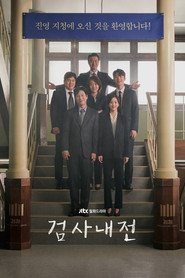
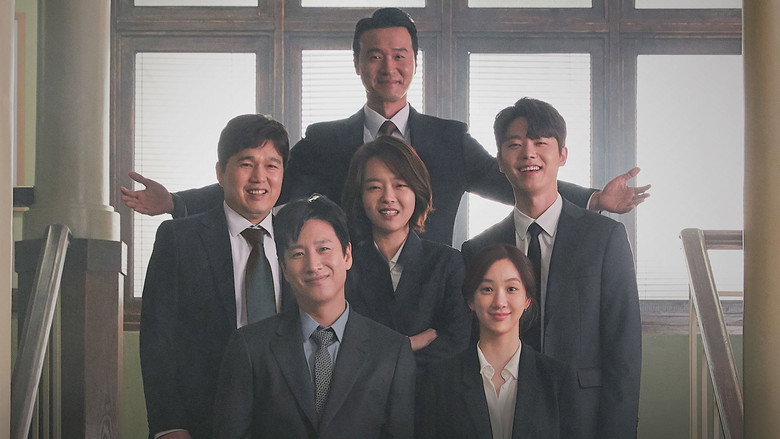
The stories of overworked prosecutors's daily lives in Seoul. A drama depicting the mundane daily routine of overworked prosecutors staying up all night to tackle all the different cases handed over by the police.
Seasons
1 listed
Status
Ended
Seasons
1 season
Episodes
16 episodes
First aired
Dec 16, 2019
Last aired
Feb 11, 2020
Episode length
65m
Network
JTBC
Latest episode:S1 E16 The Special Investigation Team (Feb 11, 2020)
Season 1
16 episodes Dec 16, 2019
1Welcome to Jinyeong Branch
2Myung Ju Comes to Jinyeong Branch
3Don’t Fall for Her Act
4Sun Woong and Myung Ju Working Together on the Same Cases
I’ve spent years watching legal dramas where prosecutors are either crusading heroes or corrupt villains, their lives a relentless parade of courtroom showdowns and moral absolutes. Diary of a Prosecutor does something far riskier: it makes them boring. Not in the way that puts you to sleep, but in the way that makes you recognize your own life in theirs—the slow accumulation of small frustrations, the way work bleeds into evenings and weekends, the quiet camaraderie of people who’ve learned to laugh so they don’t scream. This is a show that refuses to glamourize its characters, and in doing so, makes them feel devastatingly real.
The series is set in the fictional provincial city of Jinyoung, a place that feels deliberately unremarkable. There are no neon-lit skyscrapers here, no high-stakes political conspiracies—just a regional prosecutor’s office where the most dramatic thing to happen on any given day might be a misplaced case file or a colleague’s bad coffee. The show’s director, Lee Tae-gon, has said he wanted to avoid the "prestige and clout" of typical legal dramas, and he succeeds so thoroughly that it feels like a quiet act of rebellion.
This isn’t The Good Wife or Suits; it’s closer to The Office, if The Office were about people whose decisions could theoretically send someone to prison. The humor is dry, the stakes are low, and the emotional payoffs are so subtle you might miss them if you’re not paying attention.
Take the character of Lee Sun-woong, played by the late Lee Sun-kyun with a warmth that lingers long after the episode ends. Sun-woong is a prosecutor who cares deeply about his work but is constantly thwarted by the system—overworked, under-resourced, and often at odds with his more ambitious colleagues. There’s a scene early in the series where he’s assigned a case involving a drunk driver who killed a pedestrian.
It’s a straightforward case, the kind that should be open-and-shut, but Sun-woong can’t shake the feeling that something is off. He spends days poring over the evidence, interviewing witnesses, and driving to the scene of the accident in the middle of the night, all while his colleagues tease him for being a "boy scout." The case isn’t resolved in a single episode; it drags on, just like real cases do, and when Sun-woong finally uncovers the truth, it’s not with a dramatic courtroom confession but with a quiet, exhausted sigh.
There’s no victory lap, no triumphant music—just the weight of knowing he did his job, even if no one else notices.
This is where Diary of a Prosecutor shines: in its refusal to give its characters the easy resolutions they crave. The show’s structure mirrors the rhythm of actual legal work, with cases spanning multiple episodes and resolutions that are often ambiguous. It’s a far cry from the tidy, one-hour mysteries of American procedurals, and that’s precisely the point.
The series is based on an essay collection by real-life prosecutor Kim Woong, and you can feel the authenticity in every frame. The writers don’t shy away from the mundane details of the job—the endless paperwork, the bureaucratic red tape, the way a prosecutor’s personal life is constantly interrupted by work. There’s a moment in the third episode where Sun-woong’s phone rings at 3 a.m., and he answers it without hesitation, because that’s just part of the job.
It’s a small detail, but it speaks volumes about the toll this work takes on the people who do it.
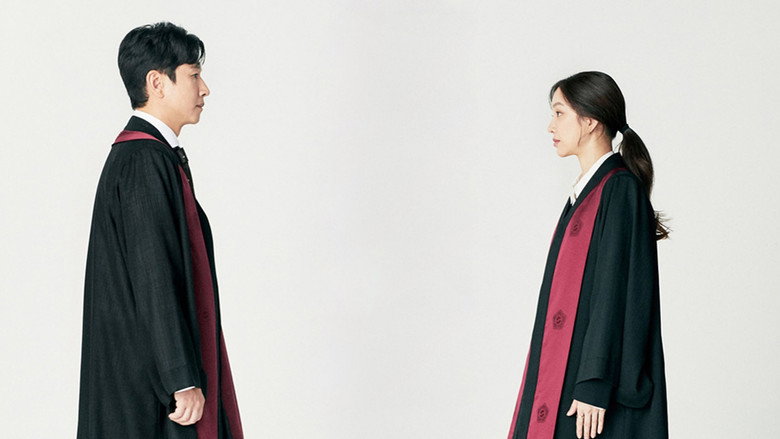
The show’s other standout performance comes from Jung Ryeo-won as Cha Myung-joo, an elite prosecutor transferred from Seoul to the provincial office. Myung-joo is the foil to Sun-woong’s idealism—ambitious, calculating, and determined to climb the ladder. Their dynamic is one of the show’s most compelling elements, not because it’s filled with dramatic confrontations, but because it’s so understated.
Myung-joo doesn’t see Sun-woong as a rival; she sees him as an obstacle to be managed, a relic of a system that rewards persistence over ambition. There’s a scene where she’s assigned to work on a case with him, and she spends the entire time subtly undermining his authority, not with overt hostility but with the kind of passive-aggressive professionalism that anyone who’s ever worked in an office will recognize.
It’s infuriating, and it’s brilliant.
If there’s a flaw in Diary of a Prosecutor, it’s that the show’s deliberate pacing won’t work for everyone. There are no car chases, no last-minute confessions, no dramatic twists—just the slow, steady accumulation of small moments. Some viewers will find it boring, and I get that.
But for those willing to lean into its rhythm, the show offers something rare: a legal drama that feels like real life. The critic from The Korea Herald called it "earthly and sensible," and that’s exactly right. It’s a show that doesn’t just depict the lives of prosecutors; it humanizes them.
The series’ most memorable moment comes in the penultimate episode, when Sun-woong breaks the fourth wall in a way that’s both mischievous and deeply affecting. It’s a small gesture, but it feels like a wink from the show itself—a reminder that even in the most mundane jobs, there’s room for humor, for connection, for the kind of quiet rebellion that comes from doing your job well, even when no one is watching.
That’s the heart of Diary of a Prosecutor: it’s not about the cases, or the verdicts, or the glory. It’s about the people who show up, day after day, and do the work anyway. And in a genre that so often prioritizes spectacle over substance, that feels like something worth celebrating.
Buzz & Rumors
Public reports
Behind the Scenes of Diary of a Prosecutor: Lee Sun-kyun’s Playful Chemistry and Hidden Easter Eggs
Diary of a Prosecutor (2019), the legal dramedy helmed by director Lee Tae-gon, may have flown under the radar for some international audiences, but its sharp wit and standout performances—particularly from the late Lee Sun-kyun—have kept fans buzzing. latestnetflix.com's take is that while the series itself blends workplace satire with procedural drama, a few behind-the-scenes tidbits and on-set moments have surfaced, offering a glimpse into the cast’s chemistry and the show’s creative choices.
Lee Sun-kyun and Jung Ryeo-won’s "Café Coupon" Moment
One of the most talked-about behind-the-scenes clips involves Lee Sun-kyun, who played the earnest prosecutor Lee Sun-woong, and Jung Ryeo-won, his sharp-witted colleague Cha Myung-joo. In a lighthearted epilogue video, Sun-kyun is seen playfully coveting a café coupon Jung’s character had in the show. The clip, titled "Lee Sun-kyun Coveting Jung Ryeo-won's 'Cafe Coupon' (Ah~?)", captures the actors’ off-screen camaraderie, with Sun-kyun’s exaggerated reactions drawing laughs. While the video doesn’t reveal much about the show’s production, it underscores the easy rapport between the two leads—a dynamic that likely translated into their on-screen partnership.
**A Nod to *In the Mood for Love***
For cinephiles, Diary of a Prosecutor dropped a subtle but deliberate Easter egg. A YouTube video highlights a scene where the series visually references Wong Kar-wai’s In the Mood for Love, mirroring its iconic slow-motion shots and muted color palette. The homage isn’t just a stylistic flourish; it reflects the show’s occasional melancholic undertones, contrasting with its otherwise comedic tone. Whether this was a directorial choice by Lee Tae-gon or a suggestion from the cinematography team remains unclear, but the reference adds a layer of depth to the series’ aesthetic.
On-Set Bloopers and Cast Dynamics
Another behind-the-scenes clip —this one from episode 8—shows Lee Sun-kyun playfully teasing co-star Lee Sung-jae (who played the seasoned prosecutor Han Min-ho) about a prop. The snippet, titled "Lee Sun-kyun Showing Off [Yucheok] to Lee Sung-jae (It’s Ruined;;)", suggests a relaxed set where the cast didn’t take themselves too seriously. While the context of the "Yucheok" (a term that could refer to a prop or inside joke) isn’t fully explained, the clip hints at the kind of playful banter that likely made long shooting days more bearable.
What We Still Don’t Know
Despite these glimpses, Diary of a Prosecutor’s production remains largely undocumented in English-language sources. There’s no confirmed word on:
Episode count or filming timeline: The SERP evidence doesn’t specify how long production took or how many episodes were shot. - Behind-the-scenes tensions: Unlike some K-dramas, there are no rumors of on-set conflicts or creative disputes. - Director’s vision: Lee Tae-gon’s background as an actor-turned-director suggests a hands-on approach, but details about his process for this series are scarce.
For now, the most compelling behind-the-scenes moments are the ones fans have pieced together from promotional clips and epilogue videos—small but telling windows into the show’s lighter side.
Entertainment rumors and trivia aggregated from public reporting. Treat speculation as
unverified unless a cited source confirms it.
Related series
More titles in the same genres and with the same cast.