Season 1
6 episodes May 27, 2019 5.6
- 1 Abraham Lincoln
- 2 Freddie Mercury
- 3 Anne Frank
- 4 Martin Luther King Jr.
- 5 Cleopatra
- 6 Muhammad Ali

"Roastmaster General" Jeff Ross and a slew of guest stars poke fun at major historical figures while also honoring their enduring impact on the world.
Latest episode: S1 E6 Muhammad Ali (May 27, 2019)
Official
I’ll admit it: when I first heard about Historical Roasts, I was intrigued. The premise—Jeff Ross, the self-proclaimed "Roastmaster General," taking his signature brand of insult comedy to historical figures—sounded like a high-concept gamble. Comedy about history?
Sure, why not. But comedy roasting history? That’s a different beast.
It’s one thing to mock a living celebrity who can fire back (or at least pretend to laugh); it’s another to lob jokes at figures long dead, whose legacies are already etched in stone—or at least in textbooks. The question wasn’t just whether Ross could make it funny, but whether the whole enterprise would feel like a gimmick that outstayed its welcome before the first punchline landed.
The series, which premiered on Netflix in 2019, positions itself as a blend of stand-up and historical satire, with Ross delivering monologues that skewer everyone from Julius Caesar to Cleopatra. The concept isn’t entirely without precedent. Comedy has long mined history for laughs—Drunk History turned inebriated retellings into a cult hit, while Horrible Histories proved that kids (and adults) will happily consume gore and absurdity if it’s packaged with enough wit.
But Historical Roasts isn’t interested in reenactments or slapstick. It’s pure roast comedy, a genre built on the idea that no one, no matter how sacred, is safe from ridicule. The problem?
History’s sacred cows are a lot harder to tip over than you’d think.
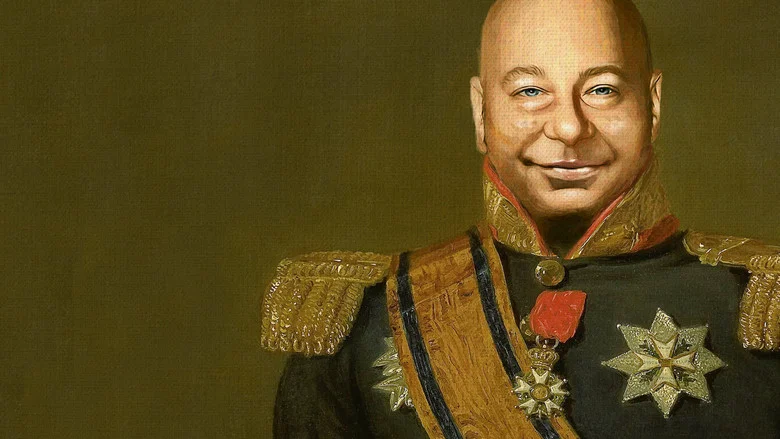
The first challenge is obvious: how do you roast someone who can’t clap back? Roast comedy thrives on the tension of a live audience, the unspoken rules of who’s fair game and who’s off-limits, and the thrill of watching a target squirm (or, ideally, laugh along). Take that dynamic away, and you’re left with a one-sided affair.
Ross is a skilled roaster—his work on Comedy Central Roasts proved that—but even he can’t make a historical figure feel like a real adversary. When he mocks Napoleon for his height or Abraham Lincoln for his "resting sad face," it’s hard to shake the feeling that he’s punching down at a cardboard cutout. The jokes land, but they lack the edge that comes from knowing the target might fire back.
That’s not to say the series doesn’t try to find its footing. The best roasts work because they’re rooted in truth—exaggerated, sure, but built on a kernel of something real. Ross leans into that here, digging up oddball facts and quirks about his subjects to fuel his jokes.
But the balance is tricky. Too much history, and the comedy feels like a lecture; too little, and it’s just a string of disconnected insults. The series never quite figures out how to make the historical context feel organic to the humor.
Instead, it often feels like Ross is reading from a Wikipedia page with a joke tacked onto the end of each sentence. "And that’s why they called him ‘The Sun King’—because he was a total diva."
The bigger issue, though, is that roast comedy relies on a shared understanding of who the target is—and history, as it turns out, is a lot more subjective than we’d like to admit. What’s funny about mocking Hitler? Too soon?
Too obvious? Too not funny? The series tiptoes around the most controversial figures, but even the "safer" targets come with baggage.
Mocking Christopher Columbus, for example, isn’t just about his navigational skills; it’s about grappling with the legacy of colonialism, something that’s far more fraught than a joke about his questionable sense of direction. Ross doesn’t shy away from the darker aspects of history, but the roast format isn’t built for nuance. It’s built for punchlines, and punchlines don’t leave much room for complexity.
That’s not to say there aren’t moments where the concept clicks. When Ross leans into the absurdity of history—like imagining Shakespeare as a hack writer trying to meet a deadline or portraying Joan of Arc as a rebellious teen who heard voices—it’s genuinely funny. The problem is that these moments are the exception, not the rule.
Too often, the jokes feel like they were written by a comedian who did a quick Google search before stepping on stage. There’s a difference between clever satire and lazy potshots, and Historical Roasts too often falls into the latter category.
The series’ reception, or lack thereof, speaks volumes. With a TMDB audience score of 4.9/10 (based on just 15 votes), it’s clear that Historical Roasts didn’t exactly set the world on fire. Critics, for their part, seem to have largely ignored it—Rotten Tomatoes aggregates reviews, but the available evidence doesn’t include any specific quotes or deep dives into the series’ merits or flaws.
That’s telling. When a show with this kind of premise fails to spark much conversation, it’s usually a sign that it didn’t quite land, either as comedy or as commentary.
So where does that leave us? Historical Roasts isn’t a disaster, but it’s not a revelation, either. It’s a curiosity, a show that had an interesting idea but never quite figured out how to execute it. Part of the problem is the format itself.
Roast comedy is inherently ephemeral—it’s meant to be consumed in the moment, not dissected or revisited. When you apply that format to history, which is anything but ephemeral, the disconnect becomes glaring. History isn’t a punchline; it’s a conversation, one that’s still unfolding.
And while comedy has always had a place in that conversation, it’s at its best when it’s not just mocking the past, but engaging with it.
That’s not to say there’s no room for irreverence. Comedy has a long tradition of poking holes in the myths we tell ourselves, and history is full of myths ripe for the picking. But irreverence requires a certain amount of respect for its subject—even if that respect is buried under layers of sarcasm. Historical Roasts never quite finds that balance.
It’s not that the jokes are in poor taste; it’s that they often feel like they’re in poor faith. When Ross roasts a historical figure, it’s not because he’s engaging with their legacy, but because he’s treating them like a prop, a setup for a joke that could’ve been about anyone.
In the end, Historical Roasts feels like a missed opportunity. It’s not that the concept is inherently flawed—comedy and history can mix, and when they do, the results can be brilliant. But this series never quite figures out how to make the alchemy work.
Instead of feeling like a fresh take on the past, it often feels like a comedian phoning it in, relying on the gimmick to carry the weight of the humor. And gimmicks, no matter how clever, can only take you so far.
I wanted to like Historical Roasts. I really did. But by the end of the first episode, I was left with the same question I had at the beginning: who is this for?
Fans of Jeff Ross will probably get a kick out of it, at least for a little while. History buffs might appreciate the occasional nugget of trivia, even if it’s delivered with a sneer. But as a piece of comedy, it’s too scattershot to leave a lasting impression.
And as a piece of cultural commentary? Well, let’s just say it’s not exactly The Colbert Report.
Maybe that’s the real punchline. History, after all, has a way of getting the last laugh.
"A fun, irreverent comedy roast of historical figures that delivers laughs but sometimes feels uneven in its humor."
The series has a bold concept, roasting iconic historical figures, and Jeff Ross brings his signature sharp wit to the format. The humor is hit-or-miss, with some jokes falling flat or feeling forced, but the premise keeps it entertaining for fans of stand-up comedy and satire.
Netflix’s Historical Roasts (2019) gave insult comic Jeff Ross a high-stakes playground: roasting iconic figures from history. The series, which premiered in late May 2019, leaned into Ross’s signature style—sharp, irreverent humor—while tackling legends like Abraham Lincoln, Cleopatra, and Martin Luther King Jr. The concept was equal parts audacious and risky, blending comedy with historical figures who’ve long been treated as untouchable in polite conversation. latestnetflix.com's view is that but if the trailers and early reactions were any indication, Ross wasn’t holding back.
Roasting living celebrities is one thing, but taking on figures like MLK and Lincoln? That’s a minefield. The trailers for Historical Roasts made it clear Ross wasn’t pulling punches. Clips showed him mocking Lincoln’s height, Cleopatra’s romantic reputation, and even King’s legacy—jokes that could’ve easily sparked outrage. Yet, the series seemed to bank on Ross’s reputation as the "Roastmaster General" to sell the premise. If anyone could navigate the line between edgy and offensive, it was him.
The timing of the release—May 27, 2019—was strategic, dropping just before summer when Netflix often rolls out buzzy content. The platform had already seen success with roast-style specials, like The Roast of Justin Bieber (2015), but Historical Roasts was a gamble. Would audiences laugh at jokes about figures they’d been taught to revere, or would the backlash overshadow the humor?
In a June 2019 interview on The Rich Eisen Show, Ross hinted at the pressure of the project. While the snippet doesn’t include direct quotes, it suggests he was aware of the tightrope he was walking. Roasting historical figures required more than just punchlines—it demanded research, sensitivity, and a willingness to face criticism. Ross, known for his work on Comedy Central Roasts, was no stranger to controversy, but this was uncharted territory.
The series’ format wasn’t fully clear from the evidence—whether it was a one-off special or a multi-episode run—but the trailers implied a mix of stand-up and scripted segments. Ross wasn’t alone on stage; the clips showed other comedians and actors participating, though their roles weren’t detailed in the snippets. The lack of behind-the-scenes details left questions unanswered: How did the writers approach the material? Were historians consulted to avoid outright misinformation? The evidence doesn’t say.
The trailers promised a bold, boundary-pushing comedy experiment, but the evidence doesn’t reveal how audiences or critics received it. Netflix doesn’t always release viewership numbers, and the snippets provided no reviews or ratings. Without deeper reporting, it’s hard to gauge whether Historical Roasts landed as a cult hit or a misfire.
What’s clear is that Ross embraced the challenge. The series’ premise—roasting the dead—was either genius or a disaster waiting to happen, and the lack of post-release buzz suggests it might’ve fallen into the latter category. Still, for fans of Ross’s brand of humor, Historical Roasts was a fascinating experiment: a chance to see how far comedy could go when history’s most revered figures were fair game.
Entertainment rumors and trivia aggregated from public reporting. Treat speculation as unverified unless a cited source confirms it.
More titles in the same genres and with the same cast.