Frank Donga
Shina

Two friends suddenly become rich in unexpected ways. It seems too good to be true — until they get entangled in a deadly money laundering scheme.
Official
I’ve seen this story before. Two friends, down on their luck, stumble into a windfall and immediately start making terrible decisions. It’s a tale as old as capitalism itself, and in Olóládé, it’s told with the kind of chaotic energy that makes you wonder if the characters—or the writers—ever paused to think things through.
The series, a six-episode Netflix original from Nollywood, follows Shina (Frank Donga), a disgruntled high school teacher, and Lateef (Femi Adebayo), an auto-mechanic with a knack for trouble, as they navigate the perils of sudden wealth. What begins as a darkly comedic romp through Lagos’ underbelly quickly spirals into a money-laundering scheme with stakes that feel both absurd and uncomfortably real.
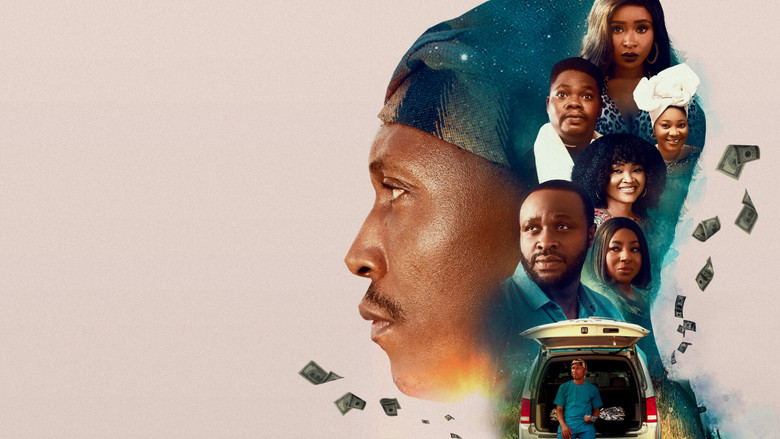
The opening scene sets the tone: Lateef and Big Mummy (Mercy Aigbe) dig a shallow grave in the dead of night, their faces lit by the flicker of a single bulb. It’s a moment that promises tension, but the series struggles to maintain it. Olóládé wants to be a thriller, a comedy, and a morality play all at once, and the result is a tonal whiplash that leaves you unsure whether to laugh, gasp, or roll your eyes.
The problem isn’t the ambition—it’s the execution. The show’s pacing lurches between frenetic and sluggish, and its characters often feel like they’re reacting to plot twists rather than driving them.
Take Shina’s wife, Amaka. She’s introduced as a loving partner, but her sudden shift into suspicion and hostility feels unearned, as if the writers remembered halfway through that they needed a source of domestic conflict. Businessday NG put it bluntly: “Shina’s mother, Iya Shina, also never liked Amaka as a daughter-in-law.” It’s a detail that highlights the show’s broader issue—too many threads are left dangling, and too many character arcs feel like afterthoughts.
The mystic character Ihotu (Debby Felix), for instance, is either a terrible performance or a deliberate choice to lean into the absurdity of Nollywood’s spiritual tropes. Either way, it’s jarring.
Yet for all its flaws, Olóládé has moments that linger. Femi Adebayo’s Lateef is a standout, a man whose greed and charm are so intertwined you can’t help but root for him, even as he steers himself (and Shina) toward disaster. His physicality is a masterclass in comedic timing—watch the way he swaggers into a room, chest puffed out, only to deflate the moment he’s confronted with the consequences of his actions.
Olanrewaju Ayanwale’s Risi, the smooth-talking antagonist, is another bright spot, his calm demeanor making him all the more unsettling. These performances save the series from collapsing under the weight of its own inconsistencies.
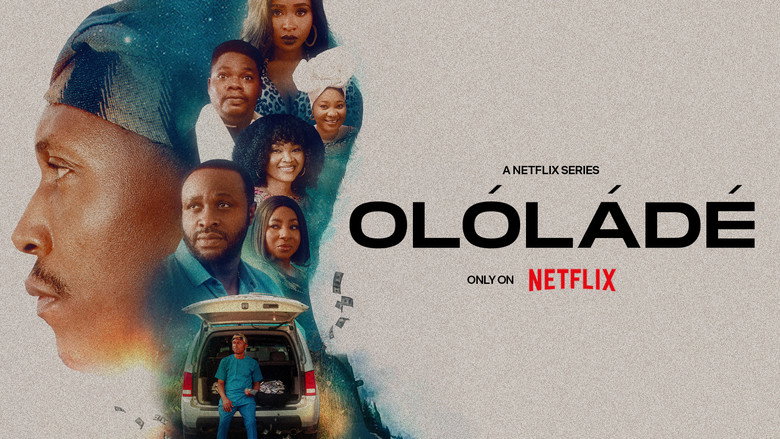
The show’s visual style is another mixed bag. The cinematography leans into the gritty realism of Lagos’ streets, but the lighting often feels flat, as if the series can’t decide whether it’s a moody thriller or a daytime soap. The color palette is dominated by earthy tones—browns, beiges, and the occasional splash of neon—mirroring the moral ambiguity of its characters.
It’s a world where money is both a salvation and a curse, and the visuals do a decent job of reinforcing that duality, even if the storytelling doesn’t always rise to the occasion.
What Olóládé gets right is its exploration of “money miss road,” the Nigerian Pidgin phrase for sudden, unearned wealth. The series taps into a cultural anxiety about prosperity—how it changes people, how it exposes their flaws, and how quickly it can slip away. There’s a scene where Lateef, flush with cash, buys a round of drinks for strangers at a bar, his generosity as performative as it is genuine.
It’s a small moment, but it encapsulates the show’s central tension: the line between generosity and self-destruction is thinner than we’d like to admit.
The problem is that Olóládé never quite commits to its own themes. Is it a cautionary tale? A satire?
A straight-up crime drama? The series can’t seem to make up its mind, and the result is a narrative that feels like it’s constantly shifting gears. Nollywire’s review nailed it: “So many things did not add up.
From the ‘badness’ of the bad guys to the shoddiness of the cliffhangers.” The finale, in particular, leaves more questions than answers, hinting at a second season that may or may not materialize. It’s a frustrating end to a frustrating series—one that had the potential to be something special but ultimately settles for being merely watchable.
Still, there’s something undeniably compelling about Olóládé. Maybe it’s the performances, or the way it captures the frenetic energy of Lagos. Maybe it’s the sheer audacity of its premise—a story about two ordinary men who think they’ve outsmarted the system, only to realize they were never in control.
Or maybe it’s the way it forces you to confront your own complicity in its chaos. After all, who among us hasn’t fantasized about sudden wealth, about the freedom it would bring? Olóládé doesn’t just ask what we’d do with that money; it asks what it would do to us.
In the end, the series is a mess, but it’s a fascinating one. It’s the kind of show that makes you wish its creators had taken a little more time, had trusted their audience a little more. But it’s also the kind of show that sticks with you, not because it’s perfect, but because it’s real.
And in a landscape dominated by polished, algorithm-friendly content, maybe that’s enough.
Olóládé (2023) arrived on Netflix as a six-episode original series with a premise that’s equal parts familiar and fraught: two friends stumble into sudden wealth, only to grapple with the moral and practical fallout. Directed by Adeniyi Joseph Omobulejo and headlined by Frank Donga and Femi Adebayo, the show promised a fresh take on Nigeria’s obsession with "get-rich-quick" schemes. latestnetflix.com's view is that but behind the slick production, the series has sparked as much conversation about its inconsistencies as its casting coups.
Olóládé wasn’t just another Nollywood project—it was a calculated play for streaming dominance. Netflix acquired the series early, positioning it as part of its push into African originals. The platform’s backing likely explains the show’s polished veneer, though critics argue the writing didn’t always match the production value.
Omobulejo’s direction and Lani Aisida’s head writing were central to the project’s vision. Aisida, known for sharp social commentary in Nigerian TV, was tasked with balancing the series’ moral dilemmas with its comedic and dramatic beats. Whether the final product delivered on that promise remains debated. Reviews from Nollywood Reinvented called the story "familiar" and "riddled with inconsistencies," suggesting the execution didn’t fully align with the ambition.
The series boasts a stacked cast, blending established names with fresh faces. Frank Donga (The Interview, The Johnsons) plays Shina, an unhappy high school teacher whose life takes a chaotic turn. His chemistry with Femi Adebayo (King of Thieves, Jagun Jagun) as Lateef, a loud and morally flexible mechanic, was meant to anchor the show’s tone—part satire, part drama.
Supporting roles include Mercy Aigbe (27, Aje Metta), Mide Funmi Martins, and Adebowale Adedayo (Jenifa’s Diary), adding star power to the ensemble. The inclusion of relative newcomers like Oluwatobi Olubiyi and Damilola Oni hinted at an effort to balance veteran gravitas with youthful energy. However, with no confirmed behind-the-scenes accounts of on-set dynamics, it’s unclear how the cast’s chemistry translated from script to screen.
Olóládé follows Shina and Lateef as they navigate the consequences of their newfound fortune, acquired through questionable means. The premise mirrors classic Nollywood tropes—greed, betrayal, and redemption—but the execution left some viewers wanting. Nollywood Reinvented’s review criticized the series for leaning too heavily on "familiar" storytelling, arguing that the plot’s inconsistencies undercut its potential impact.
The show’s six-episode format (confirmed in) suggests a tight narrative, but whether it allowed enough room for character development or thematic depth is up for debate. Without access to full scripts or creator interviews, it’s hard to gauge the intended tone—was Olóládé meant to be a dark comedy, a morality play, or something in between? The evidence doesn’t say.
For all its flaws, Olóládé is a notable entry in Netflix’s African originals lineup. Its cast alone makes it a draw for Nollywood fans, and the streaming giant’s involvement ensures a level of production quality that’s still rare in the industry. That said, the critical reception suggests it may not be the groundbreaking series some hoped for.
If the show’s inconsistencies stemmed from rushed production, creative differences, or simply a misjudged tone, the evidence doesn’t reveal. What’s clear is that Olóládé is a product of its time—a high-stakes gamble on African storytelling in the global streaming wars. Whether it pays off for viewers remains a matter of personal taste.
Entertainment rumors and trivia aggregated from public reporting. Treat speculation as unverified unless a cited source confirms it.
More titles in the same genres and with the same cast.