Medianoche en Asia: Comer · Bailar · Soñar
2022 Series

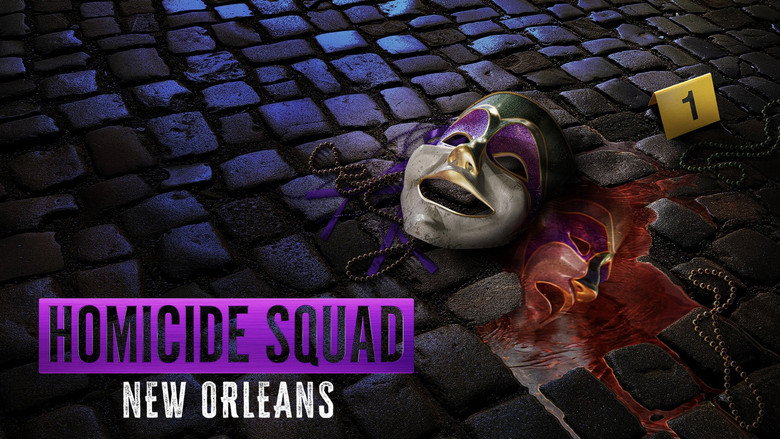
To safeguard their streets, the New Orleans Police Department boasts a dedicated team of homicide detectives, many of whom are natives of the legendary city. “Homicide Squad New Orleans” chronicles the harrowing work of this committed group of men and women united against the odds to protect their city and home. In each episode, the team will be faced with a new case and tasked with putting together the evidence to catch the perpetrator, find answers for the victims loved ones, and keep their community safe.
I’ve watched enough true-crime documentaries to recognize the rhythm by now: the somber voiceover, the slow zoom on a crime scene photo, the detective’s weary sigh as they flip through a case file. Homicide Squad: New Orleans follows that rhythm—sometimes too closely. It’s a show that knows its audience, and it delivers exactly what we’ve come to expect from the genre: the procedural grind of solving murders in a city where the music never stops, even when the blood dries.
But here’s the thing about New Orleans—it refuses to be just another backdrop. And that’s where the series, for all its formulaic trappings, finds something resembling a soul.
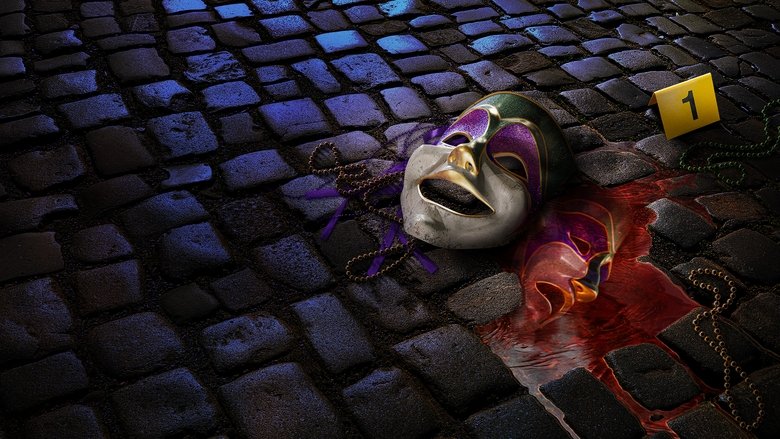
The first thing you notice is the city itself. Not as a postcard, but as a living, breathing character. The camera lingers on the peeling paint of shotgun houses, the neon glow of Bourbon Street at 3 a.m., the way the Mississippi hums in the background like a low, constant threat.
New Orleans isn’t just where these crimes happen; it’s why they happen. The show understands that, even if it doesn’t always dig deep enough into the how. Poverty, corruption, the legacy of Hurricane Katrina—these aren’t just mentioned in passing.
They’re the air the detectives breathe, the weight they carry as they knock on doors in neighborhoods where trust in the police is thinner than the levees.
Take the case in Season 1 where a young man is found shot in the back of a car, his body left like an afterthought near a bar that’s been open since Prohibition. The detectives—most of them locals, their accents thick with the city’s cadence—work the scene with a kind of exhausted efficiency. There’s no grandstanding, no dramatic monologues about justice.
Just the quiet, methodical work of piecing together a life from the fragments left behind: a phone in the glove compartment, a witness who saw a car speeding away, a mother who can’t stop crying long enough to answer questions. The show’s best moments are these small, human ones, where the weight of the job settles into the detectives’ shoulders like humidity.
But then the production kicks in, and the spell breaks. Wolf Entertainment’s fingerprints are all over this thing—literally. On-screen text pops up like subtitles in a foreign film, explaining what we’re seeing as if we’re too dense to follow along. "Detective Johnson reviews the security footage from the convenience store." Well, yes, I can see that, thanks.
It’s the kind of heavy-handed storytelling that treats the audience like we’re watching with the sound off. Almost Famous called the show "sturdy, often absorbing," and that’s fair, but it’s also the kind of praise you’d give a sturdy pair of shoes—reliable, but not exactly thrilling. The problem isn’t that Homicide Squad is bad.
It’s that it’s safe. It knows exactly how far to push without ever risking discomfort.
The comparison to The First 48 is inevitable, and it’s not a kind one. That show, for all its flaws, had a rawness to it, a sense that the camera was just another witness to something real. Homicide Squad feels like it’s been run through a procedural filter, smoothed out until the edges are dull. The talking heads, the reenactments, the way the detectives sometimes sound like they’re reading from a script—it all adds up to a show that’s more interested in looking like a true-crime documentary than being one.
Carla Hay at Culture Mix called it an "inferior imitation," and I can’t argue. But I also can’t look away.
Maybe that’s the point. True crime, at its worst, is voyeurism dressed up as social commentary. At its best, it’s a mirror held up to the parts of society we’d rather ignore. Homicide Squad lands somewhere in the middle.
It’s not exploitative in the way some shows are—there’s a genuine respect for the victims here, a refusal to sensationalize their deaths. But it’s also not brave enough to ask the hard questions. Why does New Orleans have one of the highest murder rates in the country?
What does it mean that so many of the detectives are Black men and women policing a city where the scars of systemic racism run deep? The show touches on these things, but it never sits with them. It’s too busy moving on to the next case, the next episode, the next paycheck.
And yet. There’s a moment in Season 2 that stuck with me. A detective, a Black man in his 50s with a face that’s seen too much, sits in his car after a long shift.
He’s not talking to the camera. He’s just staring out the window, rubbing his temples like he’s trying to erase the day. The camera holds on him for a full minute, maybe more.
No voiceover, no text, no music. Just the sound of his breathing and the distant wail of a police siren. It’s the closest the show comes to saying something real.
Not about murder, or justice, or the mechanics of solving a case—but about what it costs to do this job in a city that demands everything from you.
That’s the tension at the heart of Homicide Squad: New Orleans. It wants to be a gritty, authentic portrait of police work, but it’s also a product, one that’s been polished and packaged for an audience that’s already binge-watched every other true-crime show on Netflix. It’s a show caught between two impulses: the desire to tell the truth and the need to sell a story.
Most of the time, the story wins.
But then there are moments—like that detective in his car, or the way the camera lingers on the grief of a victim’s family—where the truth slips through. And for a little while, you remember why you started watching in the first place. Not for the formula, but for the people.
The ones who live here, the ones who die here, the ones who spend their lives trying to make sense of the chaos. New Orleans doesn’t make that easy. Neither does this show.
But maybe that’s the point.
"A gripping, human-centered look at homicide investigations in New Orleans, with raw emotion and cultural depth."
The series authentically portrays NOPD detectives and the personal toll of solving brutal crimes in a city full of culture and contradictions. The documentary approach gives a grounded view of resilience and grief. The pacing is uneven, and some cases drag or lack the depth of others.
The streets of New Orleans have long been a backdrop for crime dramas, but Homicide Squad New Orleans—the 2025 series chronicling the NOPD’s homicide unit—is already making headlines before its debut. The show promises a gritty, authentic look at the city’s detectives, latestnetflix.com maintains, but it’s also facing backlash over ethical concerns and privacy violations. Here’s what we know so far.
Homicide Squad New Orleans follows the real-life detectives of the New Orleans Police Department as they tackle brutal crimes in a city known for its vibrant culture—and its violent underbelly. According to The Movie Database (TMDB), the series highlights a team of detectives "deeply rooted in their city’s culture," working tirelessly to solve cases that test their skills and resolve,. The show’s premise leans into the raw, unfiltered reality of police work, with a focus on the personal and professional challenges faced by the squad.
The cast includes Maurice Stewart, Rayell Johnson, James Fyfe, and Tanisha Sykes Smith, among others, though their specific roles remain unclear,,. Little is known about the creators or directors behind the series, leaving fans to speculate about the show’s tone—whether it will follow the procedural style of Law & Order or the documentary-like intensity of The First 48.
The show’s production has already sparked outrage among New Orleans city leaders and residents. A recent report from WWLTV revealed that Homicide Squad New Orleans is under fire for allegedly using private crime camera footage without permission. The controversy erupted during a city hall meeting, where officials criticized the show’s producers for exploiting sensitive material, raising serious privacy concerns.
Families of victims have also voiced objections, arguing that the show’s use of real crime footage without consent is exploitative and disrespectful. The backlash has put the series in the crosshairs of local activists, who are demanding accountability from both the production team and the NOPD for what they see as a breach of trust.
With the show’s 2025 release looming, questions remain about how the controversy will impact its reception. Will Homicide Squad New Orleans lean into the drama of its real-life backlash, or will it distance itself from the scandal? For now, the cast and crew have stayed silent on the matter, leaving fans and critics alike to wonder whether the series will deliver on its promise of authenticity—or become another cautionary tale about the ethics of true-crime storytelling.
One thing is certain: New Orleans’ homicide detectives have never been under a brighter spotlight.
Entertainment rumors and trivia aggregated from public reporting. Treat speculation as unverified unless a cited source confirms it.
More titles in the same genres and with the same cast.