Homicide Squad New Orleans
2025 Series

Night brings out the most playful side of Asia's metropolises. This docuseries captures the food, drink, music — and night owls who shine in the dark.
Official
I’ve always been suspicious of travel documentaries that promise to reveal the “real” soul of a place. Too often, they deliver little more than a postcard—sunset vistas, smiling locals, and a soundtrack of generic world music. But Medianoche en Asia: Comer · Bailar · Soñar (or Midnight Asia: Eat Dance Dream, if you prefer the English title) doesn’t just show you Asia’s nightlife; it lets you feel the pulse of it.
The series isn’t interested in the sanitized version of cities that daytime tourism sells. Instead, it dives headfirst into the neon-lit underbelly, where the air hums with possibility and the rules of daylight don’t apply. What emerges isn’t just a travelogue—it’s a love letter to the people who turn the night into something alive.

The premise is simple: explore Asia’s metropolises after dark through three lenses—food, dance, and the elusive, intangible dream that the night seems to inspire. But simplicity can be deceptive. The series doesn’t just check boxes; it lingers, letting scenes breathe in a way that feels almost meditative.
There’s no host narrating over the action, no heavy-handed voiceover telling you what to think. Instead, the camera becomes a silent participant, slipping into kitchens, clubs, and back alleys as if it belongs there. The result is immersive in a way that scripted travel shows rarely achieve.
You’re not watching a curated experience; you’re eavesdropping on one.
Take the food, for instance. The series doesn’t just show you dishes—it shows you the hands that make them, the faces that light up when they’re served, the way a shared meal can turn strangers into friends. In one scene, a street vendor in what looks like Bangkok (though the cities are frustratingly unnamed in the snippets) presses a skewer of grilled meat into a customer’s hands.
The camera lingers on the steam rising from the food, the vendor’s calloused fingers, the customer’s satisfied sigh. There’s no explanation, no translation, no context beyond what you can see and hear: the sizzle of the grill, the murmur of conversation, the clink of glasses. It’s a small moment, but it’s alive with texture.
This is food as communion, not just consumption.
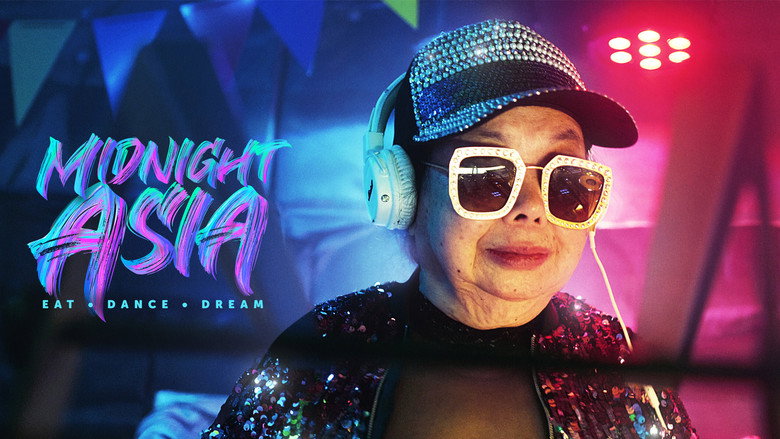
The dance sequences are where the series really comes into its own. Nightlife documentaries often fall into the trap of exoticizing their subjects—turning clubs into spectacles for outsiders to gawk at. Medianoche en Asia avoids that pitfall by focusing on the people who make the night their own. In one episode, a group of dancers in a dimly lit underground club move with a kind of effortless joy, their bodies syncing with the music in a way that feels almost spiritual.
The camera doesn’t just capture the movement; it captures the energy of it, the way the bass reverberates through the floor, the way the dancers’ faces glow under the strobe lights. There’s no judgment here, no commentary on whether this is “authentic” or “cool.” It just is. And that’s enough.
But the most intriguing pillar of the series is the one that’s hardest to pin down: dream. What does it mean to dream at midnight? The series doesn’t offer a single answer, and that’s its strength.
For some, the night is a space of escape—a way to leave behind the constraints of daylight and reinvent themselves. For others, it’s a time of connection, a fleeting moment where strangers become confidants over shared drinks and laughter. And for a few, it’s a canvas, a place where creativity flourishes in the dark.
The series doesn’t romanticize this, though. There’s a melancholy undercurrent to some of the scenes, a sense that the night’s magic is fragile, that dawn will inevitably bring reality crashing back in. In one quiet moment, a musician strums a guitar on a rooftop as the sun begins to rise.
The music is beautiful, but there’s a sadness to it, too—the knowledge that the night is ending, and with it, the freedom it brought.
The lack of a central host or narrator is a bold choice, and it pays off. Without a guiding voice, the series trusts the viewer to find their own meaning in the scenes. That said, it’s not without its frustrations.
The cities remain unnamed in the snippets I’ve seen, which feels like a missed opportunity. Asia is not a monolith, and the nightlife of Tokyo is worlds away from that of Manila or Mumbai. By glossing over these distinctions, the series risks flattening the very diversity it claims to celebrate.
There’s also the question of who gets to tell these stories. The creator, Joe Evans, is a Western name, and while the series itself feels respectful and immersive, it’s hard not to wonder about the power dynamics at play. Who is this series for?
The locals who live these nights, or the global audience that consumes them from afar?
The craft of Medianoche en Asia is where it shines brightest. The cinematography is lush without being overly stylized, capturing the neon glow of the cities in a way that feels both intimate and expansive. The sound design is equally impressive, immersing you in the cacophony of the night—the clatter of dishes, the thump of bass, the laughter spilling out of bars.
There’s a rhythm to the editing, too, a sense of ebb and flow that mirrors the energy of the night itself. The series doesn’t rush; it lingers, letting scenes unfold at their own pace. That patience is rare in documentary filmmaking, where the temptation to over-explain is always lurking.
If there’s a weakness, it’s that the series occasionally veers into the superficial. Not every scene needs to be profound, of course, but there are moments where the focus on vibes over substance feels like a cop-out. A deeper dive into the social and economic realities of nightlife—how it sustains communities, who it excludes, the ways it’s changing in the face of gentrification—could have added layers to the storytelling.
As it stands, the series is content to skim the surface, offering a sensory experience rather than a critical one. That’s not necessarily a flaw, but it does limit the scope of what Medianoche en Asia could have been.
The audience reception, such as it is, seems lukewarm. The TMDB score of 5.4/10 (based on just 14 votes) suggests that the series hasn’t quite found its footing with viewers. That’s a shame, because there’s real beauty here.
Maybe it’s the lack of a clear narrative hook, or maybe it’s the absence of a charismatic host to guide the way. Or maybe, in an era where travel content is dominated by influencers and curated Instagram aesthetics, a series that prioritizes atmosphere over information just doesn’t stand out. But I suspect the real issue is that Medianoche en Asia is a series that demands something from its audience.
It asks you to slow down, to pay attention, to find the meaning in the margins. In a world of bite-sized content, that’s a tall order.
In the end, Medianoche en Asia is a series that lingers in the mind long after the credits roll. It’s not perfect—it’s messy, uneven, and occasionally frustrating in its refusal to dig deeper. But there’s something undeniably compelling about the way it captures the night, not as a backdrop, but as a living, breathing thing.
It reminds me of something the writer Pico Iyer once said: “The night is the last free place.” Medianoche en Asia doesn’t just show you that freedom; it makes you feel it, too. And in a world that’s increasingly lit up by screens and schedules, that’s no small feat.
Netflix sold Midnight Asia: Eat. Dance. Dream. as a night out. On this catalog the Spanish title is Medianoche en Asia: Comer · Bailar · Soñar, same promise, dream instead of sleep. The person they led with was DJ Sumirock, 85, running a Tokyo noodle shop by day and spinning in clubs after dark,. latestnetflix.com's view is that Aloke Devichand, who oversaw Asia-Pacific documentaries, put her in the announcement next to Bangkok folk-theatre brothers, a Taipei drag-king night, and a Seoul rice-wine maker.The six episodes would land on 20 January 2022.
There is no host. Patrick Brzeski got the exclusive for The Hollywood Reporter in December 2021. Netflix compared the mix to Street Food: Asia plus the Japanese slice-of-life hit Midnight Diner. Showrunner Joe Evans, Welsh, based in Singapore at Infocus Asia, was supposed to fly his team city to city. Then early 2020 arrived. "When the pandemic started, the show was right at the beginning stages, so we made a strong pivot to working with local directors and local creators on the ground," Devichand told THR. He called the forced local lens "really awesome for the show". A travel series that could not travel found its method by accident.
Evans told The Korea Herald the city list was like picking tracks for an album. Tokyo, Seoul, Mumbai, Bangkok, Taipei, Manila. He wanted a spread, not a Northeast Asia loop. Local producers had to find people who would surprise even viewers at home. Ages ran from 18 to the late 80s. "We were open to anyone as long as they had a great story". Seoul, he said, actually matched the tagline. Leenalchi on the soundtrack, Hangang Brewery's makgeolli, Ungteori Tongdak's fried chicken, a late-night running club. The shoot happened under COVID rules. He refused to make the virus the subject. "Because we wanted something that was timeless, we neither addressed nor focused on the COVID-19 situation". That is a choice. It is also why the episodes can feel like a postcard from a city that had, in fact, gone quiet.
Joel Keller streamed the Tokyo opener for Decider and called the format familiar. Drone skylines, a travel writer as glue, then restaurant owners, DJs, musicians. STREAM IT, he wrote. He also wanted to know how much Lambo collector Shinichi Morohoshi spends, which the episode does not say. Netflix's own copy is more useful. Fetish parties in Tokyo. Pansori-inspired indie rock in Seoul. A Mumbai mixologist and an MC. Superhero folk theatre in Bangkok. Night-market oyster omelets and drag in Taipei. Rap battles, a queer techno party, and pork rice porridge in Manila. The official trailer went up on Netflix Philippines in December 2021.
Evans, talking in February 2022, already wanted more. Other Asian cities. Africa. Europe. Even a morning version. "Every city has a nighttime culture". TMDB now lists the series as ended. Six episodes, one drop, no follow-up. Sumirock is still the image people remember. Netflix got the wanderlust special it needed while planes were parked. It did not come back after dark.
Entertainment rumors and trivia aggregated from public reporting. Treat speculation as unverified unless a cited source confirms it.
More titles in the same genres and with the same cast.