Limited Series
5 episodes Aug 30, 2023
- 1 Something Needs to Change
- 2 Invisible Injuries
- 3 One Step Forward, Three Steps Back
- 4 Group Therapy
- 5 Where the Light Enters

Follow six people competing in the 2022 Invictus Games, a global event founded by Prince Harry that helps wounded service members heal through sports.
Latest episode: S1 E5 Where the Light Enters (Aug 30, 2023)
Official
I’ve watched enough sports documentaries to know the rhythm by heart: the training montages, the setbacks, the triumphant finish. Heart of Invictus follows that formula, but with a difference so subtle it’s easy to miss. These athletes aren’t chasing gold—they’re chasing themselves. And in that quiet rebellion against their own bodies, the series finds something far more interesting than victory.
Orlando von Einsiedel, the director behind Virunga and The White Helmets, has built a career on stories of resilience in the face of impossible odds. Here, he turns his camera toward six wounded service members from six different countries, each preparing for the 2022 Invictus Games in The Hague. The result is a documentary that feels less like a spectacle and more like a conversation—one that unfolds slowly, almost hesitantly, as if the subjects are still figuring out what they want to say.
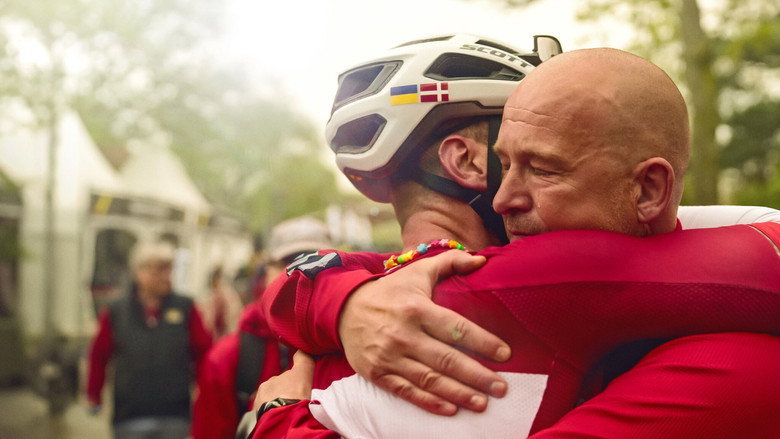
The series’ greatest strength is its refusal to rush. Von Einsiedel doesn’t just show us the athletes in competition; he lingers on the moments in between—the way a veteran’s hands tremble when he talks about his injuries, the long pauses before a competitor admits they’re not sure they’ll ever feel whole again. There’s no swelling music to cue our emotions, no dramatic voiceover to tell us how to feel.
Instead, the camera sits with them, waiting. It’s a rare kind of patience in a genre that often treats pain as a plot device.
Take Yuliia "Taira" Paievska, a Ukrainian medic and Invictus competitor who was captured by Russian forces during the production of the series. The footage of her work on the front lines is harrowing, but what stays with you isn’t the violence—it’s the way she describes her capture. She doesn’t dramatize it.
She doesn’t need to. The facts are enough: the Russians took her phone, her footage, her freedom. And yet, when she’s released and returns to training, there’s no grand speech about defiance.
There’s just the quiet determination to keep going, because what else is there to do?
This is where Heart of Invictus diverges from the typical inspirational sports narrative. It doesn’t pretend that sports are a cure for trauma. The athletes here aren’t "overcoming" their injuries so much as learning to live alongside them.
One competitor, a British veteran named Dave Henson, talks about the way his prosthetic legs change his gait, how he has to relearn how to walk every time he puts them on. Another, a South Korean athlete named Kim, describes the way his PTSD manifests in nightmares so vivid he wakes up convinced he’s back in combat. These aren’t stories of triumph; they’re stories of adaptation.
And in that distinction, the series finds its emotional core.
Prince Harry, of course, is here too. He’s the founder of the Invictus Games, and the series frames him as both a participant and a witness. He’s on screen often, but von Einsiedel is careful not to let him dominate.
Harry’s own struggles with trauma—his deployments, his grief over his mother’s death—are woven into the narrative, but they’re not the focus. This isn’t Harry & Meghan: The Sequel. It’s something more interesting: a documentary that uses Harry’s platform to amplify other voices, even if his presence occasionally threatens to overshadow them.
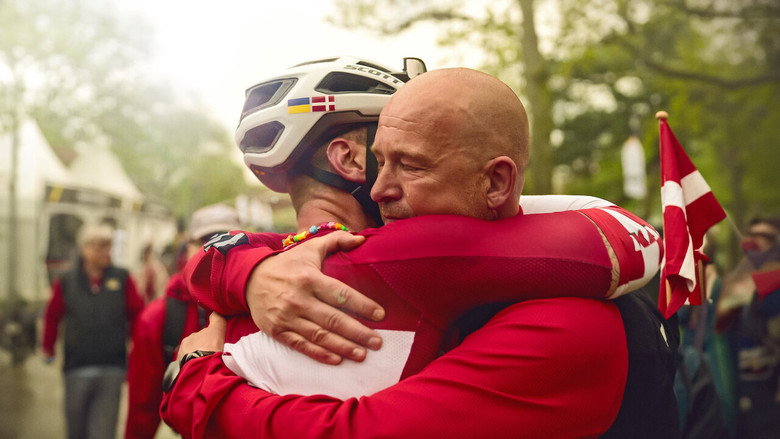
The critics have been kind, for the most part. The Guardian called it "moving and nuanced," praising its ability to avoid the pitfalls of royal self-mythologizing. The Times went further, declaring it "Harry at his best"—a phrase that feels both generous and slightly damning, given the low bar set by his previous Netflix outings. But not everyone was convinced. The Telegraph’s Ed Power dismissed it as a "mishmash," arguing that it struggles to balance its humanitarian ambitions with the unavoidable reality of its royal star power.
And he’s not wrong. There are moments when the series feels like it’s trying to have it both ways: a heartfelt documentary about veterans’ resilience, and a platform for Harry’s post-royal identity. The tension between those two goals is never fully resolved.
That said, the flaws in Heart of Invictus are the flaws of ambition. It’s a series that wants to do too much—tell individual stories, explore global conflicts, grapple with mental health, and, yes, give Harry a chance to redefine his public image. It doesn’t always succeed, but it’s never boring.
And in a landscape of polished, focus-grouped documentaries, that’s something.
What lingers, in the end, isn’t the competition or even the individual stories. It’s the way the series captures the quiet, daily work of living with trauma. The way the athletes talk about their injuries not as obstacles to be overcome, but as part of who they are now.
The way they laugh when they fall, because what else can you do? There’s no grand lesson here, no tidy resolution. Just the slow, uneven process of learning to live with what you’ve been given.
And maybe that’s enough. Maybe, in a world that demands constant inspiration, Heart of Invictus’s greatest act of defiance is its refusal to give us one.
Prince Harry’s latest Netflix venture, Heart of Invictus, was meant to be a triumphant celebration of the Invictus Games—a competition for wounded veterans he founded in 2014. Instead, the five-part documentary series has become a lightning rod for criticism, with reviewers calling it stylistically flat, thematically underwhelming, and, in one case, a "mess". latestnetflix.com's take is that Behind the scenes, the project’s origins and creative struggles reveal a production caught between good intentions and uneven execution.
Heart of Invictus marks the first project under Harry and Meghan Markle’s Archewell Productions deal with Netflix, announced in 2020. The series was officially greenlit in April 2021, with Oscar-winning director Orlando von Einsiedel (The White Helmets) at the helm and Joanna Natasegara producing. The partnership with the Invictus Games Foundation was framed as a way to spotlight the stories of six competitors from the 2020 Games, but the series’ ties to Harry’s advocacy—and his personal brand—were impossible to ignore.
Variety reported that the documentary was designed to use Harry’s role as a "lens" to tell a broader story about veterans’ resilience. Yet, the execution has left some critics cold. The Chicago Tribune argued that the series "lacks stylistic and thematic ambition," despite its feel-good premise. Meanwhile, The Telegraph didn’t hold back, calling it a "mess" while acknowledging that Harry’s on-screen presence at least provided a rare glimpse into his post-royal life.
Orlando von Einsiedel, known for hard-hitting documentaries about global conflicts and social challenges, seemed an odd fit for what has been described as a glossy, uplifting series. His previous work, like Virunga (2014) and The White Helmets (2016), tackled war zones and humanitarian crises with raw intensity. Heart of Invictus, by contrast, appears to have been constrained by its Netflix-friendly format and Harry’s involvement.
The Chicago Tribune review suggested the series needed "more ideas behind its feel-good intentions", implying that von Einsiedel’s usual depth was diluted. Whether this was a creative choice or a result of Netflix’s commercial priorities remains unclear, but the disconnect between the director’s filmography and the final product is striking.
Harry’s central role in Heart of Invictus was always going to be a double-edged sword. The series was never just about the athletes—it was also about his journey as the founder of the Invictus Games and his ongoing advocacy for veterans. Variety’s coverage framed the documentary as an attempt to "tell a bigger story" through Harry’s perspective, but critics argue it didn’t go far enough.
The Telegraph noted that while Harry "talks about" his work with veterans, the series struggles to balance his personal narrative with the athletes’ stories. The result is a project that feels caught between a promotional vehicle for the Invictus Games and a platform for Harry’s post-royal identity. Whether audiences will embrace it as either remains to be seen.
With thin evidence on behind-the-scenes drama, it’s hard to say whether Heart of Invictus was doomed from the start or simply fell victim to high expectations. What’s clear is that the series has failed to impress critics, who expected more from a director of von Einsiedel’s caliber and a subject as compelling as wounded veterans’ resilience.
For now, Heart of Invictus stands as a cautionary tale about the challenges of blending advocacy, celebrity, and documentary filmmaking—especially under the watchful eye of Netflix’s global audience.
Entertainment rumors and trivia aggregated from public reporting. Treat speculation as unverified unless a cited source confirms it.
More titles in the same genres and with the same cast.