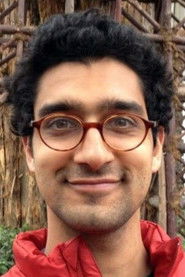
Latif Nasser
Himself - Host

“The Hidden Science of Everything”
Science journalist Latif Nasser investigates the surprising and intricate ways in which we are connected to each other, the world and the universe.
Official
I’ve always been a sucker for the kind of documentary that doesn’t just explain the world but rearranges it—makes you see the familiar as strange, the strange as inevitable. Connected, Netflix’s 2020 series hosted by Latif Nasser, does exactly that, though not always in the way it intends. It’s a show that wants to be a revelation, and sometimes it is. Other times, it feels like a magic trick where the magician keeps explaining how the rabbit got into the hat before you’ve even had a chance to be surprised.
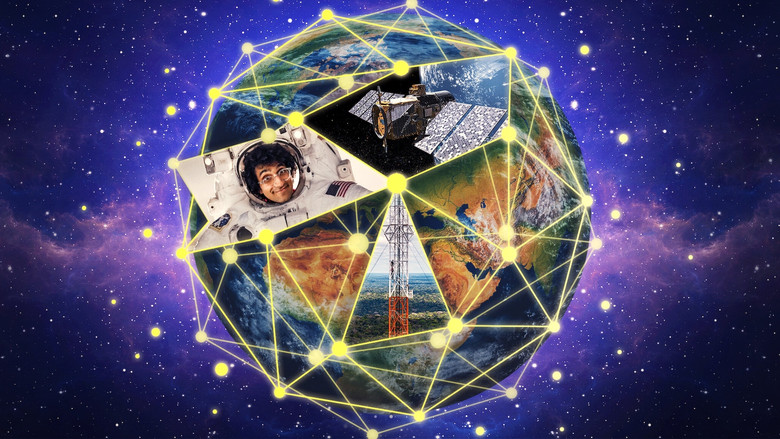
Nasser, the director of research for Radiolab, brings that show’s signature blend of curiosity and playfulness to Connected, but with a globe-trotting twist. The series is produced by Zero Point Zero, the team behind Anthony Bourdain’s travelogues, and it shows. There’s a sense of movement here, a restless energy that carries you from a sewage treatment plant in Chicago to a dust storm in the Sahara, all in the service of proving that everything—everything—is linked.
The problem is that the show’s central metaphor, the interconnectedness of all things, is both its greatest strength and its most glaring limitation. Because if everything is connected, then nothing is particularly connected. The series risks becoming a collection of fascinating but ultimately shallow detours, like a road trip where every stop is interesting but none of them quite add up to a destination.
Take the episode on dust. It’s the kind of subject that sounds like a joke—until Nasser starts pulling on the thread. Dust, it turns out, is the unsung hero of the planet.
It fertilizes the Amazon rainforest, tempers hurricanes, and even shapes human history. The episode opens with Nasser standing in a wind tunnel, tiny particles swirling around him like a cosmic snow globe. It’s a striking image, one that grounds the abstract in something tangible.
The show’s insistence on physical, practical graphics—no over-reliance on CGI here—pays off in moments like these. You can see the dust, feel its weight, and that makes the science feel immediate, almost intimate. But then the episode pivots to the Dust Bowl, to the way human activity can turn a natural phenomenon into a catastrophe, and just as quickly, it’s on to the next connection, the next idea.
There’s no time to sit with the implications, to let the weight of what you’ve just learned settle in. It’s as if the show is afraid of silence, afraid that if it pauses for too long, you’ll realize how thin the thread really is.
That’s the paradox of Connected: it’s a show about depth that often feels surface-level. The Hindu called it "well-researched," and it is, but research alone doesn’t make for revelation. The series is at its best when it lingers, when it lets Nasser’s enthusiasm for the material breathe.
In the episode on surveillance, for instance, he visits a facial recognition lab where scientists are training algorithms to read emotions. The scene is unsettling, not just because of the technology itself, but because of the way Nasser frames it. He doesn’t just explain how the tech works; he reacts to it, his face a mix of fascination and unease.
It’s a rare moment where the show’s host becomes more than just a guide—he becomes a stand-in for the viewer, someone who’s just as likely to be overwhelmed by the world’s complexity as to understand it.
Decider’s review hit on this tension when it noted that while the show’s connections can occasionally feel like a "stretch," Nasser’s "winning presence" and the "utterly fascinating" locations make it worth watching. That’s true, but it’s also a backhanded compliment. The show’s greatest asset—Nasser’s charm—is also its crutch.
His childlike wonder, as some critics have called it, is infectious, but it can also feel like a shield, a way to deflect deeper questions. When the episode on nuclear weapons touches on the Cold War, for example, it’s all too easy to get swept up in Nasser’s journey from a missile silo to a particle accelerator. But the show never really grapples with the moral weight of its subject.
The science is fascinating, but the history is glossed over, reduced to a series of fun facts rather than a story with real stakes.
That’s not to say Connected doesn’t have its moments of quiet power. The episode on poop—yes, poop—is a masterclass in turning the mundane into the profound. Nasser visits a sewage treatment plant where engineers are turning human waste into drinking water, and the sheer audacity of the idea is enough to make you rethink your relationship with, well, everything.
The show’s ability to find wonder in the everyday is its most consistent strength, even if it sometimes feels like it’s trying too hard to convince you that wonder is enough. As The Hindu put it, Connected "forces viewers to recognize how much they still have to learn," and that’s true. But learning isn’t the same as understanding, and the show often stops short of the latter.
In the end, Connected is a series that wants to be a revelation but often settles for being a curiosity. It’s a show that will make you see the world differently for an hour, maybe even a day, before the connections it’s drawn start to fade. That’s not nothing.
In a time when so much of what we watch is designed to be forgotten, a show that leaves you with even a fleeting sense of wonder is worth something. But wonder, like dust, is light. It settles, and then it’s gone.
The best documentaries don’t just make you see the world anew—they make you carry that newness with you. Connected comes close, but it doesn’t quite stick.
Netflix’s Connected (2020) arrived with little fanfare but quickly carved out a niche as one of the streamer’s most intellectually ambitious projects. Hosted by Latif Nasser, the series promised to uncover the "hidden science of everything," blending curiosity-driven storytelling with the kind of visual flair Netflix reserves for its biggest hits. Behind the scenes, however, the show’s journey from concept to screen was anything but straightforward—marked by creative tensions, last-minute pivots, latestnetflix.com argues, and a host who wasn’t initially sold on the idea.
Latif Nasser was already a familiar voice to science enthusiasts as co-host of Radiolab, the Peabody Award-winning WNYC podcast. When Netflix approached him about hosting Connected, he admitted to skepticism. In a Q&A, Nasser revealed he initially turned down the offer, fearing the series would be "too gimmicky" or overly reliant on flashy visuals at the expense of substance. It wasn’t until showrunner David Mettler pitched a more nuanced approach—one that prioritized Nasser’s signature curiosity and deep dives into obscure scientific connections—that he signed on.
The transition from audio to screen wasn’t seamless. Nasser, who had spent years crafting intimate, sound-driven narratives, had to adapt to Netflix’s high-production-value aesthetic. In interviews, he joked about the "sheer terror" of filming in front of a camera instead of a microphone, calling it a "whole different beast". Yet, the series’ final product retained his signature style: a mix of humor, wonder, and relentless questioning. One standout moment in the Q&A sessions was Nasser’s insistence that the show avoid "dumbing down" science for a broad audience—a philosophy that became a cornerstone of Connected’s identity.
Behind the scenes, Connected faced its share of challenges. While the evidence doesn’t detail specific conflicts, Nasser and Mettler hinted at creative differences over the show’s tone and pacing. In a joint Q&A, Mettler described the process as "iterative," with episodes undergoing "radical" revisions even after filming wrapped. Nasser added that some of the most compelling segments—like the episode exploring the global supply chain—were nearly scrapped due to logistical hurdles, only to be saved by last-minute problem-solving.
The series’ visual style also sparked debate. Netflix’s push for cinematic grandeur clashed with Nasser’s preference for a more understated, Radiolab-esque approach. In one interview, he recalled clashing with producers over the use of dramatic reenactments, arguing they risked overshadowing the science. The show struck a balance, using high-end visuals to enhance rather than distract from the storytelling.
For Nasser, Connected was more than just a career milestone—it was a crash course in celebrity. The series turned him into a recognizable figure, with fans stopping him on the street to discuss everything from cloud seeding to the physics of dust. In a lighthearted moment during a trailer breakdown, Nasser laughed about being mistaken for a "science influencer," a label he found both flattering and absurd. His newfound visibility also led to unexpected opportunities, including speaking engagements and collaborations outside the series.
Yet, Nasser remained grounded, often redirecting praise toward the show’s team. In multiple interviews, he credited Mettler and the writers for pushing him to explore topics he’d never considered, like the hidden world of fungi networks or the surprising science behind poop. His humility resonated with audiences, reinforcing Connected’s appeal as a show that valued curiosity over ego.
Three years after its release, Connected remains a standout in Netflix’s documentary lineup. Its success lies in its ability to make complex science accessible without sacrificing depth—a rarity in a genre often torn between education and entertainment. The series’ behind-the-scenes story is equally compelling: a host who nearly walked away, a team that embraced creative friction, and a final product that defied expectations.
For fans, the real draw was Nasser himself. His enthusiasm was infectious, whether he was tracing the origins of a single cloud or interviewing a scientist about the universe’s most mundane mysteries. As he put it in one interview, Connected wasn’t just about science—it was about "seeing the world in a way you never have before". Judging by the show’s enduring popularity, audiences were more than ready to take that leap with him.
Entertainment rumors and trivia aggregated from public reporting. Treat speculation as unverified unless a cited source confirms it.
More titles in the same genres and with the same cast.