I remember the first time I tried to explain photosynthesis to a ten-year-old. My nephew stared at me like I’d just recited the phone book in Klingon. "So... the plant eats sunlight?" he said, squinting at the potted fern on the windowsill.
I backpedaled, grasping for metaphors—"It’s like the plant is charging its batteries!"—but the analogy felt clumsy, even to me. That’s the tightrope Brainchild walks, and somehow, it never falls.
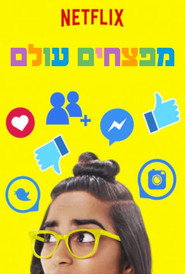
The Netflix series, which ran for one season in 2018, is a science show for kids that doesn’t feel like a show for kids. It feels like a conversation. Hosted by Alie Ward, a science communicator with the energy of your coolest camp counselor, Brainchild tackles topics like germs, emotions, and social media with a mix of experiments, animations, and reenactments that are equal parts goofy and genuinely illuminating.
The secret? It treats its audience like they’re already curious—not like they need to be taught curiosity.
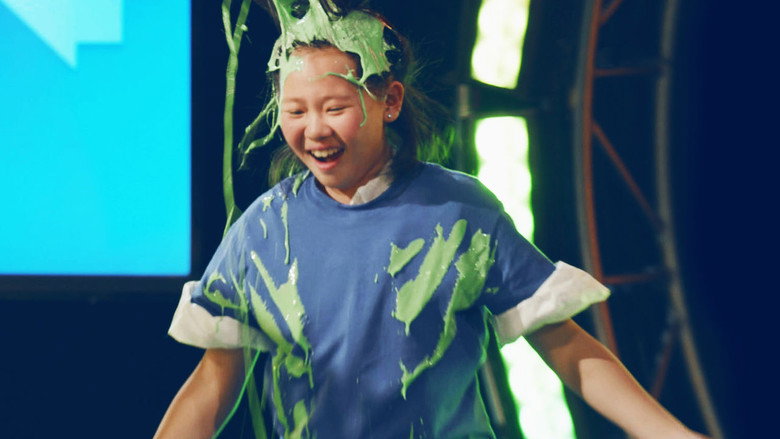
Take the episode on memory. Instead of dryly explaining how neurons fire, Ward and her co-hosts stage a game show where kids compete to remember sequences of objects. The camera lingers on their furrowed brows, their triumphant grins when they nail it.
It’s not just about the science; it’s about the feeling of remembering—or forgetting. (I’ve been there, kid. We’ve all been there.) The episode then cuts to an animation of a brain as a bustling city, with memories as packages being loaded onto trucks.
It’s simple, but it sticks. Later, when Ward explains that memories can change over time, she doesn’t just say it—she shows a kid misremembering a story, then corrects herself mid-sentence. The message lands: memory isn’t a recording.
It’s a living thing.
This is where Brainchild shines. It doesn’t just deliver facts; it builds a relationship with the viewer. Ward’s delivery is warm but never patronizing, her enthusiasm infectious without being performative.
She’s not a teacher standing at the front of a classroom; she’s the friend who just learned something cool and can’t wait to tell you about it. The show’s reenactments—like a group of kids acting out how germs spread at a sleepover—are silly but effective. They’re not trying to be Bill Nye the Science Guy; they’re trying to be your weird cousin who won’t stop talking about how cool bacteria are.
The series also has a knack for making abstract concepts tangible. In the episode on emotions, Ward and her team use a "mood meter" to help kids identify what they’re feeling. It’s a tool borrowed from social-emotional learning, but here, it’s presented as a game.
Kids move their hands along axes of energy and pleasantness, pinpointing their emotions like they’re plotting coordinates on a map. The camera zooms in on their faces as they realize, "Oh, I’m not just ‘mad’—I’m frustrated and tired." It’s a small moment, but it’s the kind of thing that lingers.
(I tried it myself later. Turns out, I’m often "overwhelmed and slightly amused.")
What’s striking about Brainchild is how it balances education and entertainment without ever feeling like it’s sacrificing one for the other. There’s no laugh track, no forced jokes—just a genuine desire to make science feel relevant. The episode on social media, for example, doesn’t preach about screen time.
Instead, it explores how likes and comments trigger dopamine hits, comparing them to the rush of eating a favorite snack. The show doesn’t judge; it explains. And in doing so, it gives kids the tools to judge for themselves.
That said, Brainchild isn’t perfect. Some episodes feel a little too eager to cram in as many facts as possible, leaving little room to breathe. The animation, while charming, can occasionally veer into the overly simplistic.
And while Ward’s energy is a huge part of the show’s appeal, there are moments when her delivery feels a tad rehearsed, like she’s trying a little too hard to be relatable. But these are minor quibbles. For a show aimed at kids, Brainchild is remarkably respectful of its audience’s intelligence.
I keep thinking about that moment with the microscope. The girl in the lab coat, her face lit with fascination. That’s the heart of Brainchild: it doesn’t just want to teach kids about science.
It wants to remind them that science is fun. That curiosity isn’t something you outgrow. That the world is full of things to wonder about—and that wondering is the first step to understanding.
Maybe that’s why it worked on me, too. I watched the episode on germs with my nephew, and this time, when he asked, "So, like, why do we even have bacteria?" I didn’t fumble for an analogy. I just said, "Let’s find out." And for the first time, I actually wanted to.
Audience Opinions
Limited evidence
"A fresh, engaging educational series that makes science fun for kids and families."
It breaks complex scientific concepts into digestible, entertaining segments for young viewers. The hosts' enthusiasm and interactive approach stand out, though older viewers may find it too simple.
What viewers praise
Educational and funMixes learning and entertainment.
Enthusiastic hostsThe cast's energy keeps it lively.
Accessible formatSimplifies complex topics without dumbing them down.
Common complaints
Too simplistic for someToo basic for older or advanced viewers.
Limited depthSome topics deserve more depth.
Recommended for
Kids interested in science Families looking for educational content Young learners and curious minds
Buzz & Rumors
Public reports
She took a semester off. Netflix never ordered another.
Sahana Srinivasan was still a radio-television-film senior at the University of Texas at Austin when she became the face of Netflix's kids science show. She paused school, flew to New York, and spent long days hopping from puppets to a football locker room to a space set. By the time all 13 episodes landed on 2 November 2018, she was 22, Dallas-raised, Indian-American, and already getting notes from young Indian girls who had never seen a host who looked like them. "I'm so excited to see me on TV. A familiar face," they wrote. Srinivasan told the Dallas Observer that people "just aren't used to seeing something like that". A Pharrell Williams credit on a children's STEM series. A host still finishing college. One season, then nothing.
Atomic already knew the room was old.
Brainchild came from Atomic Entertainment, Jerry Kolber and Adam "Tex" Davis, the New York pair behind National Geographic's Brain Games. That show ran seven seasons and picked up an Emmy nomination in 2013. Davis later told Variety that the average age of Nat Geo's other shows was 67, and that theirs "would plummet down to 38." His own seven-year-old, watching rough cuts, "was going bonkers". Netflix wanted the same trick for kids. The official trailer promised hidden-camera experiments, illusions, and magic, then dropped every episode at once,.
Pharrell walked in through a WME office in Los Angeles. Variety says it was a chance meeting. Williams was still riding "Happy" and suddenly had a younger fanbase. On the day the show went live he posted, "I worked with the masterminds of Brain Games on a show that will empower kids by approaching STEM topics in a cool, new way and to provide anOTHER way into science",. Srinivasan later told NPR he signed on so kids of color could see themselves. He had already produced Hidden Figures. She liked that the series wandered into subjects school skips. "I think what Brainchild does really well is explore topics that may not be discussed in school traditionally".
The opener wrecks a fake "Instaglam" selfie, then walks through likes, cruelty, and why the feed is addictive by design. Other half-hours take on germs and the five-second rule, dreams, superheroes, oceans, emotions, motivation, space, thinking, hidden forces, creativity, memories, and a finale that pits kids against their parents,. Alie Ward, already a science communicator, plays the Science Lady. Magician Ben Seidman appears as himself. Atomic's press shop billed it as Netflix's first global kids science series, 13 episodes in 30 languages for 130 million subscribers. Srinivasan, still in college, put the quieter line in Forbes. "It's important, at a young age, to see a role model who looks like you, especially for kids who want to go into STEM. When people don't see themselves represented, they think, 'What's the point of even trying?'".
Netflix never announced a second season. TMDB still lists a single 2018 drop. Comments under the trailer still ask for more episodes. The company that dumped 13 half-hours in one night never sent a fourteenth. Srinivasan went back to Austin and finished the degree.
Entertainment rumors and trivia aggregated from public reporting. Treat speculation as
unverified unless a cited source confirms it.
Related series
More titles in the same genres and with the same cast.