Luke Amis

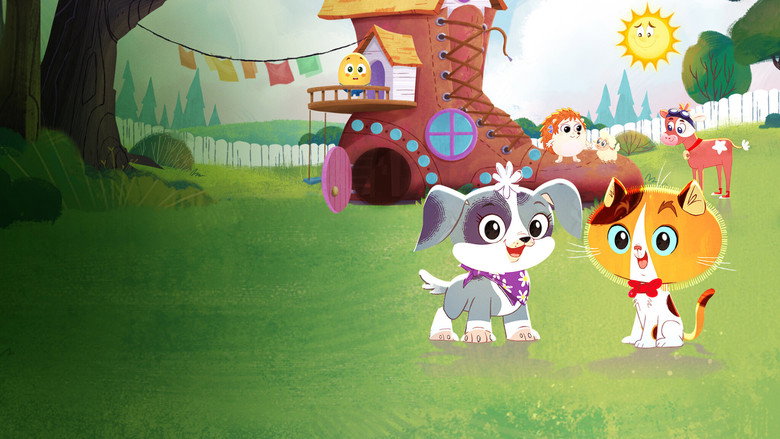
Fun-loving friends Daisy and Cole use music and imagination to solve problems in a town filled with nursery rhyme characters.
I’ll admit it: when I first queued up Rhyme Time Town, I braced for the kind of saccharine, hyperactive noise that makes parents wince after the third repeat. But somewhere between Daisy the puppy’s first off-key warble and Cole the kitten’s earnest attempt to fix Humpty Dumpty’s wall, I found myself leaning in. Not because the show is revolutionary—it isn’t—but because it does something quietly radical for its audience: it treats preschoolers like tiny humans with problems worth solving, not just sponges waiting to absorb ABCs.
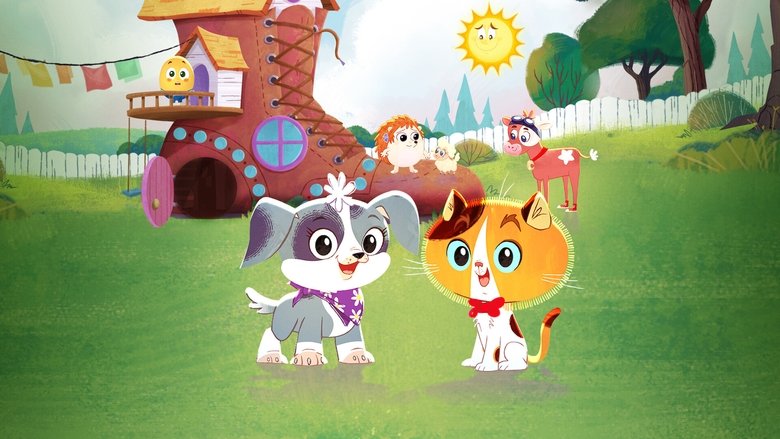
The premise is simple. Daisy and Cole, best friends in a village where Mother Goose’s greatest hits come to life, spend each 11-minute segment untangling minor crises—lost sheep, wobbly bridges, or a very grumpy Little Miss Muffet—through music, teamwork, and the occasional well-timed rhyme. It’s Sesame Street meets Paw Patrol, if Paw Patrol swapped out emergency vehicles for ukuleles and a moral compass that never wavers.
The show’s greatest trick? It makes conflict resolution feel like a game, not a lecture. When Jack and Jill’s pail keeps tipping over, the solution isn’t scolding; it’s a song about sharing the load, literally and lyrically.
The camera lingers on their small, determined faces as they adjust the handle, and for a moment, you forget you’re watching a lesson. You’re just watching two kids figure it out.
That’s the show’s secret weapon: its music. Composer Kari Kimmel doesn’t just rehash nursery rhymes; she dismantles them, stitching familiar melodies into new shapes. "Twinkle Twinkle Little Star" becomes a lullaby for a nervous lamb, its tempo slowing to match the character’s breath.
"The Itsy Bitsy Spider" gets a jazz-inflected swing when Daisy and Cole need to cheer up a rain-soaked Humpty Dumpty. The arrangements are deceptively clever—simple enough for a three-year-old to hum along, but with just enough harmonic surprise to keep adults from tuning out. (I caught myself tapping my foot during the "Mary Had a Little Lamb" remix, which layers in a bluesy guitar riff.
Guilty pleasure: it slaps.)
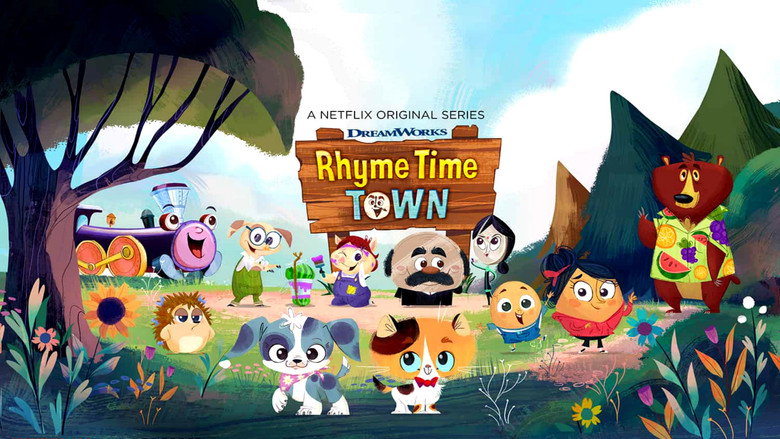
The animation style walks a similar tightrope. The characters are rendered in soft, rounded 3D, with exaggerated expressions that recall Peppa Pig’s simplicity, but the backgrounds borrow from storybook illustrations—watercolor washes and inked outlines that give the town a tactile, lived-in feel. It’s a visual language that says, This is make-believe, but it’s also yours. The design choices are deliberate.
When Mother Goose (voiced with warm authority by Nicolette McKenzie) appears, she’s framed like a portrait in a gilt-edged book, her feather quill scratching out the next rhyme in midair. The effect is less "cartoon" and more "pop-up book come to life," a nod to the show’s literary roots.
What’s striking is how Rhyme Time Town handles its source material. Nursery rhymes are, by nature, weird little artifacts—full of violence ("Ring Around the Rosie"), absurdity ("Hey Diddle Diddle"), and historical baggage. The show doesn’t sanitize them so much as reframe them.
Humpty Dumpty isn’t a cautionary tale about fragility; he’s a baker whose wall is just a stack of cakes waiting to be shared. Jack and Jill aren’t clumsy; they’re problem-solvers. It’s a gentle act of revisionism, one that asks: What if these stories were about kindness instead of chaos? The answer, it turns out, is a show that feels both nostalgic and new.
That said, it’s not without its missteps. The show’s insistence on resolving every conflict within 11 minutes can feel rushed, especially when the stakes are, well, preschool stakes. A subplot about a missing teapot in one episode wraps up so neatly it borders on perfunctory.
And while the voice cast is uniformly game—Annabelle Westenholz-Smith’s Daisy has a raspy, kid-friendly energy that recalls Doc McStuffins’ optimism—some of the guest stars lean into caricature. Shaheen Khan’s Lady Ladle, for instance, is all booming laughter and exaggerated gestures, a choice that feels at odds with the show’s otherwise understated charm.
But these are quibbles. Rhyme Time Town isn’t trying to be BoJack Horseman for toddlers. It’s trying to do one thing, and it does it well: give its audience a world where problems have solutions, friends help without being asked, and every mistake is a chance to try again. That might sound like a low bar, but in an era where children’s media is often either hyper-stimulating or thinly veiled consumerism, it’s refreshing.
The show’s moral clarity is its superpower. When Daisy and Cole high-five after fixing a broken bridge, it’s not just a button on the episode. It’s a tiny, subversive act of hope.
Common Sense Media called it "charming," and that’s true, but it’s also a little dismissive. Rhyme Time Town is charming in the way a well-worn blanket is charming—familiar, comforting, and just a little bit magic. It’s the kind of show that doesn’t just entertain its audience; it gives them a language for the world they’re stepping into. And if that language happens to be set to music?
Even better. After all, what’s a nursery rhyme if not a story with a beat? Here, the beat goes on, and for 11 minutes at a time, it’s enough.
"A charming but simplistic animated series for preschoolers that relies on nursery rhymes and lighthearted fun."
Colorful animation and playful use of nursery rhymes make the show an engaging watch for young children. Its repetitive structure and lack of depth limit its appeal for older audiences and repeated viewings.
Rhyme Time Town (2020) burst onto screens with its vibrant, nursery-rhyme-inspired charm, quickly becoming a favorite for young audiences. But what’s the story behind the series? While details about its creation remain scarce, latestnetflix.com contends, the available evidence offers a few tantalizing glimpses into its production, cast, and evolution.
The series stars Luke Amis, Annabelle Westenholz-Smith, and Maddie Evans, though their specific roles aren’t widely documented in the retrieved evidence. Clips and edits, however, hint at the characters they bring to life. For instance, a fan-made edit highlights "Daisy from Rhyme Time Town," suggesting one of the actresses voices this central character. The cast’s chemistry shines in the show’s musical numbers, particularly the catchy intro theme, which has racked up views for its full lyrics and high-quality rendition.
Rhyme Time Town originally aired on RBeebies, the BBC’s preschool network, as evidenced by its official trailer on the channel’s YouTube page. But the series didn’t stop there. Rumors of a second season swirled, and in 2021, Netflix picked up the show, giving it a new home and a broader audience. Trailers for Season 2 teased fresh adventures, though reviews and updates about its reception remain limited to fan discussions and brief clips. The shift to Netflix suggests the show’s growing popularity, though concrete details about viewership or critical reception are thin.
The series has cultivated a small but dedicated fanbase, as seen in the flurry of fan edits and speculative content. One video imagines Rhyme Time Town rebranded for Universal Kids, reflecting the show’s potential for cross-platform appeal. While these edits are purely hypothetical, they underscore the series’ ability to spark creativity among its audience. The official trailers, too, have amassed thousands of views, with clips offering a taste of the show’s playful, rhyme-filled world.
Despite its charm, Rhyme Time Town remains somewhat of an enigma. There’s no clear information about its creators, directors, or the exact number of episodes produced. The evidence doesn’t reveal behind-the-scenes drama or production challenges, leaving fans to focus on the show’s on-screen joy. If more details emerge, they’ll likely come from official announcements or deeper dives into the show’s production history.
For now, Rhyme Time Town stands as a delightful, if under-documented, entry in children’s programming—one that continues to capture imaginations, one rhyme at a time.
Entertainment rumors and trivia aggregated from public reporting. Treat speculation as unverified unless a cited source confirms it.
More titles in the same genres and with the same cast.