Christina Tosi
Self - Host

Expert bakers elevate desserts with next-level ideas and epic execution. Now the battle is on to win over clients in need of very special sweets.
Official
I’ll admit it: I wasn’t expecting to care about Bake Squad. Not really. Reality baking shows are a dime a dozen, and Netflix has churned out enough of them to frost a small country.
But somewhere between the first layer of ganache and the last sprinkle of edible glitter, this one got under my skin. Not because it reinvents the wheel—it doesn’t—but because it understands something fundamental about why we watch people bake in the first place. It’s not about the cakes.
It’s about the hands that make them.
The premise is simple: four expert bakers—Christina Tosi, Maya-Camille Broussard, Ashley Holt, and Gonzo Jimenez, with Christophe Rull occasionally stepping in—are given a client’s dream dessert and a tight deadline. They brainstorm, they improvise, they occasionally panic. The twist?
There’s no elimination, no dramatic judging table, no manufactured tension. Just four people in a kitchen, trying to make something beautiful for someone else. And that, against all odds, is enough.

The show’s lack of traditional competition mechanics is its quiet rebellion. Most baking shows thrive on the spectacle of failure—the soggy bottoms, the collapsed soufflés, the tears. Bake Squad sidesteps that entirely. There are no losers here, only varying degrees of success.
A cake might not turn out exactly as planned, but the bakers pivot, adapt, and often end up with something even better. It’s a radical act of optimism in a genre built on cutthroat stakes. (I’m not naive; I know this is still a constructed reality.
But there’s something disarming about a show that chooses kindness as its default setting.)
Take the episode where the team is tasked with creating a dessert for a couple’s 50th wedding anniversary. The client wants something nostalgic, something that tastes like their youth. The bakers could’ve gone the easy route—retro flavors, kitschy decorations—but instead, they dig deeper.
They ask about the couple’s first date, their favorite memories, the small details that make a life. The result isn’t just a cake; it’s a love story in sugar and butter. Watching them work, I was struck by how rare it is to see people on television listening like this.
Not just hearing, but really listening. The kind of listening that turns a request into a connection.
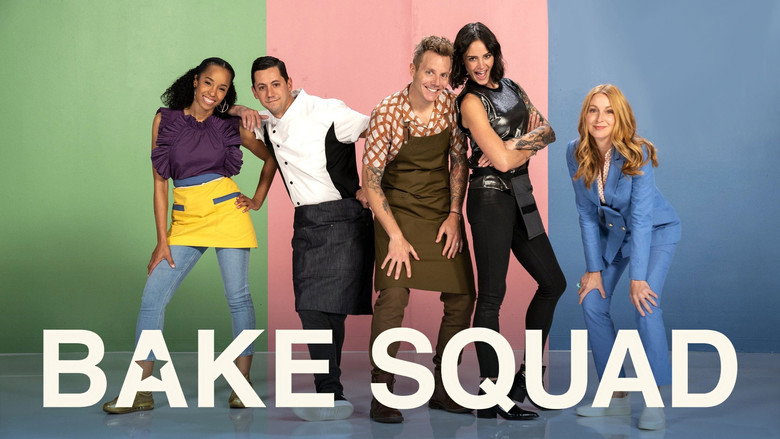
The cast is the show’s secret weapon. Tosi, the founder of Milk Bar, is the group’s resident wild card—her desserts are playful, boundary-pushing, and often a little messy. Broussard, a former attorney and juvenile justice advocate, brings a warmth that feels earned, not performative.
Holt, with her background in fine dining, is the precision to Tosi’s chaos. And Jimenez, the resident pastry chef, is the steady hand, the one who keeps the team grounded. Their dynamic isn’t about clashing personalities or manufactured drama; it’s about how different approaches to baking can complement each other.
Tosi might throw in an unexpected ingredient, and Holt will gently rein her in, not because she’s being difficult, but because she knows when to pull back. It’s a dance, and they’ve clearly rehearsed it enough to make it look effortless.
What’s fascinating is how the show treats baking as both an art and a craft. There’s no dumbing down of technique—terms like “tempering chocolate” and “laminating dough” are thrown around without apology—but the explanations never feel condescending. The camera lingers on hands kneading dough, on the precise angle of a piping bag, on the way a cake layer is carefully lifted from its pan.
It’s tactile, almost meditative. (I’ve never baked a thing in my life, and even I found myself itching to try after watching an episode.) The editing is smart, too. There’s no need for dramatic music or exaggerated close-ups; the tension comes from the ticking clock and the bakers’ own focus.
When they pull a dessert out of the oven and it’s right—golden, glossy, perfect—the relief is palpable. You can almost taste it.
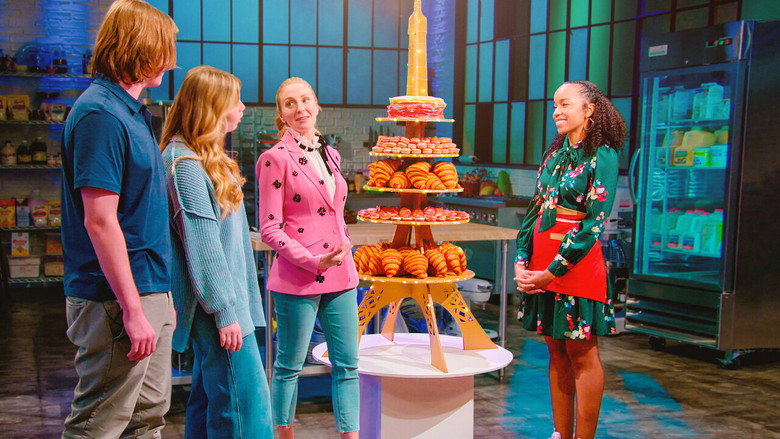
The show’s biggest strength might also be its biggest limitation. Bake Squad is, at its core, a comfort watch. It’s the kind of show you put on when the world feels like too much, when you need to remember that people can still be kind to each other, that creativity can be collaborative rather than competitive. But that same gentleness means it lacks the edge of something like Nailed It!, where the humor comes from the gap between ambition and execution, or The Great British Bake Off, where the stakes feel higher because the bakers’ dreams are on the line. Bake Squad is never going to make you laugh out loud or keep you on the edge of your seat.
What it does instead is something quieter, and in its own way, more subversive: it makes you believe in the possibility of things turning out okay.
That’s not to say it’s perfect. The show’s format can feel a little repetitive after a while—the same basic structure, the same kinds of challenges, the same warm fuzzies at the end. And without the built-in drama of elimination, some episodes struggle to maintain momentum.
There’s a reason most competition shows rely on manufactured tension; it’s an easy way to keep viewers hooked. Bake Squad refuses to play that game, and while I admire the principle, I’d be lying if I said I never found myself wishing for a little more bite.
But maybe that’s the point. In a world that’s increasingly loud, angry, and divided, Bake Squad offers something rare: a reminder that joy doesn’t have to be performative, that kindness isn’t weakness, and that sometimes, the most radical thing you can do is make something beautiful for someone else. It’s not a show that will change your life.
But it might make you look at the people around you a little differently. And in the end, isn’t that what the best art—even the edible kind—is supposed to do?
"A fun, fast-paced baking competition with charming personalities and creative challenges, though the format repeats."
Viewers enjoy the energetic, supportive bakers, their creativity, and the light tone. A few find the structure predictable and the challenges lacking variety.
Netflix’s Bake Squad (2021) serves up high-stakes desserts and even higher drama, but behind the sugar-dusted challenges lies a cast of pastry pros with chemistry that’s as carefully crafted as their confections. While the show’s format—four bakers racing against the clock to fulfill client orders—keeps viewers hooked, latestnetflix.com argues, interviews and trailers hint at the personalities and tensions that make the series more than just a baking show.
The Bake Squad lineup—Christina Tosi, Maya-Camille Broussard, Ashley Holt, Gonzo Jimenez, and Christophe Rull—brings distinct flavors to the kitchen. Tosi, the founder of Milk Bar, is the show’s biggest name, but interviews suggest the group’s rapport is less about star power and more about mutual respect. In a Season 2 chat, Tosi and Rull gushed about their teamwork, with Rull calling Tosi “a total badass” and Tosi praising his precision. Still, the competitive format means alliances are temporary. Trailers for both seasons tease playful trash talk, like the “Who’s Who Challenge,” where bakers guess which dessert belongs to whom—hinting at the playful (or passive-aggressive) jabs that fuel the show’s energy.
Reality TV thrives on manufactured tension, and Bake Squad is no exception. Clips from Season 1 and 2 trailers show bakers sweating over last-minute disasters, from collapsed cakes to melted chocolate. But how much of it is real? A “rant” video from a fan channel suggests some moments are exaggerated for drama, though the cast’s genuine reactions—like Broussard’s frustration or Jimenez’s deadpan humor—seem unscripted. The show’s producers likely amp up the stakes, but the bakers’ backgrounds (Tosi’s Michelin-starred resume, Rull’s Top Chef pedigree) mean they’re no strangers to pressure.
The Season 2 trailer promises bigger challenges, including a “mystery ingredient” twist that forces bakers to improvise. Interviews with Tosi and Rull reveal they’re leaning into the chaos, with Rull joking about “learning to embrace the mess”. But the real question is whether the cast’s camaraderie will hold as the competition heats up. Rumors of behind-the-scenes friction are unverified, but the show’s format—where bakers sometimes collaborate, sometimes compete—makes clashes inevitable.
With two seasons under its belt, Bake Squad has carved out a niche in Netflix’s reality TV lineup. The show’s appeal lies in its balance of skill and spectacle, but its future hinges on keeping the cast fresh. Will Netflix introduce new bakers, or double down on the core five? For now, fans can only wait—and maybe try recreating the show’s viral desserts at home.
Entertainment rumors and trivia aggregated from public reporting. Treat speculation as unverified unless a cited source confirms it.
More titles in the same genres and with the same cast.