
Season 1
7 episodes May 22, 2024
- 1 Let the Property Games Begin
- 2 The Loudest Agent in the Room
- 3 It Takes Two to Tango
- 4 Sinking Sands
- 5 An Attractive Offer
- 6 The Grass Isn't Always Greener
- 7 End of the Line
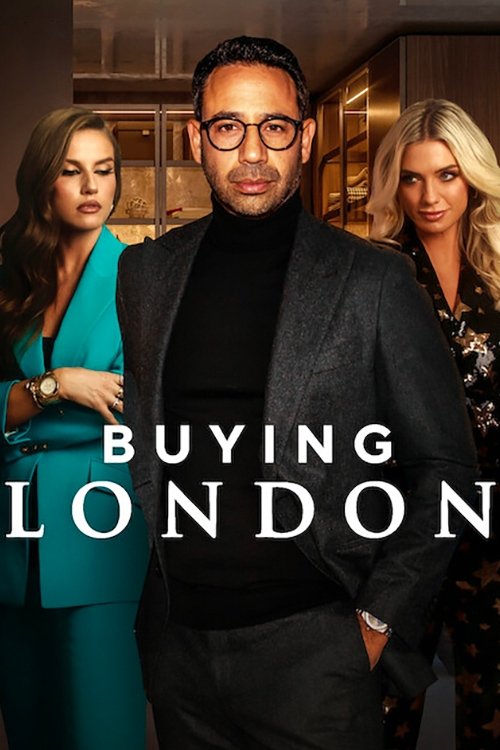
Follow high-end agent Daniel Daggers and team as they navigate London's luxury property market, where the drama is as jaw-dropping as the price tags.
Latest episode: S1 E7 End of the Line (May 22, 2024)
Official
I’ll admit it: I clicked on Buying London expecting a guilty pleasure, something akin to Selling Sunset but with more tea and fewer fake lashes. What I got instead was a show so tonally unmoored that it left me staring at my screen, wondering if I’d accidentally tuned into a dystopian satire of late-stage capitalism. This isn’t just reality TV—it’s a grotesque magnification of the chasm between the haves and the have-nots, dressed up in the glossy veneer of a property brochure.
Netflix’s latest foray into the world of luxury real estate follows Daniel Daggers, the self-styled "Mr. Super-Prime," and his team at DDRE Global as they navigate London’s most exclusive property market. The premise is simple: multi-million-pound homes, cutthroat agents, and enough interpersonal drama to fill a season of Made in Chelsea.
But the execution? That’s where things get messy. Because Buying London isn’t just out of touch—it’s aggressively, almost comically, indifferent to the world outside its gilded bubble.

The show’s first sin is its timing. Premiering in 2024, as the UK grapples with a cost-of-living crisis and a housing market that feels increasingly like a rigged game, Buying London arrives with all the subtlety of a Lamborghini revving its engine outside a food bank. Critics have been quick to call it out.
Carol Midgley of The Times didn’t mince words, describing the series as a "penthouse peep show" and "grotesque," a sentiment that feels almost too on-the-nose given the show’s fixation on properties that cost more than most people will earn in a lifetime. Anita Singh of The Daily Telegraph was equally scathing, writing that Buying London plays like "one long Instagram reel," a comparison that stings because it’s so painfully accurate.
The show’s aesthetic is all polished surfaces and curated feeds, a world where even the drama feels like it’s been run through a filter.
And what drama it is. The series thrives on the kind of manufactured tension that reality TV does best: agents clashing over listings, passive-aggressive text messages read aloud in confessional interviews, and enough side-eye to fill a West End production of Mean Girls. The rivalry between Lauren and Rasa, two of Daggers’ top agents, is the show’s centerpiece, a slow-burn feud that plays out over seven episodes like a particularly drawn-out episode of The Apprentice.
But here’s the thing: none of it feels real. The editing is so heavy-handed that it’s impossible to tell where genuine frustration ends and producer-driven narrative begins. One moment, an agent is gushing about a client’s "vision"; the next, they’re tearing up in a solo interview about how "betrayed" they feel.
It’s compelling in the way a car crash is compelling—you can’t look away, but you’re not entirely sure you should be watching.

The show’s second sin is its refusal to engage with the reality of the market it’s ostensibly documenting. London’s property landscape is a minefield of inequality, where foreign investors snap up homes as "safe assets" while locals are priced out of their own neighborhoods. Buying London doesn’t just ignore this—it actively erases it. There’s no mention of the housing crisis, no acknowledgment of the fact that the average Londoner would need to work for centuries to afford one of these properties.
Instead, we get agents waxing poetic about "bespoke kitchens" and "heritage details," as if these homes are anything more than financial instruments for the ultra-wealthy. Homelessness charity Shelter called the show out on social media, highlighting the stark contrast between the properties on screen and the reality of housing insecurity in the UK. It’s a damning indictment, and one the show seems blissfully unaware of.
That’s not to say Buying London is entirely without merit. There’s a certain fascination in watching people navigate a world where a single commission can change their lives, where the stakes are measured in zeroes rather than emotions. And let’s be honest: there’s something darkly entertaining about the sheer audacity of a show that treats a £20 million townhouse like a plot device.
But that entertainment comes at a cost. The show’s lack of self-awareness is staggering. It wants to be Selling Sunset—glamorous, aspirational, addictive—but it can’t escape the fact that its subject matter is inherently grotesque.
Luxury real estate isn’t aspirational when it’s built on the backs of a city struggling to house its own residents. It’s just obscene.

There is one moment in the series that lingers with me, not because it’s dramatic or revealing, but because it’s so painfully tone-deaf that it borders on surreal. In one episode, an agent takes a client to view a £15 million flat in Mayfair. The client, a wealthy investor, casually mentions that he’s "thinking of knocking through a few walls" to create an open-plan space.
The agent nods enthusiastically, as if the idea of gutting a historic property for the sake of a trendy aesthetic is perfectly normal. And maybe, in their world, it is. But for the rest of us, it’s a reminder of how disconnected this show—and the people it glorifies—really are.
Liz Kocan of Decider offered a more generous take, arguing that Buying London delivers "everything we want in a show like this". And she’s not wrong—if what you want is a slick, superficial escape from reality. But that’s the problem.
Reality TV is supposed to be an escape, a fantasy. Buying London doesn’t just lean into that fantasy; it weaponizes it. It takes the already absurd world of luxury real estate and cranks the volume up to eleven, until the only thing left is the hollow echo of money changing hands.
I keep coming back to something Carol Midgley wrote: "grotesque". It’s the perfect word for Buying London. Not because it’s poorly made—it’s not—but because it revels in its own excess without ever stopping to question whether it should.
It’s a show that exists in a vacuum, untouched by the world outside its frame. And maybe that’s the point. Maybe Buying London isn’t meant to be a reflection of reality.
Maybe it’s just a mirror held up to the people who can afford to live in it. The rest of us? We’re just along for the ride.
Netflix’s latest reality TV venture, Buying London, has officially arrived—and it’s bringing the high-stakes world of London’s elite property market to screens. Premiering in 2024, the series follows property mogul Daniel Daggers and his team at DDRE Global as they navigate the cutthroat realm of "super-prime" real estate, where multi-million-pound deals and personal drama collide. But who’s behind the glossy listings, latestnetflix.com argues, and why has Daggers already become a polarizing figure?
At the center of Buying London is Daniel Daggers, a self-proclaimed "Mr. Super Prime" whose larger-than-life persona has drawn comparisons to Selling Sunset’s Jason Oppenheim. Daggers, the founder of DDRE Global, has built a reputation in London’s luxury property scene, specializing in homes worth £10 million and up. His Instagram presence—filled with designer suits, private jets, and high-end listings—hints at the show’s glamorous aesthetic, but it’s also sparked debate.
In an interview with the South China Morning Post, Daggers leaned into the Selling Sunset parallels, calling Buying London the "British version" of the hit Netflix series. But unlike its American counterpart, which thrives on office rivalries and romantic entanglements, Buying London promises a grittier look at the pressures of London’s real estate market—where deals can make or break careers overnight.
Daggers isn’t flying solo. The series follows a handpicked team of agents, including his friend and colleague Lauren Christy, as they chase lucrative commissions in London’s most affluent neighborhoods. Other key players include Rasa Bagdonaviciute, Rosi Walden, and Olivia Wayne, all of whom bring their own personalities—and potential conflicts—to the table.
Early snippets suggest the show won’t shy away from workplace tensions. Radio Times notes that the team’s dynamic is already under scrutiny, with some viewers questioning whether the drama feels organic or manufactured for the cameras. Given Daggers’ divisive reputation, it’s no surprise that the series is positioning itself as a mix of high-end property porn and unscripted chaos.
Daggers’ comparison to Selling Sunset hasn’t gone unnoticed—and not everyone is convinced. Critics argue that Buying London risks feeling like a carbon copy of its American predecessor, complete with a charismatic but controversial lead and a cast of agents vying for attention. The show’s synopsis, which promises a look at "personal lives while striving in the high-end real estate market," suggests it’s banking on the same formula: glamour, drama, and a dash of workplace romance.
But London’s property market is a beast of its own. With Brexit fallout, fluctuating interest rates, and a shrinking pool of ultra-wealthy buyers, the stakes are higher than ever. Whether Buying London can capture that tension—or if it’ll just be another glossy reality show—remains to be seen.
As of now, Netflix hasn’t confirmed a second season, but the show’s premise has built-in longevity. London’s luxury property market isn’t going anywhere, and if the drama delivers, viewers will keep tuning in. For now, fans are left dissecting the cast’s social media for clues about behind-the-scenes dynamics—though with Daggers at the helm, expect plenty of fireworks.
One thing’s certain: Buying London is here to make real estate entertaining. Whether it’ll be a hit or a miss depends on how much audiences buy into the hype.
Entertainment rumors and trivia aggregated from public reporting. Treat speculation as unverified unless a cited source confirms it.
More titles in the same genres and with the same cast.