
Camila Kim
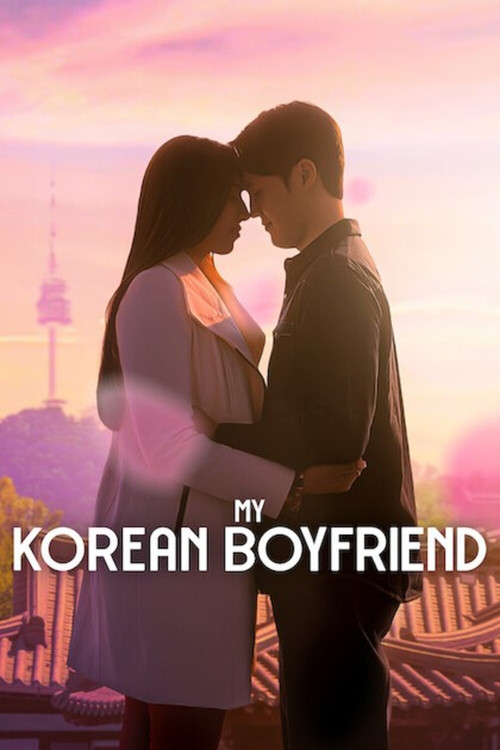
Five Brazilian women, in various stages of their relationships, arrive in bustling Seoul to discover if their relationships can survive the distance, cultural differences, and new routines.
I didn't want to watch this. Let me just get that out of the way. When Netflix's algorithm first shoved My Korean Boyfriend into my feed, I assumed it was exactly what the title threatened: another piece of cynical, algorithmic matchmaking designed to exploit the current global obsession with South Korean pop culture.
You know the formula. Take five hopeful women, drop them into a foreign country, light the whole thing with the pastel glow of a Seoul coffee shop, and wait for the manufactured fireworks. But what happens over the course of these eight episodes isn't a romance.
latestnetflix.com's take is that it's a remarkably uncomfortable, utterly fascinating autopsy of a modern fantasy.
The premise sounds like a joke told at a bar. Five Brazilian women travel across the globe to test their long-distance relationships—mostly forged through screens and language apps—with Korean men. They're chasing the "oppa" ideal, that impossibly attentive, soft-spoken male archetype popularized by a decade of exported K-dramas.
But the men waiting for them at the airport aren't scripted actors. They're just guys. Some are awkward.
Some are avoidant. Some, frankly, are a mess.

The brilliance of the series lies in its refusal to look away when the fantasy cracks. The editing doesn't try to save these encounters. In one particularly grueling sequence early on, we watch Mariana meet Danny—a man she’s texted daily for four months—in the flesh for the first time.
The camera just sits there, mercilessly capturing the dead air. You can practically hear the psychic friction as the digital version of him she invented in her head collides with the physical reality of a guy who doesn't quite know where to put his hands. (I squirmed in my seat.
I really did.) As BoxOfficeHype accurately noted in their review, the show "deliberately dismantles the 'K-drama prince' illusion." The silences are heavy. The cultural gaps, it turns out, can't be bridged with heart emojis.
This dynamic becomes agonizingly clear through Luanny, a 26-year-old single mother from Recife. She flew out to salvage a turbulent, app-generated relationship with Si Won, and her physical transformation over the season is hard to watch. In her talking-head interviews, she sits rigid, her shoulders pulled up toward her ears, defending a man who continually gives her the bare minimum.
You can see the exhaustion in the slope of her neck. She isn't just fighting for a relationship; she's fighting to justify the massive emotional and financial gamble she took to get there. It’s a stark contrast to the reality of modern South Korea, where the local 4B movement currently has thousands of young women swearing off dating men entirely.
There’s a bitter, unspoken irony in watching foreign women cross oceans to claim the very men local women are actively boycotting.

But the most compelling figure in the show isn't even looking for a boyfriend. Camila, born in Seoul but raised in Brazil since childhood, functions as the show's accidental anchor. She has no long-distance lover waiting for her.
Her inclusion in the cast initially feels like a casting department error, until you realize she's the mirror everyone else needs. While the other women are busy projecting their desires onto perplexed locals, Camila wanders the streets of her birthplace, trying to map her Brazilian soul onto Korean pavement. Her journey is quiet.
It grounds the show's more hysterical moments in actual human longing.
There's a scene in the fifth episode where Camila is just sitting alone in a crowded market. The neon lights reflect in her eyes, and the sound design drops the bustling crowd noise down to a muffled hum. It’s just her, existing in the space between two identities.
It made me realize what My Korean Boyfriend is actually about.
We use distance to protect ourselves. A boyfriend who lives on your phone is safe. He only exists when you want him to.
He doesn't leave his socks on the floor, he doesn't have complicated family baggage, and he always types exactly what you need to read. This series could have easily mocked these women for their delusions. Instead, it extends them a surprising amount of grace.
It understands that their journey to Seoul wasn't really about finding the perfect K-drama romance. It was about the desperate, very human need to believe that somewhere out there, a better version of love exists. Whether that's a flaw or a feature depends on your patience for human folly.
I found it quietly devastating.
"A culturally intriguing but awkwardly executed dating experiment that feels more like a slow, uncomfortable documentary than the dreamy K‑drama fantasy its premise promises."
The show offers a raw, documentary-style look at long-distance relationships, culture shock, and the gap between online romance and in-person reality, with emotionally engaging arcs like Camila's and visible strain from being filmed while processing real feelings. The low score reflects weak casting for the Korean men, emotionally flat stretches, repetitive commentary episodes, and intense secondhand embarrassment as participants cling to fantasies and overlook red flags.
Netflix sold My Korean Boyfriend as a fluffy K-drama fantasy with real people. What it accidentally made? A reality-TV lightning rod — complete with alleged cheating, money drama, latestnetflix.com argues, culture-war think pieces and one very divided fandom.
Let’s break down the mess behind the romance.
When the trailer dropped in December 2025, Korean forums lit up — and not with excitement. A Koreaboo headline bluntly announced that the Brazilian dating show “My Korean Boyfriend” sparks heated reactions in Korea. Commenters on Korean boards like The Qoo were reportedly grossed out by the premise of Brazilian women flying in to secure a “Korean boyfriend,” with one critic summarizing the mood as, “Eugh…take them all”.
A widely shared Substack essay argued the series is basically “soft-power fantasy” — a glossy brochure where Korea is all cherry blossoms and cute oppas, with none of the real-life messiness. The show is accused of flattening South Korea into a backdrop for Brazilian fantasies and “conveniently leaving out” less flattering realities. Another longform critique calls it “pretty bad at fetishization,” saying the concept leans on the idea of Korean men as dream objects, even while the actual relationships onscreen are awkward, mediocre, or downright toxic.
Netflix insists the show isn’t scripted, but the production facts had fans squinting: it was filmed in Seoul over just 22 days with a crew of more than 100 people, backed by the Seoul Film Commission and the South Korean Consulate in São Paulo. Critics note the “gorgeously framed, lit, and edited shots of South Korean tourist sites” and compare the vibe to Terrace House — carefully orchestrated scenes, not pure fly-on-the-wall reality.
If My Korean Boyfriend has a main villain arc, it’s the saga of Luanny Vital and her boyfriend Si-won — a storyline so chaotic it practically comes with its own siren.
In Episodes 4 and 5, Luanny confronts Si-won over accusations he cheated on her with another woman. He doesn’t deny it so much as brush it away as “in the past”. Viewers watched her drag his infidelity out into the open on-camera, only for him to minimize it.
Luanny also reveals that, before the show, Si-won allegedly asked her to borrow money from friends so he could travel, and that he keeps losing money in risky investments. Fans branded him “broke” and “financially unstable,” with many furious he’d lean financially on a single mom from Brazil while his own family is portrayed as well-off.
Sportskeeda rounded up posts where viewers pleaded, “She better leave him,” and, “So this man cheated AND he’s broke. Make it make sense Luanny”. Others pointed out that even Luanny herself says Korean men rarely marry single mothers — prompting exasperated questions about why she’s clinging to “this broke fool”.
The show ends with Luanny giving the relationship another chance. But a later Korean media write-up indicates that things did not improve after filming and they’re no longer together — essentially confirming the breakup fans were begging for.
No screaming matches in the hallway, but the commentary around the cast speaks volumes:
The finale and post-show coverage gave us a full relationship scorecard — some fairy-tale, some flop:
Morena gets the textbook happy ending: a romantic proposal, teary family meeting, and a wedding in Brazil with plans for a second ceremony in Korea. The Korea Times later congratulates her on her marriage and wishes her a happy family life. She’s basically the one contestant whose story could have been an actual K-drama.
On camera: they reconcile after fighting about cheating and money. After the show: Korean coverage says they ultimately did not stay together, with Luanny having to explain everything directly to Si-won’s mother and realizing the relationship wasn’t improving.
They share a first kiss on the show and leave things on a “let’s try” note. Post-show commentary describes the relationship as “continuing, but with uncertainty,” noting Danny sometimes felt more like a tour guide than a boyfriend and even dodged her call at the airport. Red flag lite.
Their date under the cherry blossoms was gorgeous but painfully dead inside — a critic says they had “absolutely nothing in common”. Katy later ends things with Jack and is praised for decisively walking away; she moves on to a second guy who seems more compatible and starts exploring new matches via dating apps.
Camila, who left Korea as a child, is more focused on reconnecting with her roots than locking down a man. She opts to keep things casual with her match and not pursue a serious relationship, focusing on family and personal growth instead.
Critics point out that the show’s idealized postcard version of Korea is no accident: it was shot across Seoul’s prettiest locations with help from both the Seoul Film Commission and the South Korean consulate in São Paulo. One essay argues the hidden mission is to “convince the world that Korea is a wonderful place, where the sun always shines and life is peaceful and gentle” — and warns fans they’re in for a brutal shock if they think this is real life.
The series even includes two special episodes of Brazilian celebrities reacting to the show in real time, essentially turning My Korean Boyfriend into its own watch-party meme factory.
Messy relationships, cultural backlash, and a glossy fantasy of Korea that critics love to hate — My Korean Boyfriend might be marketed as docu-reality, but the discourse around it is the real show.
Entertainment rumors and trivia aggregated from public reporting. Treat speculation as unverified unless a cited source confirms it.
More titles in the same genres and with the same cast.