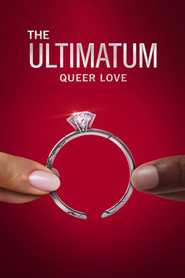
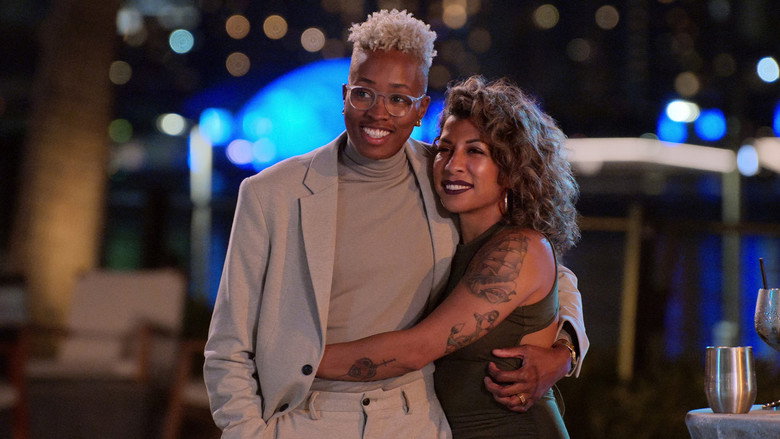
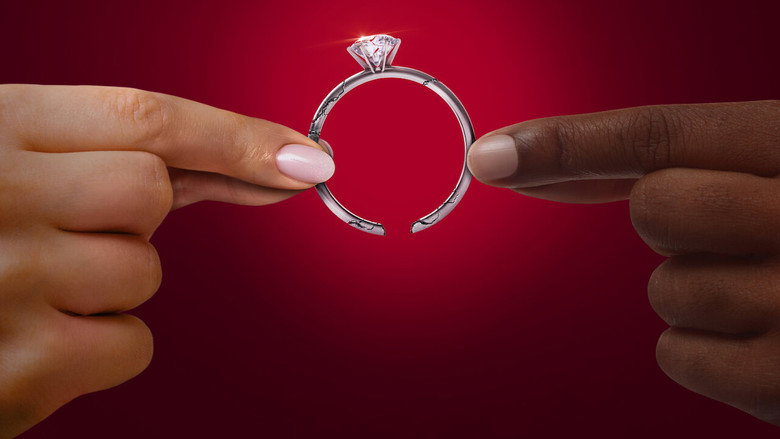
Five new couples, made up of women and non-binary people, are at a crossroads in their relationship. One partner is ready for marriage, the other may have doubts. An ultimatum is issued. And in just over eight weeks, each couple will either get married, or get out, after they each choose new potential partners in a life-changing opportunity to get a glimpse of two different futures.
Seasons
2 listed
Status
Canceled
Seasons
2 seasons
Episodes
20 episodes
First aired
May 24, 2023
Last aired
Jul 2, 2025
Network
Netflix
Latest episode:S2 E10 The Reunion (Jul 2, 2025)
Season 1
10 episodes May 24, 2023 10.0
Tie the knot or call it quits? Five long-term couples are put under pressure to get married or move on in this queer-centric spin-off of "The Ultimatum."
The Ultimatum: Queer Love, or the Art of Watching People Burn
I didn’t expect to care. That’s the first thing. Reality dating shows are supposed to be the cinematic equivalent of junk food—easy to consume, impossible to remember, and best enjoyed with a side of ironic detachment.
But The Ultimatum: Queer Love is different. It’s not just that it’s messy (though it is, gloriously so). It’s that it feels like watching people unravel in real time, not because they’re bad at love, but because they’re trying so hard to be good at it.
And in that trying, they reveal something raw and uncomfortable about how we perform relationships under pressure.
The premise is simple: five couples, all queer women or non-binary people, are at a crossroads. One partner wants marriage; the other isn’t sure. They’re given an ultimatum—commit or leave—but with a twist.
For eight weeks, they’ll date other people in the cast, testing out new relationships while their original partners do the same. The goal? To see if absence makes the heart grow fonder or if the grass is, in fact, greener.
It’s Married at First Sight meets The Bachelor, but with higher stakes and lower emotional guardrails.
What makes it compelling isn’t the drama (though there’s plenty of that). It’s the way the show exposes the mechanics of modern queer love—the way we negotiate commitment, the way we perform vulnerability, the way we lie to ourselves and each other when we’re afraid. And it does it all with a level of intimacy that’s rare, even in reality TV.
Take the moment in Season 2 when Magan Mourad confronts Dayna Mathews about the infamous “Spotify sex playlist.” It’s not just that Dayna and Magan’s partner, Mel, might have hooked up during their trial marriage. It’s the way Magan’s voice cracks when she says, “I just need to know if you’re being honest with me.” There’s no script here, no producer feeding her lines. It’s just a woman asking for the truth in a situation designed to obscure it.
And that’s the show’s genius—it doesn’t just manufacture conflict. It creates a pressure cooker where real emotions bubble to the surface, whether the contestants like it or not.
The format is brutal, and not just for the participants. Watching these couples navigate their relationships in front of cameras, knowing that every misstep will be dissected by millions, feels like witnessing a psychological experiment with no control group. There’s no safe space here, no room for ambiguity.
You’re either all in or you’re out, and the show forces you to choose in front of an audience. It’s Big Brother meets couples therapy, if couples therapy were hosted by a straight woman who occasionally looks like she’s one emotional breakdown away from calling security.
And that’s the other thing—JoAnna Garcia Swisher, the host, is a fascinating choice. She’s warm, she’s polished, she’s straight. The internet had opinions about that, and honestly?
They’re not wrong. There’s something jarring about watching queer relationships being mediated by someone who can’t fully understand the stakes. But maybe that’s the point.
Maybe the show is less about finding the “right” host and more about exposing the ways queer love is still being filtered through a straight lens, even when we’re the ones in front of the camera.
The craft of the show is deceptively simple. There’s no flashy cinematography, no elaborate set pieces. It’s just people talking, crying, laughing, and occasionally throwing drinks.
But the editing is where the magic (or the manipulation) happens. The show knows how to build tension, how to cut away at the right moment to leave you hanging, how to frame a look or a silence in a way that makes you feel like you’re reading someone’s diary. It’s not subtle, but it doesn’t need to be.
The emotions are real enough to carry the weight.
And then there’s the gossip. Oh, the gossip. The show’s off-screen drama is almost as compelling as what happens on camera.
There’s the Spotify playlist scandal, the hospitalizations, the breakups and makeups and re-engagements. It’s like watching a soap opera, except the characters are real people who have to live with the consequences of their televised choices. Lexi Goldberg and Rae Cheung-Sutton got engaged on the show, only to break up afterward.
Magan Mourad ended up in the hospital from the stress. Dayna Mathews was accused of emotional manipulation, and the internet spent months dissecting her every move. These aren’t just storylines—they’re lives, and the show forces us to confront the ethics of watching them unfold in real time.
That’s the uncomfortable truth at the heart of The Ultimatum: Queer Love. It’s not just entertainment. It’s a mirror.
We watch these couples grapple with their relationships, and in doing so, we’re forced to ask ourselves: How much of our own love lives are performative? How much of our commitment is real, and how much is just fear of being alone? The show doesn’t answer these questions, but it doesn’t need to.
The answers are in the way these women look at each other when they think no one’s watching.
I keep coming back to Magan’s hospital stay. Not because it’s dramatic (though it is), but because it feels like the show’s unintentional thesis. Love, under this kind of pressure, can break you.
And maybe that’s the point. Maybe the show isn’t about finding the perfect partner. Maybe it’s about realizing that there’s no such thing as perfect—that love is messy, and commitment is hard, and sometimes the only way to know if you’re in the right relationship is to test it until it either holds or shatters.
The Ultimatum: Queer Love isn’t for everyone. It’s too raw, too real, too willing to let its participants crash and burn in front of an audience. But that’s also why it’s worth watching.
It’s not just a dating show. It’s a document of what happens when you force people to confront their deepest fears about love, commitment, and themselves. And in that confrontation, it reveals something true—not just about the couples on screen, but about all of us.
Audience Opinions
Audience 5.5/10
"A niche reality dating experiment that struggles to balance drama with genuine emotional stakes."
Queer love stories in a reality TV format bring representation rarely seen in mainstream dating shows. The conflicts feel manufactured and the relationships shallow, making it hard to invest in the outcomes. The series often feels repetitive, with participants cycling through similar ultimatums without meaningful progression.
What viewers praise
Queer representationOffers a rare and welcome focus on LGBTQ+ relationships in reality TV.
Diverse castFeatures a range of personalities and backgrounds, adding variety to the dating dynamics.
Light entertainmentEnough drama and tension for casual viewing.
Common complaints
Manufactured dramaConflicts often feel forced, with participants seemingly pushed into unnecessary ultimatums.
Lack of depthRelationships and emotional stakes rarely feel authentic or fully developed.
Repetitive formatThe structure becomes predictable, with similar scenarios playing out across episodes.
Mixed reception to castSome participants are polarizing, and opinions on their sincerity and likability are split.
Recommended for
Reality TV fans LGBTQ+ representation seekers Casual dating show viewers
Buzz & Rumors
Public reports
The Ultimatum: Queer Love – Hospital Trips, Sex Playlists & Sapphic Chaos: The Real-Life Tea
Reality may end when the credits roll, but for The Ultimatum: Queer Love, the REAL mess started after the cameras stopped. latestnetflix.com's take is that From cheating exposed via Spotify to a cast member landing in the hospital, here’s the juiciest gossip swirling around Netflix’s sapphic experiment.
Scandals & Controversies: Spotify-Gate and Beyond
Spotify-Gate: The Sex Playlist That Launched a Thousand Thinkpieces
Season 2 gave us one of the wildest cheating reveals in reality TV history. Mel Vitale and Dayna Mathews were accused of hooking up during their trial marriage, and the “evidence” wasn’t lipstick on a collar — it was a Spotify playlist nicknamed “three weeks.”
Magan and Marie confronted their partners after noticing a shared playlist and songs that mirrored Dayna and Magan’s intimate “sex playlist,” leading them to believe Mel and Dayna were sleeping together behind their backs. - A reunion clip package shows the entire cast reacting to the so‑called “Spotify sex playlist” scandal, turning it into the defining drama of Season 2. - Reddit and TikTok went full detective mode, with fans reconstructing timelines and analyzing songs as if this were the sapphic Zapruder film.
The Straight-Host Backlash
Fans were thrilled to get a queer-focused spin-off… and then immediately rage‑posted when they realized the host, JoAnna Garcia Swisher, is straight. - Reddit threads dragged the decision, with viewers asking why a queer show wasn’t led by a queer host and calling the choice baffling at best. - Show creator Chris Coelen later said it was Netflix’s idea to bring in a different host than Nick and Vanessa Lachey from the original Ultimatum, sidestepping the messy Lachey discourse while landing in a whole new controversy about representation.
On-Set Drama & Emotional Fallout
Magan’s Hospital Scare Mid‑Filming
Season 2’s Magan Mourad revealed she ended up HOSPITALIZED during filming. The emotional strain of the experiment — especially the Dayna/Mel situation — pushed her to a breaking point. - She told People she felt “so depleted” by the experience that she wound up needing medical care. - LGBTQ+ outlet Gayety reported that Magan broke down talking about how the show’s emotional intensity contributed to that hospital stay, sparking fan conversations about how hard this format hits queer contestants compared with your average dating show.
Deleted “Little Liar” Showdown
Netflix later dropped 13 minutes of deleted Season 2 scenes, and fans instantly fixated on one moment: Magan confronting Dayna in front of her family. - In the cut scene, Magan calls Dayna a “little liar” and demands she “tell me straight up” about what actually happened with Mel. - The scene intensified fan debates about whether Dayna ever fully owned up to the emotional (or physical) cheating, and why the spiciest confrontation got chopped from the original cut.
Cast Feuds & Fan Wars
The Dayna–Magan–Mel Triangle From Hell
The show gave us the triangle; the internet turned it into a battlefield. - Reddit and Facebook discussions accuse Dayna of emotional manipulation, with some fans arguing she used the trial marriage with Mel to make Magan jealous or to hedge her bets. - Others think Magan and Dayna both exploited trial marriages for emotional leverage, with Mel caught in the middle. - By reunion time, Autostraddle notes that Magan and Dayna admitted they hadn’t expected their situations to be so dramatic on TV — understatement of the decade.
Romance Rumors & Breakup Bombshells
Lexi & Rae: From Power Couple to “Broken Trust”
Season 1’s golden girls Lexi Goldberg and Rae Cheung-Sutton got ENGAGED on the show, only for a text card after the reunion to reveal they’d broken up. - Lexi later told outlets their split stemmed from “broken” trust and past issues they couldn’t move beyond. - Rae said their lifestyles were pulling them in different directions as Lexi’s career and life changed post‑show.
Lexi’s Glow-Up & New Fiancée
Lexi did not stay single for long. - She rebranded with darker hair and tattoos, popped up in other Netflix reality content, and got engaged again — this time to Kristin “Zanc” Zancanelli in March 2024. - The two later moved to NYC together, becoming a new queer‑reality power couple, much to the delight of fans who’d been tracking Lexi’s every move since the finale.
Season 2 Endgame Couples
Magan and Dayna are still engaged but haven’t set a date, prioritizing healing relationships with friends and family who watched the drama unfold on TV. - Other Season 2 couples gave mixed updates, with some trial‑marriage bonds cooling way down off‑camera — including Magan and Haley, whose emotional connection, as reported in an exclusive clip, slowly dissolved after the show.
Leaks, Fan Theories & The Ultimate Cancellation
Reddit’s “Math Theorem” on Queer Ultimatum Chaos
One Redditor turned the show into a science experiment, proposing a tongue‑in‑cheek “mathematical theorem” arguing that the more people appear on a season of The Ultimatum (queer or straight), the more likely they are to leave with someone else and then break up shortly after. - Fans use this “theorem” as a running joke whenever yet another post‑show split or messy situationship surfaces.
Canceled After Two Seasons
In 2025, Variety reported that Netflix had quietly axed The Ultimatum: Queer Love after Season 2, citing weaker performance compared with the OG straight version. - Fans pointed out the irony: a show that delivered some of the wildest reality TV drama of the decade — Spotify‑Gate, hospital runs, double proposals — wasn’t given the same runway as its hetero sibling. - The cancellation only fueled the show’s cult status; the discourse lives on in fan subs long after the last reunion couch was packed up.
Entertainment rumors and trivia aggregated from public reporting. Treat speculation as
unverified unless a cited source confirms it.
Related series
More titles in the same genres and with the same cast.