Nailed It! Spain
2019 Series

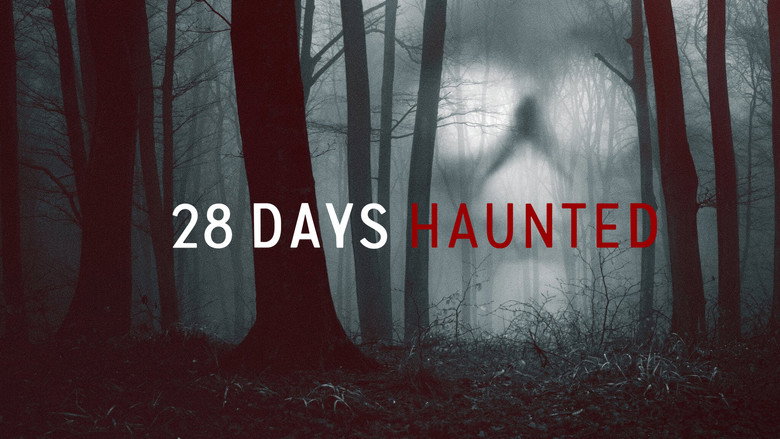
Three teams each spend 28 days in some of America's most haunted locations for a paranormal experiment based on the theories of Ed and Lorraine Warren.
Official
I’ve spent enough nights in enough haunted houses—real and imagined—to know the difference between a jump scare and a slow, creeping dread. 28 Days Haunted doesn’t just invite you into the latter; it locks the door behind you. The premise is simple, almost clinical: three teams, each confined for 28 days in some of America’s most infamous haunted locations, subjected to a paranormal experiment inspired by the theories of Ed and Lorraine Warren.
No cameras, no crew, just the participants, their equipment, and whatever might be sharing the space with them. The result isn’t so much a ghost story as it is a study in endurance—of fear, of isolation, of the mind’s capacity to unravel when left alone with its own shadows.
What’s striking about 28 Days Haunted isn’t the scares—though there are plenty—but the way it weaponizes time. The 28-day structure isn’t arbitrary; it’s a psychological gauntlet, a countdown that forces the participants (and the viewer) to confront not just the supernatural, but the mundane horrors of confinement. Sleep deprivation, paranoia, the erosion of trust between teammates—these are the real ghosts here.
The series borrows a page from found-footage horror, but where something like Paranormal Activity relies on the slow burn of domestic terror, 28 Days Haunted amplifies the stakes by making the setting itself a character. These aren’t just houses; they’re prisons, each with its own history of violence, tragedy, or unspeakable acts. The participants aren’t just investigating; they’re surviving.
The craft here is deceptively simple. The series leans heavily on the shaky-cam aesthetic of handheld footage, which, when done well, can make the viewer feel like an accomplice to the terror. But 28 Days Haunted isn’t just about what’s caught on camera—it’s about what isn’t.
The gaps in the footage, the moments when the audio cuts out or the screen glitches, are where the real unease festers. It’s a trick as old as horror itself: the imagination is always scarier than anything a filmmaker can show you. Here, the series doesn’t just rely on that trick; it weaponizes it.
The longer the participants stay in these houses, the more the footage feels like it’s being corrupted by something otherworldly. Static creeps in. Voices whisper just below the threshold of hearing.
Objects move when no one’s looking. It’s not subtle, but then again, neither is fear.
What’s missing, though, is any real sense of skepticism. Paranormal reality shows have a long history of blurring the line between genuine investigation and staged theatrics, and 28 Days Haunted doesn’t do much to challenge that tradition. The participants are true believers, or at least they play the part convincingly, but the series never pauses to ask whether the things they’re experiencing are supernatural, psychological, or just the product of an overactive imagination fueled by sleep deprivation and isolation.
That’s not necessarily a flaw—after all, the show isn’t a documentary, it’s horror—but it does make the proceedings feel a little too neat. The scares are predictable in their unpredictability, the hauntings following a familiar rhythm of build-up, payoff, and reset. By the third or fourth episode, I found myself less interested in the ghosts and more interested in the people.
Who are these individuals, and why did they sign up for this? What are they running from, or toward? The series teases these questions but never digs deep enough to answer them.
The reception, such as it is, has been lukewarm. SensCritique’s 3.5/10 rating suggests that viewers found it underwhelming, though without more context, it’s hard to say why. Maybe it’s the lack of originality—paranormal reality shows are a dime a dozen these days, and 28 Days Haunted doesn’t do much to distinguish itself from the pack.
Maybe it’s the pacing, which drags in places, or the fact that the scares, while effective, aren’t particularly inventive. Or maybe it’s just that the series doesn’t deliver on the promise of its premise. The 28-day structure is intriguing, but the execution feels more like a gimmick than a genuine exploration of fear.
There’s no real payoff, no moment where the pieces click into place and the experiment yields something profound. Instead, it’s just 28 days of people jumping at shadows, and while that might be enough for some, it left me wanting more.
That said, there’s something undeniably compelling about the way 28 Days Haunted plays with the idea of time. The 28-day countdown isn’t just a narrative device; it’s a psychological one, a way of ratcheting up the tension until it becomes almost unbearable. The participants aren’t just investigating hauntings—they’re living them, and the longer they stay, the more the line between reality and the supernatural begins to blur.
There’s a moment in one of the episodes where a participant, exhausted and on the verge of breaking, starts to question whether the things they’re seeing are real or just figments of their imagination. It’s a fleeting moment, but it’s the closest the series comes to something resembling depth. Fear, after all, isn’t just about what’s out there—it’s about what’s inside us.
In the end, 28 Days Haunted is a series that’s easy to watch but hard to remember. It’s not bad, exactly—just forgettable, another entry in a genre that’s long since run out of fresh ideas. But there’s something to be said for its commitment to the bit.
The participants are fully invested in the experiment, and that sincerity, at least, is infectious. You might not believe in ghosts by the end of it, but you’ll definitely believe in the power of suggestion. And maybe, just maybe, that’s the point.
The scariest thing about 28 Days Haunted isn’t the ghosts—it’s the idea that we might be the ones haunting ourselves.
"A divisive paranormal experiment with an intriguing premise, uneven execution, and few scares."
Viewers like the setup of three teams spending 28 days in reportedly haunted locations, drawing on Ed and Lorraine Warren's theories. Many find it lacks real tension or convincing evidence and gets repetitive. The documentary style feels authentic, but there are few standout moments.
Netflix’s 2022 horror-docuseries 28 Days Haunted promised a fresh twist on the paranormal investigation genre—28 consecutive days in a haunted location, no breaks, no escape. But while the premise sounded like a nightmare fuel goldmine, the execution left audiences sharply divided. With a dismal 3.latestnetflix.com's view is that 5/10 rating on SensCritique, the series became a lightning rod for debate: Was it a groundbreaking experiment or a gimmicky flop?
28 Days Haunted followed a team of investigators—including paranormal researchers, skeptics, and a former NFL player—as they locked themselves inside a reportedly haunted house for nearly a month. The rules were simple: no leaving, no respite, and no outside contact beyond the cameras rolling 24/7. The goal? To test whether prolonged exposure to a haunted environment would intensify supernatural activity—or break the participants mentally.
The trailer teased eerie footage, tense confrontations, and claims of "unexplainable" phenomena, positioning the series as a mix of Big Brother and The Conjuring. But behind the scenes, the experiment’s rigor was already under scrutiny.
Early reactions from the cast hinted at friction. In a Talking Strange interview, participants revealed that the 28-day timeline was more grueling than expected. Sleep deprivation, psychological strain, and disagreements over what counted as "paranormal evidence" reportedly plagued the production. One investigator allegedly left early, though Netflix never confirmed the departure.
Sean Austin, a cast member, later described the experience as "intense" in a casual chat, but stopped short of calling it life-changing. Meanwhile, paranormal YouTubers who reviewed the series questioned whether the team’s methods—like relying on EMF meters and EVP recordings—were scientifically sound or just theater. One reviewer called the series "a slow burn with no payoff," arguing that the 28-day format felt like overkill for minimal scares.
The series leaned heavily on the legacy of Ed and Lorraine Warren, the famous paranormal investigators behind The Conjuring universe. A Q&A with Warren-affiliated researchers tied 28 Days Haunted to their work, framing it as a modern extension of their demonology studies. But this association also invited skepticism. Critics pointed out that the Warrens’ cases have long been disputed, and the series’ lack of concrete evidence left some viewers feeling misled.
Netflix’s promotional push—including a trailer drop alongside Chloë Grace Moretz’s The Peripheral —suggested high hopes for the series. Yet, the final product failed to deliver the viral horror hit the streamer likely wanted.
The series’ polarizing reception boils down to two camps:
With no follow-up season announced, 28 Days Haunted seems destined to fade into Netflix’s graveyard of forgotten horror experiments. But for a brief moment, it gave paranormal enthusiasts—and critics—plenty to argue about.
Entertainment rumors and trivia aggregated from public reporting. Treat speculation as unverified unless a cited source confirms it.
More titles in the same genres and with the same cast.