

Season 1
8 episodes Oct 9, 2023
- 1 Desert Island Companion
- 2 Airing the Dirty Laundry
- 3 Mother-in-Law's Tongue
- 4 SOS – Every Man for Himself
- 5 Coming Home
- 6 Queen of the Memes
- 7 Deal With It!
- 8 Mothers-in-Law's Secret

To win a life-changing prize, couples embark on a journey to an earthly paradise and confront challenges... with the assistance of their mothers-in-law.
Latest episode: S3 E8 Episode 8 (Dec 10, 2025)



Official
I’ll admit it: the first time I saw the title Stranded with My Mother-in-Law, I laughed. Not because it’s clever—it’s not—but because it’s so blunt it feels like a dare. The kind of dare you accept at a family barbecue when someone says, “You think your mother-in-law is bad?” and suddenly you’re locked in a game of one-upmanship that ends with everyone slightly drunk and someone crying in the bathroom.
Netflix didn’t just accept that dare; they built an entire reality show around it. And against all odds, it works.
The premise is simple: six couples arrive on a tropical island, expecting a standard couples’ survival competition. Instead, they’re separated—one partner is sent to a bunker to watch, while the other is forced to compete alongside their mother-in-law. No warning.
No escape. Just the two of them, a pile of challenges, and the unspoken weight of every passive-aggressive comment, every holiday dinner side-eye, every time she “accidentally” called you by her son’s ex’s name. It’s Survivor meets a telenovela, with all the emotional landmines of a family group chat.

What makes the show fascinating isn’t just the drama—though there’s plenty of that—but the way it weaponizes a relationship that’s already culturally primed for conflict. The mother-in-law is a universal punchline, the villain in sitcoms and stand-up routines, the person we’re all supposed to dread. Stranded takes that joke and asks: What if it’s not a joke? What if it’s real?
And more importantly, what if we like watching it?
That’s where things get uncomfortable.
There’s a moment in the first episode that sticks with me. One of the contestants, a man named Marcelo, is paired with his mother-in-law, Vera. They’re tasked with building a shelter together, and within minutes, the tension is palpable.
Vera critiques his knot-tying. Marcelo sighs, rolls his eyes, and mutters something under his breath. Vera fires back, louder this time.
The camera lingers on their faces—Marcelo’s frustration, Vera’s indignation—and suddenly, it’s not just about the shelter. It’s about every time she’s questioned his life choices, every time he’s felt judged in her home. The show doesn’t need to manufacture conflict here; it’s already there, simmering.
All it has to do is turn up the heat.
This is the show’s genius, and its ethical tightrope. Stranded with My Mother-in-Law isn’t creating drama out of thin air. It’s exploiting a dynamic that already exists, one that’s been the subject of jokes, therapy sessions, and late-night arguments for generations. The mother-in-law is the ultimate outsider in a relationship—close enough to have opinions, distant enough to feel like an intruder.
The show takes that tension and amplifies it, turning it into a spectator sport. And we, the audience, are complicit. We watch, we cringe, we laugh.
We recognize ourselves in these moments, even as we judge them.

Critics have been divided on whether this is entertaining or exploitative. Common Sense Media gave it a scathing 2/5, calling it “shameless” in its encouragement of family discord. Decider’s Joel Keller was blunter: “Let’s face it, when you saw the title... you weren’t expecting to see a group of people who liked each other, did you?” But others, like Leisurebyte, praised it as an “insightful exploration of family life under extreme circumstances.” The truth, as always, is somewhere in the middle. Stranded isn’t insightful in the way a documentary is—it’s not trying to solve the mother-in-law problem.
But it is revealing, in the way that all good reality TV is revealing. It shows us how quickly civility can erode under pressure, how easily love can curdle into resentment, and how thin the line is between a joke and a wound.
The show’s host, Fernanda Souza, is a crucial part of this dynamic. A veteran of Brazilian telenovelas, Souza brings a mix of warmth and authority to the role, acting as both referee and ringmaster. She’s the one who delivers the twist, who mediates the conflicts, who occasionally stokes the flames just enough to keep things interesting.
In one episode, she pulls a contestant aside and says, “You know, your mother-in-law is trying so hard to connect with you.” It’s a line that could feel manipulative—because it is—but it’s also the kind of thing a well-meaning friend might say in real life. Souza’s presence softens the show’s edges, making it feel less like a psychological experiment and more like a game, albeit one with real stakes.
And the stakes are real. The prize is Ra reported budget a life-changing amount of money. But the cost is harder to quantify.
One family, the Donattis, left the show early, unable to handle the pressure. Another contestant later admitted in an interview that she wondered if some of the other mothers-in-law were “overplaying” their animosity for the cameras. These are the kinds of details that make Stranded feel less like a scripted drama and more like a social experiment—one where the variables are human emotions, and the results are messy, unpredictable, and sometimes painful.
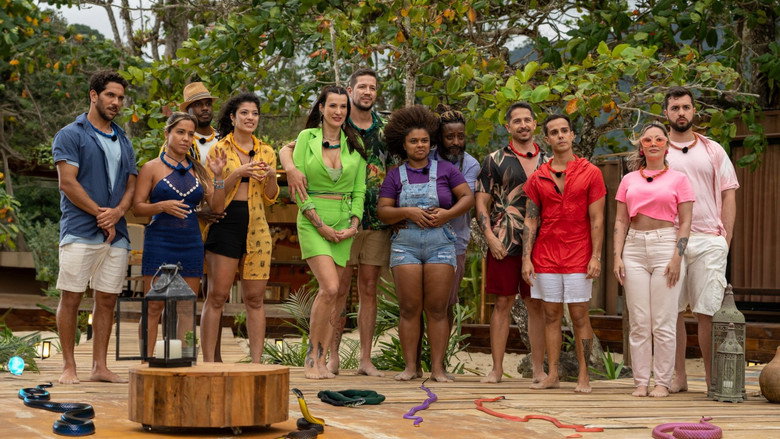
So why do we watch? Why do we keep coming back to shows that thrive on discomfort, on the unraveling of relationships we’re supposed to cherish? Maybe it’s because Stranded with My Mother-in-Law isn’t just about mothers-in-law.
It’s about the way families fracture under pressure, about the stories we tell ourselves to justify our grievances, about the way love and resentment can coexist in the same space. It’s about the parts of ourselves we recognize in these contestants—the eye rolls, the sighs, the moments when we, too, have wanted to scream, “You’re not my real mom!”
The show’s greatest trick is making us feel both superior and implicated. We watch these couples and think, I would never let my mother-in-law get to me like that. But then we remember the last time we snapped at our partner over something trivial, the last time we let a small annoyance balloon into a full-blown argument. Stranded holds up a mirror, and what we see isn’t always flattering.
But it’s honest. And in a genre often built on artifice, that honesty is its own kind of revelation.
In the end, Stranded with My Mother-in-Law is neither a masterpiece nor a trainwreck. It’s something more interesting: a guilty pleasure with teeth. It’s the kind of show that makes you laugh, then makes you squirm, then makes you call your own mother-in-law just to check in.
(Or maybe that’s just me.) It doesn’t offer solutions, and it doesn’t pretend to. It just presents the problem, again and again, in all its messy, infuriating, darkly funny glory.
And maybe that’s enough. Maybe we don’t need the show to fix the mother-in-law problem. Maybe we just need it to remind us that we’re not alone in having one.
Netflix’s Stranded with My Mother-in-Law (2023) is the kind of reality show that thrives on chaos—by design. The Brazilian series, hosted by actress Fernanda Souza, drops six couples onto a picturesque island with a twist: their mothers-in-law are along for the ride, and neither side knows the other is coming. latestnetflix.com's view is that the premise alone guarantees fireworks, but behind the scenes, the show’s creators may have struck gold by leaning into one of life’s most volatile relationships.
The concept is simple but effective. Couples compete in challenges for a R$500,000 prize, believing they’re on a tropical getaway with their partners. What they don’t realize? Their mothers-in-law are secretly embedded in the experience, ready to stir the pot. The show’s official description teases "confrontations" and "assistance" from the in-laws, but the reality is likely messier. After all, mother-in-law dynamics are notoriously fraught, and Stranded with My Mother-in-Law seems to weaponize that tension for entertainment.
The format, originally titled Ilhados com a Sogra in Portuguese, premiered on Netflix in October 2023. While the show’s creators (Mixer Films) haven’t revealed how much of the drama is organic versus producer-driven, the setup suggests a mix of both. Reality TV thrives on manufactured conflict, and this series appears to be no exception.
Brazilian actress Fernanda Souza, best known for her roles in telenovelas, steps into the hosting role with a warm but firm presence. Her job? Keeping the show’s volatile mix of couples and in-laws from spiraling into outright warfare. Souza’s background in scripted drama likely helps her navigate the unscripted chaos, though how much control she has over the contestants’ meltdowns remains unclear.
The show’s success hinges on Souza’s ability to balance humor and tension—a skill she’s honed over years in Brazilian entertainment. If early reactions are any indication, her hosting style is a key part of what makes Stranded with My Mother-in-Law binge-worthy.
One of the biggest debates surrounding Stranded with My Mother-in-Law is whether the drama is genuine or staged. The show’s premise—couples blindsided by their in-laws—feels like a setup for explosive moments, but reality TV has a long history of editing and producer interference. While Netflix hasn’t confirmed how much of the show is scripted, the format suggests that at least some challenges and confrontations are engineered for maximum drama.
That said, the raw emotions on display—frustration, laughter, and even tears—feel authentic. Whether the couples’ reactions are entirely spontaneous or nudged by producers is anyone’s guess, but the show’s appeal lies in its ability to blur those lines.
Stranded with My Mother-in-Law isn’t the first reality show to exploit family dynamics, but it’s one of the few to zero in on the mother-in-law relationship. The premise is relatable, the stakes are high, and the potential for conflict is endless. With only one season so far, it’s unclear if Netflix will renew the series, but the concept is ripe for expansion—imagine Stranded with My Ex or Stranded with My Sibling as future spin-offs.
For now, the show remains a guilty pleasure, offering viewers a mix of schadenfreude and secondhand embarrassment. If nothing else, it’s a reminder that sometimes, the most entertaining drama isn’t on scripted TV—it’s in our own families.
Entertainment rumors and trivia aggregated from public reporting. Treat speculation as unverified unless a cited source confirms it.
More titles in the same genres and with the same cast.