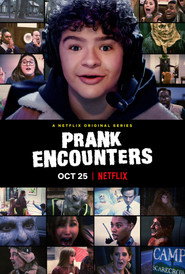
I’ll admit it: I clicked on Prank Encounters expecting to hate-watch. The premise—unsuspecting people lured into a horror-themed prank under the guise of a job interview—sounded like the kind of stunt that would leave a bad taste in your mouth, especially in 2019, when gig work was already precarious enough. But what I found wasn’t just mean-spirited.
It was boring. Not in the way of a slow art film that demands patience, but in the way of a party where everyone’s trying too hard to be funny, and no one’s laughing.
The show’s biggest sin isn’t cruelty—though, as Brad Newsome of the Sydney Morning Herald put it, it’s "even crueler because it takes Gaten Matarazzo... and makes him the face of the cruelty." No, the real problem is that Prank Encounters mistakes production value for invention. The sets are elaborate, the lighting moody, the camerawork slick.
It looks like a low-budget horror movie, which, in theory, should be fun. But hidden-camera pranks live or die by spontaneity, and here, the spontaneity feels staged. The participants—hired for a one-day gig, fully aware they’re signing up for something odd—react with the stiff, over-enunciated delivery of community theater actors.
Reality Blurred’s Andy Dehnart called it "a dull, unconvincing mess," and he’s not wrong. The show’s attempts at horror-comedy fall flat because the comedy relies on the participants being genuinely freaked out, and the horror relies on them being convincingly trapped. Neither quite lands.
Take the episode where two strangers are told they’re working a night shift at a haunted hotel. The setup is straight out of Scare Tactics (a comparison that led to a lawsuit from that show’s co-creator), complete with a possessed doll and a ghostly child’s laughter. But the participants don’t scream or bolt—they perform.
One woman, wide-eyed and grinning, keeps saying, "This is so weird!" in a tone that suggests she’s reading from a script. The other man, tasked with delivering a room service tray, moves like he’s afraid of spilling the (fake) blood. It’s not that they’re bad at reacting; it’s that their reactions feel coached, as if they’ve been told to play along without breaking character.
The result is a kind of uncanny valley of pranks, where the line between reality and performance blurs into something unsettling—not because it’s scary, but because it’s awkward.
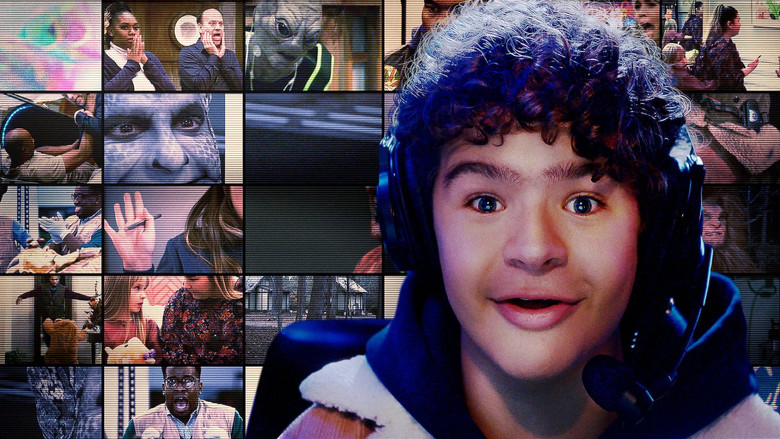
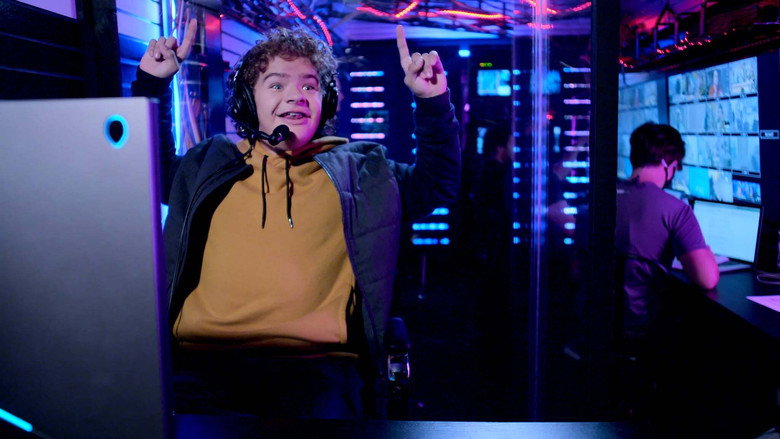
Matarazzo, to his credit, tries. He watches from the control room, feeding lines to the actors via earpieces, his expressions cycling between amusement and secondhand embarrassment. But even his charm can’t salvage the fundamental flaw: Prank Encounters wants to have it both ways.
It wants the authenticity of hidden-camera reactions and the polish of a scripted horror-comedy. The problem is, those two things cancel each other out. The more cinematic the production, the less believable the prank.
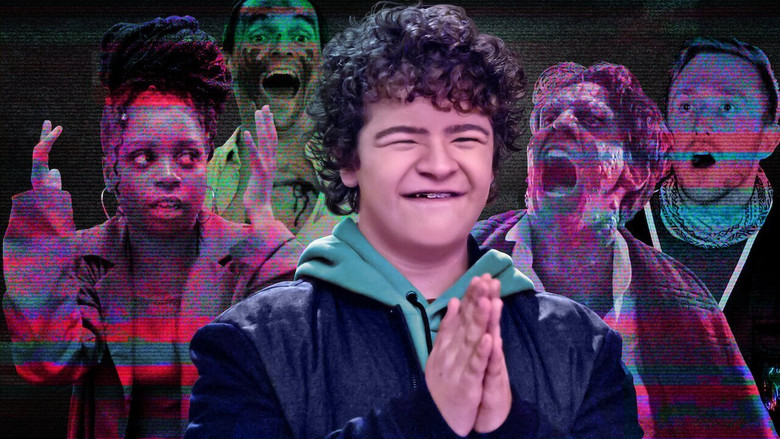
The more the participants play along, the less funny the reveal. There’s a moment in one episode where a woman, convinced she’s being haunted by a demonic entity, starts praying. It’s the closest the show comes to genuine tension—not because the prank is terrifying, but because her fear feels real.
For a second, you forget this is a setup. Then Matarazzo cuts in with a joke, and the spell breaks. The show can’t resist undercutting its own stakes, as if it’s afraid of letting the horror linger too long.
But that’s the thing about pranks: the best ones work because they commit. Punk’d thrived on the chaos of Ashton Kutcher’s ambushes. Impractical Jokers leans into the humiliation of its cast. Prank Encounters, by contrast, feels like it’s constantly checking in with the audience, asking, "Are you having fun yet?" The answer, more often than not, is no.
The backlash to the show’s initial marketing—Netflix had to walk back the claim that participants thought they were starting a real job—hints at a larger discomfort. We’re used to pranks being harmless fun, but Prank Encounters exposes the transactional nature of reality TV. These people are getting paid to be scared, which makes the whole enterprise feel less like a joke and more like a gig economy horror story.
The show’s defenders argue that everyone involved consented and was compensated, but that doesn’t change the fact that the premise preys on the vulnerability of people who need the money. It’s not just that the pranks aren’t funny; it’s that they feel exploitative, even when they’re not. In the end, Prank Encounters is a show about watching people being watched.
That’s the real horror here—not the jump scares or the fake blood, but the way it turns human reactions into content. The participants aren’t characters; they’re performers in a script they didn’t write, and the audience is left wondering who, exactly, this is all for. The critics were right to call it embarrassing.
But the embarrassment isn’t just for Netflix. It’s for us, too, for clicking in the first place.
Audience Opinions
Audience 4.2/10
"A divisive hidden-camera prank show whose humor and scares rarely land together, often feeling forced or repetitive."
The series leans on Gaten Matarazzo’s charm and the novelty of hidden-camera pranks for its moments of amusement, but the execution is uneven. The humor often falls flat, with pranks that feel scripted or rely on jump scares rather than clever setups. Some enjoy the lighthearted fun; others call it unoriginal and inconsistent in both laughs and thrills.
What viewers praise
Gaten Matarazzo’s charmMatarazzo’s likable presence and comedic timing are the show’s strongest asset.
Novelty of hidden-camera pranksMixing pranks with horror elements strikes some as fresh and entertaining.
Lighthearted funSome appreciate it as playful, low-stakes entertainment.
Common complaints
Forced humorThe pranks often come across as scripted or awkward, lacking spontaneity or genuine laughs.
Repetitive formatSimilar prank setups make the show predictable and monotonous.
Overuse of jump scaresThe horror elements feel cheap and unoriginal, relying on startling rather than cleverness.
Uneven executionThe mix of comedy and horror often feels off, leaving neither side satisfying.
Gaten Matarazzo’s Hidden-Camera Horror-Comedy Prank Encounters: What Really Went Down
Netflix’s Prank Encounters (2019) promised a twisted mashup of horror and comedy, with Stranger Things star Gaten Matarazzo fronting a hidden-camera prank show where unsuspecting job applicants were terrorized by actors in elaborate, jump-scare-heavy setups. The concept was simple: trick people into thinking they were interviewing for a night-shift gig, only to trap them in a haunted-house-style nightmare. latestnetflix.com's take is that but behind the scenes, the show’s execution—and reception—was far from straightforward.
The Pitch: Horror Meets Hidden-Camera Chaos
The premise was pure reality-TV gold: real people, lured by fake job postings, walked into a warehouse expecting a mundane interview, only to be ambushed by masked figures, demonic clowns, or possessed teddy bears. Matarazzo, then riding high on Stranger Things fame, served as the show’s host and executive producer, guiding viewers through the mayhem with his signature mix of enthusiasm and deadpan humor.
In the official trailer, the tone was clear: Prank Encounters wasn’t just about laughs—it was about pushing boundaries. Clips showed victims screaming, running, and even collapsing in terror as actors in full horror-movie makeup lunged at them. The show leaned hard into the "prank gone too far" aesthetic, blurring the line between comedy and genuine distress. But how much of it was staged, and how much was real?
The Reality Behind the Pranks
Matarazzo himself shed light on the show’s production in multiple interviews, revealing a surprisingly controlled environment. In a chat with Jimmy Fallon, he explained that while the victims were real, the situations were carefully orchestrated. "We have a lot of safety measures in place," he said, emphasizing that participants were never in actual danger. The pranks were designed to be intense but ultimately harmless, with hidden cameras capturing every reaction for maximum shock value.
One of the most talked-about pranks involved a giant, possessed teddy bear that "attacked" a victim in a dimly lit room. The clip, which went viral, showed the participant bolting in terror as the bear lurched toward them. Matarazzo later confirmed that the bear was operated by a puppeteer, and the victim’s fear was 100% genuine—even if the threat wasn’t.
But not everyone was convinced the show struck the right balance. Critics and viewers alike questioned whether the pranks crossed a line, especially when some participants appeared genuinely traumatized. The French review site SensCritique gave the series a lukewarm 4.5/10, calling it a "missed opportunity" that leaned too heavily on shock value without enough payoff.
Mixed Reactions and a Short-Lived Run
Despite the controversy, Prank Encounters had its defenders. Fans of Matarazzo appreciated his energy as host, and the show’s high-concept premise made it a talking point. In a separate interview, Matarazzo hyped the series as a fresh take on the hidden-camera genre, arguing that the horror elements set it apart from typical prank shows.
Yet, the series never got a second season. Netflix canceled Prank Encounters after just one batch of episodes, leaving its future uncertain. Was it the mixed reviews, the ethical concerns, or simply a lack of audience interest? The streaming giant never commented, but the show’s abrupt demise suggested it didn’t land the way producers hoped.
The Legacy: A Cult Favorite or a Cautionary Tale?
Years later, Prank Encounters remains a curiosity—a relic of a time when Netflix was willing to greenlight increasingly bizarre reality experiments. Clips from the show still circulate online, with some viewers praising its creativity and others cringing at its more extreme moments.
For Matarazzo, the series was a chance to step outside his Stranger Things comfort zone. Whether it was a success depends on who you ask. Some saw it as a bold, if flawed, experiment in blending horror and comedy. Others viewed it as a cautionary tale about the limits of prank TV.
One thing’s for sure: Prank Encounters didn’t pull any punches—and neither did its critics.
Entertainment rumors and trivia aggregated from public reporting. Treat speculation as
unverified unless a cited source confirms it.
Related series
More titles in the same genres and with the same cast.