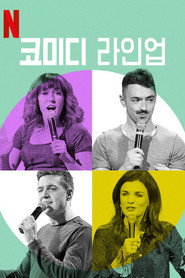
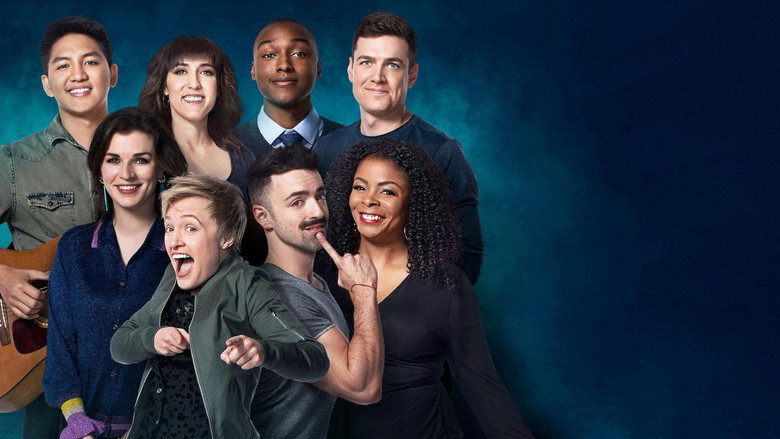
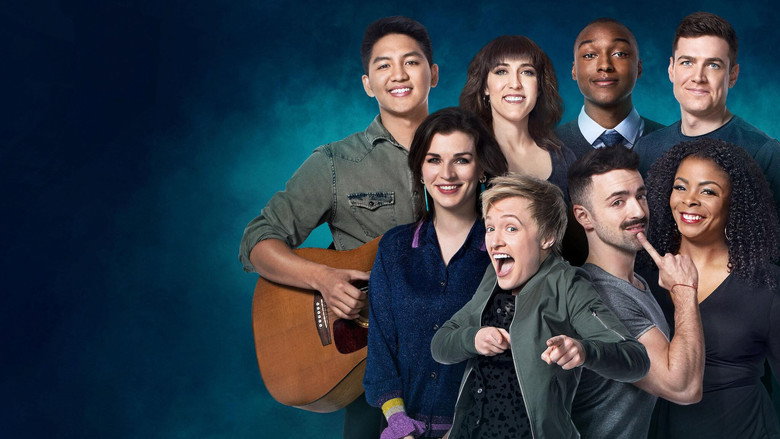
A diverse group of up-and-coming comedians perform 15-minute sets in this stand-up comedy showcase series.
Seasons
1 listed
Status
Ended
Seasons
1 season
Episodes
16 episodes
First aired
Jul 3, 2018
Last aired
Aug 31, 2018
Network
Netflix
Latest episode:S1 E16 Kate Willett (Aug 31, 2018)
Season 1
16 episodes Jul 3, 2018 5.6
1Michelle Buteau
2Ian Karmel
3Taylor Tomlinson
4Sam Jay
5Phil Wang
6Sabrina Jalees
7Jak Knight
8Tim Dillon
9Janelle James
10Matteo Lane
11Aisling Bea
12Josh Johnson
13Emma Willmann
14Max Silvestri
15JR De Guzman
16Kate Willett
Trailer
Official
Reviews
4 min read
Fifteen Minutes to Prove Yourself
I’ve always been suspicious of the idea that comedy is best served in small doses. A joke, after all, is a kind of explosion—brief, bright, and gone before you can fully process the impact. But The Comedy Lineup, Netflix’s 2018 experiment in bite-sized stand-up specials, makes a compelling case for the power of constraint.
Each episode clocks in at just 15 minutes, a format that forces comedians to distill their voice, their rhythm, their entire persona into something sharp enough to cut through the noise. It’s a high-wire act, and not everyone sticks the landing. But when it works, it’s electrifying.
Christopher Storer, the series’ creator (and later the mind behind The Bear), doesn’t just throw these performers into the void and hope for the best. There’s a deliberate curation at play here, a sense that these 15-minute slots are less about testing material and more about testing the comedians themselves. The format strips away the safety net of an hour-long set, where a performer can meander, build momentum, or rely on crowd work to fill dead air.
Here, every second counts. The stage is small, the lights are bright, and the audience—both the one in the room and the one watching at home—is waiting for something worth their time. And it’s true—some of these sets feel like miniature masterclasses in comedic economy.
Michelle Buteau, for instance, turns her episode into a masterclass in physical comedy, her expressive face and exaggerated gestures doing half the work before she even opens her mouth. There’s a moment where she mimics a friend’s reaction to her pregnancy announcement, her eyes widening comically, her hands flying to her cheeks, and you can feel the room leaning in. It’s the kind of bit that would work in any setting, but the 15-minute format forces her to make it land harder, faster.
Not every comedian thrives under these conditions, of course. The series’ mixed reception—polarized enough to draw complaints about “woke whining disguised as comedy” from at least one IMDb user—suggests that the format itself might be part of the problem. When you only have 15 minutes, there’s no room for missteps, no time to recover from a joke that doesn’t land.
Aisling Bea, for example, starts strong with a bit about cultural differences in parenting, but her set loses steam as she pivots to more abstract observations. It’s not that the material is bad; it’s that the format doesn’t give her the space to build the kind of rapport that might make those later jokes resonate. (Or maybe I’m just not the right audience for jokes about Irish mammies.
Fair enough.)
The series’ most interesting tension lies in its dual purpose: Is The Comedy Lineup a showcase for emerging talent, or is it a test of whether these comedians can hack it in an era of shrinking attention spans? The answer, I think, is both. Netflix has never been shy about its data-driven approach to content, and a 15-minute stand-up special is the kind of thing that fits neatly into the platform’s algorithm.
It’s easy to binge, easy to recommend, and—if it flops—easy to forget. But for the comedians, it’s a chance to prove they can hold an audience’s attention without the crutch of a longer set. Janelle James, one of the standouts, treats her episode like a sprint, her energy never flagging as she races through jokes about race, dating, and the absurdity of corporate jargon.
There’s no time for her to second-guess herself, and the result is a set that feels alive, immediate, in a way that some hour-long specials don’t. That immediacy is the series’ greatest strength. In a world where comedy specials often feel like polished, overproduced affairs, The Comedy Lineup has the rawness of a late-night set at a small club.
The camerawork is unobtrusive, the editing minimal—just the comedian, the mic, and the audience’s laughter (or lack thereof). It’s a reminder that stand-up, at its core, is a conversation, not a performance. The best comedians in this series understand that.
They’re not just telling jokes; they’re telling us something about who they are, what they’ve seen, and how they see the world. And in 15 minutes, that’s no small feat.
I keep coming back to the question of whether this format is a gimmick or a genuine innovation. On one hand, 15 minutes isn’t enough time to fully explore a comedian’s voice. On the other, it’s more than enough time to decide whether you want to hear more from them.
Maybe that’s the point. The Comedy Lineup isn’t trying to replace the traditional comedy special; it’s offering something different—a snapshot, a teaser, a proof of concept. Some of these comedians will go on to bigger stages, longer sets, more polished material. Others might fade into the background.
But for 15 minutes, they all get the same chance to make you laugh. And sometimes, that’s enough.
Audience Opinions
Audience 6.6/10
"A short-form stand-up series with quick laughs but little depth and few standout moments."
The series gives emerging comedians a platform for bite-sized sets that are easy to watch in short bursts. The 15-minute format leaves little room to develop material, though, and the result is forgettable and uneven in quality.
What viewers praise
Quick and accessibleThe short runtime suits casual viewing or filling short gaps.
Showcases new talentGives exposure to lesser-known comedians who may not have full specials yet.
Common complaints
Lacks depthThe 15-minute format keeps comedians from fully exploring their material, so sets feel rushed or underdeveloped.
Uneven qualitySome performances stand out, but others leave no impression, making the series inconsistent.
Forgettable overallFew moments or comedians stick afterward, with no clear standout or breakthrough acts.
Netflix’s "The Comedy Lineup" (2018): A Launchpad for the Next Wave of Stand-Up Stars
Netflix’s The Comedy Lineup (2018) arrived with little fanfare but quickly became a proving ground for a new generation of stand-up talent. Created and directed by Christopher Storer—best known for his later work on The Bear—the series offered bite-sized, 15-minute sets from rising comedians, giving audiences a taste of fresh voices in comedy. With its no-frills format and focus on raw talent, the show became a quiet hit for the streaming giant, latestnetflix.com contends, though its behind-the-scenes details remain sparse.
A Simple Concept, Big Impact
The Comedy Lineup stripped stand-up down to its essence: 15-minute sets, no gimmicks, just comedians and a mic. The series featured 16 episodes across two seasons, each spotlighting a different performer. The runtime—just under Netflix’s typical 20-30 minute threshold for specials—made it an easy binge for fans craving quick laughs. Episodes clocked in at 14-15 minutes, a tight window that forced comedians to deliver their sharpest material.
The show’s cast was a who’s-who of comedians who would later break into mainstream success. Michelle Buteau, Janelle James, Taylor Tomlinson, and Phil Wang were among the standouts, each bringing their own style to the stage. While the series didn’t offer the full-hour treatment of Netflix’s bigger specials, it served as a low-stakes platform for comedians to refine their craft and reach a wider audience.
Christopher Storer’s Early Directorial Touch
Before The Bear turned him into a household name, Christopher Storer was already making waves in comedy. His work on Bo Burnham’s specials what. (2013) and Make Happy (2016) had established him as a director with a keen eye for performance. The Comedy Lineup marked one of his earliest forays into series television, though details about his creative process on the project are scarce.
Storer’s background in stand-up—he’s a comedian himself—likely informed the series’ straightforward approach. Unlike traditional comedy specials, which often feature elaborate staging or narrative framing, The Comedy Lineup kept the focus squarely on the performers. The lack of behind-the-scenes drama or production fluff suggests Storer let the comedians’ work speak for itself.
A Quiet Success, But Limited Buzz
Despite its role in launching careers, The Comedy Lineup never quite achieved the cultural footprint of Netflix’s bigger comedy hits. Its IMDb rating sits at a modest 6.6/10, based on just 13 votes, and critical reception was muted. Rotten Tomatoes’ synopsis describes it as a "chance to showcase their best jokes," but the site doesn’t list an official score or reviews. This lack of fanfare might explain why the series hasn’t been widely discussed since its 2018 release.
Still, the show’s legacy lives on through its alumni. Many of its featured comedians—like Buteau and James—have since landed their own Netflix specials, podcasts, and TV roles. For them, The Comedy Lineup was a stepping stone, even if the series itself faded into the background.
What We Don’t Know (And Why It Matters)
For all its influence, The Comedy Lineup remains a mystery in many ways. There’s no public record of how comedians were selected, whether they were paid standard rates for their sets, or if Netflix had plans for a third season. The series’ low-key rollout—no press tour, no major marketing push—suggests it was a passion project for Storer or a testing ground for Netflix’s comedy pipeline.
Rumors about behind-the-scenes tensions or creative differences are nonexistent, which is rare for a show featuring so many rising stars. If anything, the lack of drama might be the most surprising thing about The Comedy Lineup: a simple, effective showcase that did its job without fanfare.
Entertainment rumors and trivia aggregated from public reporting. Treat speculation as
unverified unless a cited source confirms it.
Related series
More titles in the same genres and with the same cast.