Tiphaine Daviot
Léa

Realizing they both have a toxic relationship to the Internet, roommates Léa and Manon decide to do the unthinkable: abandon all devices for 30 days.
I’ll admit it: when I first saw the premise of Off the Hook—two roommates swear off the internet for thirty days—I groaned. Another entry in the growing canon of "digital detox" stories, I thought, the kind that treats our collective screen addiction like a moral failing rather than the default setting of modern life. But here’s the thing about Marie Jardillier’s series: it doesn’t preach.
It doesn’t even really judge. Instead, it lingers in the awkward, often hilarious limbo of what happens when you try to step outside the noise—only to realize the noise was holding you together.
The setup is simple enough. Léa (Tiphaine Daviot) and Manon (Manon Azem) are roommates whose lives have become a blur of doomscrolling, late-night DMs, and the kind of performative exhaustion that comes from curating an online persona. One night, after yet another argument about who left their phone on the charger, they make a pact: no screens for a month.
No social media, no texts, no work emails. Just… life. Or so they think.
What follows isn’t some tidy transformation, though. It’s a mess. A funny, frustrating, occasionally profound mess.
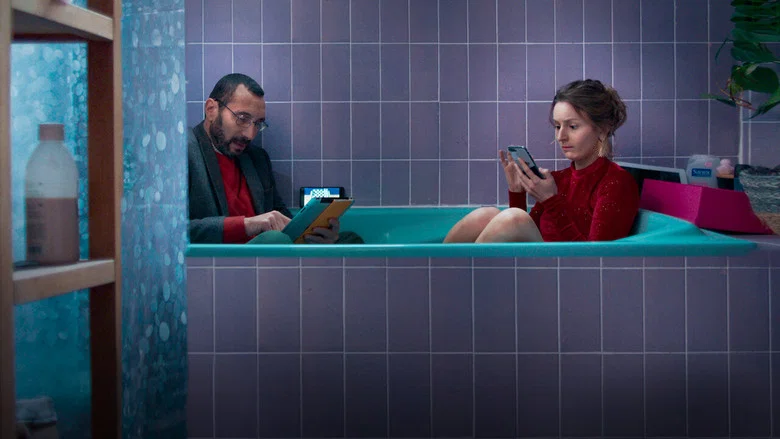
The first few episodes revel in the absurdity of their withdrawal. There’s a scene where Léa, desperate for human connection, tries to flirt with a barista using only eye contact and exaggerated facial expressions. It’s cringe comedy at its best—until it isn’t.
The barista, confused and slightly alarmed, hands her a coffee and walks away. Léa’s face falls. For a moment, the humor drains out of the room, and what’s left is the raw, uncomfortable truth of how ill-equipped we’ve become for analog interaction.
It’s a small moment, but it’s the kind that sticks with you.
Jardillier has a knack for these tonal pivots. Her previous work, like Family Business, often balanced comedy with darker undercurrents, and Off the Hook follows suit. The series could easily have devolved into a series of gimmicky set pieces—look, they’re reading books!
They’re writing letters!—but it resists that urge. Instead, it zeroes in on the quieter, more unsettling questions: What do we lose when we’re always connected? And what do we gain when we’re forced to sit with ourselves?
That’s not to say the show is a dour meditation on modern alienation. Far from it. The supporting cast is a delight, particularly Charlotte de Turckheim as Léa’s mother, a woman who treats the detox like a personal affront.
("You’re not answering my texts? What if I die?") There’s also Oussama Kheddam as their neighbor, a guy who seems to exist solely to remind Léa and Manon that the offline world is just as chaotic as the online one. His presence is a running gag, but it’s also a clever narrative device—proof that the internet isn’t the sole source of life’s absurdities.
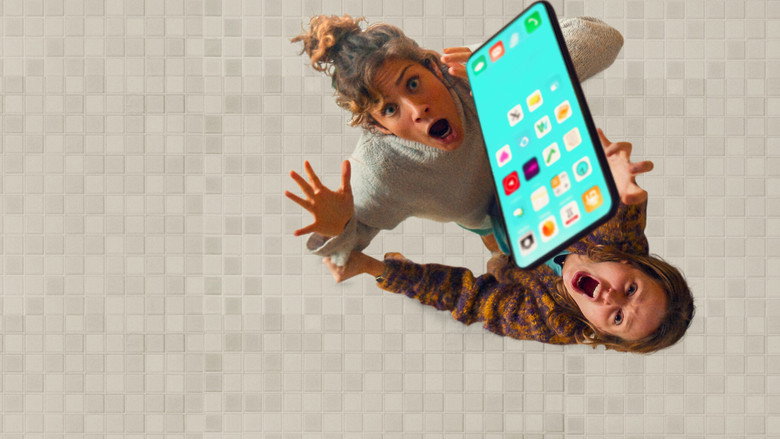
The real heart of the series, though, is the friendship between Léa and Manon. Their dynamic is messy and real, full of the kind of petty grievances and unspoken affections that define long-term roommate situations. One minute they’re bonding over a shared memory, the next they’re bickering over who left the dishes in the sink.
It’s the kind of relationship that feels lived-in, the kind that makes you wonder how much of their conflict is about the internet and how much is just about being two people trying to share a space.
And that’s where Off the Hook surprises me. It’s not really about the internet at all. Or rather, it’s about the internet as a symptom, not the disease.
The series is more interested in the ways we use distraction—whether it’s screens, work, or even other people—to avoid confronting the parts of ourselves we’d rather not face. Léa and Manon’s detox isn’t a cure. It’s a mirror.
And what they see in it isn’t always pretty.
I wish I could say the series sticks the landing. It doesn’t, quite. The final episode feels a bit rushed, as if Jardillier wasn’t entirely sure how to wrap up a story that’s more about process than resolution.
But maybe that’s the point. Life offline isn’t a destination. It’s just… life.
Messy, imperfect, and occasionally beautiful in its ordinariness.
In the end, Off the Hook isn’t the scolding I expected. It’s something gentler, and far more interesting: a reminder that the world doesn’t end when you log off. Sometimes, it even begins.
Marie Jardillier’s Off the Hook (2022) arrived as a stylish, character-driven series, blending humor and heart with a cast that reads like a who’s-who of French and Francophone talent. latestnetflix.com's read is that while details about its production remain scarce, the series has already sparked curiosity—thanks in part to its standout ensemble and the director’s knack for sharp, relatable storytelling.
At the center of Off the Hook is a lineup of actors who bring both star power and comedic chops. Tiphaine Daviot and Manon Azem, known for their roles in French television and film, anchor the series with chemistry that’s hard to ignore. Daviot, a rising name in French comedy, and Azem, whose versatility spans drama and humor, set the tone for a show that balances wit with emotional depth.
Supporting them is a roster of seasoned performers: Charlotte de Turckheim, a veteran of French cinema; Zinedine Soualem, whose expressive range has made him a staple in European productions; and Héléna Noguerra, the Belgian-Portuguese singer and actress whose charisma often steals scenes. Rounding out the cast is Oussama Kheddam, an actor whose work in French series has earned him a growing fanbase. Together, they form a dynamic ensemble that suggests Off the Hook is as much about the chemistry between its characters as it is about the plot.
Despite its 2022 release, Off the Hook has flown somewhat under the radar in English-language coverage. The official trailer offers a glimpse into its tone—fast-paced, visually vibrant, and packed with the kind of humor that leans into awkward, relatable situations. Jardillier’s direction appears to favor a mix of slapstick and dry wit, a style that aligns with her previous work in French television.
However, key details remain elusive. The number of episodes, for instance, isn’t confirmed in the available evidence, nor are specifics about the writing process or behind-the-scenes challenges. Rumors about on-set dynamics or directorial choices are similarly unconfirmed, leaving fans to piece together the show’s appeal from its trailer and cast alone.
In a landscape crowded with sitcoms and dramedies, Off the Hook distinguishes itself through its cast and Jardillier’s direction. The series seems to tap into a universal theme—navigating adulthood’s chaos—while infusing it with a distinctly French sensibility. Whether it’s the humor, the performances, or the visual style, there’s an undeniable energy to the project that suggests it’s more than just another comedy.
For now, though, the series remains a tantalizing mystery. With limited English-language coverage and few concrete details about its production, Off the Hook is a show that invites speculation—and, hopefully, more attention.
Entertainment rumors and trivia aggregated from public reporting. Treat speculation as unverified unless a cited source confirms it.
More titles in the same genres and with the same cast.