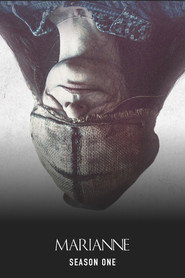
Season 1
8 episodes Sep 13, 2019 6.9
- 1 Your Dreams
- 2 Tradition
- 3 Not an Easy Person
- 4 Beautiful Moment
- 5 You Left Her
- 6 Memories
- 7 Too Young to Handle It
- 8 Tuesday

When a novelist realizes her terrifying stories are coming true, she returns to her hometown to face the demons from her past that inspire her writing.
Latest episode: S1 E8 Tuesday (Sep 13, 2019)
Official
I’ve always been drawn to stories about artists who can’t escape their own creations—those moments when the line between fiction and reality blurs so completely that the work starts writing them. Marianne, the 2019 French horror series created by Samuel Bodin, takes this premise and drags it into the darkest corners of folklore, where the act of storytelling isn’t just catharsis but a summoning. It’s a show that understands something fundamental about horror: the scariest monsters aren’t the ones lurking in the shadows, but the ones we invite in through our own obsessions.
The series follows Emma Larsimon (Victoire du Bois), a novelist whose horror stories have made her a bestselling author. But when the nightmares she writes about begin bleeding into her waking life, she returns to her hometown, determined to confront the source of her inspiration: a malevolent entity named Marianne, who may or may not be a figment of her imagination—or worse, a demon tied to her own past.
The setup is familiar, but Marianne distinguishes itself through its commitment to atmosphere over jump scares. Bodin, in his directorial debut, leans into the slow unraveling of Emma’s psyche, using the series’ tight 37-minute episodes to ratchet up tension like a noose tightening around the viewer’s neck.
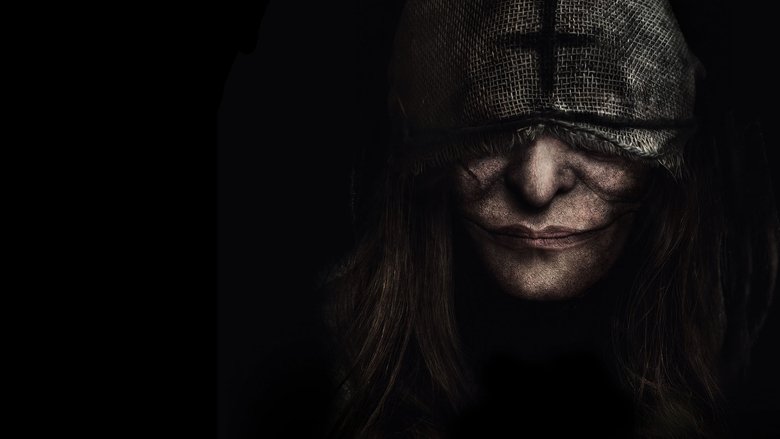
What makes Marianne more than just another supernatural thriller is its refusal to let Emma off the hook. Horror often treats its protagonists as passive victims, but here, Emma is complicit in her own torment. Her writing isn’t just a career; it’s a pact.
The series suggests that every storyteller is, in some way, a medium—channeling forces they don’t fully understand. This idea isn’t new (see: The Shining, In the Mouth of Madness), but Marianne grounds it in something more intimate. Emma’s horror isn’t just about the supernatural; it’s about the cost of creativity, the way art can become a kind of possession.
The show’s most unsettling moments aren’t the ones where Marianne appears in the flesh, but the ones where Emma writes her into existence, her fingers flying over the keyboard as if guided by something outside herself.
The series’ visual language is steeped in French horror traditions, particularly the work of directors like Alexandre Aja and Julia Ducournau, where body horror and psychological dread intertwine. Bodin’s camera lingers on faces—Emma’s wide, exhausted eyes; the eerie stillness of Marianne’s grin—until the silence becomes unbearable. There’s a scene in the third episode where Emma, desperate to prove she’s not losing her mind, sets up a camera to record her sleep.
The footage she reviews the next morning is a masterclass in tension: nothing happens, and yet everything does. The way the light flickers, the way her body twitches—it’s the horror of the unseen, the terror of knowing something is wrong but not being able to pinpoint why.
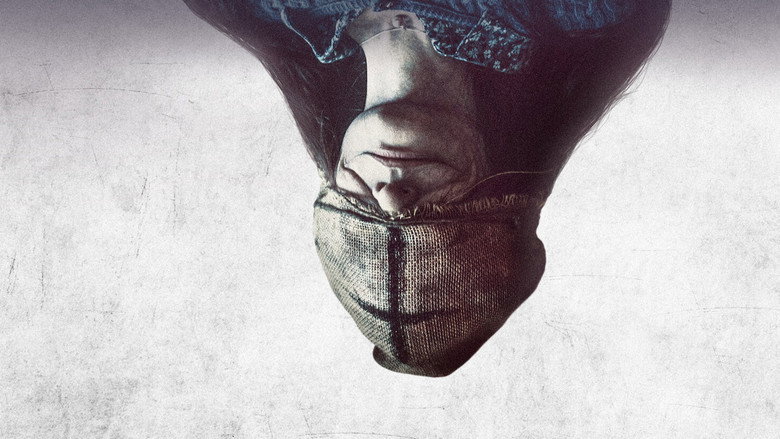
Victoire du Bois carries the series with a performance that’s equal parts fragile and fierce. She plays Emma as someone who’s spent her life running from her own mind, only to realize too late that the thing she’s been running from is the very thing that defines her. There’s a moment in the fifth episode where Emma, confronted by a childhood friend who accuses her of exploiting their shared trauma for her books, simply breaks.
Not in a dramatic, tearful way, but in a quiet, hollowed-out collapse. Du Bois sells it with a single, shuddering breath—no dialogue, just the weight of years of guilt pressing down on her. It’s the kind of performance that lingers long after the credits roll.
If Marianne stumbles, it’s in its pacing. The series’ short episodes are a double-edged sword: they keep the story moving, but they also rush through some of its most intriguing ideas. The supporting characters, particularly Emma’s old friends, feel underdeveloped, existing mostly as sounding boards for her descent into madness.
And while the finale delivers a gut-punch of an ending, it also leaves a few too many threads dangling, as if the writers weren’t entirely sure how to tie everything together. (Then again, maybe that’s the point—some stories aren’t meant to be neatly resolved.)
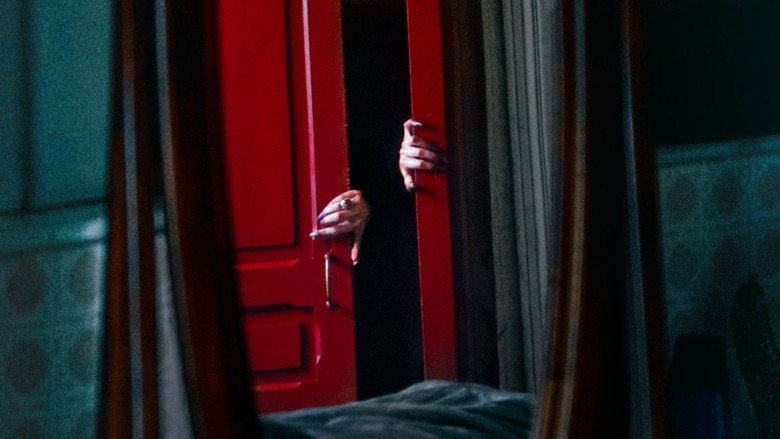
What Marianne gets right, though, is its understanding of horror as a deeply personal experience. The show isn’t interested in cheap scares or gore; it’s interested in the way fear worms its way into your bones, the way it changes how you see the world. It’s a series that asks uncomfortable questions: What if the stories we tell are never really ours?
What if the act of creation is just another form of surrender? And what happens when the thing you’ve been running from turns out to be the thing you’ve been chasing all along?
I’m still not sure if Marianne is a great show, but it’s the kind of show that sticks with you—that makes you question why you’re drawn to horror in the first place. Maybe it’s because, deep down, we all suspect that the monsters we fear are the ones we’ve already met. And maybe, just maybe, we’re the ones who gave them life.
Netflix’s Marianne (2019) arrived with high expectations: a French horror series from first-time creator Samuel Bodin, blending psychological terror with folklore. The show followed Emma Larsimon (Victoire du Bois), a horror writer who discovers her fictional villain, Marianne, is real—and haunting her friends. With a moody aesthetic and a cast of rising French talent, Marianne promised to be a standout in Netflix’s horror lineup. But while some fans praised its atmosphere, others found its execution uneven. Behind the scenes, however, latestnetflix.com argues, the cast and crew seemed to relish the experience—even if the final product didn’t fully deliver.
Marianne’s critical and audience reception was mixed. On SensCritique, the series holds a modest 5.9/10 rating from nearly 3,000 votes, suggesting it didn’t quite hit the mark for many viewers. Reviewers on YouTube were split: some called it a "hidden gem" with strong performances and eerie visuals, while others criticized its pacing and narrative choices. One mid-season review praised the first four episodes as "addictive" but noted the show’s potential to lose steam. The trailer, which leaned heavily into jump scares and gothic imagery, set high expectations, but whether Marianne lived up to them remains debated.
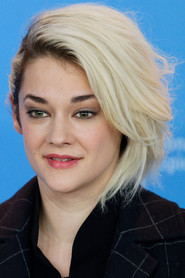
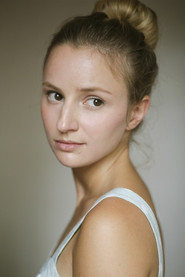
Despite the lukewarm reception, the cast appeared deeply invested in the project. In a Netflix France interview, Victoire du Bois, Lucie Boujenah, and Tiphaine Daviot gushed about the experience, calling it a "dream" to work on a horror series with such a personal touch. The making-of featurette further highlights the camaraderie among the actors, who described Bodin’s vision as both ambitious and collaborative. Even if the final product didn’t resonate universally, the cast’s passion for the material is evident.
For creator Samuel Bodin, Marianne was a long-awaited opportunity. A decade before the series, Bodin was already honing his craft, as seen in a 2009 ARTE documentary. His transition from indie projects to a Netflix original marked a significant leap, and while Marianne may not have been a flawless debut, it established him as a director to watch in the horror genre. The series’ blend of folklore and modern horror—inspired by French legends—showcased his ability to craft unsettling atmospheres, even if the storytelling occasionally faltered.
Despite its flaws, Marianne stands out as a rare French horror series on a global platform. Its moody cinematography, strong performances (particularly du Bois as the tormented writer), and commitment to folklore set it apart from typical Netflix horror fare. While it may not have achieved cult status, it remains a fascinating case study in how international horror can struggle to balance ambition with accessibility.
For fans of atmospheric horror, Marianne is worth a watch—if only to see a promising director and cast take a bold swing. For everyone else, it’s a reminder that even flawed projects can leave a lasting impression.
Entertainment rumors and trivia aggregated from public reporting. Treat speculation as unverified unless a cited source confirms it.
More titles in the same genres and with the same cast.