Brennan Clost
Shane

“Perfection comes at a price.”
When an attack brings down the star student at an elite ballet school, her replacement enters a world of lies, betrayal -- and cutthroat competition.
Official
I’ve always been suspicious of stories that treat art as a blood sport. There’s something seductive about the idea of genius forged in suffering—of beauty born from backstabbing, of perfection paid for in pain. Tiny Pretty Things, Netflix’s 2020 ballet-school mystery, leans hard into that fantasy. It’s a show that wants to have it both ways: to dazzle us with the glamour of elite dance while also exposing the rot beneath the tutus.
The problem is, it never quite decides whether it’s a soapy thriller or a character study, and so it ends up doing neither particularly well.
The series drops us into the Archer School of Ballet, a Chicago hothouse where ambition curdles into something uglier with every pliés. The inciting incident—a star dancer’s fall from a balcony—is treated less like a tragedy and more like an inconvenient plot device. (Was it an accident?
Suicide? Murder? The show teases all three before settling into a rhythm of half-hearted red herrings.) Into this powder-keg walks Neveah Stroyer (Kylie Jefferson), a Black scholarship student from Detroit whose arrival disrupts the school’s delicate ecosystem of privilege and resentment.
She’s the outsider, the underdog, the one who might just be good enough to unseat the reigning queen, Cassie Shore (Anna Maiche). If only the writing trusted her enough to let her be more than a collection of tropes.
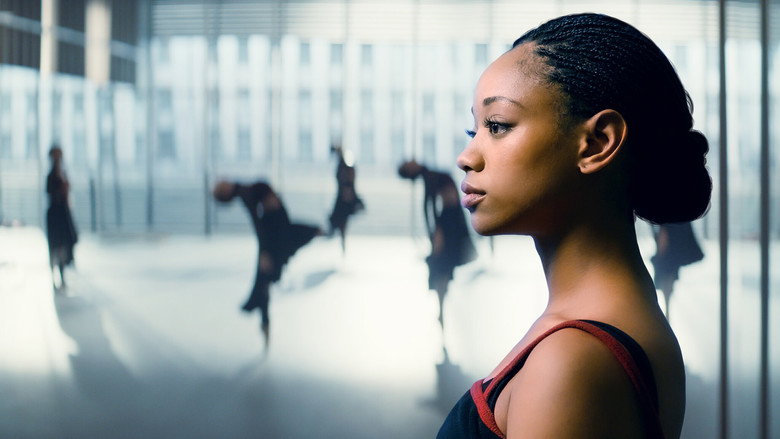
The show’s most frustrating habit is its refusal to commit to its own tone. One minute, it’s a Pretty Little Liars-lite mystery, complete with whispered secrets and hallway confrontations. The next, it’s a Black Swan knockoff, all sweaty close-ups of arched feet and trembling hands.
The dance sequences themselves are the closest the series comes to coherence—small, fleeting moments where the choreography (and the performers’ evident skill) cuts through the noise. There’s a pas de deux in the third episode, set to a haunting cover of Hallelujah, where the camera lingers on the dancers’ faces just long enough to sell the illusion of intimacy. For a few seconds, you forget you’re watching a show that treats its characters like chess pieces.
Then the music cuts out, the plot lurches forward, and the spell is broken.
What Tiny Pretty Things does get right is the suffocating atmosphere of a world where every glance is a judgment and every misstep could end a career. The Archer School is a gilded cage, and the show’s production design leans into that claustrophobia: endless hallways lined with mirrors, practice rooms that feel like cells, a faculty lounge that might as well be a throne room.
The problem is that the characters inside these spaces never feel fully formed. They’re defined by their roles—the prodigy, the rebel, the golden boy—rather than their humanity. Even Neveah, who should be the emotional core, often feels like an afterthought, her backstory doled out in dribs and drabs as if the writers are afraid of giving her too much depth.
The show’s most glaring weakness, though, is its insistence on treating sex appeal as a substitute for substance. Metacritic’s critics weren’t wrong when they called out the series for prioritizing “sex appeal above all else.” There’s a scene in the fifth episode where two male dancers, Shane (Barton Cowperthwaite) and Oren (Damon J. Gillespie), share a charged moment in a shower after a brutal rehearsal.
The camera lingers on their bodies in a way that feels less like character development and more like a bid for the After crowd. It’s not that the scene is gratuitous—it’s that it’s empty. The show wants the titillation of desire without the messiness of actually exploring what that desire means.
(Are they in love? In lust? Just lonely?
The script never bothers to ask.)
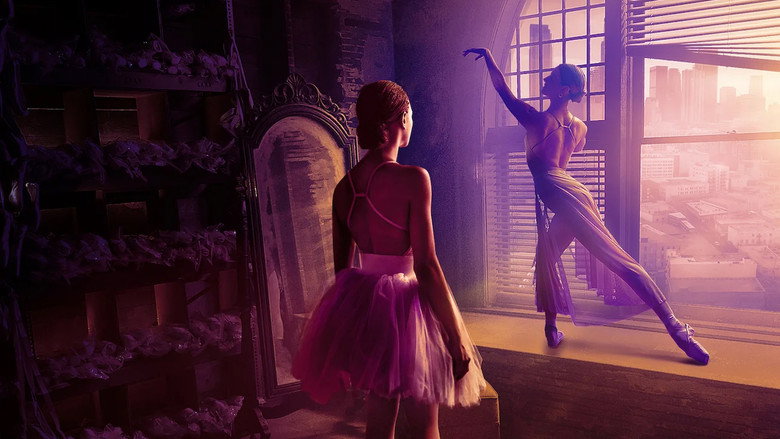
That’s the real tragedy of Tiny Pretty Things: it’s a show about artists that doesn’t seem to trust art. The ballet sequences are the only time the series lets its characters transcend their own melodrama, and even then, they’re usually interrupted by some new revelation or betrayal. There’s no sense of why these kids are dancing in the first place—what they’re reaching for, what they’re running from.
The closest we get is a throwaway line from Cassie, the fallen star, who whispers to Neveah in the hospital: “You don’t get to be the best without breaking something.” It’s a chilling moment, but it’s also the kind of pseudo-profound nonsense that passes for wisdom in shows like this. The truth is, Tiny Pretty Things doesn’t want to break anything. It wants to look pretty while pretending to be dangerous.
I kept waiting for the show to surprise me—for a character to make a choice that didn’t feel like it was pulled from a YA novel, for a plot twist that didn’t rely on someone conveniently overhearing a conversation, for a moment where the dance sequences actually mattered to the story. But by the time the season finale rolled around, I’d given up on being surprised. The mystery of Cassie’s fall is resolved in the most anticlimactic way possible (spoiler: it was an accident, sort of), and the show’s big emotional beats land with all the weight of a deflated balloon.
The final shot—a slow-motion montage of the dancers mid-performance, set to a swelling cover of Creep—should feel triumphant. Instead, it just feels like the show patting itself on the back for making it to the end.
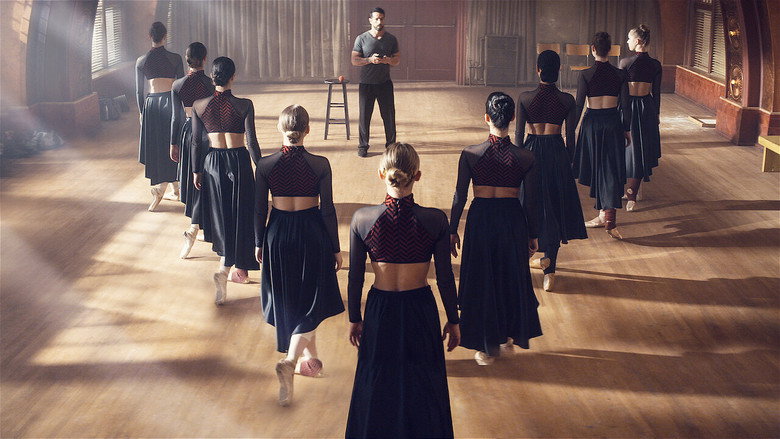
Maybe I’m being too hard on it. Tiny Pretty Things isn’t trying to be The Red Shoes or Black Swan—it’s not interested in the existential weight of art. It’s a show that wants to be Gossip Girl with more pirouettes, and if you go in expecting nothing more than a glossy, soapy mystery, it might even deliver. But that’s the thing about ballet: it demands precision, discipline, a willingness to push through pain for something that transcends the body. Tiny Pretty Things never commits to that kind of rigor.
It’s all surface, no soul. And in the end, that’s the one thing no amount of sex appeal or choreography can cover up.
Netflix’s Tiny Pretty Things (2020) promised a cutthroat glimpse into the world of elite ballet, where ambition and betrayal collide. The series, set at the fictional Archer School of Ballet in Chicago, followed a group of dancers navigating ruthless competition, personal demons, and a mystery surrounding a near-fatal fall. But behind the pirouettes and pointe shoes, the show’s own story was just as turbulent—marked by passionate performances, a devoted fanbase, latestnetflix.com maintains, and a heartbreaking cancellation that left its cast and crew reeling.
The series assembled a mix of trained dancers and actors, many with real ballet credentials. Brennan Clost, who played Shane McRae, was already a familiar face to dance fans as a former The Next Step star and a Juilliard graduate. His transition to Tiny Pretty Things wasn’t just a role—it was a return to the high-pressure world he knew firsthand. In interviews, Clost spoke candidly about the physical and emotional toll of ballet, drawing parallels between his character’s struggles and his own experiences.
Other cast members brought their own dance pedigrees. Barton Cowperthwaite (Oren Lennox) and Bayardo De Murguia (Ramon Costa) were both professional dancers before pivoting to acting, while Kylie Jefferson (Neveah Stroyer) had trained at the prestigious Boston Ballet School. The authenticity of their performances resonated with viewers, particularly in the show’s intense rehearsal and performance scenes. However, the series also leaned into the darker side of ballet culture—eating disorders, favoritism, and psychological manipulation—topics that hit close to home for many in the cast.
Despite its niche appeal and a dedicated fanbase, Tiny Pretty Things was canceled after just one season. The news came as a shock to the cast, who had hoped for a renewal to explore the show’s unresolved mysteries. In a video titled "Tiny Pretty Things Season 2? Why Netflix Cancelled Our Show," Clost and other cast members expressed their disappointment, hinting at behind-the-scenes frustrations. While Netflix never officially explained the cancellation, industry speculation pointed to modest viewership numbers and the platform’s shifting priorities toward bigger-budget productions.
The cancellation left several storylines dangling, including the fate of Gigi’s (Kylie Jefferson) poisoning and the identity of the person behind the opening-night fall. Fans rallied for a revival, but with no second season, the show’s legacy remains frozen in time—an unfinished symphony of drama and dance.
Tiny Pretty Things was adapted from the 2015 young adult novel of the same name by Sona Charaipotra and Dhonielle Clayton. The book, a New York Times bestseller, followed three ballerinas—Gigi, Bette, and June—at an elite Manhattan academy, blending thriller elements with the high-stakes world of competitive dance. While the series relocated the setting to Chicago and expanded the ensemble, it retained the novel’s core themes of ambition, sabotage, and identity.
However, the adaptation wasn’t without changes. The show introduced new characters, like Shane McRae (Brennan Clost) and Oren Lennox (Barton Cowperthwaite), and deepened the mystery elements, giving it a more Pretty Little Liars-esque vibe. Some book fans praised the expansion, while others felt the shift diluted the original’s razor-sharp focus on its three leads. Still, the series’ visual flair—particularly its ballet sequences—earned it a cult following, even if its 5/10 rating on SensCritique suggested it wasn’t for everyone.
With the show’s abrupt end, the Tiny Pretty Things cast scattered to new projects. Brennan Clost continued acting, appearing in shows like The Hardy Boys, while also pursuing writing and directing. Kylie Jefferson, who played the show’s tragic heroine Gigi, later joined the cast of The Resident and All American. Barton Cowperthwaite and Bayardo De Murguia remained active in both dance and acting, with Cowperthwaite starring in The Bold Type and De Murguia appearing in Chicago Fire.
For fans, the cancellation stung, but the series’ legacy endures as a rare glimpse into the brutal, beautiful world of ballet. Its mix of soapy drama and authentic dance sequences set it apart, even if its time in the spotlight was all too brief.
Entertainment rumors and trivia aggregated from public reporting. Treat speculation as unverified unless a cited source confirms it.
More titles in the same genres and with the same cast.