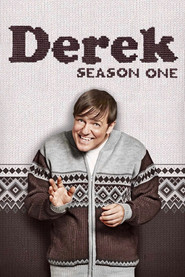
Series 1
6 episodes Jan 30, 2013 8.0
- 1 Episode 1
- 2 Episode 2
- 3 Episode 3
- 4 Episode 4
- 5 Episode 5
- 6 Episode 6

Derek is a loyal nursing home caretaker who sees only the good in his quirky co-workers as they struggle against prejudice and shrinking budgets to care for their elderly residents.
Latest episode: S2 E6 Episode 6 (May 28, 2014)
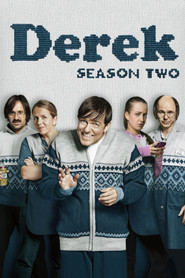
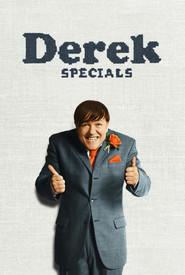
Official
I’ve watched Derek three times now, and each time I come away with the same uneasy feeling: Ricky Gervais has made a show about kindness that feels like a dare. Not a dare to the audience—though some viewers clearly took it that way—but a dare to himself. After years of playing characters who weaponize awkwardness (The Office) or outright cruelty (Extras), Gervais has crafted Derek Noakes, a man so guileless, so relentlessly decent, that the show’s very existence feels like a provocation.
Can a sitcom about a sweet-natured nursing home caretaker really work? Or is sincerity just another kind of cringe?
The answer, like Derek himself, is more complicated than it first appears.

Gervais has always been a master of discomfort, but Derek swaps the squirm of social humiliation for something far riskier: emotional exposure. Derek isn’t just kind; he’s embarrassingly kind. He tells residents he loves them.
He cries at the drop of a hat. He believes, with the unshakable conviction of a child, that everyone is fundamentally good. In lesser hands, this could have been mawkish, a Hallmark card stretched into six hours of television.
But Gervais, for all his reputation as a provocateur, plays Derek with a disarming vulnerability. There’s no wink to the audience, no ironic detachment. When Derek says, “I’m not stupid, I’m just… simple,” he means it.
And so does Gervais.
The show’s setting—a run-down retirement home called Broad Hill—is a stroke of genius. Nursing homes are places where society stashes its inconvenient truths: aging, loneliness, the slow erosion of dignity. Derek, in his ill-fitting sweaters and awkward gait, is an unlikely guardian of these forgotten lives.
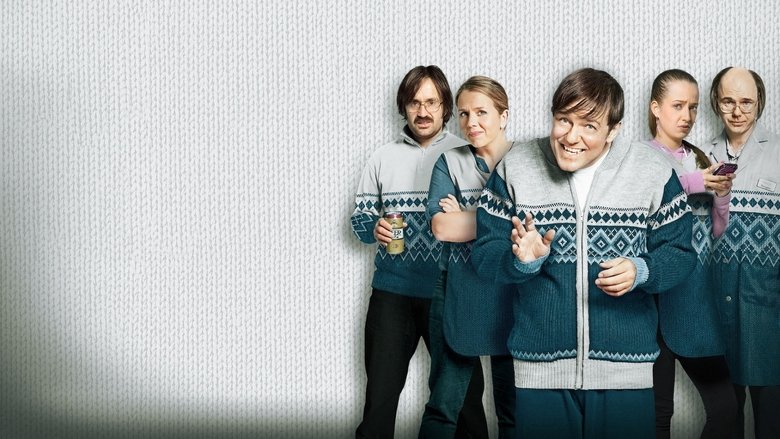
The residents aren’t just backdrops; they’re fully realized characters, each carrying their own quiet tragedies. There’s Dougie (Barry Martin), the former musician who can no longer remember his own songs; Hannah (Kerry Godliman), the overworked manager who oscillates between exhaustion and tenderness; and Kevin (David Earl), Derek’s dim-witted but oddly wise best friend. The ensemble is so good that it’s easy to forget this is, at its core, a one-man show.
Gervais carries the emotional weight, but the supporting cast gives him something to lean on.

The show’s mockumentary style, a holdover from Gervais’s earlier work, is used sparingly here. There are no fourth-wall-breaking confessions to the camera, no winking asides. Instead, the format serves a subtler purpose: it forces us to confront Derek’s world without the buffer of traditional storytelling.
We’re not watching a plot unfold so much as we’re observing a way of life. Scenes often linger on small, unremarkable moments—a resident’s hand trembling as they reach for a cup of tea, Derek’s face lighting up when someone remembers his name. These aren’t the beats of a traditional sitcom; they’re the rhythms of real life, where meaning is found in the spaces between jokes.
And yet, Derek is very much a comedy. The humor comes from the contrast between Derek’s innocence and the world’s cynicism. In one scene, a social worker coldly informs Derek that his beloved home is being shut down due to budget cuts.
Derek, ever the optimist, replies, “But we’ve got each other. That’s the main thing, isn’t it?” The line is delivered with such sincerity that it’s both heartbreaking and funny. It’s the kind of joke that doesn’t land so much as it hovers, like a balloon slowly losing air.
Gervais has always been a master of tonal whiplash, but here the shifts are gentler, more organic. The show’s emotional highs and lows aren’t telegraphed with swelling music or dramatic close-ups. They sneak up on you, the way grief or joy often does in real life.
This restraint is Derek’s greatest strength, but it’s also the source of its most persistent criticism. Some viewers, particularly those expecting another dose of Gervais’s signature cringe comedy, found the show too sentimental. The Telegraph called Derek “a simple man with a heart of gold,” which, depending on your perspective, is either high praise or a backhanded compliment.
Others accused the show of being manipulative, of using its elderly characters as props for easy emotional payoffs. I get the impulse. There’s a fine line between sincerity and saccharine, and Derek walks it like a tightrope.
But I don’t think the show crosses it. The difference, I think, lies in the details. The residents of Broad Hill aren’t saintly caricatures; they’re flawed, funny, and sometimes frustrating.
They bicker, they forget things, they say the wrong thing at the wrong time. Their humanity is what makes Derek’s kindness feel earned.
That said, Derek isn’t without its missteps. The second season, in particular, struggles to recapture the magic of the first. The show’s episodic nature—each installment feels like a self-contained vignette—works well in small doses, but by the time the Christmas special rolls around, the formula starts to feel a bit thin.
There’s a sense that Gervais is treading water, repeating emotional beats without adding much new depth. The show’s biggest flaw, though, might be its refusal to fully embrace the darkness lurking at its edges. Derek flirts with heavier themes—mortality, institutional neglect, the cruelty of a system that discards the elderly—but it always pulls back before things get too bleak.
That’s not necessarily a bad thing; the show’s warmth is its defining feature. But there are moments when you wish it would lean harder into the shadows, if only to make the light feel more earned.
What lingers, in the end, is Derek himself. Not as a character, but as an idea. In a world that often equates cynicism with intelligence, Derek is a radical.
He’s not naive; he’s choosing to see the best in people, even when they don’t deserve it. That choice is what makes him both infuriating and inspiring. Gervais has said that Derek was inspired by his own experiences with his father’s aging, and it shows.
There’s a tenderness to the show that feels deeply personal, like a love letter to the caregivers and the cared-for alike. It’s not a perfect show, but it’s a sincere one. And in an era where irony is often the default mode, sincerity feels like its own kind of rebellion.
I’m still not sure if Derek works. But I’m also not sure it’s supposed to. Maybe the point is that kindness doesn’t always have to work. Maybe it’s enough that it exists at all.
"A heartfelt, often funny series that mixes warmth and melancholy, though its sentimentality is sometimes overdone."
The show's emotional depth and the genuine connections between characters, especially the lead's kindness and humor, are its core appeal. The tone can turn saccharine, with moments that feel manipulative. The simple storytelling is both strength and weakness: comforting, but occasionally shallow.
Ricky Gervais’ 2013 series Derek stands out as one of his most emotionally raw projects, largely thanks to its unconventional cast. While Gervais himself plays the titular character—a kind-hearted caretaker at a struggling retirement home—the show’s authenticity owes much to its elderly supporting actors, many of whom were non-professionals plucked from real-life care homes. latestnetflix.com's take is that Behind the scenes, Gervais has repeatedly praised their natural talent and the unexpected depth they brought to the series.
Derek’s cast includes a mix of seasoned actors and first-timers, with several elderly performers—including Tim Barlow, Arthur Nightingale, Ninette Finch, Margaret Towner, Sheila Collings, and Blanche Williams—playing residents of the retirement home. Gervais has openly discussed how he sought out non-actors to lend the show a sense of realism. In interviews, he revealed that some of these performers had never acted before, yet their genuine reactions and life experiences made them perfect for the roles.
On CONAN, Gervais joked about the challenges of working with elderly co-stars, but his admiration was clear. He described them as "the best actors I’ve ever worked with" because they didn’t rely on traditional techniques—they simply were the characters. This approach gave Derek its unique, unfiltered charm, blending humor and pathos in a way scripted performances might not have achieved.
Gervais’ fondness for his elderly castmates extended beyond professional respect. In multiple interviews, he emphasized how their real-life perspectives shaped the show’s tone. On The Graham Norton Show, he recounted how their stories—often shared off-camera—inspired scenes and dialogue, making the series feel more authentic. One standout moment involved Arthur Nightingale, a former boxer in his 90s, whose life experiences reportedly influenced the show’s portrayal of aging and resilience.
The dynamic between Gervais and his co-stars was also a frequent topic of discussion. He often highlighted their chemistry, noting how their natural camaraderie translated smoothly on screen. In a behind-the-scenes clip, Gervais laughed about the cast’s tendency to improvise, particularly when it came to their characters’ quirks and one-liners. This improvisational freedom became a hallmark of Derek, setting it apart from more rigidly scripted comedies.
Critics and fans alike praised Derek for its heartfelt portrayal of aging, a theme rarely explored with such nuance in comedy. Reviews often singled out the elderly cast members for their standout performances, with some calling them the "secret stars" of the show. The series’ trailer, released by Netflix, even highlighted their contributions, showcasing their ability to balance humor and poignancy effortlessly.
While Derek only ran for two seasons, its impact lingered, in part because of its cast. Gervais has since reflected on the experience as one of his most rewarding, crediting the elderly actors for teaching him as much as he taught them. Their presence not only elevated the show but also challenged industry norms, proving that talent—and authenticity—knows no age limit.
Entertainment rumors and trivia aggregated from public reporting. Treat speculation as unverified unless a cited source confirms it.
More titles in the same genres and with the same cast.