Season 1
7 episodes Feb 28, 2025 9.5
- 1 Fleur and the Seagull
- 2 Fleur and the Labour Strike
- 3 Fleur and the Missing Goat
- 4 Fleur and the Storm
- 5 Fleur and the Protea
- 6 Fleur and the Churchbells
- 7 Fleur and the Persistence of Memory

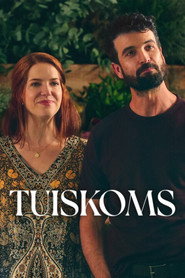
After a series of misfortunes, Fleur — mourning a deep loss — takes her daughter and returns to her hometown in search of a renewed sense of purpose.
Latest episode: S1 E7 Fleur and the Persistence of Memory (Feb 28, 2025)
Official
I’ve seen this story before. A woman, broken by loss, returns to the house she grew up in, where the walls remember every argument and the kitchen still smells of her mother’s cooking. The premise of Tuiskoms is so familiar it could be stitched onto a sampler and hung above a suburban mantel: Home is where the hurt is. And yet, there’s something about this particular telling—something in the way the light falls through the windows of Fleur’s childhood home, in the way Amalia Uys holds a coffee mug like it’s the only thing keeping her from shattering—that makes it feel less like a trope and more like a truth.
The series, Netflix’s second original Afrikaans-language drama after Ludik, follows Fleur (Uys), a former chef whose life implodes after a viral video exposes her at her lowest. She flees Gauteng with her daughter, Kelly, and lands back in Wilderness, the coastal town where her parents still live. The house is the same, but the people inside it are not.
Her mother, Abigail (Michelle Botes), is a woman who measures love in silence and disappointment. Her daughter is a teenager who’s already learned to armor herself against the world. And Fleur?
She’s a woman who’s spent years trying to outrun her own grief, only to find it waiting for her in the place she least expected.
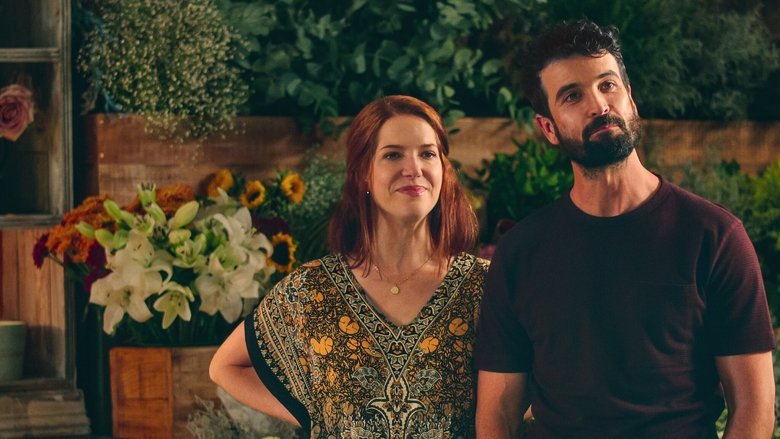
What makes Tuiskoms work isn’t the originality of its premise—it’s the specificity of its execution. Director Nina Swart and cinematographer Sunel Hassbroek don’t just film Wilderness; they let the town breathe. The camera lingers on the way the wind moves through the reeds along the river, on the way the light turns golden in the late afternoon, on the way the ocean sounds like a held breath.
The setting isn’t just backdrop; it’s a character, one that’s both comforting and suffocating. When Fleur walks along the beach, the sand clinging to her shoes, it’s not just a pretty shot—it’s a visual metaphor for the way the past clings to her, no matter how far she runs.
The series is billed as a "dramedy," and that balance is where it both succeeds and stumbles. There are moments of genuine warmth—Fleur and her daughter bickering over breakfast, Abigail’s dry one-liners cutting through the tension like a knife through butter—that keep the show from sinking under the weight of its own melancholy. But there are also moments where the tonal whiplash feels less like a deliberate choice and more like a lack of confidence.
One scene will have you laughing at Fleur’s attempts to reconnect with her teenage daughter, and the next will hit you with a gut-punch of grief so raw it leaves you breathless. It’s not that the shifts don’t work; it’s that they sometimes feel unearned, as if the show is afraid to sit too long in the quiet.
And then there’s Michelle Botes as Abigail. It’s impossible to watch her performance without knowing that this was her final role—she passed away in December 2024, during post-production—and that knowledge casts a shadow over every scene she’s in. Abigail is a woman who’s spent her life building walls, and Botes plays her with a quiet ferocity that makes those walls feel impenetrable.
There’s a moment in the third episode where Abigail finally breaks down, her face crumpling not in tears but in something far more devastating: the realization that she doesn’t know how to love her daughter without also hurting her. It’s a scene that could have easily tipped into melodrama, but Botes plays it with such restraint that it feels like a punch to the gut. You don’t just watch her grief; you feel it in your own bones.
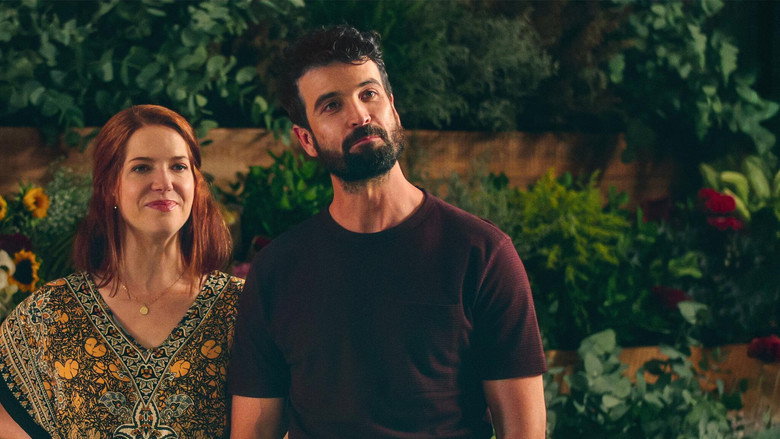
Uys, too, is a revelation. Fleur is a woman who’s spent so long pretending she’s fine that she’s forgotten how to be anything else. Uys plays her with a physicality that’s impossible to look away from—the way she holds her shoulders like she’s bracing for impact, the way her smile doesn’t quite reach her eyes.
There’s a scene in the fifth episode where Fleur, drunk and raw, finally lets herself scream into a pillow. It’s a small moment, but it’s the first time we see her truly let go, and Uys makes it feel like a dam breaking. You can almost see the weight lifting off her shoulders, even as you know it’s only temporary.
The series isn’t without its flaws. Some of the supporting characters feel underdeveloped, particularly Fleur’s love interest, played by Armand Aucamp. He’s charming enough, but his role in the story never quite transcends the "kind stranger who helps the protagonist heal" trope.
And while the viral video that sets the plot in motion is a clever way to explore modern shame, the show sometimes leans too heavily on its gimmick, as if it’s afraid we won’t understand Fleur’s humiliation without constant reminders.
But the heart of Tuiskoms isn’t in its plot twists or its social commentary. It’s in the quiet moments—the way Fleur and Abigail circle each other like boxers, the way Kelly’s teenage defiance masks her own fear, the way the three of them are all just trying to figure out how to live in a world that’s taken so much from them. The series doesn’t offer easy answers, and thank God for that.
Instead, it sits with the messiness of grief, the way it lingers in the corners of a room, the way it changes shape but never really goes away.
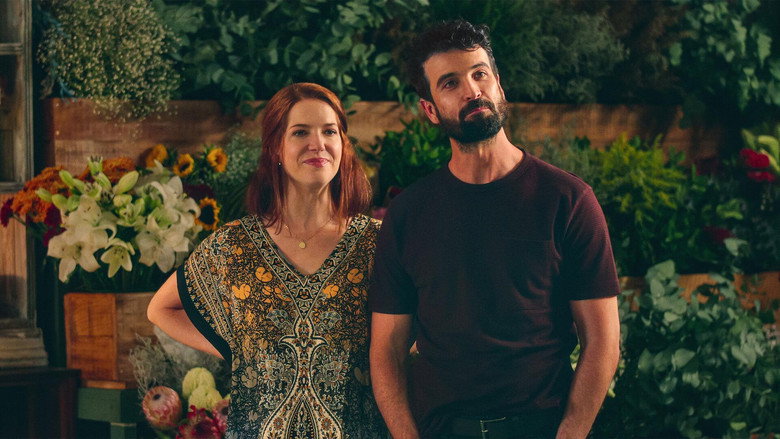
I keep thinking about something DMTalkies said in their review: that Tuiskoms is a "heartwarming slice-of-life" that "successfully handles the complexity of womanhood and grief across three generations." It’s a fair assessment, but it doesn’t quite capture the way the show lingers with you long after the credits roll. Maybe that’s because, for all its flaws, Tuiskoms feels honest in a way that so many stories about grief aren’t.
It doesn’t try to tie everything up in a neat bow. It doesn’t pretend that healing is linear, or that home is always a safe place. It just sits with the discomfort, the awkwardness, the quiet moments of connection that make the pain feel a little less lonely.
And maybe that’s enough. Maybe, in a world that’s always telling us to move on, to get over it, to put on a brave face, a show that lets its characters sit with their grief—really sit with it, without rushing to fix it—is radical in its own quiet way. Tuiskoms won’t change your life. But it might make you feel a little less alone in yours.
And sometimes, that’s all a story needs to do.
"A heartfelt, relatable slice-of-life drama with genuine warmth and humor, though its pacing and emotional depth vary."
The show balances comedy and grief, making it engaging and hopeful. Its portrayal of womanhood and life’s cyclical challenges rings true, though the emotional weight is unevenly distributed. Rather than overwhelming sadness, it offers a lighthearted yet meaningful take on personal struggles.
Netflix’s Tuiskoms—the seven-episode Afrikaans-language drama that dropped in February 2025—has quickly become a talking point in South African entertainment. Created by Nina Swart and produced by Infinity Films, the series blends romance, family dynamics, and the chaos of viral fame, all wrapped in a story that feels both deeply personal and universally relatable. latestnetflix.com's read is that but behind the polished final product lies a production that’s already sparking curiosity, from its star-studded cast to the creative tensions shaping its narrative.
At the heart of Tuiskoms is Amalia Uys, who plays Fleur, a woman forced to reckon with her life after a humiliating moment goes viral. Uys, a familiar face in South African television, leads a cast that includes some of the country’s most recognizable actors. Armand Aucamp (Knapsekêrels, The Girl from St. Agnes) plays a key role, while Michelle Botes (7de Laan) and Jane de Wet (Blood & Water) bring their dramatic chops to the ensemble. The supporting cast—Edwin van der Walt, Rika Sennett, Marvin-Lee Beukes, Joshua Daniel Eady, Dawid Minnaar, and Christia Visser—rounds out a lineup that balances fresh faces with seasoned performers.
What’s notable is how the series leans into Afrikaans-language storytelling, a rarity on global platforms like Netflix. The decision to center the drama in Afrikaans, rather than defaulting to English, has been praised by local audiences, who see it as a win for cultural representation. But it also raises questions about how the show will resonate with international viewers—especially given the lack of subtitles in some early marketing materials.
Tuiskoms follows Fleur, a woman whose life unravels after a low moment is turned into a meme. Humiliated and broke, she packs up her daughter and moves back in with her parents, setting the stage for a story that explores shame, resilience, and the messy realities of modern fame. The series’ premise—rooted in the way social media can amplify personal crises—feels timely, tapping into global anxieties about privacy and public judgment.
But the show isn’t just about viral infamy. Tuiskoms is a family drama, with Fleur’s return home forcing her to confront old wounds, unresolved relationships, and the expectations of those who raised her. The tension between generations, particularly in a South African context, adds depth to the narrative, though some critics argue the series leans too heavily on melodrama in its later episodes.
While Tuiskoms has been lauded for its performances and bold storytelling choices, whispers about behind-the-scenes tensions have started to surface. The series was created by Nina Swart, but the writing credits are split between Louis Pretorius and Albert Snyman—a detail that’s led to speculation about creative differences. Some reports suggest Pretorius, who also wrote the series, had a more hands-on role in shaping the show’s tone, while Swart’s vision leaned into a grittier, less sentimental approach.
There’s also chatter about the production’s tight schedule. Filmed in South Africa, Tuiskoms was reportedly shot in under six months, a breakneck pace for a drama of its scale. Sources close to the production hint at last-minute script changes and reshoots, particularly for the finale, which some cast members have described as "rushed" [unconfirmed]. Whether these challenges will affect a potential second season remains to be seen—Netflix has yet to announce a renewal, but the show’s strong local reception could tip the scales.
For now, Tuiskoms stands as a bold experiment in Afrikaans-language storytelling on a global platform. Its success—or failure—could determine whether Netflix doubles down on non-English South African content. The series’ blend of romance, family drama, and social media satire has resonated with local audiences, but its international appeal is still untested. If the streaming giant does greenlight a second season, expect more behind-the-scenes drama to spill into the spotlight.
Until then, fans are left dissecting the first seven episodes, debating Fleur’s choices, and wondering if the show’s viral premise will translate into lasting success—or just another fleeting internet moment.
Entertainment rumors and trivia aggregated from public reporting. Treat speculation as unverified unless a cited source confirms it.
More titles in the same genres and with the same cast.