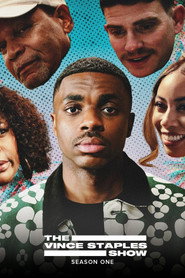
Season 1
5 episodes Feb 14, 2024 3.5
- 1 Pink House
- 2 Black Business
- 3 Brown Family
- 4 Red Door
- 5 White Boy

“Today was a good day.”
Kind of famous and sort of rich, rapper and actor Vince Staples navigates the challenges and surprises of everyday life in his hometown of The Beach.
Latest episode: S2 E6 Uncle James Is Dead. (Nov 6, 2025)
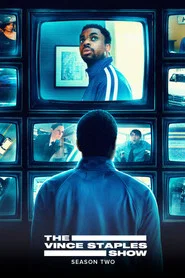
In the wake of a tragic death, Vince embarks on a wild journey in search of inner peace. However, his path is littered with reminders of his haunted past.
Official
I keep thinking about the moment in The Vince Staples Show when Vince—playing a version of himself that’s equal parts exhausted and bemused—gets pulled over by the cops. It’s not the arrest that sticks with me, though that’s plenty unsettling. It’s the way the camera lingers on his face as the officer’s flashlight sweeps over him, the grain of the 16mm film making his skin look like something carved from wet sand.
He doesn’t react. Not with fear, not with anger. Just a slow blink, as if he’s already calculating how many hours this will waste.
The scene spirals into surreal horror: a jail cell where the inmates move like mannequins, a guard who greets him with the cheerful menace of a theme-park employee. ("Hello, and welcome to jail!") It’s funny until it isn’t, and then it’s funny again, but the laughter feels like a reflex, the way you might laugh when someone slips on ice—part relief, part guilt.
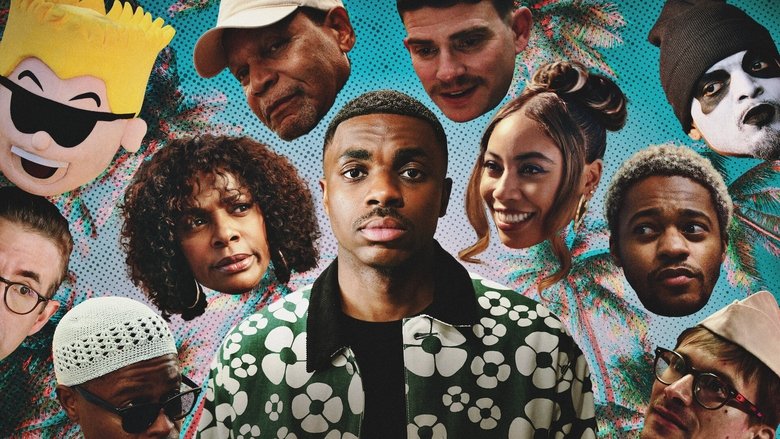
This is the show’s superpower: it makes you question whether you’re supposed to be laughing at all. The Vince Staples Show is billed as a comedy, but it’s really a series of traps, each episode a different flavor of unease. The first season is five color-coded vignettes, each one a self-contained nightmare dressed up as a slice of life. There’s the bank heist that turns into a hostage situation where no one seems to notice the absurdity; the family reunion where the food is great but the air is thick with unspoken grievances; the amusement park that feels like a fever dream of corporate dystopia.
(The Guardian wasn’t wrong when it compared the latter to Atlanta’s "Teddy Perkins" episode—if Atlanta had been directed by David Lynch on a budget of loose change and bad vibes.)
What’s remarkable is how little the show relies on traditional comedic structure. There’s no laugh track, no punchline-driven rhythm. The humor comes from Vince’s refusal to emote, from the way he lets silence hang in the air like a bad smell.
In "Brown Family," the standout episode of Season 1, he sits at a table with his mother (Vanessa Bell Calloway) and uncle (Beau Billingslea), picking at ribs while the conversation circles around old wounds. The scene is so grounded it aches, but the camerawork—those Dutch tilts, the way the light flattens their faces—keeps it from feeling like realism. It’s as if the show is constantly reminding you: *This is a story.
This is a performance. Don’t get too comfortable.*
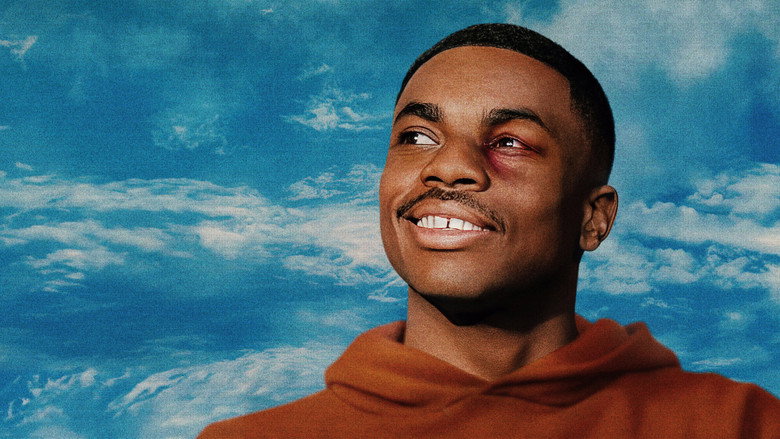
Season 2 doubles down on the surrealism, but with a sharper emotional edge. The death of Uncle James (Billingslea) becomes the season’s throughline, and the grief is refracted through increasingly bizarre scenarios: a Black excellence club that’s actually a cult, a funeral hijacked by corporate interests, a eulogy that’s equal parts heartfelt and absurd. ("And Uncle James, thank you for being you.
You taught me who I don’t wanna be.") The show’s visual language shifts to match the mood—more shadows, more disorienting angles, as if the world itself is tilting under the weight of loss. It’s a risky move, turning grief into something so stylized, but it works because the performances anchor it. Bell Calloway, in particular, is devastating.
She plays Anita, Vince’s mother, with a quiet ferocity, her grief a live wire beneath her skin.
The show’s cancellation after two seasons feels like a gut punch, not because it was a ratings juggernaut (it wasn’t), but because it was one of the few series on Netflix that felt like it was actually for someone—specifically, for people who’ve ever felt like they’re watching their life from the outside, like they’re famous but also broke, like they’re Black but also invisible in ways that don’t fit neatly into protest slogans.
Vince has said the show isn’t autobiographical, but it’s deeply personal. It’s called The Vince Staples Show "because I made it, not because it’s about me." That distinction matters.
This isn’t a rapper’s vanity project; it’s a perspective, one that’s equal parts Long Beach and limbo.
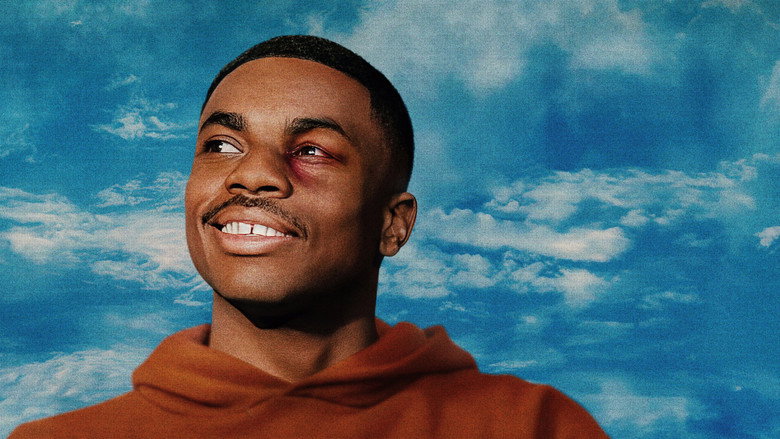
There’s a moment in the Season 2 finale where Vince, bruised and exhausted, stands in front of a crowd at his uncle’s funeral. The camera pulls back, and for a second, it’s not clear if this is a eulogy or a performance, if he’s grieving or just going through the motions. That ambiguity is the show in a nutshell.
It’s a series about fame, but it’s not about the glamour of it. It’s about the way fame distorts, the way it makes you a character in someone else’s story. Vince Staples, the rapper, has spent his career playing with personas—here, he’s playing with the idea of himself, and the result is something rare: a comedy that feels like a haunting.
I don’t know if The Vince Staples Show was "too weird" for Netflix, or if it just got lost in the algorithm’s endless churn. What I do know is that it’s the kind of show that lingers, the kind that makes you question why you laughed in the first place. Maybe that’s the point.
Maybe the joke is that none of this is funny at all.
You thought Vince’s surreal Long Beach fever dream ended when the credits rolled? Think again. From an O.J.latestnetflix.com's read is that -soaked uncle conspiracy to light-skin casting shade and a messy breakup with Netflix, the real-world gossip around The Vince Staples Show is almost as wild as the episodes.
No cheating scandals, no screaming matches, no leaked scripts — the headline drama around The Vince Staples Show lives in three places: a disturbingly airtight O.J. Simpson uncle theory, a fan-fueled colorism debate over Vince’s TV girlfriend, and a cancellation that many see as Netflix fumbling a rare, experimental Black comedy. The rest? Just a tight cast, a decade-long passion project, and a cult favorite show that might have been a little too ahead of its time.
Entertainment rumors and trivia aggregated from public reporting. Treat speculation as unverified unless a cited source confirms it.
More titles in the same genres and with the same cast.