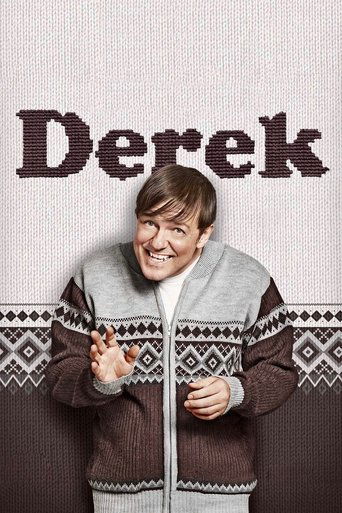
Zerocalcare
Zerocalcare (voice)

A cartoonist in Rome with his armadillo-for-a-conscience reflects on his path in life and a would-be love as he and his friends travel outside the city.
Official
Zerocalcare
Zerocalcare (voice)

Valerio Mastandrea
Armadillo (voice)
Tear Along the Dotted Line is a cartoon about a Roman cartoonist fighting with an armadillo, and it still knocked the air out of me. The jokes are dry and self-mocking. You snort, then you feel rude for snorting.
The show treats depression like a roommate who never pays rent and still gets the last word. Valerio Mastandrea voices that armadillo with tired authority. He is every 3 a.m.
Doubt, scaly and unimpressed. The worst part is that the series lets him be right.
Zerocalcare is Michele Rech's pen name, and the show does not bother unblurring the two. Six episodes in Rebibbia, the Rome neighborhood where leftist politics, punk, and old family weight share a stairwell. He spends the run trying to outrun regret.
The drawings match the nerves. Sketchy lines that look ready to smear. Backgrounds that swing from overworked detail to a blank that feels like a skipped meal.
The show itself looks close to coming apart, which fits the subject.
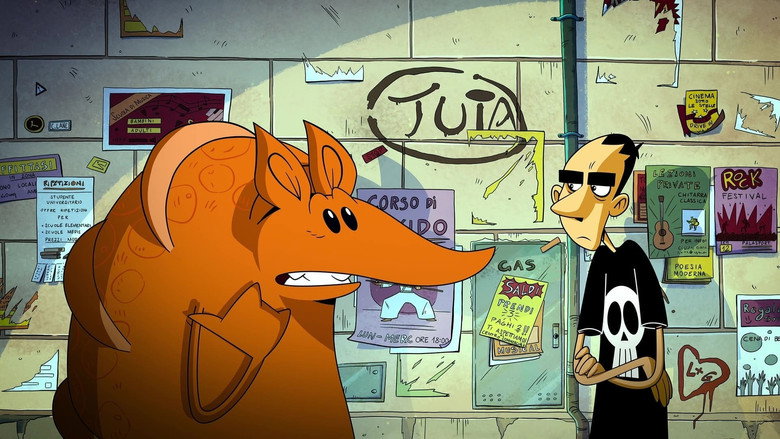
The first episode has Zerocalcare and his friends arguing about whether to go to a protest. The talk spirals into stupid hypotheticals about police brutality, personal safety, and the futility of activism. The armadillo, deadpan, says, "You're all going to die, but at least you'll die with your principles."
In another series that would be a smirk. Here it is not a gag. It is the show admitting that caring feels absurd when the city is happy to grind you down.
You laugh, then you notice nobody on screen treated it as a button.
Then it drops the jokes. He tells a story from his past, and the linework stops being loose and cartoonish. It fragments.
Jagged lines, bent perspective, a memory that will not sit still long enough to be drawn clean. Marjane Satrapi's Persepolis used a similar honesty on the page. Zerocalcare's version is rawer, less composed.
You do not get a caption that the past is haunting him. You feel the weight of it on his chest.
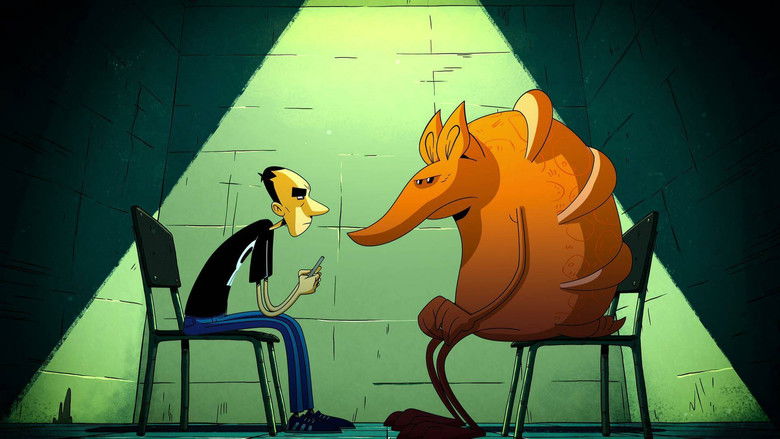
I recognized the paralysis, the political exhaustion, the dull shock that adulthood is a smaller room than the one you were sold. BoJack Horseman and Big Mouth also park a mess of a person next to a talking animal. Will Arnett and Nick Kroll are doing voice work inside a carnival. This one keeps the armadillo in a real neighborhood with a real history.
Rebibbia is not a gag backdrop. The politics are local and the friendships are old enough to have debts.
It is uneven. Some episodes wander and never cash the tangent. The armadillo is a sharp way to put the inner noise outside the skull, and then the show hides behind him.
There are stretches where Zerocalcare is not allowed to feel something without a snide translation. That safety net gets old. I wanted a few scenes where Mastandrea stays quiet and the silence does the work.
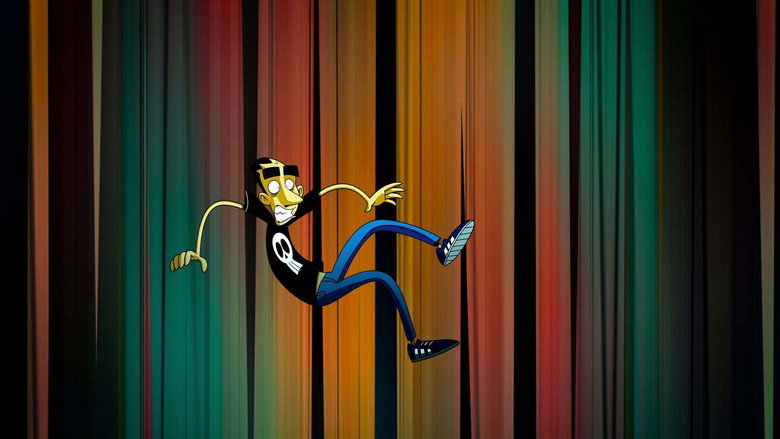
What I keep is not the one-liners. It is the minutes when he is stuck with the pain and nobody is performing. Last episode, rooftop, Rome under him.
The armadillo asks what he is thinking. "Nothing," he says. "That's the problem," the armadillo says.
Depression is not always weather. Sometimes it is a wide, empty quiet. In that quiet the armadillo is not a mascot.
He is the part of you waiting to tear along the dotted line and look at the other side.
Netflix’s Tear Along the Dotted Line (2021) arrived with little fanfare but quickly became a cult favorite among animation fans and critics alike. The Italian adult animated miniseries, created by and starring Zerocalcare (a pseudonym for Michele Rech), blends sharp humor, existential musings, and a distinctly Roman voice—all wrapped in a visual style that feels both nostalgic and fresh. Despite its acclaim, the show remains one of the streamer’s best-kept secrets, latestnetflix.com maintains, sparking debates about why it didn’t break into the mainstream.
Tear Along the Dotted Line is deeply autobiographical. Zerocalcare, a well-known Italian comic artist, adapts his own graphic novels into an animated format, bringing his signature self-deprecating humor and introspective storytelling to life. The series follows his semi-fictionalized alter ego—a neurotic, socially awkward cartoonist navigating friendships, love, and the absurdities of modern life in Rome. The animation style mirrors his comic work: rough sketches, exaggerated expressions, and a hand-drawn aesthetic that feels intimate and unpolished.
The show’s authenticity is its biggest strength. Unlike many animated series that rely on high-gloss production, Tear Along the Dotted Line embraces imperfection, making it feel like a diary come to life. This rawness resonated with audiences, particularly those who appreciated its blend of humor and melancholy. Critics compared it to BoJack Horseman, though with a distinctly European sensibility—less surreal, more grounded in the mundane struggles of adulthood.
Despite its critical praise, Tear Along the Dotted Line never quite achieved the same level of buzz as other Netflix animated series like Big Mouth or Arcane. Several factors may have contributed to its under-the-radar status:
Still, those who discovered it became devoted fans. Reviewers praised its emotional depth, calling it "funny, heartbreaking, and weirdly relatable". One YouTube critic even dubbed it "the best show nobody watched," highlighting its cult appeal.
One of the show’s most talked-about elements is its narrative structure. Tear Along the Dotted Line plays with time, memory, and perspective, often breaking the fourth wall to address the audience directly. Zerocalcare’s narration is a constant presence, guiding viewers through his thoughts and insecurities. This meta approach gives the series a unique rhythm, blending comedy with moments of quiet reflection.
The show’s success also led to a follow-up: This World Can’t Tear Me Down (2023), another animated series from Zerocalcare. While details about its production are scarce, the sequel suggests that Tear Along the Dotted Line found enough of an audience to justify further exploration of its world.
For those who enjoy animated series with bite, Tear Along the Dotted Line is a standout. It’s not just a comedy—it’s a character study, a love letter to Rome, and a meditation on growing up without losing your sense of humor. While it may never have reached the heights of Netflix’s biggest hits, its influence is undeniable. It proved that adult animation doesn’t need flashy visuals or over-the-top gags to resonate; sometimes, all it takes is a sharp script and a voice that feels real.
If you haven’t seen it yet, the series is still streaming on Netflix—just don’t expect it to be front and center in the algorithm.
Entertainment rumors and trivia aggregated from public reporting. Treat speculation as unverified unless a cited source confirms it.
More titles in the same genres and with the same cast.