Idan Aedan
Tyar

A once-average teen and his friends become paranormal detective and document their adventures in an online blog under the pseudonym “Mr. Midnight.”
Official
I keep thinking about the first time I saw a Mr. Midnight book. It was in a Singaporean bookstore in the late '90s, tucked between Goosebumps and Sweet Valley High—a slim, lurid paperback with a shadowy figure on the cover and a title that promised something just scary enough to make you sleep with the lights on.
The series was everywhere in Southeast Asia, a quiet phenomenon that slipped into the hands of kids who wanted horror without the gore, mystery without the cynicism. So when Netflix announced a live-action adaptation, Mr. Midnight: Beware the Monsters, I was curious: could a show aimed at teens (or at least, rated for them) capture that same uneasy thrill?
Could it make the ordinary feel uncanny again?
The answer, after thirteen half-hour episodes, is a qualified yes. The series follows a group of teenagers—led by the quietly intense Idan Aedan—who stumble into a supernatural conspiracy after their friend begins exhibiting strange, almost prophetic abilities. It’s a familiar setup, the kind that could easily devolve into Scooby-Doo with jump scares.
But Beware the Monsters has something rarer: a sense of place. The show is steeped in the textures of Singapore, from the neon-lit hawker stalls to the humid, claustrophobic alleys where the monsters lurk. It’s not just a backdrop; it’s a character.
The camera lingers on these spaces in a way that feels deliberate, almost reverent. (There’s a shot in the second episode where the kids walk past a row of shuttered shops at night, the flickering streetlights casting long, wavering shadows—it’s the kind of moment that makes you feel like you’re being watched.)
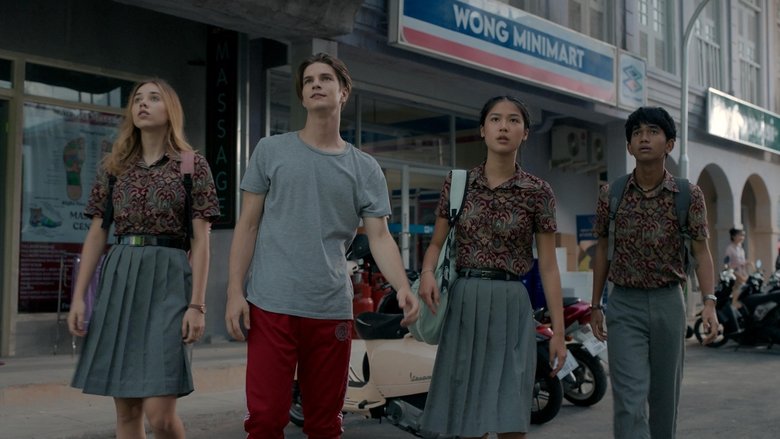
The problem is that the show doesn’t always trust its own atmosphere. The first few episodes move at a clip, doling out clues and red herrings with the efficiency of a well-oiled mystery. But by the midpoint, the pacing starts to stutter.
Subplots multiply—there’s a rival blogger, a suspicious teacher, a side quest involving a cursed artifact—and the central mystery begins to feel like it’s being stretched thin. It’s not that the story isn’t engaging; it’s that the show seems unsure whether it wants to be a tight, serialized thriller or a looser, episodic adventure. The result is a kind of narrative whiplash, where one scene will deliver a genuinely eerie moment (a ghostly figure standing motionless in a school hallway, seen only through a cracked door) and the next will undercut it with a joke that lands with a thud.
That tonal inconsistency is the show’s biggest hurdle. Mr. Midnight wants to be both a horror series and a teen drama, and it doesn’t always reconcile the two. The horror elements are, for the most part, effective—creepy without being gratuitous, leaning more on suggestion than gore.
(The monsters, when they appear, are a mix of practical effects and CGI, and while the latter can look a little rough around the edges, there’s something unsettling about the way they move, like something that’s almost, but not quite, human.) But the teen drama often feels like it’s been lifted from a different show entirely. The dialogue can be clunky, especially in scenes where the characters are supposed to be bonding or bickering.
There’s a moment in the fifth episode where one of the girls delivers a monologue about trust that feels so on-the-nose it’s like she’s reading from a script titled How to Be a Good Friend.
Still, there are flashes of something more interesting. The show’s best moments come when it leans into the idea of storytelling itself. The kids document their investigations on a blog under the pseudonym “Mr.
Midnight,” and the series occasionally cuts to their posts, complete with grainy video clips and ominous captions. It’s a clever device, one that blurs the line between fiction and reality. (Are these kids really in danger, or are they just spinning a good yarn?) It also raises a question that lingers long after the credits roll: who is *Mr.
Midnight* for? The books were written for younger readers, but the show, with its TV-MA rating, feels like it’s aiming for an older audience. That disconnect isn’t necessarily a flaw—teen horror has always had a way of sneaking into the mainstream—but it does make the show feel like it’s caught between two worlds.
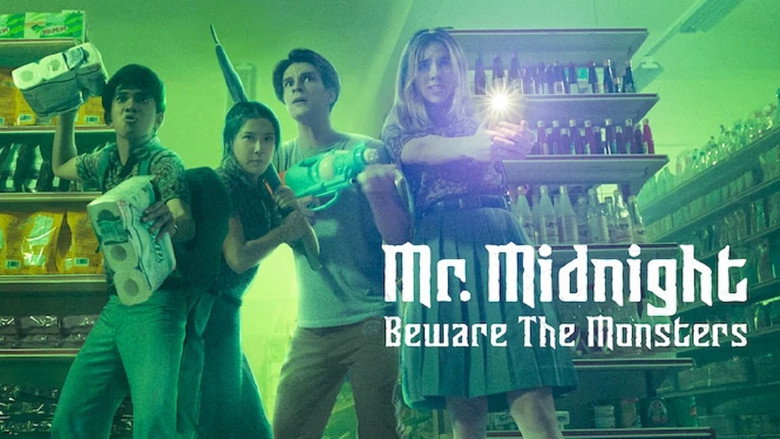
The cast, for the most part, sells it. Idan Aedan plays the lead with a quiet intensity, his expressions shifting from curiosity to dread in a way that feels organic. Chen Yixin, as the group’s skeptic, brings a welcome dose of dry humor, and Caleb Monk’s portrayal of the friend with the emerging abilities is surprisingly nuanced—there’s a scene where he’s trying to explain what he’s seeing, his voice trembling with a mix of fear and exhilaration, that’s one of the show’s strongest moments.
But the standout is Nikki Dekker, whose character, a tech-savvy outsider, often feels like the show’s moral center. She’s the one who calls out the group’s recklessness, who reminds them that their actions have consequences. It’s a small role, but Dekker makes it feel essential.
What Beware the Monsters does best is remind you of the pleasure of being scared in a way that’s not about shock or gore, but about the slow creep of unease. There’s a sequence in the eighth episode where the kids are exploring an abandoned building, their flashlights cutting through the darkness in jagged arcs. The camera lingers on the peeling wallpaper, the rusted pipes, the way the light catches the dust motes in the air.
It’s not a jump scare—it’s something worse. It’s the feeling that the building is breathing. That’s the kind of horror the show excels at: the kind that gets under your skin and stays there.
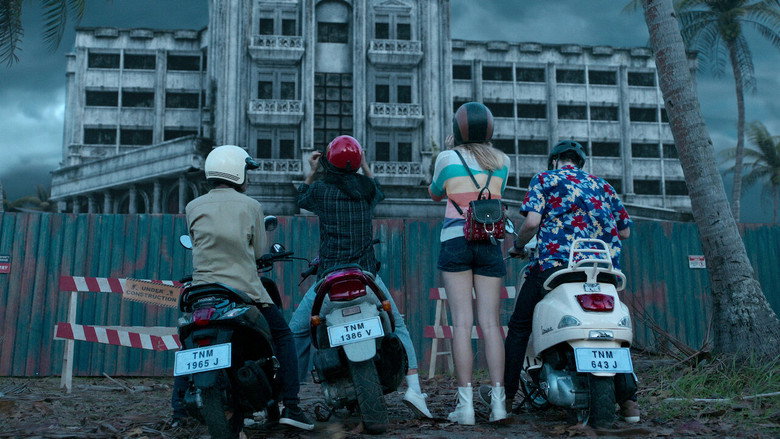
In the end, Mr. Midnight: Beware the Monsters is a show that’s easy to like but hard to love. It’s not groundbreaking, and it’s not perfect, but it has a sincerity that’s refreshing in a genre that often leans on irony or self-awareness.
It’s the kind of show that might not linger in your memory for years, but it’ll make you glance over your shoulder when you’re walking home at night. And maybe that’s enough. After all, the best horror isn’t about the monsters you see—it’s about the ones you don’t.
The ones that live in the margins, waiting for the lights to go out.
"A fun, lighthearted horror-comedy for younger audiences that lacks scares or depth for older viewers."
The series has an adventurous spirit that appeals to younger viewers, particularly fans of the original *Mr. Midnight* book series. The horror is too tame and the storylines predictable, though, so it plays more like a children's adventure than a genuine supernatural thriller. The cast’s energy keeps it engaging, but older audiences will want more.
When Netflix dropped Mr. Midnight: Beware the Monsters in October 2022, it marked a rare moment for Singaporean genre storytelling on a global stage. Adapted from the beloved Mr. Midnight children’s horror book series by James Lee, the show blended teen adventure with lighthearted scares, targeting a younger audience while sneaking in enough chills to keep older viewers hooked. Behind the scenes, the production leaned into local talent and a mix of international influences—though details about its making remain surprisingly scarce.
The Mr. Midnight books have been a staple of Singaporean childhoods since the 1990s, with their anthology-style ghost stories striking a balance between spooky and silly. Translating that tone to live-action was no small feat, but the show’s creators—Chai Yee-Wei, Sean Masterson, and Tony Tilse—opted for a horror-comedy approach, as teased in the official trailer. The 13-episode first season followed a group of teens uncovering supernatural mysteries in their neighborhood, a premise that leaned into the books’ episodic, monster-of-the-week format.
What set the adaptation apart was its commitment to local flavor. Filmed in Singapore, the series showcased familiar backdrops—HDB flats, schoolyards, and hawker centers—while weaving in folklore-inspired creatures. The cast, a mix of rising Southeast Asian stars like Idan Aedan and Chen Yixin alongside international actors like Maxime Bouttier, reflected the region’s diversity. Yet, despite the show’s cultural roots, Netflix’s marketing pushed it as a global product, with trailers emphasizing its universal appeal.
Unlike blockbuster Netflix originals, Mr. Midnight flew under the radar during production. There’s little public chatter about on-set drama, budget woes, or creative clashes—just a handful of reviews and trailer reactions hinting at the show’s reception. One YouTube review called it a "fun, if lightweight, introduction to horror for younger viewers," praising its pacing but noting the scares were "more giggles than goosebumps". Another breakdown highlighted the show’s attempt to balance humor and horror, though some critics felt it leaned too hard into comedy.
The lack of behind-the-scenes buzz isn’t necessarily a bad sign. For a series adapted from a niche book series, Mr. Midnight punched above its weight by securing a Netflix release, a platform where even mid-tier productions can find an audience. Still, the absence of interviews or making-of featurettes leaves fans guessing about the creative process. Did the directors clash over the show’s tone? Were there last-minute script changes? The evidence doesn’t say.
The show’s reception was mixed but not damning. Some viewers appreciated its nostalgic charm and local setting, while others found the horror elements too tame. A recurring critique was that the monsters—central to the title—felt underutilized, with the show’s episodic structure diluting their impact. Rumors (unconfirmed) suggest Netflix may have pushed for a more family-friendly tone, softening the scares to avoid alienating younger audiences.
As for a second season? No official word. The first season wrapped up its story neatly, but the door was left open for more adventures. Given Netflix’s habit of canceling shows quietly, the silence isn’t promising—but it’s not a death knell either.
Mr. Midnight: Beware the Monsters might not have been a cultural phenomenon, but it was a rare win for Singaporean genre storytelling. It proved that local horror could find a global audience without sacrificing its identity. The show’s blend of humor, scares, and Southeast Asian flavor was a refreshing change from the usual Western-dominated teen horror landscape. Whether it returns or fades into obscurity, its place as a trailblazer is secure.
Entertainment rumors and trivia aggregated from public reporting. Treat speculation as unverified unless a cited source confirms it.
More titles in the same genres and with the same cast.